8th Grade Unit 2 Energy Vocabulary
 Call Kai
 Learn
Learn Practice Test
 Spaced Repetition
 Match
Match Flashcards
1/33

There's no tags or description
Looks like no tags are added yet.
Name | Mastery | Learn | Test | Matching | Spaced | Call with Kai | Chat |
|---|
No analytics yet
Send a link to your students to track their progress
34 Terms
Energy
The ability to do work or cause change

kinetic energy
the energy an object has due to its motion
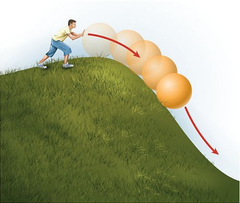
potential energy
stored energy that results from the position or shape of an object

gravitational potential energy
Energy stored by objects due to their position above Earth's surface.

energy transformation
a change of energy from one form to another

Mass
The amount of matter that makes up an object

Speed
The rate at which an object moves along a path

mechanical energy
the energy an object has due to its motion

Radiant Energy-Light Energy
Electromagnetic energy of visible light

sound energy
Energy vibrating waves

chemical energy
Energy stored in chemical bonds between atoms. (food, fuel, fire, batteries)

Heat (thermal energy)
All of the kinetic energy from the MOTION of an object. (The transfer of heat from one object to another.)

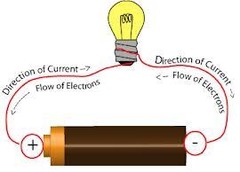
electrical energy
Energy from flowing (moving) electrons.
nuclear energy
Energy stored in the nucleus of an atom

Law of Conservation of Energy
energy cannot be created or destroyed but can be changed from one form to another

Temperature
The intensity of heat an object has

heat
All of the kinetic energy from the MOTION of an object (transfer of heat from one object to another)

heat transfer
the movement of heat from a warmer object to a cooler object

Conduction
Heat transferred directly through touch

Convection
The transfer of heat by the movement of a fluid (a liquid or a gas)

Radiation
Heat transferred through electromagnetic waves

Friction
the action of one surface or object RUBBING against another. (restricts the movement of an object)

work
When a force is acted on an object that causes it to move

Solid
Matter that has a definite shape and volume. Particles are tightly packed.

liquid
Matter that has an indefinite shape and close flowing particles

Gas
Matter that has an indefinite shape and particles that are spread far apart

Plasma
super heated and electrically charged gas such as lightning

weight
The force that an object is attracted to earth
Weight= mass x gravity

velocity
how fast an object is going and in what direction (ex. 30 mph northwest)

Newton's 1st Law
An object at rest will stay at rest and an object in motion will stay in motion
UNLESS
acted upon by an outside force

Inertia
The tendency of an object to remain unchanged (it will always remain at rest--or always keep moving)

Newton's 2nd Law
The effect that force and mass have on the acceleration of an object
Force= mass x acceleration

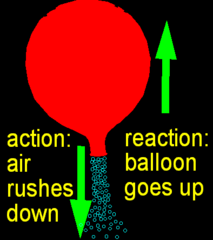
Newton's 3rd Law
For every action there is an equal and opposite reaction
Magnitude
The direction and distance an object travels
