micro exam 3
 Call Kai
 Learn
 Practice Test
 Spaced Repetition
 Match
 Flashcards
 Knowt Play
1/87

There's no tags or description
Looks like no tags are added yet.
88 Terms
which of the following group of individuals is most at risk from a life threatening systemic fungal infection?
immunocompromised individuals
which of the following is NOT a predisposing factor of disease?
none of the above (gender,egentic background,climate and fatigue are all predisposing factors)
which of the following factors influence the disease outcome after the entry of a microbe into a human?
all of the above factors influence disease outcome (host immune status,virulence of the pathogen,portal of entry and dose)
what is the correct definition of selective toxicity?
use of drugs to kill or inhibit the growth of a pathogen without harming the host
which of the following is NOT a direct method to measure microbial cell numbers?
Turbidity readings with a spectrophotometer (this measures optical density,an indirect method)
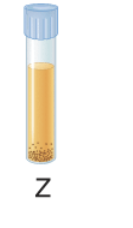
In figure 1,which tube shows the expected growth pattern for an obligate anaerobe?
growth restricted to the bottom of the tube

In figure 1,which tube shows the expected growth pattern for a facultative anaerobe?
growth throughout the tube,but heaviest near the top
A culture medium containing agar,human blood and beef heart extract is an example of a
complex medium
a culture medium on which only gram positive organisms grow and a yellow halo surrounds
selective medium( and differential)
which of the following pairs of terms is mismatched
bacteriostatic kills bacterial cells (bacteriostatic inhibits growth; bactericidal kills cells)
Figure 2 shows a bacterial growth curve with the y-axis indicating the log of the number of bacteria and the x-axis indicating time in culture. Which section (or sections) of the curve shows a phase where the number of cells dying equals the number of cells dividing?
stationary phase (flat portion,labeled c)
In figure 2,what is the scientific name for the section of the curve labeled b? (rising)
logarithmic phase (exponential growth phase)
Most bacteria grow best in which pH range?
pH6.5-7.5
most (human) disease causing microorganisms are classified into which of the following groups
mesophiles
if a bacterial growth experiment began with 4 cells and ended with 128 cells how many generation did the cells go through?
5
destruction or removal of microbes capable of causing infection from inert/inanimate surfaces is known as :
disinfection
which of the following concentrations of ethanol is the most effective bactericide
70%
For years, people in eastern countries stored water in copper containers. The belief was that this reduced the number of microbes in the water, making it safer to drink. To which of the following categories of anti-microbial agents does copper belong?
heavy metals
which disinfectant is the most effective at stopping bacterial growth
doom
which disinfectant was bactericidal
mortum
in practice,alcohol based hand sanitizers have found to be more effective than soaps because they…
all of the above statements are correct
Which of the following is NOT a physical method of controlling microbial growth?
use of an alcohol based gel
Which of the following cellular structures/molecules does u.v. and gamma radiation mainly damage?
nucleic acids (DNA)
how are protein containing solutions such as antisera or some vaccines typically sterilized?
filtration
what was the first compound truly characterized as an antibiotic
penicillin
against which class of organisms do most the currently available antimicrobial drugs work
bacteria
penicillin and cephalosporins interfere with the synthesis of which bacterial structure?
cell wall
diseases caused by which of the following classes of organisms are typically the most difficult to treat with antimicrobial drugs
viruses (followed closely by eukaryotic pathogens like fungi/protozoa due to shared cellular similarities)
drug resistance occurs:
when antibiotics are used indiscriminately
why are anti-bacterial drugs that target the plasma membrane such as polymyxin B(found in neospoin) typically only used for superficial infections
all of the above statements are correct (they can also harm human host cell membranes)
why are broad spectrum antibiotic avoided if possible when treating a bacterial infection?
they disrupt the patients normal microbiome by also removing good bacteria
There are three major classes of antifungal drugs (azoles, polyenes and the echinocandins) routinely used for serious (non-superficial) infections. What are the major targets of these drugs?
Unique structures within the fungal cell wall and membrane (such as ergosterol)
which of the following statements about antimicrobial drug resistance is FALSE
it occurs only in gram negative bacteria
which of the following is not a mechanism employed by microbes to develop drug resistance?
all of the above are mechanisms of microbial drug resistance
Protozoan and fungal diseases are more difficult to treat than bacterial infections because:
Their cells are structurally and functionally more similar to human cells than bacterial cells
The diagram below shows the results of an E-test. This test is used in the clinical testing laboratory to determine...
the minimum inhibitory concentration (MIC) of an antibiotic
The new anti-CoVID-19 drug Paxlovid™ is a protease inhibitor. Which stage of the SARS-CoV2 virus life-cycle does it inhibit?
viral capsid production
The following figure shows the results of a disk diffusion assay performed in a clinical testing laboratory to measure the effectiveness of several antibiotics against an E. coli strain isolated from an infected patient. Which antibiotic was the most effective against this strain in this assay?
A (largest zone of inhibition)
what phenomenon is happening in the clear zone indicated by the white arrow
drug synergy
What is the correct definition of commensalism?
Type of symbiosis in which one organism benefits but the other is unaffected.
All adhesive first aid dressings such as Band-Aids now allow air to pass through them (breathable). Which disease/infection is this feature primarily designed to prevent?
tetanus
what is an advantage of the direct microscopic count
it requires no incubation time
Which section of a bacterial growth curve shows a phase where the number of cells dying equals the number of cells dividing?
section c (stationary phase)
What is NOT an example of a physical method of controlling microbial growth?
use of an alcohol based gel
Against which class of organisms do most of the currently available antimicrobial drugs work?
bacteria
what are the four types of mechanisms employed by microbes to develop drug resistance?
Alter the permeability of the cell to the drug.
Production of enzymes to degrade or modify the drug's chemical structure.
A mutation to modify the drug's cellular target.
Up-regulation of efflux pumps to rapidly remove the drugs from inside the microbial cell.
Drug resistance occurs when antibiotics are used indiscriminately. What are four reasons why human patients contribute to the problem of antimicrobial resistance?
Failing to follow prescription instructions.
Self-administration of antimicrobial drugs left over from a prior infection.
Asking health care providers for antimicrobial drugs when they are not needed.
Using drugs prescribed for someone else without seeing a medical professional.
most bacteria reproduce by
binary fission
If a bacterial growth experiment began with 8 cells and ended with 512, how many generations (divisions) did the cells go through?
5
A culture medium containing yeast extract, peptone, and dextrose (YEPD) is an example of a:
complex medium
Which of the following is NOT a physical method of controlling microbial growth?
chlorination
Reducing the number of microbes likely to cause an infection on living tissue is known as:
antisepsis
Which scientist identified the first antibiotic? (penicillin)
fleming
Which of the following classes of antibacterial drugs interfere with the folic acid synthesis pathway?
(Sulfonamides/sulfa drugs — referenced in context as part of metabolic pathways)
Complications such as septic shock, acute respiratory distress syndrome (ARDS), and disseminated intravascular coagulation (DIC) can result from using antibiotics to treat which type of infections?
gram negative bacterial infections
what is blood agar used to distinguish streptococcus species?
differential medium
what is a direct method to measure microbial cell numbers?
standard plate count
Due to their ability to cross the blood-brain barrier, which drugs are preferred for meningitis/encephalitis?
cephalosporins
Due to their ability to cross the blood-brain barrier, which drugs are preferred for meningitis/encephalitis?
gram negative bacterial infections
what is a classic example of a persistent viral infection
HIV/AIDS
What is a classic example of a latent viral infection?
shingles
At which stage of their life cycle is the external lipid envelope acquired?
release
What can NOT be used to culture/propagate viruses?
plate culture media
Cytopathic effects observed in host cells are used as an indicator of which type of infection?
viral infection
Why are protozoan and fungal diseases more difficult to treat than bacterial infections?
Their cells are structurally and functionally more similar to human cells than bacterial cells.
Their cells are structurally and functionally more similar to human cells than bacterial cells.
protozoa
Which of the following statements about bacterial endotoxin is true?
it is pyrogenic (induces fever)
Which of the following statements about exotoxins is FALSE?
they cannot be denatured or inactivated by heat
Protozoan and fungal diseases are more difficult to treat than bacterial infections because
their cells are structurally and functionally more similar to human cells than bacterial cells
What type of microbe is the brain-eating amoeba Naegleria fowleri?
protozoan
A multicellular organism that has a mouth and lives inside an animal host would most likely be a(n)
helminth
What is the name of the assay used to test antibiotic susceptibility?
kirby bauer disk diffusion test
which antibiotic is the most effective in a Kirby-Bauer assay?
Depends on the image (the one with the largest zone of inhibition)
Which group of microorganisms is most likely to spoil food stored in a refrigerator?
psychrophiles
The drug chloroquine works by causing the accumulation of toxic heme levels inside the food vacuole of a pathogen that lives inside red blood cells. This pathogen is the
malarial parasite
The anti-viral drugs Acyclovir and AZT block which stage of the viral life-cycle?
viral DNA replication
If a bacterial growth experiment began with 4 cells and ended with 256 how many generations (divisions) did the cells go through?
6
fungicide
kills fungi;yeasts and molds
germicide
kills microbes
virucide
inactivates viruses/kills viruses
sterilant
destroys all living microorganisms
physical methods to control microbial growth
pasteurization, refrigeration, freezing, desiccation
Which of the following would typically be used to sterilize cardboard box full of plastic Petri dishes?
gamma radiation
Which of the following cellular structures/molecules does UV light and gamma radiation mainly damage?
nucleic acids
Biosafety level (BSL) for a clinical microbiology laboratory working with potentially airborne pathogens such as tuberculosis bacteria or coccidiodes fungus is
BSL-3
The antibiotic chloramphenicol binds to the 70s ribosome... It functions by
Preventing peptide bond formation in prokaryotes
Anti-microbial drugs resistance traits:
it may be carried on a plasmid, it may be transferred from one bacterium to another during conjugation, It may be due to production of enzymes that degrade the antibiotic, It may occur through the misuse of antibiotics
Human patients contribute to the problem of antimicrobial resistance by
failing to follow prescription instructions for proper drug use, self-administration of antimicrobial drugs leftover from prior infection, Asking health care providers for antimicrobial drugs when they are not needed, Using drugs prescribed for someone else without seeing medical professional.