L28-kidney lecture 3- urine PH and drug removal
 Call Kai
 Learn
 Practice Test
 Spaced Repetition
 Match
 Flashcards
 Knowt Play
1/15

There's no tags or description
Looks like no tags are added yet.
16 Terms
what are the possible routes ( of excreation ) for substances entering the nephron
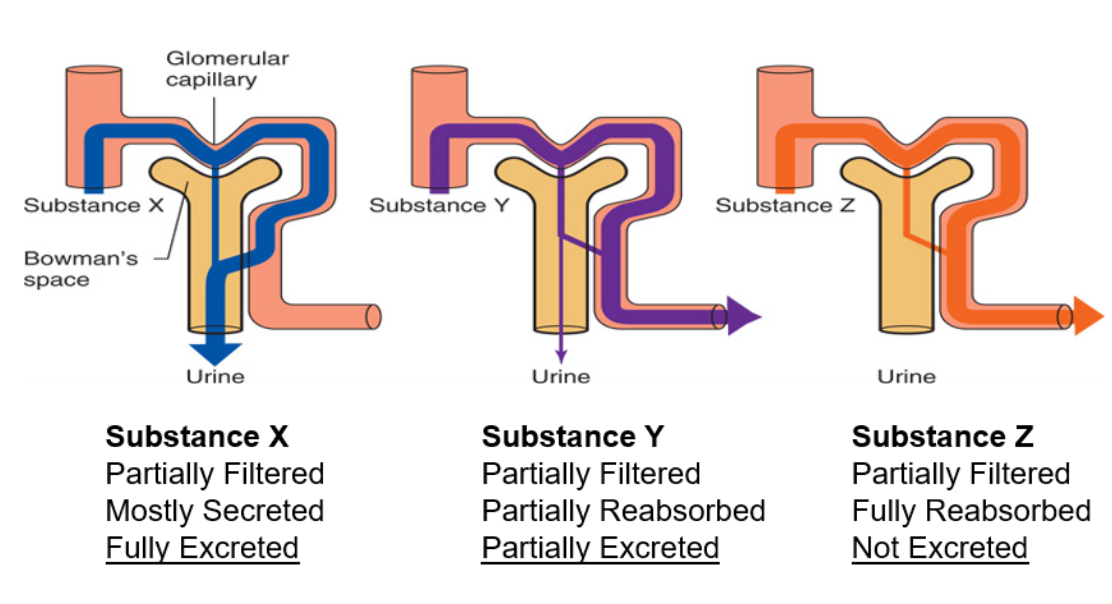
what is the renal processing of a substance based on
to what degree is the substance filtered
how much is reabsorbed
how much is secreted
different factors affects these things
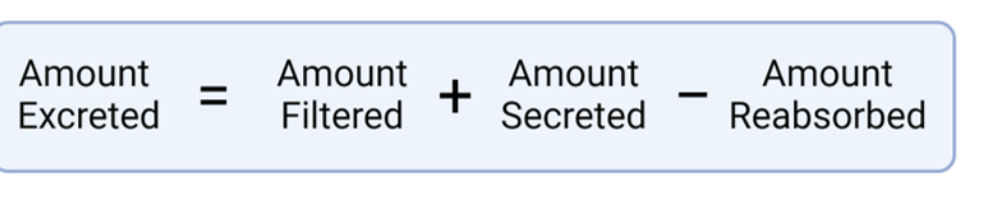
what does OATS stand for and what are they
organic anon transporters
they are transporters that passively transport anionic substances down a concentration gradients
they are important for the renal secretion of drugs and substances
where are OATS primarily expressed
( OAT1/3 , OATT4 , URAT1 )
in the proximal tubule
OAT1/3- basolateral ( blood→ tubule cell)
OAT4- apical ( tubule cell→ urine/inside of nephron)
URAT1- apical ( important for uric acid reabsorption )
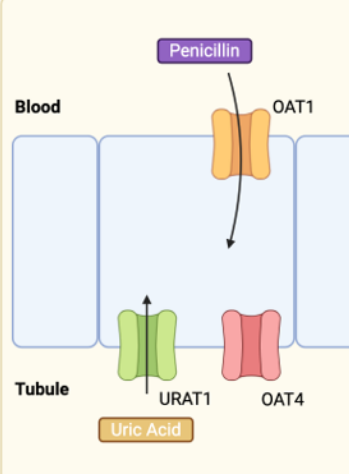
what does OCTS stand and what do they do
organic cation transporters
they passively transport cationic substances down concentration gradients
theyre important for the excretion of many drugs and substances
where ate OCT primarily expressed
(OCT 2/3 , OCT1 , )
OCT 2&3- Basolateral ( blood → tubule cell )
OCT1 -primarily found in the liver but some are seen in the kidney
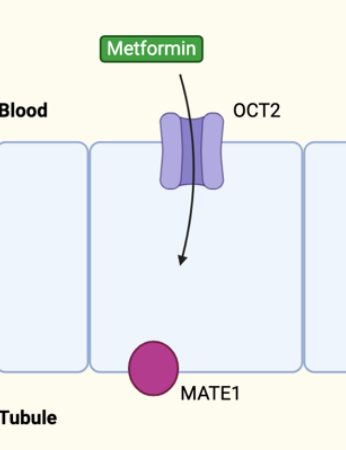
when substances are in the cell through OCTS how to thee leave into the tubule fluid
through the apical transport of MATE 1&2 which is an organic cation counter transporter
what is the key enzyme that regulates acid base homeostasis
carbonic anhydrase
describe how the Ph is lowered and raised and the kidneys role in this
adding or subtracting bicarbonate lowers or raises H+ therefore influencing ph
the kidney regulates bicarbonate HCO-3
so it regulates ph

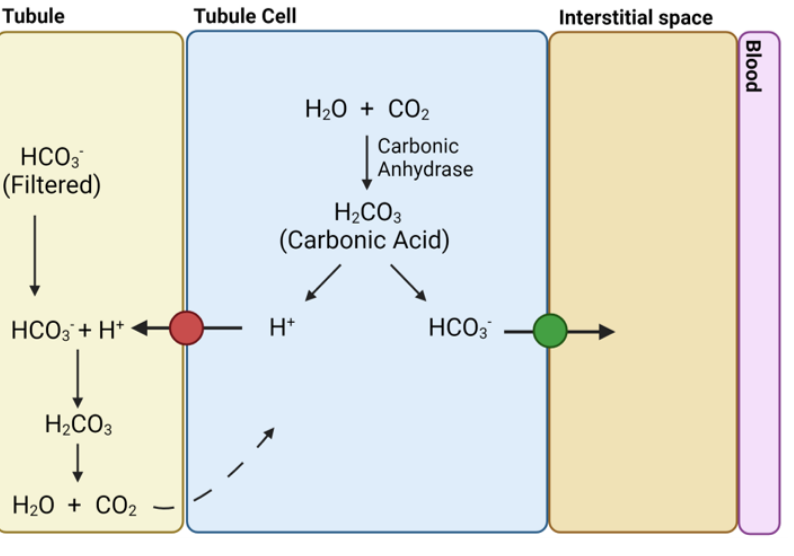
describe bicarbonate reabsorption in the Kidney
inside the tubule cells there is carbonic anhydrase
this means that the carbonic acid created can be broken down into H+ and HCO- 3
the hydrogen ions are transported out of the tubule cells and into the tubule
whilst the bicarbonate is transported from the tubule cells into the interstitial space then reabsorbed into the blood
the hydrogen that’s been pumped into the tubule is able to react with filtered bicarbonate forming carbonic acid again
which breaks down into water and carbon dioxide which is reabsorbed
so there no net loss of bicarbonate
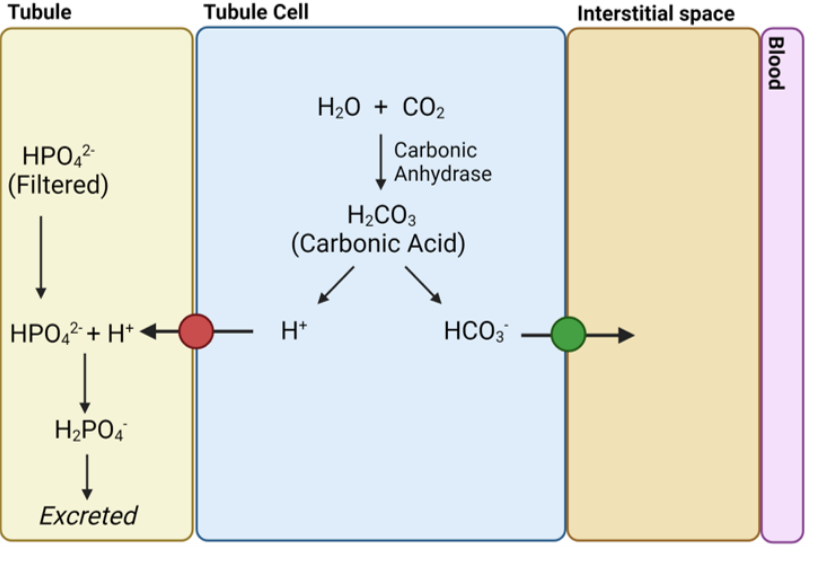
explain bicarbonate generation in the kidneys
in the tubule cells there is carbonic anhydrase present
this forms water and carbon dioxide into carbonic acid which is split into bicarbonate and hydrogen ions
the hydrogen ions are pumped into the tubule whilst the bicarbonate are pumped into the blood
the hydrogen now in the tubule is able to combine with filtered phosphate to form
the product is then excreted
this results in the gai of bicarbonate
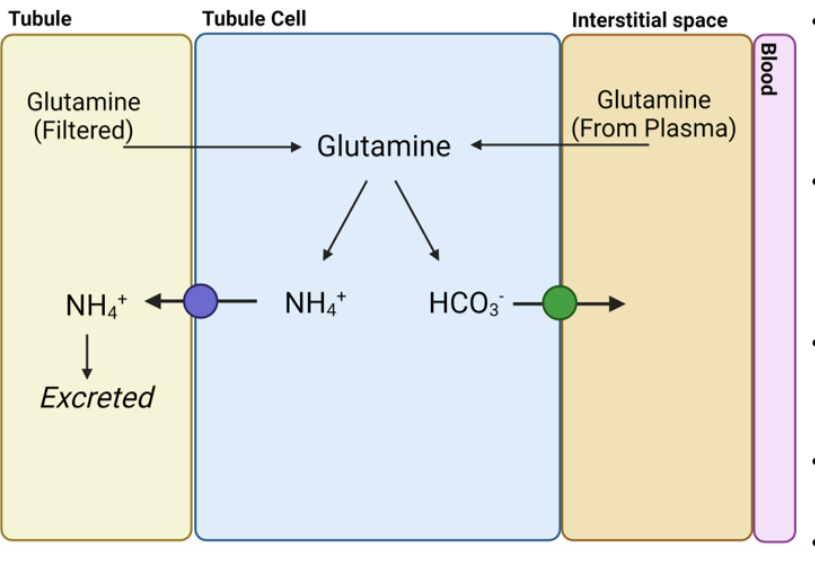
describe how bicarbonate is generated through glutamine metabolism
the amino acid glutamine enters the tubule cells through either the filtrate or the blood plasma
it then gets broken down into ammonia and bicarbonate
the ammonia gets pumped into the tubule then excreted
the bicarbonate moves into the blood
so there a net gain of bicarbonate
what is alkalosis and what is acidosis
alkalosis- when the body loses hydrogen ions, the PH increases and becomes more alkali
acidosis- when the body gains more hydrogen ions and the ph. decreases and becomes more acidic
explain the kidneys response to acidosis
in acidosis there is a high number of protons in the tubule cells
so they enter into the tubule and react with all the filtered bicarbonate and more of the filtered phosphate
the kidney can also respond to acidosis to increase glutamine metabolism
overall the body generates more bicarbonate ions which helps push the equation backwards decreasing hydrogen ions
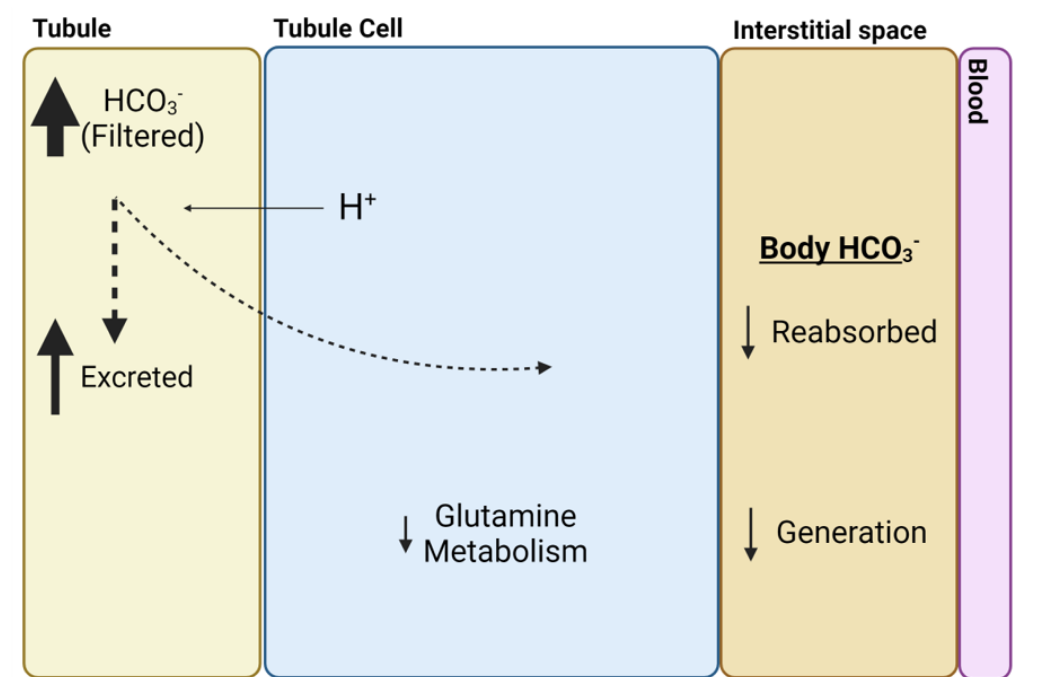
what is the kidneys response to alkalosis
there is little hydrogen ions inside the tubule cells
so there are less hydrogen ions being passed into the tubule
so less is there to combine with the bicarbonate in the filtrate- so less is reabsorbed
and glutamine metabolism is lowered- so there is less generation of bicarbonate
overall this pushes the equation to the side that increases bicarbonate and therefore increases hydrogen ions
explain what happens to drugs depending on if the urine is alkaline or acidic
most drugs are either weak bases or weak acids
in alkaline urine acidic drugs are ionised
in acidic urine alkaline drugs are ionised
ionised drugs are less likely to be reabsorbed in the kidney so there’s increased excretion