Anatomy and Physiology Chapter 1-4
 Call Kai
 Learn
Learn Practice Test
 Spaced Repetition
 Match
Match Flashcards
 Knowt Play
1/183

There's no tags or description
Looks like no tags are added yet.
Name | Mastery | Learn | Test | Matching | Spaced | Call with Kai | Chat |
|---|
No analytics yet
Send a link to your students to track their progress
184 Terms
Anatomy
"Cutting Open"
-form
Physiology
"How does it work"
-function
Cytology
study of cells and their structure
Histology
study of tissues and their structure
Cell Physiology
process within and between cells
Hippocrates
Father of medicine, code of ethics Hippocrate Oath, Diseases and natural cause
Aristotle
Contributions to human knowledge
Claudius Galen
Surgeon for gladiators
Maimonides
Avicenna
andreas Vesalius
william harvey
michael sevetus
robert hooke
anthony van leeuwenhoek
mathias schelidin and theodore schwann
Maimonides - 10 books, jew, disease
Avicenna-studied galen and aristotle
Andreas Ves-blood circulation book of Motion of the heart
William Harvery-Blood circulates around the body and organs then back to the heart
Robert Hooke-designed scientific Instruments - compound microscope Magnified 30x
Anthony Van Leeuwenhoek- textile merchant invented- simple microscope, single lense mag. 200x
Schelidin and schwann- all organisms are compossed of cells, cell theory
Inductive Reasoning
Making numerous observations until one feels good to make generalizations about.
Hyothetico- Deductive Reasoning
Physiological Knowledge was obtained
Hypothesis
Educated Guess
Experimental Design
Sample Size, Controls, Control Group, Treatment Group, Psychosomatic Effect, Experimental Bias
Sample size
number of subjects
Controls
comparison between treated and untreated individuals
Control Group
Baseline of treatment, stays the same, receives Placebo, does not receive the actual treatment
Treatment Group
Receives the actual treatment
psychosomatic effect
state of mind of individual
experimental bias
experimenters expect a certain result so their interpretations can effect the outcome of the treatment. Their bias opinion
Transcription
Copies genetic instructions from DNA to MRNA
Translation
Converts language of nucleotide into language of amino acids
Organism
Single, complete individual
organ system
group of organs witha unique collective function such as circulation, respiration, digestion
Organ
structure of 2 or more tissue types that work together to perform as specific function. Example; skin- largest
tissue
mass of cell and cell product
cell
smallest unit of life, composed of lipids and proteins, lives in plasma membrane
organelle
microscopic structure in cell that carry out the function example: mitochondria, centrioles, lysosomes, composed of molecules
8 Characteristics of Life
1. organization
2. cellular composition
3. metabolism
4. response/ movement
5. homeostasis
6. development
7. reproduction
8. evolution
cytology
study of cells
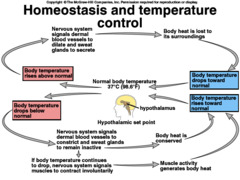
Homeostasis
maintaining a stable internal environment
Negative Feedback
-controls body temperature
Positive Feedback
response of effector increases change caused by stimulus
-body moves away from homeostasis
-normal range lost
-used to speed up process
Anatomical Position
hands at sides, palms forward
Supine
lying down, face up
Prone
lying down, face down
Anatomical Planes
Imaginary flat area passing through the body, Sagital, Frontal, Transverse
Sagital
Vertically through the body making a right/left division.

Mid-Sagital
Equal cut, median/ middle. Head/ Pelvic
Frontal
Vertical and perpendicular to sagital, divides into front and back, anterior and posterior

Transverse
horizontal, divides body from top/bottom, superior and inferior

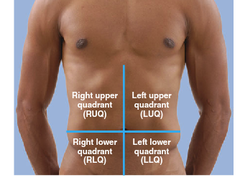
4 Abdominal Quadrants
Right upper, left upper
right lower, left lower
Abdominopelvic Regions
-Right hypochondriac Region-->Epigastric-->Left Hypochondriac Region
-Right Lumbar Region-->Umbilical-->Left Lumbar Region
-Right iliac Region-->Hypogastric-->Left iliac Region

Axial
Head, neck, trunk
Body Cavities
Ventral
Thoraic
Abdominopelvic
Ventral Cavity
-provides protection, allows organ movement
-separated by diaphragm
Thoracic Cavity
-surround by the chest wall and diaphragm
1.) Right Pleural-right lung
2.)Mediastinum-contain the trachea, esophagus
-pericardial- heart
3.)Left Pleural-left lung
Abdominopelvic Cavity
-contain the peritoneal cavity
1.) Abdominal-contains many digestive glands and organs
2.) Pelvic-contain urinary bladder, reproductive organs, last portion of digestive tract
Serious Membrane
-line body cavities and cover organs
-parietal-->line cavity
-visceral-cover organ

Atoms
the smallest stable unit of matter
-join together to form molecules with different characteristics
Elements that make up 98% of human body weight
Oxygen, Carbon, Hydrogen, Nitrogen, Calcium, Phosphorous
Proton
positive
Neutron
neutral
Electron
negative
Nucleus
contain protons and neutrons, center of an atom
Electron cloud
contain electrons
Element
determined by the atomic number of an atom
A#=PROTONS
Atomic #
equal to number of protons in each atom, which is equal to the number of electrons
Mass #
number of protons plus number of neutrons
Isotopes
two or more forms of the same element with the same number of protons and electrons but different neutrons number
Marie Curie
First women to receive Nobel prize, also first woman in France to receive Ph.D, Second Nobel Prize for work in Radiation. Died from radiation poisoning at 67
Radioactive Isotopes
Forms of atoms that emit radioactivity such as gamma rays which can be measured
-used clinically to track hormones, treat cancer
Alpha
To large of rays, contacts SKIN

Beta
Rays penetrates the skin

Gamma
Dangerous effects body

Ions
Charged particles with unequal # of protons and electrons
anion
gains electron, negative charge
cation
loses electron, positive charge
Chemical bonds between atoms
-involves the sharing, gaining or losing of electrons in the valence shell
Atomic Bonding
occurs when outermost electrons are either shared with or transferred to another atoms
Ionic Bonds
strong attraction between cation (e donor) and anion (e acceptor)
Covalent Bonds
strong bonds involving shared electrons
STRONGEST
Covalent bonds share e-
-Involve sharing pairs of electrons b/w atoms
-One e- is donated by each atom to make the pair of electrons
1=single
2=double
3=triple
Nonpolar Covalent
Involve equal sharing of electrons because atoms involved in bond have equal pull* on electrons (e.g. C2H6)
Polar Covalent
-Involve unequal sharing of electrons because one atom involved in bond has a disproportionately strong pull on electrons
-Form polar molecules — like water
Hydrogen Bonds
involve slightly positive and slightly negative portions of polar molecules being attracted to one another
WEAKEST... intermolecular bonds based on partial electrical attractions
Water
Universal Solvent, accounts for up to 2/3 of your total body weight
Hydrophillic
interact with water
-includes ions and polar molecules
Hydrophobic
-fear
-does not interact with water
-includes nonpolar molecules, fats, and oils
pH
concentration of hydrogen ions in a solution
Neutral
-balance of H+ and OH-
-pure 7.0
Acidic
ph solution below 7.0, proton donor
basic
alkaline, above 7.0, proton accepted
buffer
chemical solution that resist change in ph, add buffer to level it out
Adhesion
Clings to another substance
Cohesion
Clings to itself
Thermal Stability
balance of internal body temperature, heat capacity
pH of blood
ranges from 7.35 to 7.45
free radical
chemical particle with odd number of electrons
Decomposition
large molecules break down into smaller ones, change in ph or temperature

Synthesis Reaction
2 or more molecules form a larger one

Main Organic Molecules
Carbohydrate, Lipids, Protein, Nucleic Acids
Carbohydrates
-contain carbon, hydrogen and oxygen-->1:2:1 ratio
Monosaccharide
simple sugar
glucose***

Disaccharide
two sugars
Sucrose ( glucose+ frutose)

Polysaccharide
many sugars, glycogen- energy storing, starch- complex carbs , cellulose- not digestible( fiber)
Lipids
-mainly hydrophobic molecules such as fats, oils, and waxes
- Fatty acid, triglyceride, phospolipids, eiocscrioids, steriods
-made mostly of carbon and hydrogen atoms
Fatty Acid
Saturated- SOLID
Unsaturated- LIQUID
Triglycerides
-3 fatty acids tails
-also called triacylglycerols or neutral fats
-energy source, insulation and protection
Saturated Fatty Acid
contains all single bonds in the carbon chain, which produces a more rigid structure
SOLID
Unsaturated Fatty Acid
contains one (mono) or more (poly) double bonds in the carbon chain, which produces a more relaxed structure
LIQUID