PBSI 336 EXAM 2
 Call Kai
 Learn
Learn Practice Test
 Spaced Repetition
 Match
Match Flashcards
 Knowt Play
1/47

There's no tags or description
Looks like no tags are added yet.
Name | Mastery | Learn | Test | Matching | Spaced | Call with Kai | Chat |
|---|
No analytics yet
Send a link to your students to track their progress
48 Terms
pharmacokinetics
-what the body does to a drug, study of drug molecules into through and out of body
-ADME
-tells time course of drug action
-if we know the dose + pharmacokinetics we can estimate the drug concentration at receptors and how strong the effect will be over time
drug action vs drug effect
-drug action: specific molecular changes produced when drug binds to a particular target site or receptor
-drug effect: alterations in physiological or psychological functions
therapeutic effect: drug produces desired physical or behavioral changes
side effects: non-therapeutic effects, not the effect you’re taking the drug for
specific drug effects: based on physical and biochemical interactions of a drug with a target site in living tissue
nonspecific drug effects: based on unique characteristics of the individual
placebo effect
-placebo: inert compound that may have therapeutic effects and side effects, positive expectations can help
-may be due to pavlovian conditioning, verbal suggestion, positive expectations, social learning, or genetics
-nocebo effect: increased anxiety or pain due to negative expectations
ADME
Absorption: administration site → blood
Distribution: blood → body
Metabolism: break down the drug (liver), biotransformation
Elimination: remove the drug/ metabolic waste from the body
take drug → blood → body → breakdown → get rid of it

theoretical blood levels of triazolam

-ineffective range: too little drug and doesn’t work
-therapeutic range: enough drug to work without being too high
-toxic range: dangerous effects
-lorazepam is longer acting and stays elevated longer but that doesn’t mean the high concentration equals how long it lasts
routes of drug administration
-enteral routes: gastrointestinal tract (GI) involvement, generally slow and produces variable blood levels “ENTER GI” “O.R.”
oral admin, these drugs must be able to survive stomach acid, insulin doesn’t so it can’t be taken orally
rectal admin
-parenteral routes: no GI involvement “T.I.I.T.”
injection
inhalation
absorption through the skin (transdermal)
absorption through the mucous membranes (topical)

administration by injection
-intravenous (IV): drug directly into the bloodstream
advantages: extremely precise dosage and very fast onset
Dangerous because can’t easily undo it once it’s in the blood
-Intramuscular (IM): into muscle
slower than IV but faster than absorption from stomach
Type 1: water/aqueous solution (rapid onset + shorter duration)
Type 2: oily solution (slower onset + prolonged duration)
-subcutaneous (SC): under the skin


-oral→gi→ liver/circulation
-inhalation→lungs→blood
-IV→directly into blood
-IM→muscle→blood
-SC→under skin→blood
oral administration
-drug must be
soluble and stable in stomach fluid
absorbed through upper intestine through passive diffusion
generally be somewhat lipid soluble
food in stomach may increase of decrease absorption
-disadvantages:
vomiting and stomach distress
drugs can be destroyed by stomach acid
absorption is highly unpredictable, different people absorb drugs differently→ genetics, food already in stomach
rectal administration
-used if patient is vomiting, unconscious, or unable to swallow (infants)
-absorption is irregular, unpredictable, incomplete
administration by inhalation
-popular amongst recreational drugs
tobacco
marijuana
cocaine
heroin
-fast absorption into blood because lungs have huge surface area, even faster than injection
-drug goes into pulmonary capillaries→lungs→left side of heart→aorta→arteries→brain

advantage/disadvantage of drug administration


drug distribution
-blood carries the drug through body after it gets absorbed into blood
-bloodstream:
entire blood volume circulates body once every minute
places with high blood flow = the drug gets there faster at a higher concentration
brain
heart
kidneys
liver (main center of detoxification and metabolism)

factors influencing drug absorption
-drug has to reach blood before influencing other part of the body→ brain (main target for drugs)
-route of administration: area of absorbing surface, cell layers between site of administration and blood (more cell layers, more barrier), drug destroyed by metabolism
-drug concentration: may be due to individual differences, sex, age, body size (larger person has more body fluid to dilute drug, females have less body fluid)
-transport across membranes: most important factor in determining plasma drug levels is the rate of passage of drug through various cell layers between site of admin and blood
-rate stomach empties: small intestine has more surface and slower movement of materials so more absorption
-blood brain barrier (BBB): brain needs lots of blood but not everything can enter “security guard”
-placental barrier: pass through passive diffusion, fetus can be influenced by drugs taken by mother
bioavailability
-portion of original drug does that reaches its site of action
-absorption and first pass metabolism can affect how much drug ultimately becomes available
passive diffusion
-movement of drug from higher to lower concentration
-lipid soluble have easier time crossing membrane via passive diffusion

first pass metabolism
-blood from GI tract first passes through the liver, which is the main organ that breaks down drugs → first pass metabolism
-oral drug→ GI→ liver first → rest of body
-reduces the amount of active drug reaching systemic circulation
-other routes may not be subject to this “first pass” effect

drug administration bypassing first pass metabolism
mechanism/process of biotransformation
depot binding
-depot binding is drug binding to inactive sites where no biological effect is initiated (plasma proteins, muscle, fat, bone)
-bound drug can’t reach active sites and can’t currently be metabolized by liver
-binding reversible
-more depot binding→less free drug→weaker/slower immediate effect
-reduce drug concentration at target
-delay effects
-change magnitude and duration of drug action
-differ based on individual differences A.B.S. (age, body size, sex)
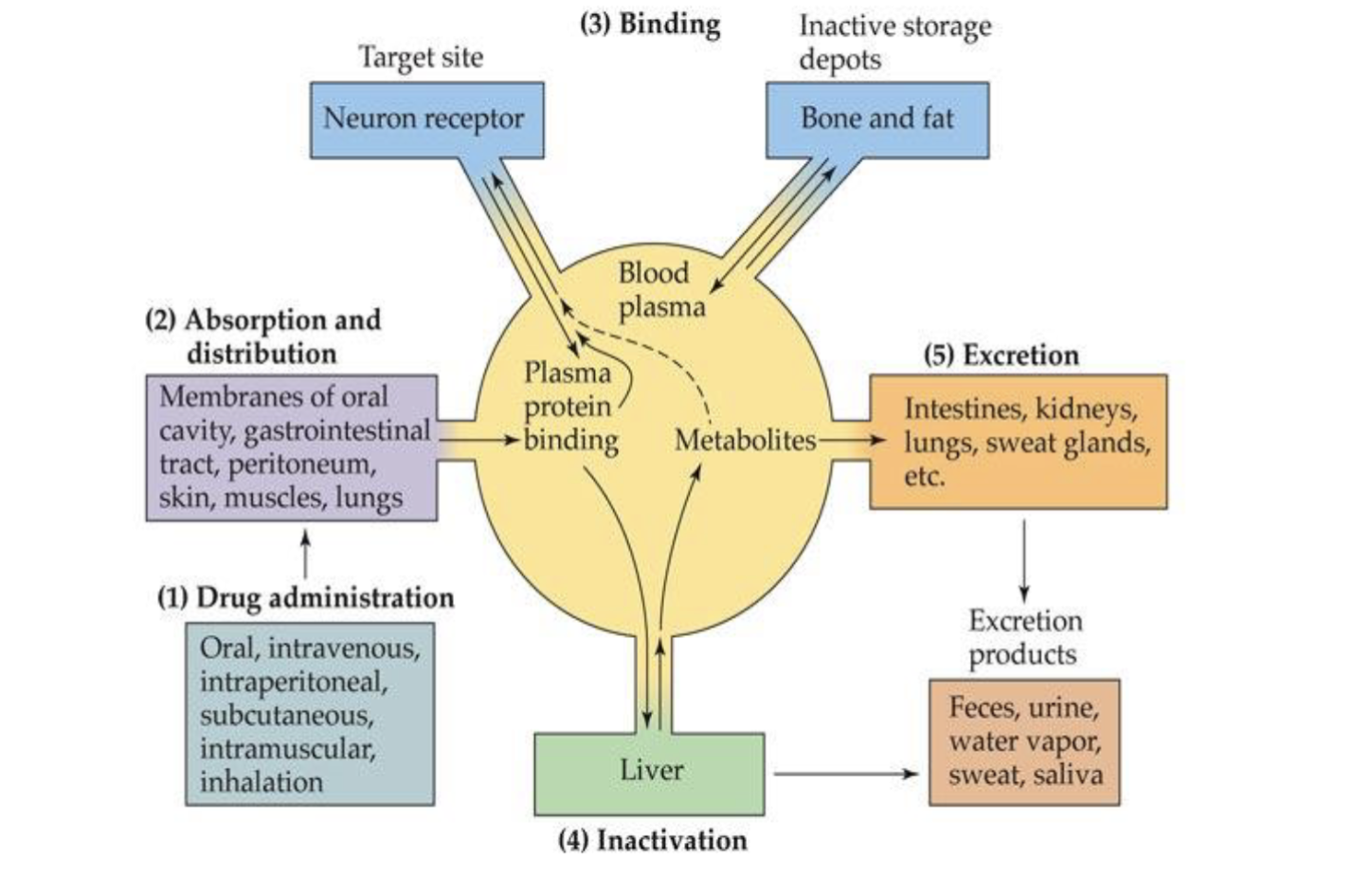

drug metabolism
-process of toxification
-biotransformation (phase 1 and 2)
termination of drug action
-routes were drug leave the body:
kidney
lung
bile
skin
-major route of drug elimination:
renal (urinary) excretion
many psychoactive drugs are lipid soluble but urine is water based, body performs biotransformation to change drug to more water soluble and less active metabolite in liver
kidneys filter substances from blood, large molecules or molecules bound to plasma proteins aren’t filtered as easily→ leave body unchanged
lithium
DRUG→METABOLISM→WATER SOLUBLE METABOLITE→KIDNEYS→URINE
phase 1 of biotransformation
-cytochrome P450-CYP enzymes, turns lipophilic fat soluble drugs into more water soluble polar compounds “livers drug processing machinery”
-concentrated in liver
-12 CYP families
CYP 1,2,3 most common for drug metabolism
CYP2D6 and CYP3A metabolize over 50% of drugs
enzyme induction
-past experience with drugs affects enzyme systems
repeated exposure to certain drugs can increase enzyme levels
if you have more enzymes breaking down a drug, the drug gets metabolized faster and less drug remains→ effect can become weaker→ tolerance, need more of drug to produce same effect
-st. john’s wort: active ingredient hyperforin induces CYP450 (CYP3A) which breaks down many other prescription drugs
theophylline(asthma), warfarin(ati clotting), birth control pills, antidepressants, immunosuppressant cyclosporin
-cigarette smoke: increases certain CYP 450 enzymes so they would need even higher doses of drugs such as antidepressants or caffeine which are metabolized by the same CYP450 pathway
-cross tolerance, enzyme induction can reduce the effect of other drugs using the same metabolic pathway
INDUCTION = INCREASED ENZYMES→INCREASE BREAKDOWN→DECREASE DRUG LEVEL/EFFECT
enzyme inhibition
-inhibit CYP enzymes and produce more intense/prolonged drug effects and high levels of drug toxicity, can’t breakdown drug as efficiently
-blood levels go up
-grapefruit juice: inhibits CYP450(CYP3A4)

drug drug competition
-2 drugs can use the same metabolic system
-more of drug 1 can reduce metabolism of drug 2
-case for alcohol and sedatives like barbiturates or valium
genetic polymorphism
-people have different genes so different amounts of CYP enzymes

first order kinetics/half life
-time required for body to eliminate 50% of the drug (first order elimination)
subtracting 50% of whats currently left each time
-allows comparisons between drugs with similar actions but diff half lives
-important to understand the relationship between time course of drug action in the body and pharmacological effects
predict optimal dosages and dose intervals needed for therapeutic effect
maintain therapeutic drug level for desired time period
determining time needed to eliminate drug
-rate of elimination is concentration dependent (exponential): when blood levels are high the clearance from body is also faster

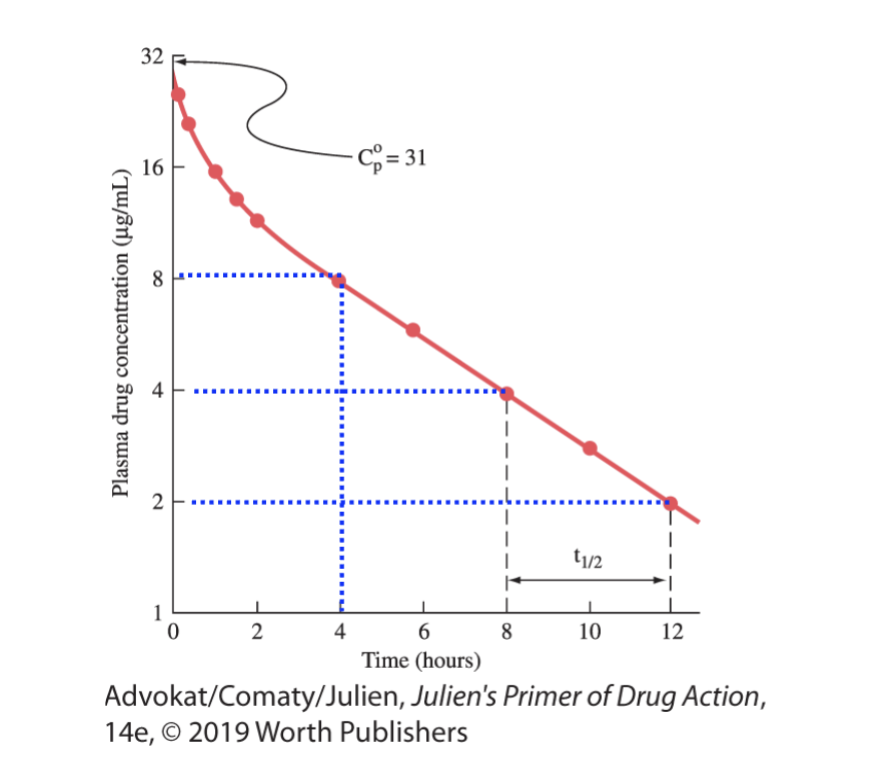
how many half lives it usually takes for drugs to be eliminated from the system

half lives of common drugs

-longer half life→ drug hangs around longer
steady state
-rate drug enters = rate drug leaves/excretes
-putting drug in at roughly the same rate the body is removing it
-steady state concentrations can be reached in about 6 times the drug’s elimination half life and is independent of actual dosage of the drug


therapeutic drug monitoring
-certain minimum (threshold) concentration is needed at receptors to produce/maintain a response
-concentration generally correlates with concentration at tissues/receptors
-therapeutic window is the safe/effective concentration range

pharmacodynamics
-study of interaction of drug molecule with specific receptors
-what the drug does to the body
ligand
-binds to receptor
-neurotransmitter, hormone, drug
receptor
-proteins on cell surfaces or within cells
-ionotropic:
fast neurotransmission, “door that opens immediately when someone turns handle”
neurotransmitter binds to receptor→ ion channel opens immediately→ions flow through the channel→when ligand leaves the channel closes quickly
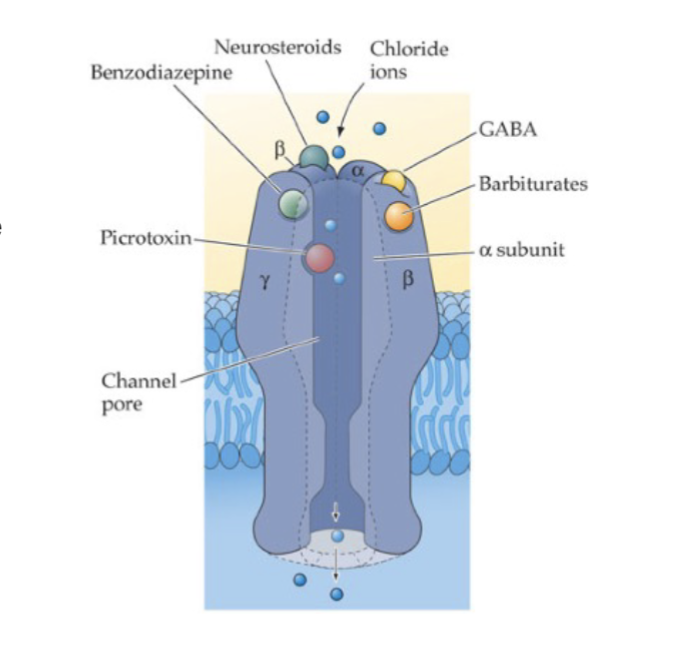
-metabotropic:
g protein coupled
slower but response lasts longer, INDIRECT

agonist→receptor→g protein→second messenger (carries signal inside the cell, cAMP and IP3)→ cellular effect, neurotransmitter/drug is first messenger binding outside the cell
kinases add phosphate groups to proteins, phosphorylation
phosphatases remove phosphate groups, dephosphorylation

types of g proteins
Gs: stimulates adenyyl cyclase, increasing cAMP
Gi: inhibits adenylyl cyclase→decreasing cAMP
Gq: activates phospholipase C, producing DAG and IP3

carrier proteins
-transporters:
take neurotransmitters back to presynaptic neuron
many drugs block carrier proteins for specific neurotransmitter (SSRI)
-enzymes:
break down neurotransmitters in synaptic cleft
if drug inhibits enzyme responsible for breakdown, more neurotransmitter remain available
monoamine oxidase inhibitors inhibit breakdown of NE and DA, used in antidepressants → increases neurotransmitter availability
acetylcholinesterase is the enzyme that breaks down acetylcholine (movement neurotransmitter) if inhibits then acetylcholine accumulates in the synapses→ prolonged and excesive receptor stimulation
used in pesticides to overstimulate insect nervous system
irreversible used as pesticides and nerve gas

affinity
-more potent drug has greater affinity for receptor, binds tighter
-less potent drug can be more easily knocked off the receptor
differences between agonist and antagonist
-receptor agonists have high affinity for receptor, bind to receptor and initiate cellular response
partial agonists have intermediate EFFICACY (not weaker at binding)
inverse agonists initiate an action opposite to that produced by an agonist
-receptor antagonists bind to receptor but produce no effects (low efficacy), blocks action of agonist
by itself produces no response
can see if drug has antagonistic action by seeing if the effect of agonist is reduced

competitive antagonism: antagonist compete with agonist for same binding site
noncompetitive: antagonist reduces response in a way that cant be overcome by increasing agonist concentration

morphine- agonist at u-opioid receptors while nalozone is comp antagonist
drug potency vs drug efficacy
-drug potency- how much of drug to get an effect
-efficacy- how strong of maximum effect can drug produce

downregulation vs upregulation
-downregulation:
cell reduces receptor number/responsiveness after repeated stimulation
desensitization “stop paying attention,” at first it produces strong response after repeated stimulation the response decreases
also known as adapation, refractoriness
tolerance: gradual decrease in response of drug
removal of drug for extended periods allows it to recover capacity again
-upregulation:
cell increases receptor number/responsiveness after prolonged blockade or reduced stimulation
supersensitivity “more aware”
reversible vs non reversible antagonism
drug-drug competition
what information can we derive from dose response relationships
-evaluate receptor activity
-describes amount of response given drug dose
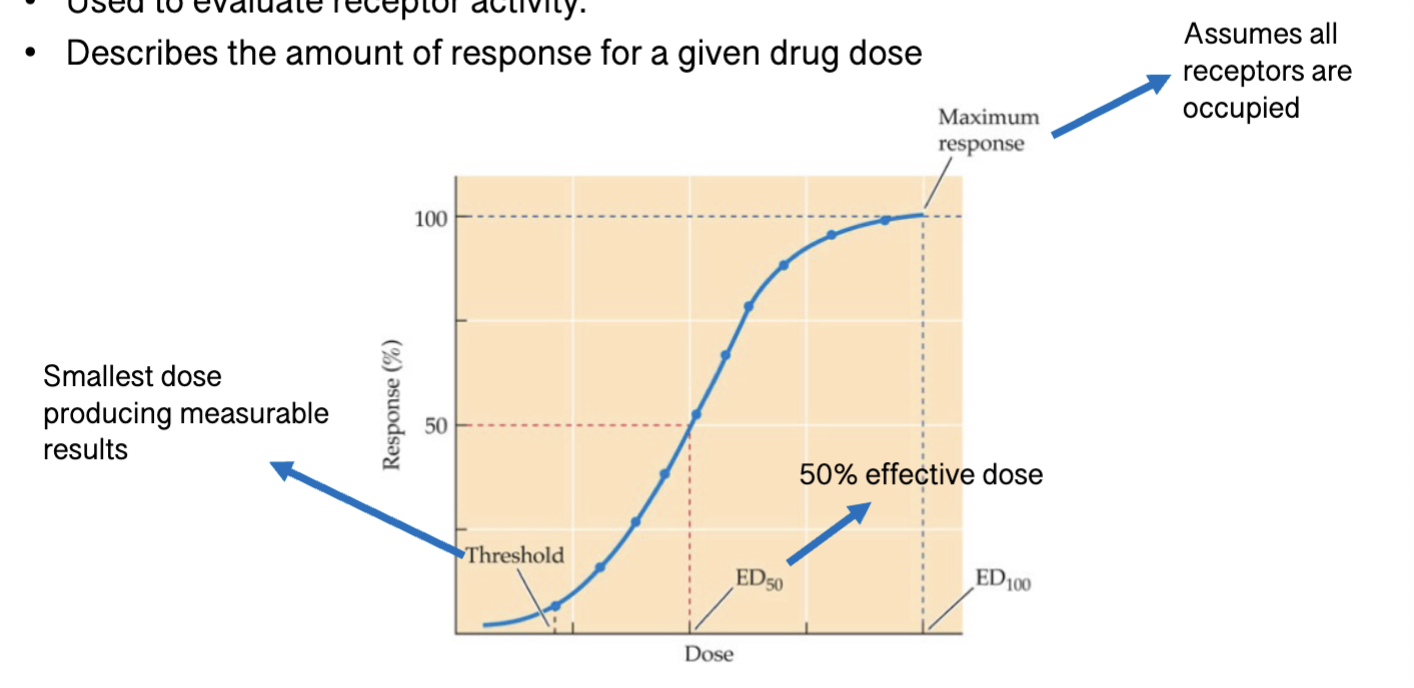
-threshold: smallest dose producing measurable effect
ED50: dose associated with 50% response
maximum response: point where adding drug no longer increase the measured effect

-leftward curve is more potent (methamphetamine)
-height of curve is efficacy (caffeine lowest)

-anaglesia is inability to feel pain
drug safety and effectiveness
-for FDA approval, drug has to be effective and safe
-ED50: drug dose that produces desired effect in 50 percent of test subjects
-LD50: lethal/toxic dose for 50%of test subjects
-therapeutic index: LD50 / ED50 (index of relative safety),
the greater the TI the safer the drug
therapeutic index vs therapeutic window


drug interactions and tolerance
-physiological antagonism:
2 drugs produce opposite physiological effects
net response is reduced
-additive effects:
combined effect equals the sum of individuals
-potentiation:
combined effect if greater than simply adding individual effects

differences between metabolic, pharmacodynamic, and behavioral tolerance
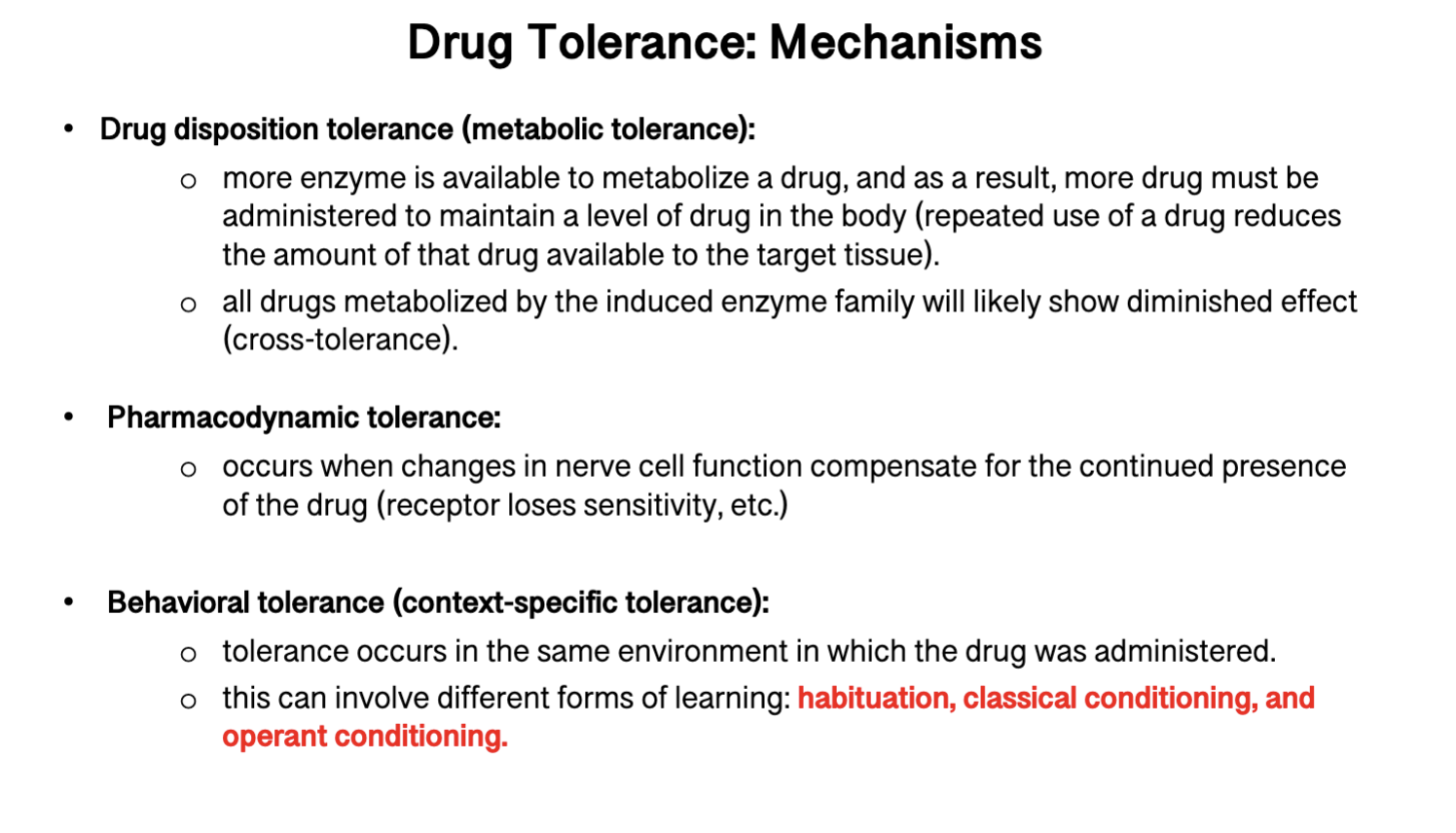
cross tolerance
rgre

classical conditioning and drug related cues
-initially: drug (US, unconditioned stimulus)→ physiological/psychological response (UR, unconditioned response)
-repeated pairings of drug related cues(neutral stimulus) + drug → response
-drug related cues alone(conditioned stimulus) → conditioned response(cr)
