chem 115 exam 3
 Call Kai
 Learn
 Practice Test
 Spaced Repetition
 Match
 Flashcards
 Knowt Play
1/29

There's no tags or description
Looks like no tags are added yet.
30 Terms
Ionic Bonding
metal and nonmetal
electrons are transferred
Lattice energy
hard, rigid, brittle, high melting points
doesn’t conduct electricity when its solid because ions don’t move
Covalent Bonding
nonmetal and nonmetal
electrons are shared
Metallic Bonding
metal and metal
electrons are delocalized
Bond Length
distance between nuclei of bonded atoms
increases when atomic sizes are larger
increases when bond order (number of bonds) decreases
Bond Strength
increases when atomic size is smaller
increased when bond order (number of bonds are higher)
Bond Energy
energy needed to break attractions between nuclei and shared electrons
Relationship between bond length and bond strength
Inverse, because of Coulumb’s Law
How to find larger lattice energy
check charges: multiply absolute values
greater charge = bigger lattice energy
Check ionic radii: add radii or check periodic table and use trend
greater radii = less lattice energy b/c inverse
Bond Polarity
how unequal bonds are
Nonpolar Covalent Bond
basically the same because the electronegativities are very close, so electrons are shared equally
Polar Covalent Bond
electrons are shared unequally
Ionic Bond
electronegativities are so far apart that electrons are completely transferred from one atom to another
Heat of Sublimation
solid → gas
ex: K(s) → K(s)
Ionization Energy
Lose electrons
ex: K → K+ + e-
Electron Affinity
Gain Electrons
ex: Br + e- → Br-
Bond Energy
Split to single atoms
ex: 2Br2 → 2Br
Heat of Formation
Makes 1 solid mole
ex: K(s) + ½ Br(g) → Br(s)
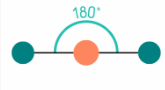
Linear
2 bonds
180 degrees
Trigonal Planar
3 bonds, 0 lone pairs
120 degrees

Bent (3)
2 bonds, 1 lone pair
117.5 degrees

Tetrahedral
4 bonds
109.5 degrees

Trigonal Pyramidal
3 bonds, 1 lone pair
107 degrees

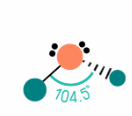
Bent (4)
2 bonds, 2 lone pairs
104.5 degrees
Trigonal Bipyramidal
5 bonds
90 and 120 degrees

Octahedral
6 bonds
90 degrees
