Lecture 27: Ecdysozoan II: Arthropods II (crustacea and insects)
 Call Kai
 Learn
 Practice Test
 Spaced Repetition
 Match
 Flashcards
 Knowt Play
1/22

There's no tags or description
Looks like no tags are added yet.
23 Terms
Embryonic development of Arthropods
triploblastic
coelomate
hemocoel
protostomes
spiral cleavage
Subphylum Crustacea
67,000 species (lobsters, shrimp, crabs, barnacles)
mostly marine
cuticle exoskeleton high in calcium and protein = harder
possess mandibles
appendages not limited to cephalothorax
Form and function of Crustacea (external)
2 pairs of antennae
5 pairs of appendages on head (2 pairs of antennae, 1 pair of mandibles, and 2 pairs of maxillae)
cephalothorax and abdomen (1 pair of appendages per segment)
cheliped
dorsal cuticle often forms hard carapace
Cheliped
terminal claw used for defense
Carapace
plate covering the cephalothorax of crustaceans
Appendage specialization
biramous appendages
swimmerets modified for reproduction
uropods used for backward movements
appendages modified for feeding
Form and function of Crustacea (internal)
internal cavity is hemocoel
open circulation
complex flexor and extender muscles
small crustaceans exchange gas across thin areas of cuticle, larger crustaceans have gills
antennal or maxillary glands (green gland) for osmotic balance and excretion
well developed sense organs (eyes) and tactile hairs for chemoreception
Reproduction of Crustacea
mostly separate sexes (barnacles are monoecious)
copepods are parthenogenic
specialized egg brooding (sacs attached to their abdomen)
indirect development in most (metamorphosis)
Parthenogenic
asexual reproduction where embryos develop directly from unfertilized eggs
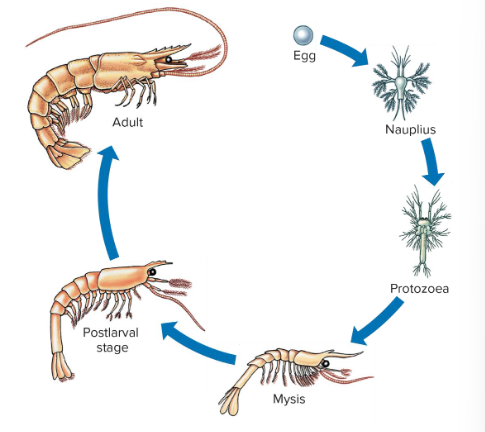
Crustacean larvae
nauplius is the first larva of many crustaceans
larvae drift in the plankton and disperse far from parents
each stage is separated by a molt
female crabs carry their eggs on the swimmerets until they hatch
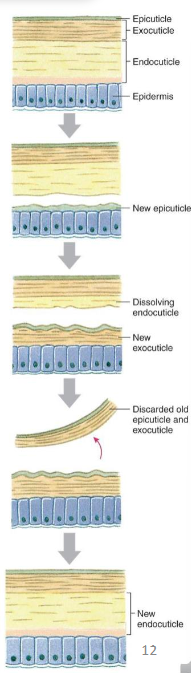
Molting vs. Ecdysis
molting: making cuticle
ecdysis: shedding cuticle
Crustacean molting
break down old cuticle layers and secrete new ones
premolt: old procuticle becomes thinner as inorganic salts are withdrawn and stored in tissues and separates, epidermis secretes new epicuticle
new exocuticle is secreted as molting fluid dissolves the old endocuticle
ecdysis: old epicuticle and exocuticle are discarded
new cuticle is stretched and unfolded as animal swells and fills with water and endocuticle is secreted
Molting is under hormonal control
molt-inhibiting hormone (MIH) keeps molting switch off
ecdysone (molting hormone) switches it on
when MIH drops, ecdysone rises and premolt begins
the new cuticle stays soft for hours to days: soft-shell crabs are caught then
insects use ecdysone too
Molt-inhibiting hormone (MIH) location
made in the X-organ in the eyestalk, released from the sinus gland
Ecdysone location
made by the Y-organs in the adductor muscles of the mandibles
Subphylum Hexapoda
2 classes
class insecta
most diverse and abundant arthropod
estimated 30 million species may exist
ecological, medical and economic importance
Defining traits of Class Insecta
3 tagmata: head, thorax, abdomen
one pair of antennae and 3 pairs of walking legs (uniramous)
wings (0, 1, or 2 pairs)
composed of cuticle
respiratory tracheae
specialized food habits
mandibles
Form and function of Class Insecta
tracheal system
network of thin tubes
main trunks open to outside via spiracles
deliver oxygen directly to cells
in aquatic insects, gas exchange mainly by diffusion
open circulatory system
malpighian tubules for excretion and water balance
well-developed sense organs
photoreceptors - fuzzy vision
hair-like structures called sensilla detect auditory, chemical and mechanical stimuli
complete digestive system
food habits vary widely
herbivores, scavengers, carnivores, parasites, parasitoids
mouth part morphology tend to diet
Reproduction of Class Insecta
separate sexes in most
egg number and parental care vary-internal fertilization
ametabolous (direct development) in some
dramatic metamorphosis
holometabolous (complete)
hemimetabolous (incomplete)
seasonal dormancy called diapause
Two ways to grow up

Insect flight
wings composed of cuticle and attached to the thorax (NOT APPENDAGE)
most with 2 pairs
direct and indirect flight muscles
direct: directly attached to wings. pull wings down
indirect: attached to exoskeleton of thorax elevate the wings. when they pull down, the wings go down
various speeds and migratory distances

Insect societies
complex organization of social groups
rely on many forms of communication (pheromones, sound, tactile, visual)
eusociality
some ants and termites are eusocial
have a reproductive queen, sterile, workers, soldiers, workers - castes (polymorphism)
Eusociality
cooperative brood care, overlapping generations, division of labor (reproductive vs. non-reproductive)