Anatomy Cells Quiz Prep
 Call Kai
 Learn
Learn Practice Test
 Spaced Repetition
 Match
Match Flashcards
 Knowt Play
1/35

There's no tags or description
Looks like no tags are added yet.
Name | Mastery | Learn | Test | Matching | Spaced | Call with Kai | Chat |
|---|
No analytics yet
Send a link to your students to track their progress
36 Terms
Cells
The Smallest living units in the body

Cells
-Obtain nutrients
-Make molecules needed to survive
-Dispose of wastes
-Maintain their shape
-Replicate itself
Organelles
-Subunits of cells with specific functions
-Most cells contain the same basic organelles
Not all cells have all organelles in the same abundance.
Components of cells
-Plasma membrane: outer boundary
-Cytoplasm: contains most organelles
-Nucleus: controls cellular activity
Plasma membrane
-Separates intracellular fluid (inside cells) from extracellular fluid outside and between cells.
-Provides a barrier against substances outside of cells
-Some act as receptors
-Acts as a bodyguard: determines which substances enter or leave the cell.
Structure of Plasma membrane
Includes:
-Fluid mosaic model (lipid bilayer)
Integral proteins- firmly embedded in or attached to the lipid bilayer.
-Short chains of carbohydrates attach to integral proteins and form the glycocalyx.
- Peripheral proteins: attach to the membrane surface.
-Support plasma membrane from the cytoplasmic side.

Simple Diffusion
Tendency of molecules to move down their concentration gradient
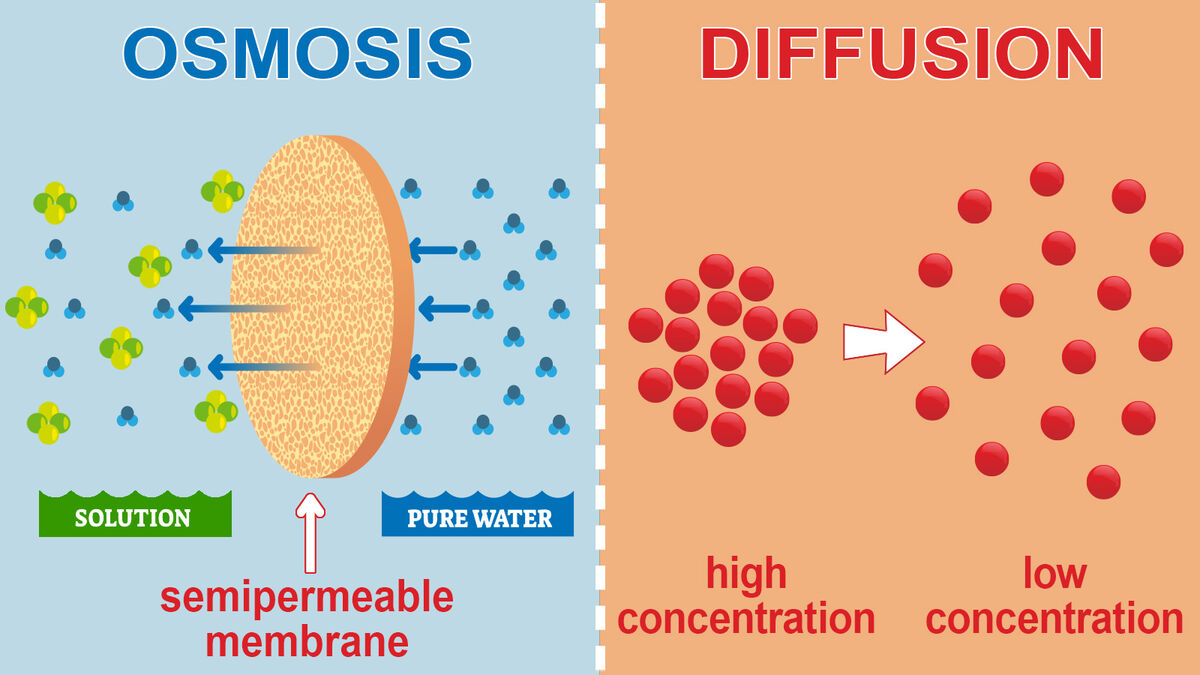
Osmosis
Diffusion of water molecules through a specific channel protein or through a lipid bilayer.

Faciliated diffusion
Movement of molecules down their concentration gradient through an integral protein.

Active transport
Some transport proteins use ATP as an energy source to actively pump substances across plasma membrane against their concentration gradient.
Endocytosis
Mechanism by which particles enter cells.

Phagocytosis
“cell eating”
The cell engulfs a large particle by forming a projecting pseudopod around it. It encloses it with a membranous sac called a phagosome; when it fuses with a lysosome, its contents are digested.

Pinocytosis
“Cell drinking”
The cell “gulps” a drop of extracellular fluid containing solutes into tiny vesicles. No receptors are used, process is nonspecific.

Receptor-Mediated Endocytosis
-Plasma proteins bind to certain molecules
-Becomes a coated pit
-Then pinches off to become a coated vesicle
-Substances may be released inside the cell or digested in a lysosome.

Exocytosis
A mechanism that moves substances out of the cell.
-Substance is enclosed in a vesicle
-Vesicle migrates to the plasma membrane

Cytoplasm
-Lies internal to the plasma membrane
-Consists of cytosol, organelles, and inclusions.
Cytosol
- Jelly-like fluid in which other cellular elements are suspended
-Consists of water, ions, and enzymes.
Ribosomes
-Assembly line of the manufacturing plant
-Site of protein synthesis
-Constructed of proteins and ribosomal RNA, not surrounded by a membrane.
-Assembly of proteins is called translation.
Ribosomes
Attach to the ER
-Make proteins to renew the plasma membrane
-Make proteins that are exported from the cell.
Free ribosomes function within the cytosol.

Endoplasmic reticulum
A system of membrane-walled envelopes and tubes throughout the cytoplasm
-Rough ER: Protein synthesis; produces proteins
-Smooth ER: No protein synthesis; metabolizes lipids and stores Calcium.
Golgi apparatus
Sorts products of the rough ER and sends them to the proper destination.
-Stack of 3-10 disc-shaped cisterns.
-Packing and shipping division of the manufacturing plant.
Mitochondria
Surrounded by a double-walled membrane.
-Powerhouse of the cell
-Generates most of the cell’s energy
-Releases energy stored in chemical bonds and transfers energy to produce ATP.
-In muscle cells.
-Most complex organelle
-Believed to have arisen from bacteria
-Contains some maternally inherited DNA.

Lysosomes
” Demolition crew”
Membrane-walled sacs containing digestive enzymes called acid hydrolases.
Digest unwanted substances, including ingested bacteria, viruses, and worn-out organelles.
Peroxisomes
Membrane-walled sacs of oxidase or catalase enzymes
The oxidase uses oxygen to neutralize free radicals, converting them into toxic hydrogen peroxide.
Catalase converts the hydrogen peroxide to harmless water and oxygen.
Breaks down long chains of fatty acids
Are numerous in the liver and kidneys
“Toxic waste removal system”
Cytoskeleton
“Cell skeleton”, an elaborate network of rods
MIcrofilaments
Intermediate filaments
Microtubules

Mircofilaments
filaments of contractile spherical protein actin

Intermediate filaments
Protein fibers are tough, insoluble, and constructed like woven ropes.

Microtubules
Cylindrical structures made of proteins called tubulin. Hollow tubes.

Centrosome
Involved in the process of cell division
Before cell division, it duplicates
The two parts move to opposite ends of the cell.
Microtubules assemble into a spindle and help separate replicated chromosomes into the daughter cells.
Centriole
Barrel-shaped organelles located in the cytoplasm of animal cells near the nuclear envelope.
Organize the microtubules that serve as the cell’s skeleton system
Helps determine the locations of the nucleus and other organelles of the cell.

Nuclear Envelope
-Two parallel membranes separated by a fluid-filled space.
-The outer membrane is continuous with the rough ER
-The inner membrane is lined by the nuclear lamina, a protein mesh that maintains the shape of the nucleus.
-Penetrated by the nuclear pores
The Nucleolus
“Little nucleus” in the center of the nucleus
-contains parts of several chromosomes
-site of ribosome subunit assembly.
Chromatin
-Formed by DNA plus proteins
-A Complex of DNA, RNA, and proteins that packages and organizes genetic material inside the nucleus in baterial and eukaryotic cells.
Nucleosome
Each cluster of DNA and histone proteins is a nucleosome.
Double helix DNA Subunits
Thymine
Adenine
Cytosine
Guanine
Chromosomes
Highest level of chromatin organization
46 exist in typical human cells
Contains a long molecule of DNA