Chapter 2 Test Study Guide
 Call Kai
 Learn
Learn Practice Test
 Spaced Repetition
 Match
Match Flashcards
 Knowt Play
1/50

Earn XP
Description and Tags
This is all based on the study guide he gave us. I genuinely don't know what he gonna quiz us on. :((((
Name | Mastery | Learn | Test | Matching | Spaced | Call with Kai | Chat |
|---|
No analytics yet
Send a link to your students to track their progress
51 Terms

American democracy was shaped by
English political heritage
Colonial experiments in self-government
Range of intellectual influences

Jamestown
-Started 1607
-First representative assembly (met in church July 30, 1619)
(Birthplace of American Democracy)
-In Virginia

English settlers ideas of government
-Limited Government
-Representative Government
-Individual Rights

Limited Government
Government is not all-powerful

Representative Government
Government should serve the will of the people

Individual Rights
Government should protect individual and property rights

Three Ships that landed on Plymouth Rock
The Susan Constant
The Godspeed
The Discovery

Social Contract
Belief that people agreed to form government to protect their rights.
Author: Jean-Jacques Rousseau

Jean-Jacques Rousseau
French philosopher
Social Contract (1762)

Francois Marie Arouet
Pen Name: Voltaire
Argued for: Civil liberties (freedom of speech and religion)
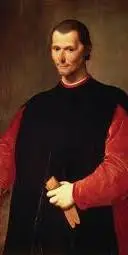
Niccolo Machiavelli
-Wrote Discourse on Livy & The Prince
-Argued a republic survives through Cvic Virtue
-Three levels of society:
Monarch (the one)
Aristocracy (the few)
People (the many)

Civic Virtue
People put good of the republic before their own

William Blackstone
-English legal scholar
-Wrote Blackstone’s Commentaries the Laws of England (1765-69)
-Basis for law in the colonies
-Influenced the writing of the U.S. Constitution.

Judeo-Christian influences
Traditions common to both Judaism and Christianity.
Law & Individual Rights; seen as being of divine origin.
Protestant Reformation ideas: individual responsibility, freedom of worship, and self-government.

Adam Smith
Scottish Economist
-Ideas: Rights to Property, Protect Economic freedom
Wrote: The wealth of nations
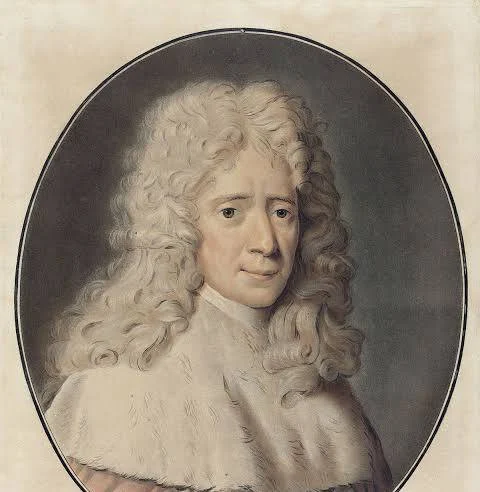
Charles de Montesquieu
-Argued that government power had to be divided
-Legislative, Executive, and Judicial branches
-He called it separation of powers

Republicanism
Representative government ( ideas from ancient Greece and Rome)
Civic Virtue - Put the common good over private interests.
Aristotle - Unrestricted power in a king could lead to tyranny.
(Framers used classical Greek and Roman ideas about government when creating the Constitution)

Olive Branch Petition
-Final appeal to King George III
-Colonists pledged loyalty and asked him to repeal the new measures.
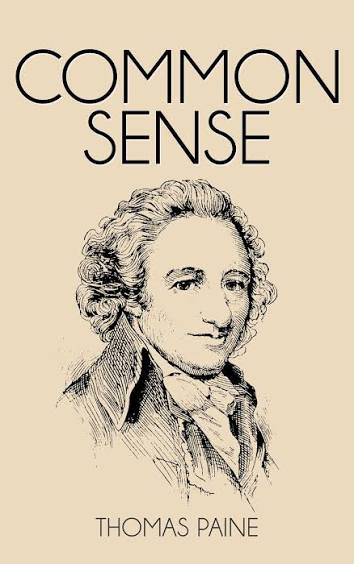
Common Sense
-a 47-page political pamphlet
-Author: Thomas Paine (Immigrant)
Key points:
-We have the power to begin the world all over again
-Monarchy is a bad form of government
-American colonies should be free from England & form own country
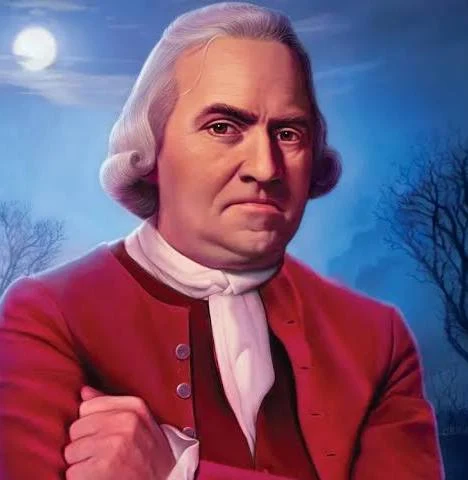
Samuel Adams
-Colonial leader
-Supported independence from Great Britain

Sons of Liberty
-Secret colonial societies that sprang up across the colonies.
- Intimidated the stamp agents collecting Parliament’s taxes
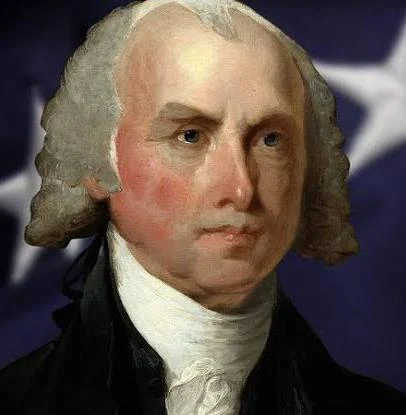
James Madison (Virginia)
-Father of the Constitution
-Led in planning the convention
-Called for a new government

Thomas Jefferson (Virginia)
-Wrote most of the Declaration of Independence

Bill of Rights
First 10 amendments to the Constitution

Albany Plan of Union
-FIrst plan to unite the colonies, proposed by Benjamin Franklin

Iroquois Confederation
-Alliance of six Native American nations (the Mohawk,
(Oneida, Onondaga, Cayuga, Seneca, and Tuscarora)
-Formed in 1570 to end wars
(Resist European takeover)
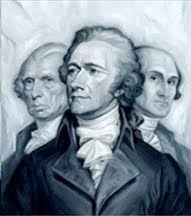
Federalist
-Group of people who supported the Adoption of the Constitution & Strong National Government

Anti-Federalist
Group of people who opposed the adoption of the U.S. Constitution
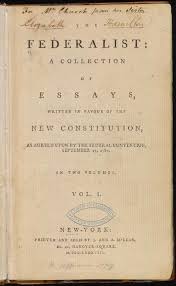
Federalist Papers
-Collection of 85 essays on the principles of government written in defense of the Constitution in 1787 and 1788.

Ratification
Formal approval

Boycott
-Refusal to buy or sell certain products or service

Magna Carta
A document: Introduced trial by juryand due process of law.

Petition of Rights
Limited the king’s powers and declared that monarchs must obey the laws.
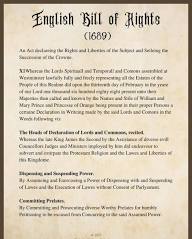
English Bill of Rights
-Limited the monarch’s power
Protected: free speech, fair trials, and freedom from cruel and unusual punishment

Framers
Delegates to the Constitutional Convention are known as the
Framers of the Constitution

Great Compromise
Agreement at Constitutional Convention byRoger Sherman
Combined ideas of Virginia and New Jersey Plans
Bicameral legislature
House: Representation based on population
Senate: Equal representation for each state

Royal colony
Controlled by the king through an appointed governor
Two-house legislature; lower house elected, upper house appointed by the king.
(Delaware, Georgia, Massachusetts, New Hampshire, New Jersey, New York, North and South Carolina, and Virginia were under the control of the Crown.) *You may not need to know this
Proprietary Colony
Based on agrant of land by the English monarch to a proprietor.
Proprietor: Could appoint officials and make laws

Charter Colony
Operated under charters agreed to by the colony and the king
Government : Elected legislature made laws and appointed the governor
(Only Rhode Island and Connecticut remained as Charter Colonies after American Revolution)

Bicameral
Two house legislature

Virginia Plan
Representation based on population
Bicameral (two-house) legislature
Favored large states
More representatives for states with larger populations

New Jersey Plan
Equal representation for each state
Unicameral (one-house) legislature
Favored small states
Each state had one vote in Congress

Unicameral
Single house legislature

Publius
Pen name used by the Federalists
Declaration of Independence
-Declared the colonies independent from Great Britain
-Thomas Jefferson, John Adams, Benjamin Franklin, Roger Sherman, Robert Livingston

Constitutional Convention
Meeting in 1787 to revise the Articles of Confederation.

Articles of Confederation
First U.S. government.
Gave most power to the states
Too weak to last

Weaknesses of the Articles of Confederation
No president — No executive branch to enforce laws.
No national courts — No national court system.
No taxation — No power to tax or raise national funds.
No trade control — No power to regulate trade or currency.
Foreign affairs — Could not prohibit states from conducting foreign affairs.
9 of 13 — Major laws required approval of 9 of 13 states.
(He might ask to list like 2 on test)

Shay’s Rebellion
Revolt led byDaniel Shays to stop farm foreclosures
(Basically farmers couldn’t pay taxes so the government took it)

Who were the authors of the Federalist Papers? How did the Federalist Papers contribute to the ratification debate?
Authors-Alexander Hamilton, James Madison, and John Jay.
Purpose- Defended the Constitution and encouraged ratification.
Impact - Influenced people across the country and the ratification debate.

According to Thomas Paine, why was declaring independence from England “common sense”?
Thomas Paine — Believed monarchy was a bad form of government.
Independence — Colonies should become free from England and form their own country.
(Its common sense for colonies to be governed by themselves and not a king)