medical terms
 Call Kai
 Learn
 Practice Test
 Spaced Repetition
 Match
 Flashcards
 Knowt Play
1/35

There's no tags or description
Looks like no tags are added yet.
36 Terms
What is a high blood pressure
140 and above
Below 90/60 is low
High temp
38 above
35 lower
Average heart rate
60-100
Oxygen saturation
95-100
Low is 90
What is the orange test tubes for blood
Orange= serum separating tube (SST) (renal?). obtains high quality serum sample by preventing cellular contamination
What is the purple test tubes for blood
Purple= red/white cells, platelets, haemoglobin (EDTA)
What is the green test tubes for blood
Green= plasma separator tube (PST) (potassium). Separates plasma from cells
What is the blue test tubes for blood
Sodium heparin tube. To check levels of trace metals, lead and mercury in the blood
What is the red test tubes for blood
Plain test tube. rarely used, only used for a specimen under instruction from the laboratory
What is the grey test tubes for blood
Fluoride oxalate tube
Used for glucose, lactate and alcohol test
What is the light blue test tubes for blood
Sodium citrate tube
The ratio between anticoagulant and blood for physiological examinations is 1:9
For coagulation studies (PT/APTT/d-dimer assays)
What is CBC
blood test that evaluates overall health by measuring different components of blood, including red blood cells (oxygen transport), white blood cells and platelets
done with a syringe
What test are conducted on new admissions
MRSA
Candida
Height
Weight
NOK (next of kin)
ECG
Laying + standing blood pressure
What are pressure ulcers
Localised damage to the skin and underlying tissue caused by prolonged pressure, friction, or shear, typically occurring over bony areas
Usually caused when laying for too long
On hips, heels, elbows, back of the head
What to do if a patient develops pressure ulcers
1) Ask consent for a photo
2) Report to DATX/IV
3) Contact tissue viability nurse
4) Air mattress
5) Regular reposition
6) Apply barrier spray
7) Assess the skin
What are the categories of pressure ulcers
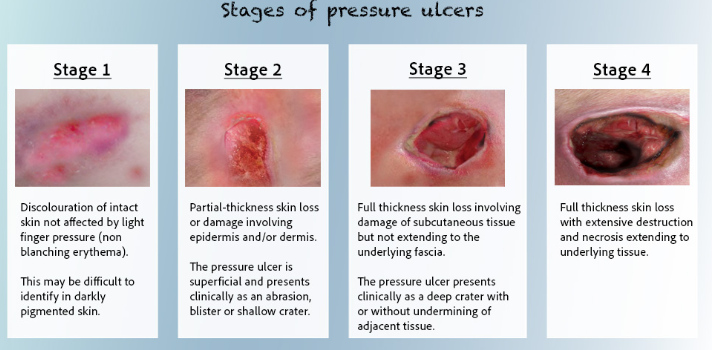
What is the average blood glucose
Non-diabetic= 4.0-5.4
Diabetes= 4-7. more than 9 after eating
AKI
(acute kidney injury)= signs are reduced urine output, fluid retentions causing leg/ankle swelling, shortness of breath, fatigue, nausea, and confusion
VAC
(vacuum-assisted closure)= a type of negative pressure wound therapy (NPWT) used to promote healing in acute and chronic wounds
It involved applying a sealed foam dressing connected to a vacuum pump, which removed fluids, reduces
DOAC
Direct Oral Anticoagulants
Blood-thinning medications to prevent blood clots
SAPT
Single Antiplatelet Therapy
Standard cardiovascular treatment using one medication (e.g. aspirin or clopidogrel) to prevent blood clots and secondary strokes
Duplex
Non-invasive ultrasound to see the structure of blood vessels and measure blood flow speed and direction
Used to detect blockages, narrowing, or clots in arteries and veins
Troponin
This is a protein that is released after heart attacks and could cause heart damage
Should not be in blood in high amounts
Orange ampule used to test for this
D-Dimer
High volume of this protein in the blood shows that there is a blood clot in the body
Old people get blood clots in their legs because of the pressure of standing up, or a lot of lying down
The blood clot can move from the legs to the heart/ lungs/ brain
Lyme disease serology
A 2-step blood test to detect antibodies produced by the immune system in response to infection
PUO
Pyrexia of unknown origin
Nephrotic syndrome
Kidney disorder where damaged glomeruli leak large amounts of protein into the urine
SpA
Causes pain + stiffness in the spine and pelvis
Pulsatile mass
A swelling lump that throbs in time with the heartbeat
ESR
Inflammatory markers to check for infections
AKI
Acute kidney injury (AKI) is a sudden, rapid drop in kidney function that happens over a few hours to seven days, causing waste products to build up in the blood
TO help we give fluids and increase oral intake (hydration)
AKI could cause swelling of lower legs and feeling dizzy
Could be caused by intoxication of the liver (too much paracetamol) and dehydration
Carotid ultrasound
Examine structure and blood flow of neck
CRP
C- Reactive protein= protein produced by the liver that rises in the blood when you have an inflammation
Levels go up quickly within hours of an infection, tissue injury, or surgery
What do you have to do before giving a blood transfusion
Check Hb
If the pt is at risk of taco→ fluid overload in the lungs
Risk factors are things like being over 60 years old, and already having heart/ kidney disease
Aortic dissection
a life-threatening medical emergency where a tear develops in the innermost layer of the aorta
causes severe pain
risk factors are things like high blood pressure
What to do if patient has chest pain
Need to know if its because of the muscle, heart or lungs
If its from the lungs its pleuritic and they feel pain every time they breathe/ chest tightness
Do an ECG to see if its from the heart
If it hurts when they move from side to side it might be from the muscle