SL Organic Chemistry
0.0(0)
Studied by 2 people Call Kai
 Learn
 Practice Test
 Spaced Repetition
 Match
 Flashcards
 Knowt Play
Card Sorting
1/45

Earn XP
Description and Tags
Last updated 10:15 PM on 3/20/23
Name | Mastery | Learn | Test | Matching | Spaced | Call with Kai | Chat |
|---|
No analytics yet
Send a link to your students to track their progress
46 Terms
1
New cards
5 Characteristics of a Homologous Series
a homologous series is a group of organic compounds that:
* contain the same functional group,
* have the same general formula,
* differ by a CH2 group,
* have similar chemical properties,
* show a gradation in physical properties such as boiling point
* contain the same functional group,
* have the same general formula,
* differ by a CH2 group,
* have similar chemical properties,
* show a gradation in physical properties such as boiling point
2
New cards
Isomers
have the same molecular formula but different arrangements of atoms
3
New cards
Functional groups
single atoms or groups of atoms that give organic compounds their characteristic properties
4
New cards
Alkanes
* Homologous series: Alkanes are hydrocarbons with all single bonds (saturated)
* Alkanes are very unreactive, although they do burn and react with halogens (e.g. chlorine).
* General formula: CnH2n+2
* Functional group: alkyl
* Boiling points of alkanes increase with increasing number of carbons (London Dispersion Forces)
* Alkanes are very unreactive, although they do burn and react with halogens (e.g. chlorine).
* General formula: CnH2n+2
* Functional group: alkyl
* Boiling points of alkanes increase with increasing number of carbons (London Dispersion Forces)
5
New cards
Alkane Reactions - Combustion
when a substance reacts with excess oxygen to produce fuel and water, an exothermic reaction. When the reaction is in complete, carbon monoxide and dioxide can be products.
6
New cards
Halogenation Step 1
Initiation

7
New cards
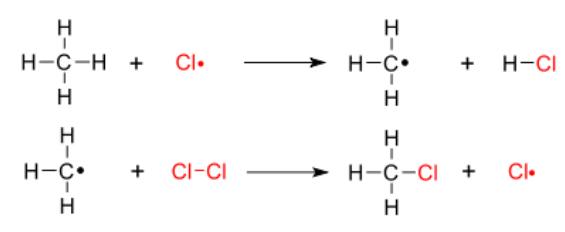
Halogenation Step 2
Propagation
8
New cards
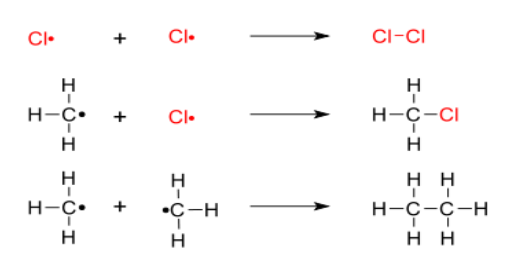
Halogenation Step 3
Termination
9
New cards
Homolytic bond fission
occurs when a bond breaks evenly, with each atom taking one electron from the bond. This results in the formation of radicals, or free-radicals, highly reactive species with unpaired electrons
10
New cards
Alkenes
* Functional group: alkenyl - a double bond
* General formula Cn H2n
* Naming
* -ene at end of root word
* Need to indicate the location of the double bond - the carbon where the double bond starts
* General formula Cn H2n
* Naming
* -ene at end of root word
* Need to indicate the location of the double bond - the carbon where the double bond starts
11
New cards
Alkynes
* Functional group - alkynyl - a triple bond
* Naming
* -yne at end of prefix
* Need to indicate the location of the triple bond
* Naming
* -yne at end of prefix
* Need to indicate the location of the triple bond
12
New cards
Cis/trans isomerism
* Restricted nomenclature form
* Cis - groups are on the same side of the double bond
* Trans - groups are on the opposite side of the double bond
* Cis - groups are on the same side of the double bond
* Trans - groups are on the opposite side of the double bond
13
New cards
5 Main Reactions with Alkenes
* Hydrogenation - Addition of Hydrogen
* Hydration - Addition of Water
* Addition of Halogen - Reaction with Hydrogen Halides
* Addition of Halogen - Reaction with Halogen Gas
* Addition Polymerization
* Hydration - Addition of Water
* Addition of Halogen - Reaction with Hydrogen Halides
* Addition of Halogen - Reaction with Halogen Gas
* Addition Polymerization
14
New cards
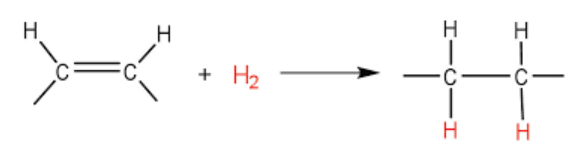
Hydrogenation - Addition of Hydrogen
* Reaction conditions:
* Nickel catalyst
* Hydrogen gas
* High temperature (about 200 °C)
* High pressure
* Activation energy of reaction is slightly higher so gaseous mixture of H2 is passed over a heated Ni catalyst
* Used to make margarine
* Reduces the number of double bonds in polyunsaturated veg oils, which causes it to be a solid at room temp
15
New cards
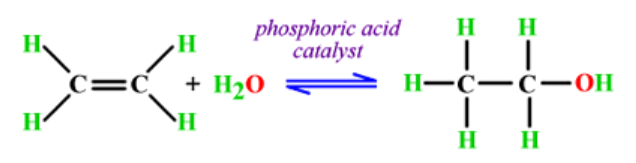
Hydration - Addition of Water
* Reaction conditions:
* Super-heated steam (300°C)
* H3PO4 or H2SO4 is catalyst
* High pressure (60-70 atm)
* Produces an alcohol
* Used as an industrial process for making alcohol
* Water must be in the form of steam
* Super-heated steam (300°C)
* H3PO4 or H2SO4 is catalyst
* High pressure (60-70 atm)
* Produces an alcohol
* Used as an industrial process for making alcohol
* Water must be in the form of steam
16
New cards
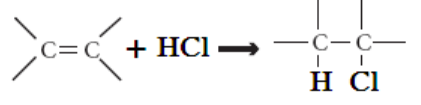
Addition of Halogen - Reaction with Hydrogen Halides
* Reaction conditions
* Spontaneous at room temperature
* Reaction also occurs with HBr and HI
* Monohalogenoalkane formed
* Spontaneous at room temperature
* Reaction also occurs with HBr and HI
* Monohalogenoalkane formed
17
New cards
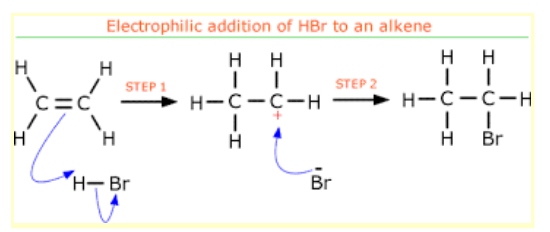
Electrophilic Addition of Halogen - Reaction with Hydrogen Halides Mechanism
18
New cards
Markovnikov’s Rule
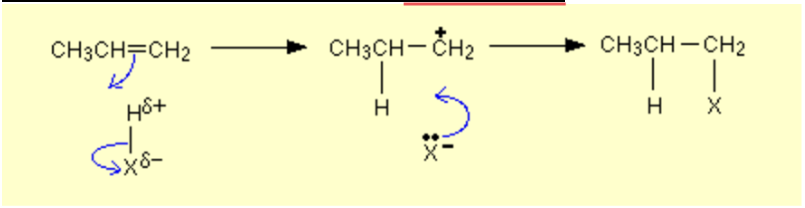
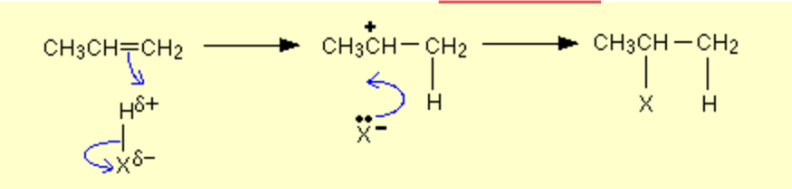
When a compound HX is added to an unsymmetrical alkene, the hydrogen becomes attached to the carbon with the most hydrogens attached to it already
19
New cards
Formation of a Primary Carbocation Mechanism (doesn’t happen)
20
New cards
Formation of a Secondary Carbocation Mechanism (Favoured)
21
New cards
Addition of Halogen - Reaction with Halogen Gas
* Reaction conditions:
* Spontaneous at room temperature.
* Reaction also occurs with Cl2 and I2
* Dihalogenoalkane formed because halogens exist as diatomic in their gaseous form
* Spontaneous at room temperature.
* Reaction also occurs with Cl2 and I2
* Dihalogenoalkane formed because halogens exist as diatomic in their gaseous form
22
New cards
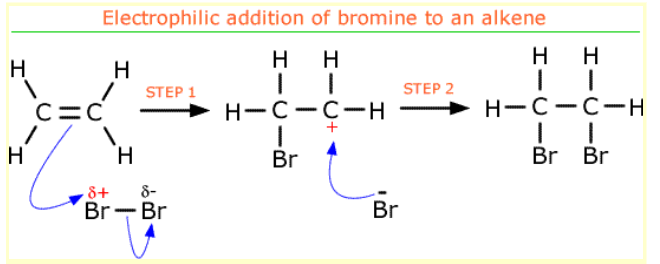
Electrophilic Addition of Halogen Gas to Alkene Mechanism
23
New cards
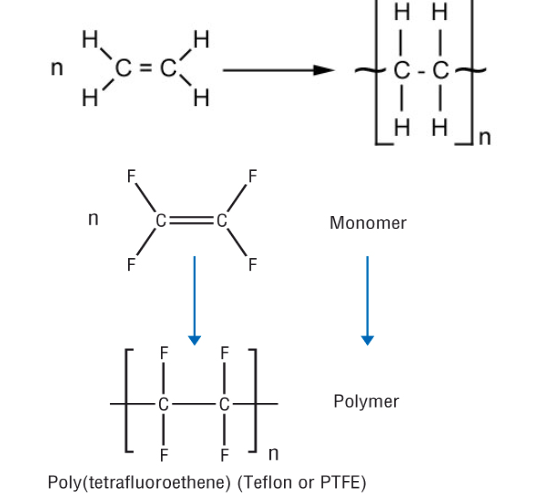
Addition Polymerization + Mechanism
24
New cards
GO BACK TO WORKSHEET "3
here
25
New cards
Ketones
* Functional group: carbonyl
* Naming
* Put an -anone on the end
* For chains with four or more carbons, need to indicate the location by putting the number of the carbon it is attached to (x): “-an-x-one”
* Made from oxidation of secondary alcohols
* Naming
* Put an -anone on the end
* For chains with four or more carbons, need to indicate the location by putting the number of the carbon it is attached to (x): “-an-x-one”
* Made from oxidation of secondary alcohols
26
New cards
Reaction with Ketones: Reduction to form secondary alcohol
* Need a reducing agent
* Can either use LiAlH4 or NaBH4
* Can either use LiAlH4 or NaBH4
27
New cards
Carboxylic Acids
* Functional group: carboxyl group
* Naming
* Ends in “-anoic acid”
* Since the functional group is always on the end, no need for numbers for the functional group - it’s carbon is always #1
* Formed by complete (under reflux) oxidation of primary alcohol
* Naming
* Ends in “-anoic acid”
* Since the functional group is always on the end, no need for numbers for the functional group - it’s carbon is always #1
* Formed by complete (under reflux) oxidation of primary alcohol
28
New cards
Reaction with Carboxylic Acid: Reduction of carboxylic acids to form primary alcohols
* Need a reducing agent
* Can only use LiAlH4
* Can only use LiAlH4
29
New cards
Aldehydes
* Functional group: carbonyl group
* Naming
* Ends in “-anal”
* Since the functional group is always on the end, no need for numbers for the functional group - it’s carbon is always #1
* Formed by oxidation of primary alcohol under distillation
* Naming
* Ends in “-anal”
* Since the functional group is always on the end, no need for numbers for the functional group - it’s carbon is always #1
* Formed by oxidation of primary alcohol under distillation
30
New cards
Reaction with Aldehyde: Reduction of Aldehyde to form Primary Alcohol
Reduction of an aldehyde
* Need a reducing agent
* Can either use LiAlH4 or NaBH4
* Need a reducing agent
* Can either use LiAlH4 or NaBH4
31
New cards
Alcohols
* Functional group: hydroxyl -OH
* Have the general formula CnH2n+1OH
* Naming
* Add -anol to the root
* If the hydroxyl group can be located at multiple points (when there are three or more carbons), indicate the location by putting the number of the carbon before the -ol
* Can be primary, secondary or tertiary
* Have the general formula CnH2n+1OH
* Naming
* Add -anol to the root
* If the hydroxyl group can be located at multiple points (when there are three or more carbons), indicate the location by putting the number of the carbon before the -ol
* Can be primary, secondary or tertiary
32
New cards
Processes to produce Alcohols
1. Fermentation
2. Hydration of ethene
3. Nucleophilic substitution of halogenoalkanes
33
New cards
Reactions of alcohols
1. Dehydration of alcohol
2. Combustion of alcohols
3. Oxidation of alcohols
34
New cards
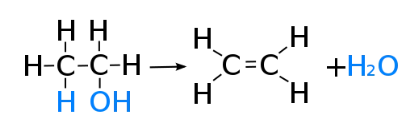
Dehydration of alcohol
* Reaction conditions:
* H3PO4 or Al2O3 is catalyst
* High Temperature
* Atmospheric Pressure
* H3PO4 or Al2O3 is catalyst
* High Temperature
* Atmospheric Pressure
35
New cards
Oxidation of Primary Alcohols
* There are two stages
* Oxidation of alcohol to an aldehyde
* distillation
* Oxidation of the aldehyde to a carboxylic acid
* heating under reflux
* Oxidation of alcohol to an aldehyde
* distillation
* Oxidation of the aldehyde to a carboxylic acid
* heating under reflux
36
New cards
Esters
* Functional group: ester
* Naming
* Name is broken into two parts
* Alcohol part has “-yl” on the end of the root and is placed at the beginning of the name
* Acid part has “-anoate” on the end of the root
* For the acid part, need to determine the root by including the carbon that is double-bonded to the oxygen
* Naming
* Name is broken into two parts
* Alcohol part has “-yl” on the end of the root and is placed at the beginning of the name
* Acid part has “-anoate” on the end of the root
* For the acid part, need to determine the root by including the carbon that is double-bonded to the oxygen
37
New cards
Formation of esters - Condensation/Esterification

38
New cards
Reactions with benzene
1. Substitution with halogens
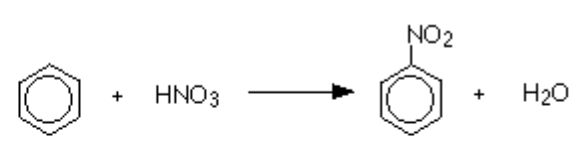
2. Electrophilic substitution with nitric acid to produce nitrobenzene
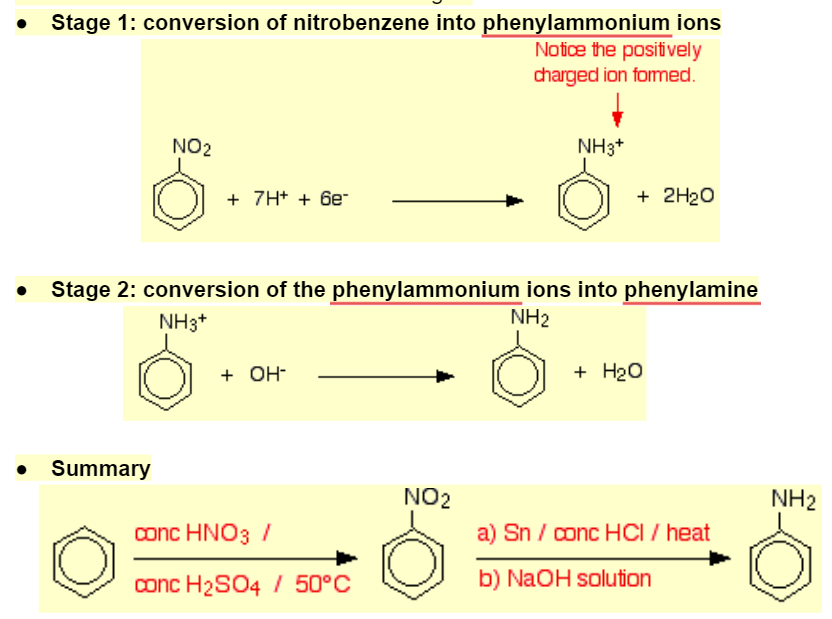
3. Reduction of nitrobenzene to phenylamine
39
New cards
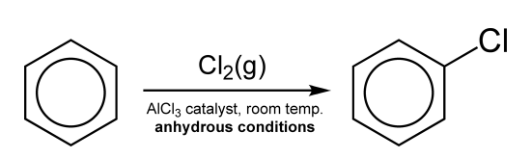
Substitution with halogens (Reactions with benzene)
* Reaction conditions
* AlCl3 catalyst
* Room temperature
* anhydrous conditions
* AlCl3 catalyst
* Room temperature
* anhydrous conditions
40
New cards
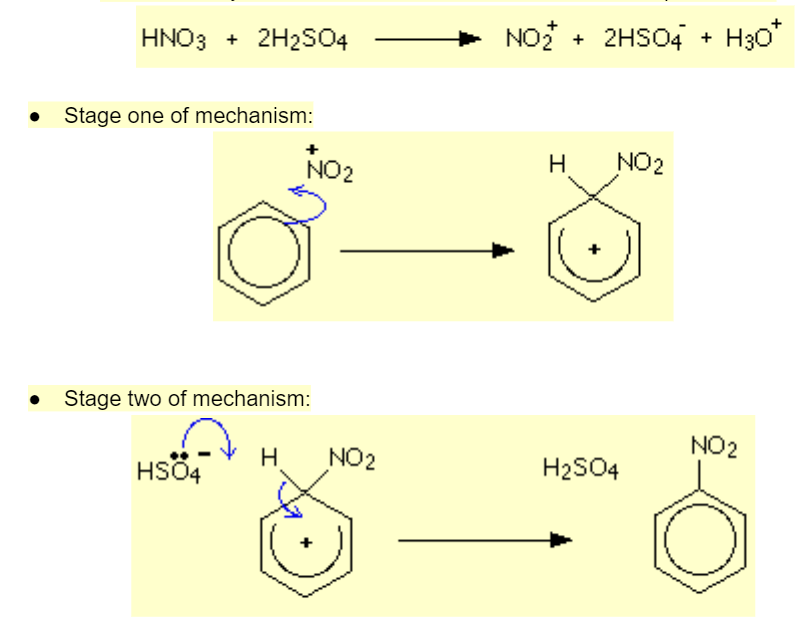
Electrophilic substitution with nitric acid to produce nitrobenzene (Reactions with benzene)
* Reaction conditions
* Low temp - maximum 50oC
* Concentrated sulfuric acid as catalyst
* Low temp - maximum 50oC
* Concentrated sulfuric acid as catalyst
41
New cards
Electrophilic substitution with nitric acid to produce nitrobenzene Mechanism (Reactions with benzene)
42
New cards
Reduction of nitrobenzene to phenylamine Mechanism (Reactions with benzene)
43
New cards
Amines
* Functional group: amine
* Naming
* If group position does not have to be indicated - put “amine” on the end of the root
* If group position needs to be indicated - put the carbon number-amino (“2-amino”) and then the root
* Naming
* If group position does not have to be indicated - put “amine” on the end of the root
* If group position needs to be indicated - put the carbon number-amino (“2-amino”) and then the root
44
New cards
Carboxamides
* Functional group: carboxamide
* Naming
* Put “-anamide” on the root
* No need to number because it is on the end
* Don’t forget to count the carbon attached to the nitrogen when determining the root
* Naming
* Put “-anamide” on the root
* No need to number because it is on the end
* Don’t forget to count the carbon attached to the nitrogen when determining the root
45
New cards
Nitriles
* Functional group: nitrile
* Naming
* Put “-nitrile” after the alkane name
* Naming
* Put “-nitrile” after the alkane name
46
New cards
Ethers
* Functional group: ether
* Naming
* Two parts to the name
* First part - the longer chain
* Determine which is the longest main chain and count carbons
* That part is named the same as the alkane name
* Second part - the shorter chain
* Determine shorter chain and count carbons
* That part gets just the root word + “oxy”
* Combine them: root from shorter part-oxy-alkane name from longer part