hydrotherapy , EMG biofeedback , vibration, BFR
 Call Kai
 Learn
Learn Practice Test
 Spaced Repetition
 Match
Match Flashcards
 Knowt Play
1/61

There's no tags or description
Looks like no tags are added yet.
Name | Mastery | Learn | Test | Matching | Spaced | Call with Kai | Chat |
|---|
No analytics yet
Send a link to your students to track their progress
62 Terms
physical properties of water
- solvent
- resistance
- hydrostatic pressure
- buoyancy
- specific heat and thermal conductivity
contraindications BAM A MINI PIG
- bleeding surface area
- acute inflammation
- maceration around wound
- advanced cardiac/pulmonary disease
- malignancies
- impaired sensation or mentation
- nephritis (renal infection)
- incontinence (bowel/bladder)
- poor thermal regulation (MS)
- impaired circulation (PVD, Buerger's)
- gangrene
precautions ICE CIGARS
- infection in area immersed
- cardiac insufficiency
- existing edema
- contamination of wound
- impaired thermal sensation
- general heat/cold temp difficulties
- age extremes (old and infant)
- recent skin grafts
- seasick (if anxious or over warm)
solvent
- can dissolve many chemical compounds without reacting with them
- water running over a body or through wound --> remove contaminants or necrotic tissue
resistance
- viscosity: resistance to flow of liquid, caused by friction between molecules of liquid
- water provides resistance relative to direction of motion of water and body
- increases proportionally to speed of motion and amount of body contact with water
- fairly safe and effective as strength and conditioning medium
hydrostatic pressure
- pressure exerted by a fluid on a body immersed in it
pascal's law:
a fluid exerts equal and inward pressure on all surfaces of a body at rest in proportion to the depth of the body in the fluid
- depth and position of body in water --> variations in benefits
buoyancy
- force experienced as an upward thrust on body in opposite direction of gravity
- archimedes principle
- can unload weight-bearing structures
specific heat and thermal conductivity
- water transfers heat by conduction and convection
- stationary water --> conduction
- moving water --> convection (superficial heating or cooling agent)
- water has a high specific heat and thermal conductivity
- water retains 4x thermal energy compared to air
- why moist hot packs = better at transferring heat
biofeedback
provides information to user about physiological or biomechanical processes to improve self-awareness and control
biofeedback considerations
- informs user about physiological or biomechanical processes
- direct biofeedback (ex heart rate monitor)
- transformed biofeedback (ex EMG)
informs user about physiological or biomechanical processes
- intention to act upon the data
- active process
- no energy transfer to target area
direct biofeedback
accurate external information reflective of internal biological processes
transformed biofeedback
external processed information reflective of internal biological processes
EMG biofeedback
provides information about electrical activity occurring in muscle tissue
surface EMG biofeedback
- uses electrodes on surface of the skin to detect underlying intrinsic electrical activity of muscle tissue
- myoelectric (ionic) activity
- converts this to extrinsic auditory, visual, or haptic signal that is fed back to user
surface EMG biofeedback device
- usually 3 silver chloride electrodes
- 2 active electrodes --> detect changes in myoelectric activity
- 1 reference electrode
- some manufacturers produce single electrode that incorporates all 3
- is not a direct measure of muscle contractility, tension or strength
- represents ionic activity of underlying muscle tissue
surface EMG biofeedback cont
- ionic muscle activity measured in microvolts
- settings range from 1 to 2000 microvolts
- gain setting determines device's sensitivity/ability to reflect ionic muscle activity
surface EMG signal processing
- EMG signal --> raw ---> amplified --> rectified --> smoothed --> processed signal fed back to user
gain
- determines the sensitivity of an EMG unit detecting the electrical activity of muscle
- higher gain setting = more sensitive and able to detect lower levels of electrical activity
peak amplitude
highest EMG activity recorded during muscle contraction
contraction latency
time it takes to reach peak amplitude ~0.5 sec
return latency
time from the command to stop a muscle contraction to the point when the myoelectrical activity return to resting or baseline levels ~ 1 sec
hold capacity
- user's ability to sustain a muscle contraction or muscle endurance
- time during which consistent EMG amplitude is produced
inter contraction baseline
level of myoelectrical activity between muscle contractions (rest period)
threshold
goal level of myoelectrical activity set by the clinician
physiological effects of EMG biofeedback
- provides myoelectrical activity feedback to use for activity modification/training
- primary neurophysiological mechanisms
primary neurophysiological mechanisms
- neuromuscular facilitation
- neuromusclar inhibition
- neuromuscular coordination
neuromuscular facilitation 2 primary mechanisms
- reduced inhibition of descending motor (excitatory) signals
- increased excitation of cerebromotor cortex
neuromuscular facilitation
- normal muscle function can be inhibited due to pain and swelling after injury and surgery
- arthorogenic muscle inhibition (AMI)
- protective, but can lead to muscle atrophy, weakness, and long term disability
- reduction of AMI --> improved muscle ability to produce force --> increased MVIC
neuromuscular inhibition
- patient/user reduces motor input to the muscle
- intent of inhibition
patient/user reduces motor input to the muscle
- decreased tone
- activation of fewer or smaller motor units
- less frequent depolarization per unit time
- combination of above
intent of inhibition
- increase afferent inhibition of aberrant efferent signals or decrease the excitability of the motor cortex
- relaxation techniques, posture, decrease tone
neuromuscular coordination
- improves timing and recruitment of muscle activity
- emphasis on correct timing and intensity of motor unit firing for a given task
- used with: athletes, musicians, patients with central or peripheral neurological injury
common clinical indications
- hemiplegia
- quadriceps strengthening
- headache
- pelvic floor disorders (Stress incontinence)
- chronic pain conditions
- TMD (temporomandibular disorders)
clinical indication: foot drop
- primary targeted muscle: anteiror tibialis, gastroc
- neurophysiological effect: facilitate, inhibit
- goals: improve gait
clinical indication: shoulder hemiparesis
- primary targeted muscle: upper traps, anterior deltoid
- neurophysiological effect: facilitate, facilitate
- goals: reduce shoulder subluxation
clinical indication: hand hemiparesis
- primary targeted muscle: wrist/finger flexors, extensors
- neurophysiological effect: inhibit, facilitate
- goals: improve grasp
contraindications/precautions APB
- acute inflammatory conditions
- pregnancy
- bladder or vaginal infection
adverse effects
- skin reaction to electrodes
- responses to cardiovascular and strengthening exercises
- over exertion of targeted musculature
responses to cardiovascular and strengthening exercises
- dyspnea
- fatigue
- angina
- other cardiac-related symptoms
- DOMS
application technique and parameters
- ensure clean, sterile skin/surface
- determine appropriate electrode location
- secure with tape if necessary
- turn unit on
- establish baseline resting muscle activity (1-3 minutes) and record
- establish peak amplitude by performing MVIC
- set threshold at or above peak amplitude
- assess outcome
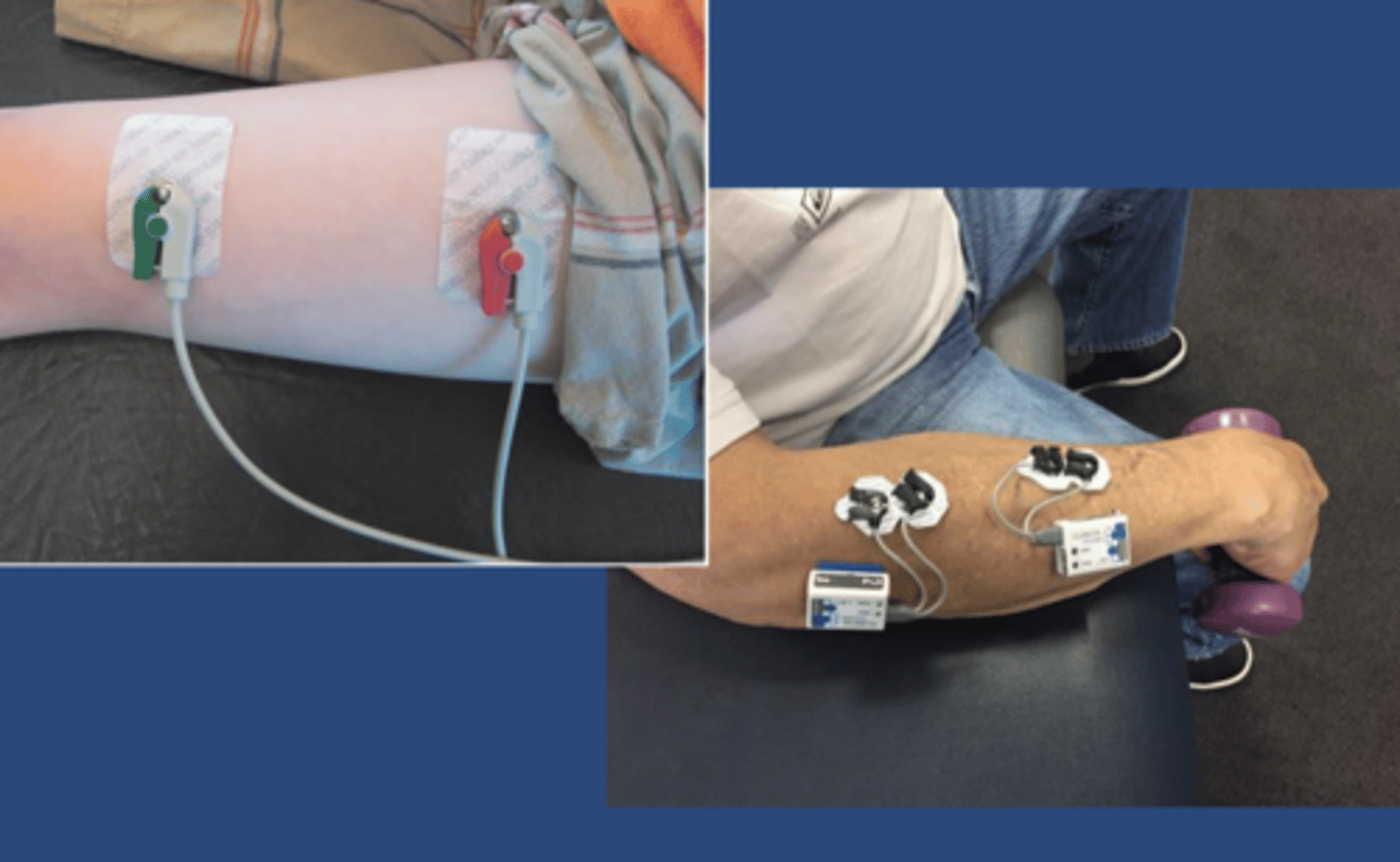
sensor, lead wire, electrode placement
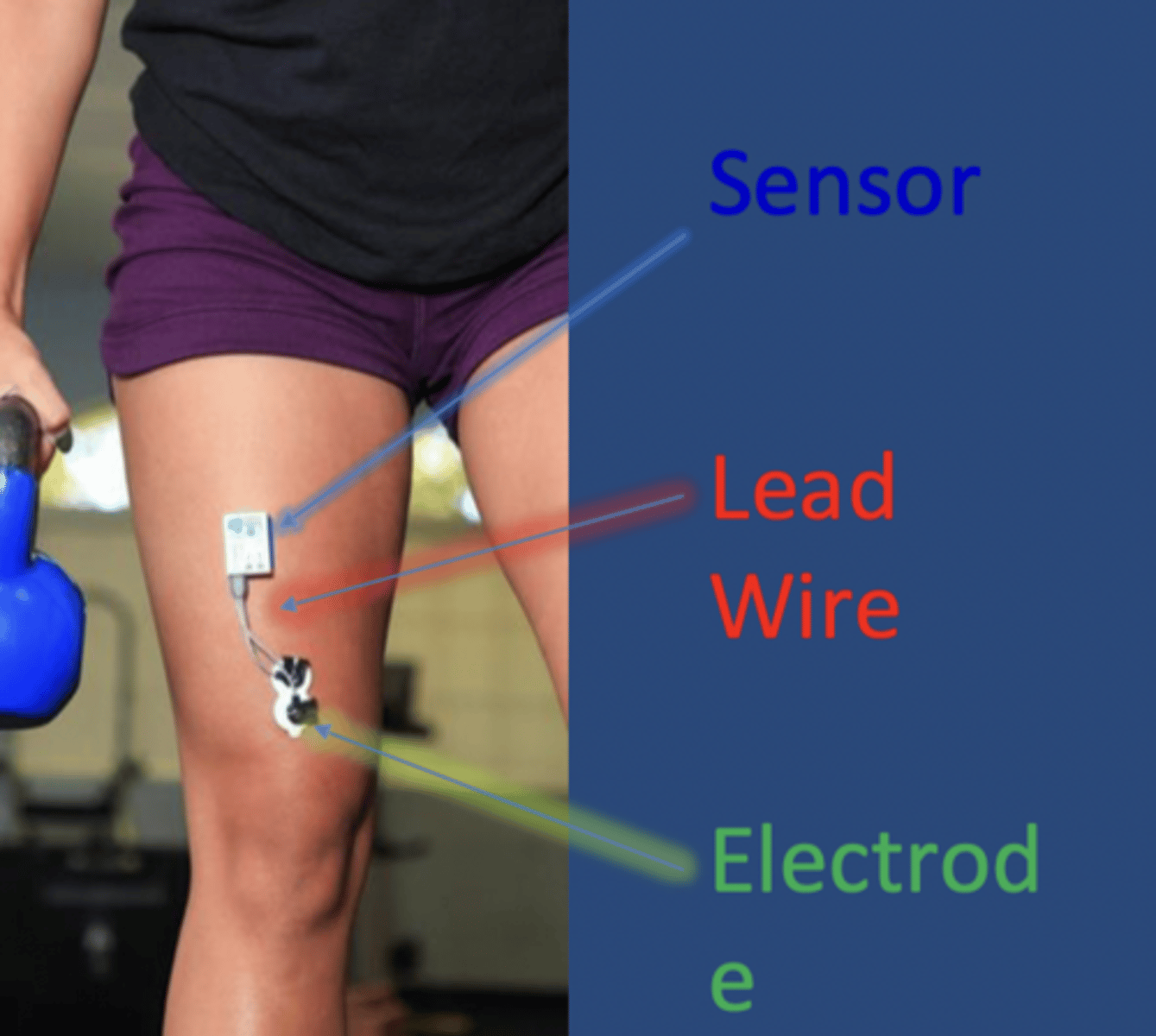
electrode placement in parallel with muscle fibers
documentation
- area of treatment
- electrode placement
- threshold level, baseline, and peak amplitude
- latency and treatment duration
- exercise parameters
- patient position
- response to treatment
evidence for vibration therapy 1
- no effect on athletic performance
- can increase peripheral blood flow
- can improve function in those with knee OA
evidence for vibration therapy 2
- can assist with increasing knee extension strength and jumping
- has been shown to produce bone mineral density changes
- can increase leg muscle performance in untrained and elderly women
BFR definition
- blood flow restriction exercise is the brief and intermittent application of a restrictive cuff to the proximal portion of an exercising limb, to fully occlude venous outflow while reducing arterial inflow
BFR accelerates
fatigue with low intensity tasks leading to increase in muscle size, muscle strength, and muscle endurance over time
80's leg positive pressure device
- development of a cycle-ergometer encased in a chamber that allowed for cycling under what the researchers called ischemic conditions
- limitation of blood flow into working muscles accelerates fatigue
metabolite theory
- moritani et al 1994 demonstrates that there is a marked increase in lactate in the BFR condition as well as a large increase in muscle activation
- neither was observed in the control condition
recommendation that hypertrophy requires a load of __ might as well be recast as a recommendation that the training must result in substantial anaerobic metabolism
>70% of 1 RM
limb occlusion pressure (LOP)
- pressure settings should be based on LOP
- occlusion can be achieved during a lower pressure when using a LOP method in conjunction with a wide tourniquet cuff in adult patients
lower and more tolerable pressures may elicit sufficient musculoskeletal adaptations while minimizing the risk of
adverse events and pain, highlighting need for individualized prescription of clinical BFR training
passive BFR
- tourniquet does the owrk
- 5' on 3-5' off
- 3-5 bouts
- 1-2 times a day
- 70-100% LOP
aerobic exercise BFR
- intensity: <50% VO2max or HRR
- pressure: 40-80% LOP
- duration: 5-20 min
- total work: 15-20 min
- intervals or steady state
resistance exercise BFR
- load: 20-40% of 1 RM
- pressure: 40-80% LOP
- sets/reps: 30/15/15/15
- rest: 30 s
- pace: 1-2' con/ecc
- frequency: 2-3 times a week
momentary muscular failure
unable to complete another rep with the correct technique
reps in reserve
estimation by patient of how many more reps they could have completed
- no more than 2 or 3
- 30/15/15/15
- all 75 reps completes 2 visits in a row
do tourniquets cause clots?
despite the risk of postoperative DVT, use of a pneumatic tourniquet does not appear to be an independent risk factor
absolute contraindications
- unstable and/or severe hypertension
- sickle cell anemia
- DVT
- IV drug use in the limb for BFR
- lymphedema
relative contraindications
- active cancer
- compromised vascular compromise
- limb of lymphectomy