A & P TEST 1 | integumentary system
 Call Kai
 Learn
 Practice Test
 Spaced Repetition
 Match
 Flashcards
 Knowt Play
1/73

There's no tags or description
Looks like no tags are added yet.
74 Terms
skin (cutaneous membrane)
largest organ in the body
epidermis
thin, superficial
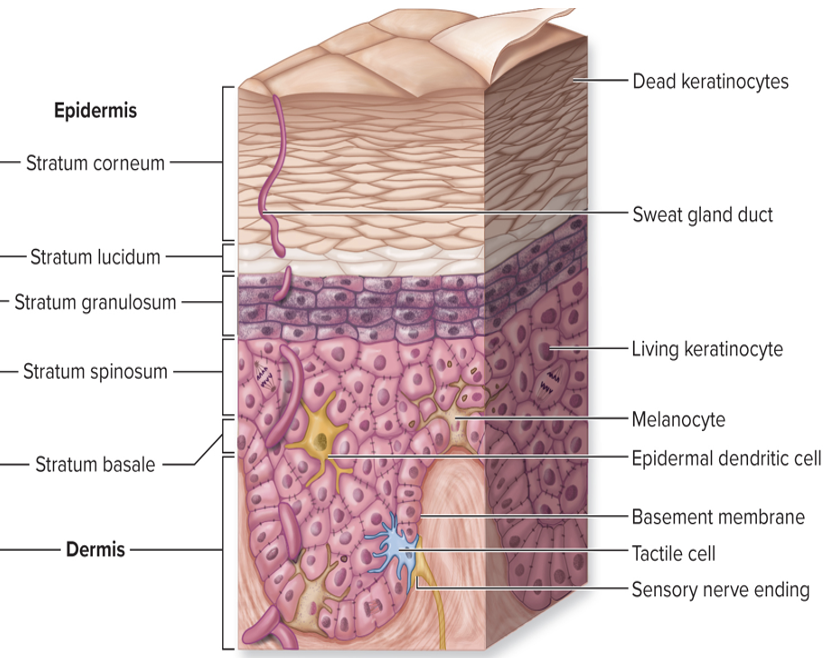
dermis
thicker, deep

skin rests on ____(subcutaneous layer) that stores fat and has large blood vessels
hypodermis

stratum basale (basal layer)
deepest layer
attached to dermis by hemidesmosome
1 row of stem cells
melanocytes (10-25% of the layer)
stratum basale mitosis (2 cells)
one stays a stem cell
one becomes a keratinocyte

stratum spinosum (prickly layer)
8-10 rows of irregular/spiny cells
keratinocytes do not divide, joined by desmosomes
cells contain web-like pre-keratin system
cells contain melanosomes
dendritic cells are present
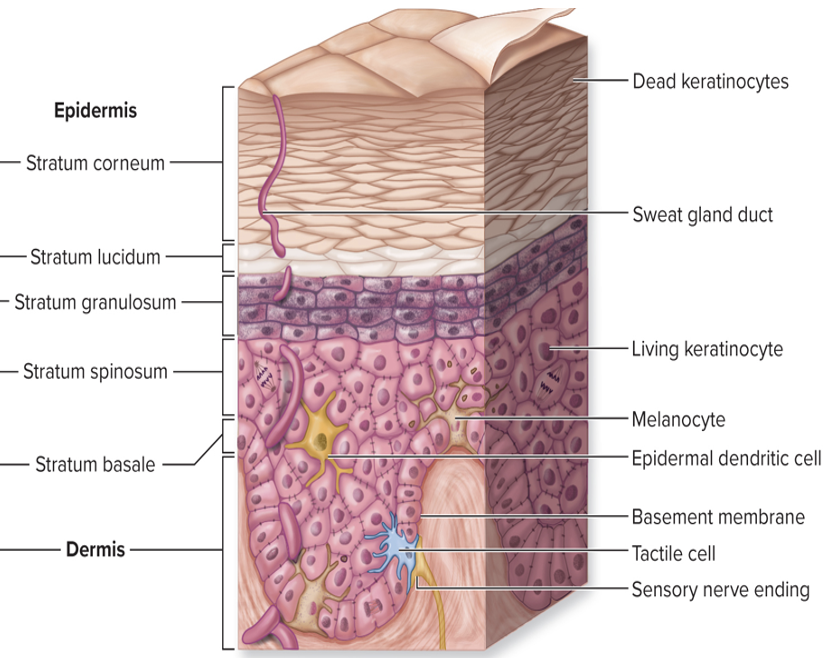
stratum granulosum (granular layer)
thin layer: 3-5 rows of cells
keratinocytes change drastically
accumulate water-resistant glycolipids
what drastic change in appearance happens in the stratum granulosum?
become flat
nuclei and organelles deteriorate
keratinization begins
glycolipid
slows water loss

stratum lucidum (clear layer)
only in thick skin: palms and soles
thin clear layer above statum granulosum
few rows of flat, clear, dead keratinocytes
provides extra protection
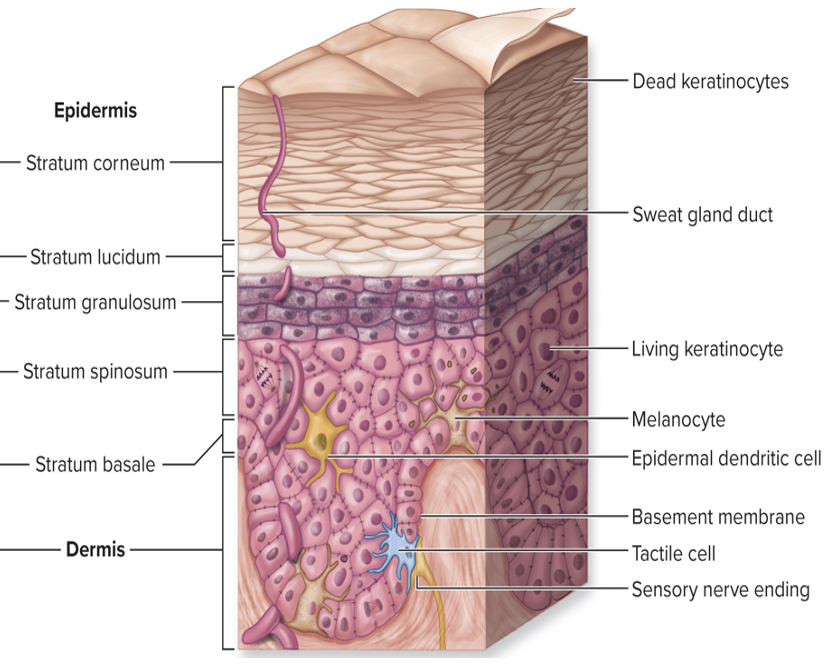
stratum corneum
20-30 rows of dead, flat, anucleate keratinized cells
cells at surface are sloughed
dead cells still provide a protective barrier

cells of epidermis
keratinocyte
melanocyte
intraepidermal (langerhans) macrophage
tacticle epithelial (merkel) cell

keratinocytes
numerous, arranged strata
produce protective keratin protein and lamellar granules that release waterproofing substance
connected by desmosomes
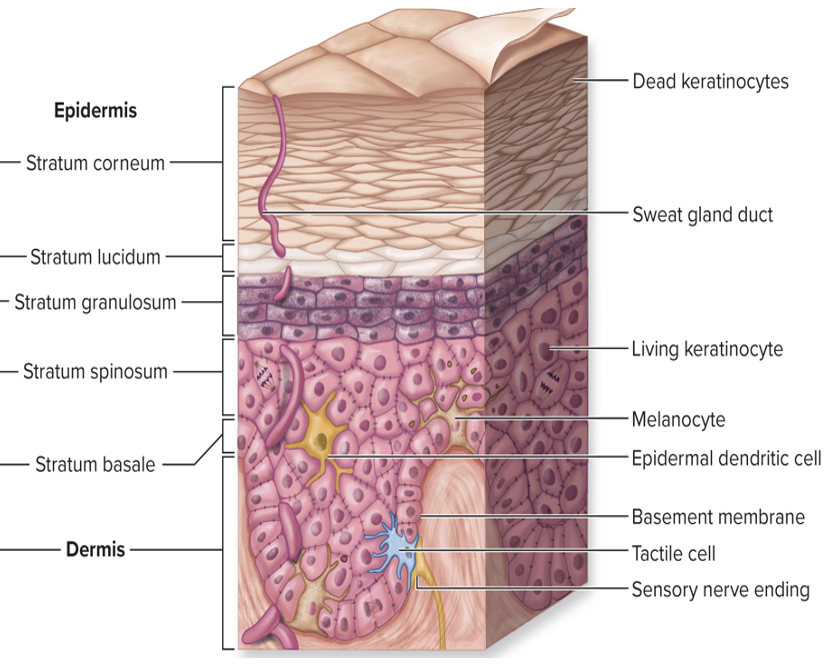
melanocytes
produce pigment melanin for protection from UV light

langerhans cells (dendritic)
immune response (phagocytosis)

tactile epithelial / merkel cells
function with merkel disc of dermis for touch

A
epidermis
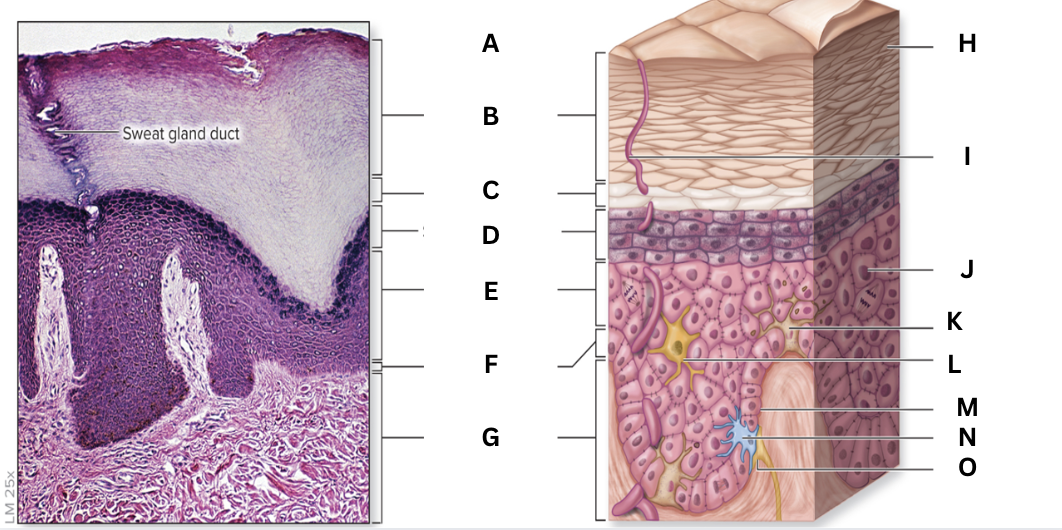
B
stratum corneum

C
stratum lucidum

D
stratum granulosum

E
stratum spinosum

F
stratum basale

G
dermis

H
dead keratinocytes

I
sweat gland duct

J
living keratinocyte

K
melanocyte

L
epidermal dendritic cell

M
basement membrane

N
tactile cell

O
sensory nerve ending
eumelanin
brown/black color
pheomelanin
yellow/tan color
carotene
source of yellow-orange pigment
hemoglobin
oxygen carrying red pigment in blood
visible through skin in dermal blood vessels
oxygen level + dilation/constriction can change color
nevus (mole)
local overgrowth of melanocytes
freckles
yellowish or brown spots
local area of increased melanocyte acitvity
hemangiomas
skin discoloration due to benign blood vessel tumor
ex: capillary and cavernous hemangiomas
friction ridges
large folds and valleys of dermis and epidermis
responsible for fingerprints
dermis components
papillary components
reticular components
papillary components
meissner corpuscles
capillary loops (blood capillaries)
free nerve endings (temperature, pain, itching)
reticular components
fibroblasts, adipocytes, and macrophages
blood vessels + nerves (smooth muscle)
hair follicles + glands
lots of collagen (reticular formation)
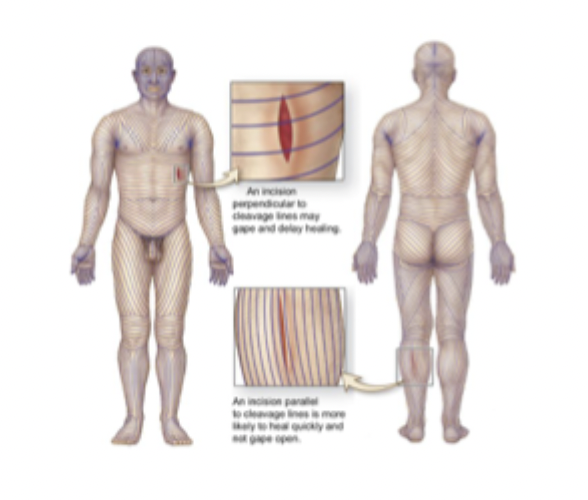
lines of cleavage
bundles of collagen and elastic fibers in parallel bundles (heal more quickly)

derivatives of the skin (appendages)
derived from epidermis
located in the dermis
include cutaneous glands, sweat glands, oil glands, hair follicles, nails
3 types of glands of the skin
eccrine
apocrine
sebaceous
2 main types of sweat glands
eccrine (merocrine)
apocrine

eccrine sweat glands
widely distributed
abundant on palms, soles, and forehead
duct transports sweat to skin surface through a pore
poorly functional before age 2
true sweat
secretion (true sweat)
99% water, salt, vitamin c, antibodies, dermicidin and metabolic wastes
pH 4-6
primary function of eccrine sweat glands
thermoregulation
secondary functions of eccrine sweat glands
excretion of wastes, protection from microbes

apocrine sweat glands
found in axillary and pubic regions
larger than eccrine glands
duct transport sweat into a hair follicle
start working at puberty
secretion: sweat + fatty substances + protein
modified apocrine sweat gland
ceruminous glands
mammary glands
ceruminous glands
only found in ear canal
secrete cerumen (earwax)

mammary glands
located in breasts
secrete milk
found in males + females
functional in pregnant and lactating females
apocrine secretion

sebaceous (oil) glands
found everywhere EXCEPT palms + soles
holocrine secretion (entire cell ruptures)
inactive until puberty
secretes sebum
thick skin
only on palms, soles, and palmar portion of fingers and toes
thin skin
everywhere else
functions of integumentary sytem
protection
body temp regulation
cutaneous sensations
metabolic functions
blood reservoir
excretion
physical barriers
dead keratinized cells + lipids
protects from abrasion
1st line of defense against pathogens
prevents dehydration
keratin + glycolipids block water + water soluble substances
limited penetration (selectively permeable)
what can penetrate skin
lipid soluble substances
plant oleoresins
organic solvents
salts of heavy metals
some drugs
chemical barriers
skin secretions
melanin
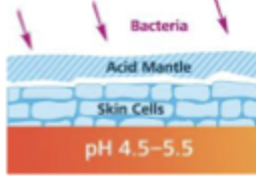
skin secretions
called acid mantle
low pH slows bacterial mitosis
sebum, dermicidin and defensins kill bacteria

melanin
defense against UV radiation damage, protects DNA
biological barriers
dendritic cells of epidermis
macrophages of dermis
white blood cells patrol skin tissue

dendritic cells of epidermis
present for eign antigens to cells of adaptive immune system
macrophages of dermis
hunt and phagocytize foreign material
cutaneous sensations
contains nerve endings and receptors that detect stimuli
detect temperature, touch and pain
blood reservoir and excretion
up to 5% of blood can be stored in dermal capillaries
if organs need more oxygen due to blood loss, capilaries vaconstrict
sends blood to core of the body
causes pallor (pale skin)
deep wound healing (4 phases)
inflammatory
migratory
proliferative
maturation
proliferative phase
continued growth and repair
maturation phase
scab sloughs off, fibrosis can form scar

rule of nines
used to estimate the surface area of an adult affected by a burn

pressure ulcers (bed sores)
lack of blood flow to tissues can cause
causes epithelium to shed
risk increases with age