Art History Week 3 (no week 2)
 Call Kai
 Learn
Learn Practice Test
 Spaced Repetition
 Match
Match Flashcards
 Knowt Play
1/24

There's no tags or description
Looks like no tags are added yet.
Name | Mastery | Learn | Test | Matching | Spaced | Call with Kai | Chat |
|---|
No analytics yet
Send a link to your students to track their progress
25 Terms

The Great Pyramids of Giza
2600-2500 BCE
Old kingdom, 4th dynasty, Egypt

Great Pyramids of Giza DESC
architect is Imhotep
monumental tombs for pharaohs Khufu, Khafre, and Menkaure
used as spiritual getaways

Book of the dead for the chantress of anun, nauny
1050 BCE
paint and papyrus
third intermediate period, Egypt

Book of the dead for the chantress of anun, nauny DESC
found in a private tomb for Osiris
used during mummification process
designed to be with the dead and guide them to the underworld

The weighing of the heart
in ‘Book of the dead’
illustrates the final judgment of someones soul to get to the underworld
if the heart is lighter than a feather, they can get in, because they are ‘pure’ and well-intentioned good people

Yazilikaya
13th century BCE
Hittite empire, near Hattusa, Turkey

Yazilikaya DESC
inscribed rock with low relief carvings everywhere
displays a grand ceremonial process, religious
chamber B conveys hierarchy of scale

Terracotta Hydria
Attributed to the group of B.M.F. 308
340-330 BCE
Apulia, italy

Terracotta Hydria DESC
used to hold liquids
shows Haiti bringing persephone to the underworld, a story that ‘explains’s the 4 seasons
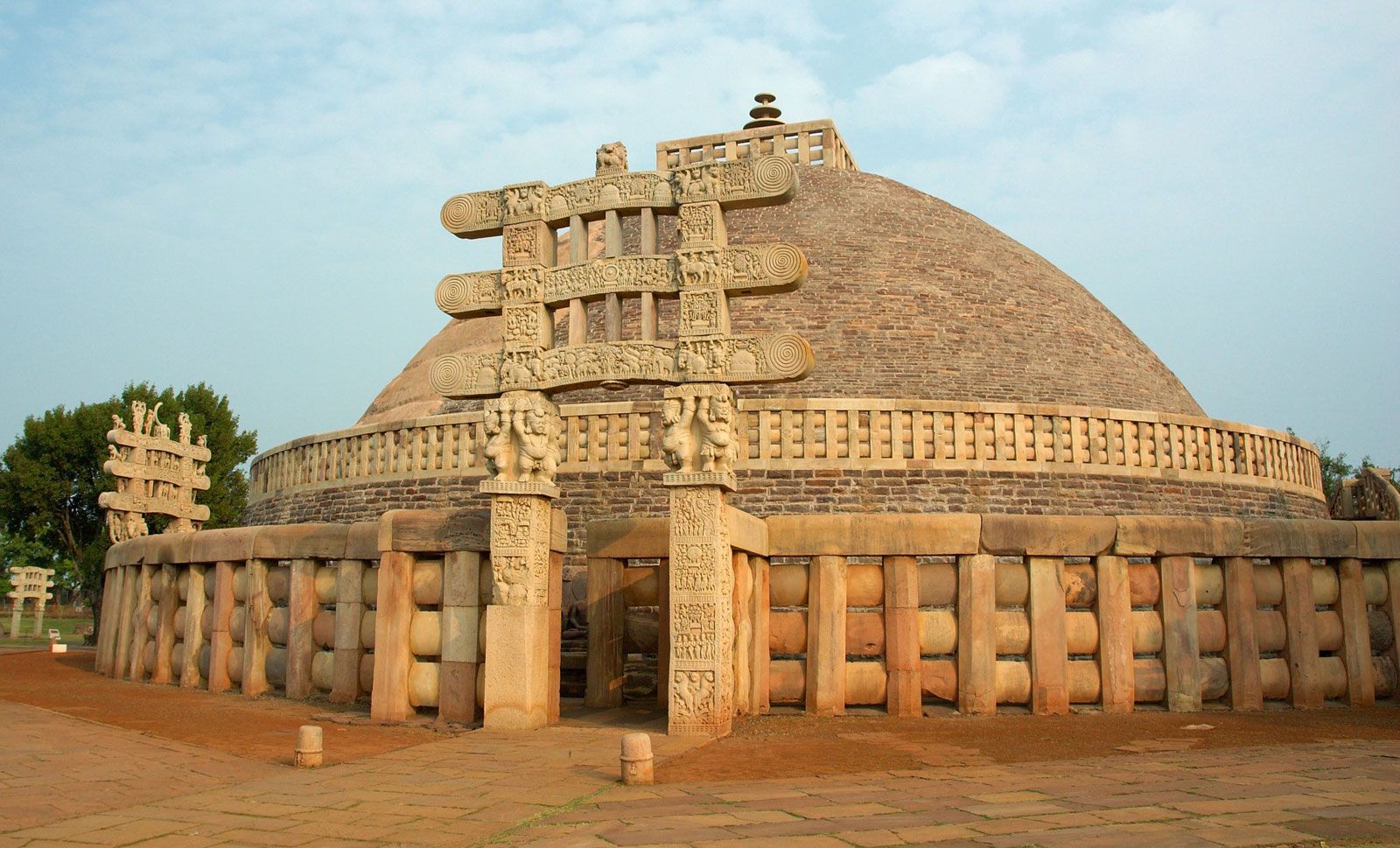
The Great Stupa (Mahastupa)
Sanchi
250 BCE
Maurya Empire, India

The Great Stupa DESC
buddhist architecture, pilgrimage and meditation
circumambulation, no entry, just walking around
buddha never shown in human form here
alludes to life and death

Terracotta Army of Emperor Qin Shi Huangdi’s Mausoleum
210 BCE
Qin Empire, China

Terracotta Army DESC
youngest emperor at the time was already planning his death, Chinese culture celebrated it as a new beginning
needed to maintain his status when he died, army to protect him when he was buried

False Face for Funerary Bundle
third century - BCE 1st century
painted cotton
paracas culture, peru

False Face for Funerary Bundle DESC
represents deceased identity and spirit
dead bodies were wrapped in textile with a mask to show human presence
Polytheism
belief or worship in more than one god
Ka
ancient Egyptian concept of a spiritual double, a person or god that came into existence at birth and then lived on after death
Red-figure
major style of greek vase painting, developed in Athens, background is a glossy black, designs are orange
Slip
liquid clay mixture used for decoration, used as a glue (not a glaze). often coated on an object, and scratched through, to expose the color underneath
Buddhism
northern India to Asia, aniconic symbols of buddha, teachings of dharma, renouncing luxury and desire,
Stupa
a dome shape in buddhist monuments or structures. sacred shrine
Aniconism
deliberate absence of figural depiction. uses symbols instead to convey a sacred presence
Circumambulation
ritual act of walking around something sacred as a form of devotion
Necropolis
a city of the dead
Zoomorphic
uses animal forms or characteristics and motifs for artistic representation