Antibacterial agents - Lamango
 Call Kai
 Learn
 Practice Test
 Spaced Repetition
 Match
 Flashcards
 Knowt Play
1/61

There's no tags or description
Looks like no tags are added yet.
62 Terms
What enzyme reduces sulfonamides?
Azoreductase
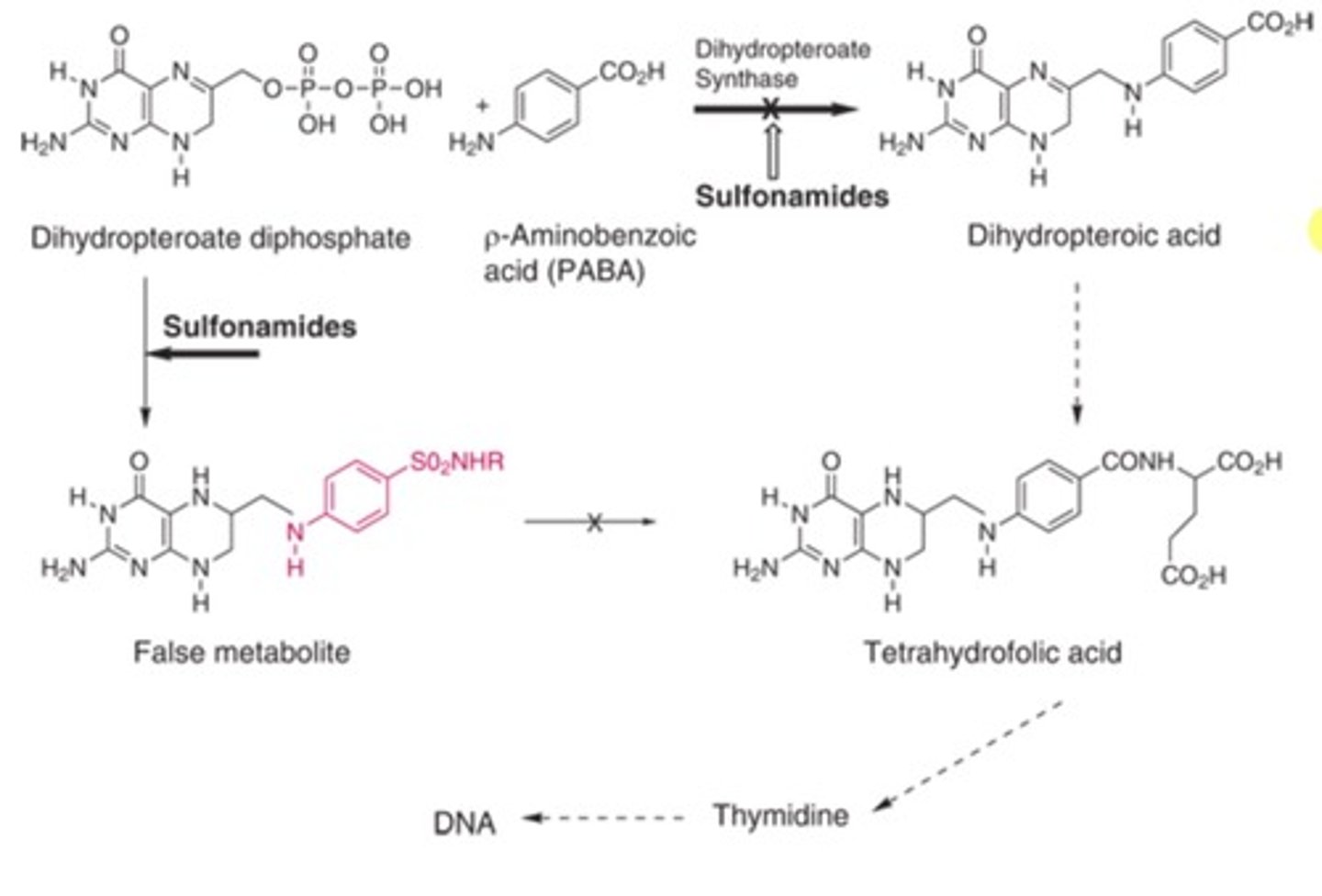
Sulfonamide mechanism of action
1) Competitive inhibition of dihydropteroate synthase
- competes with p-aminobenzoic acid (PABA)
2) produces intermediates that cannot react with glutamic acid
3)blocks Thymidine synthesis and consequently DNA synthesis
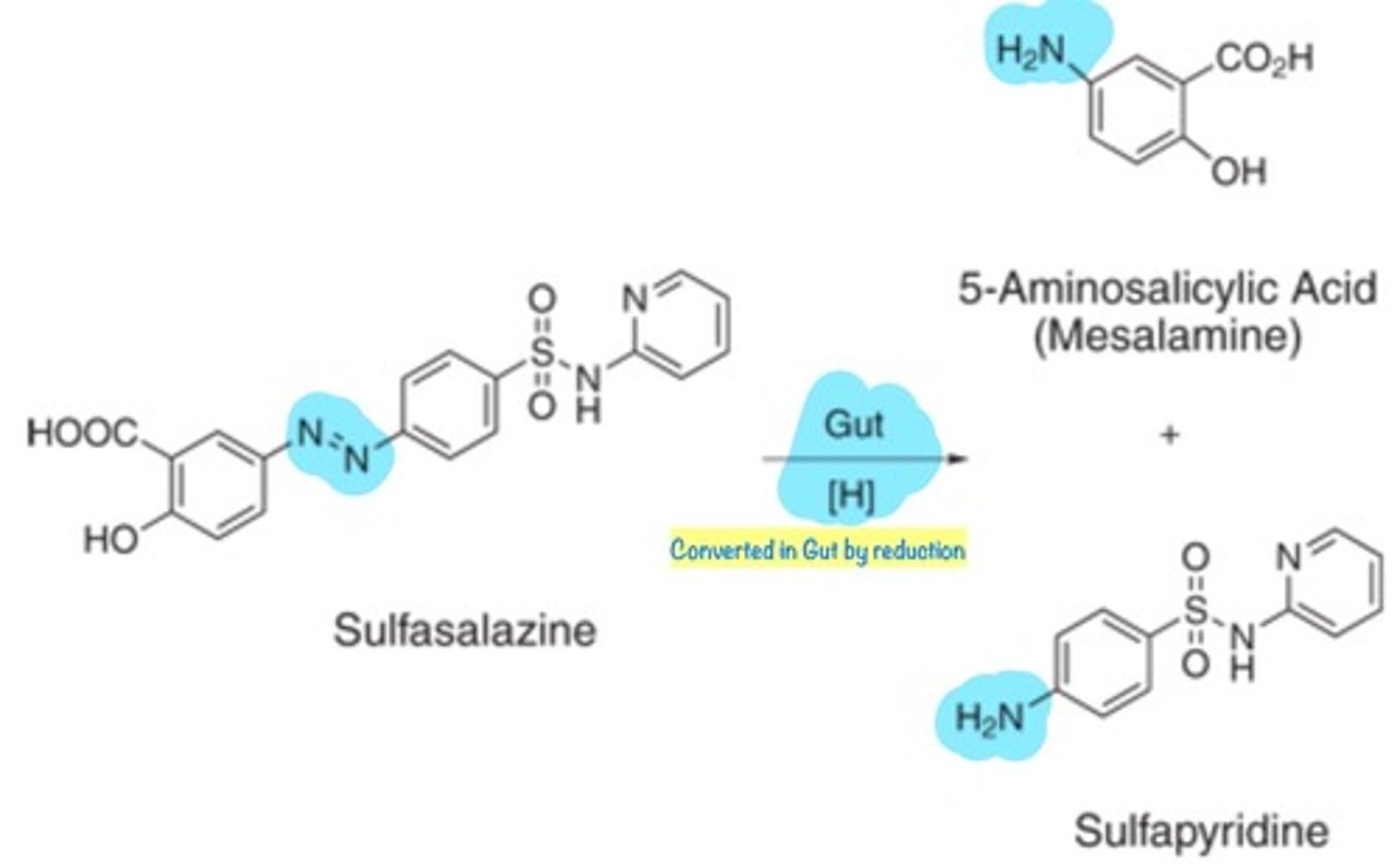
Bioactivation of sulfasalazine by gut bacteria
Gut bacteria azoreductase to reduce sulfasalazine to 5-ASA and sulfapyridine
- justifies use for ulcerative colitis and Crohn's disease.
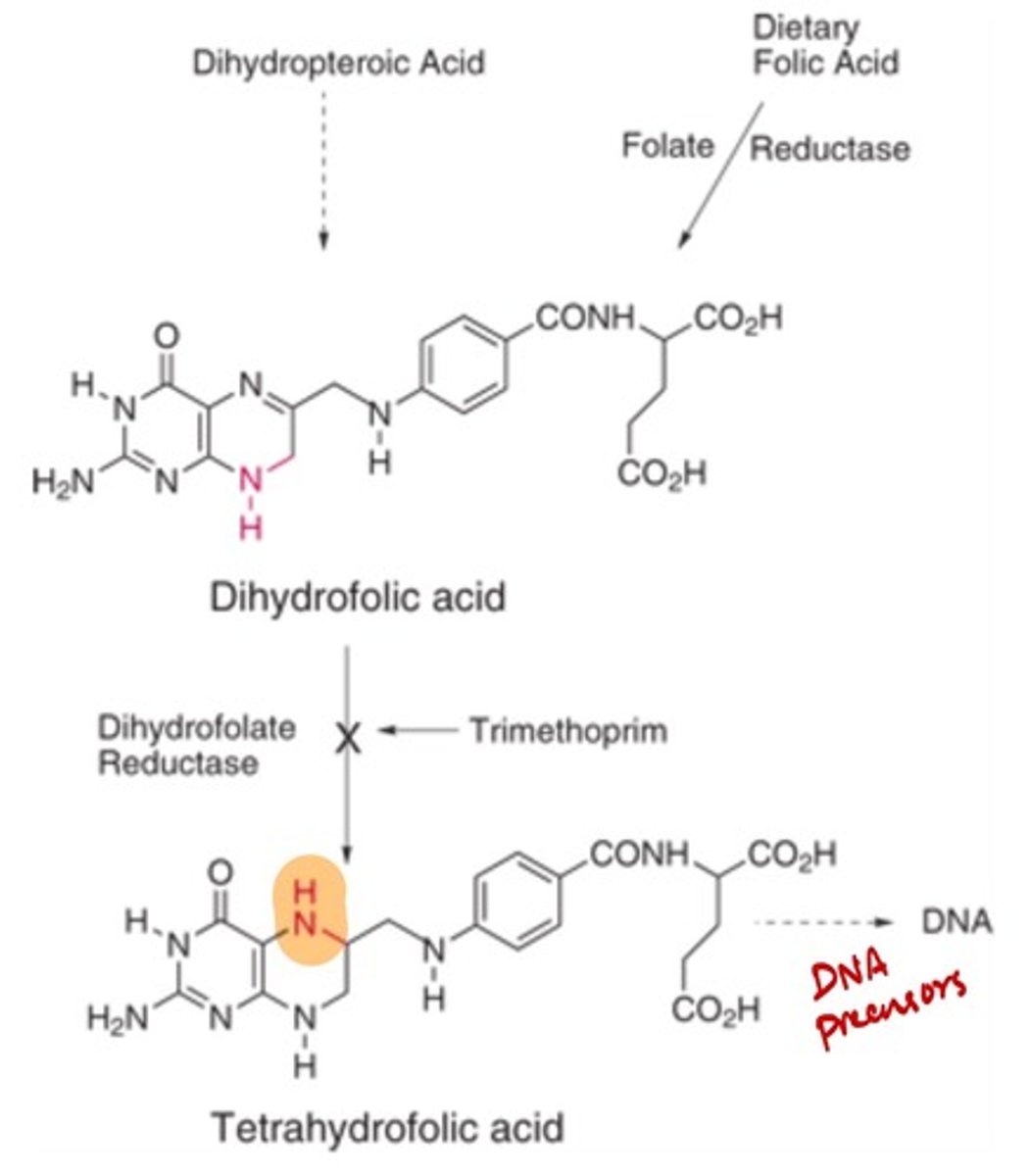
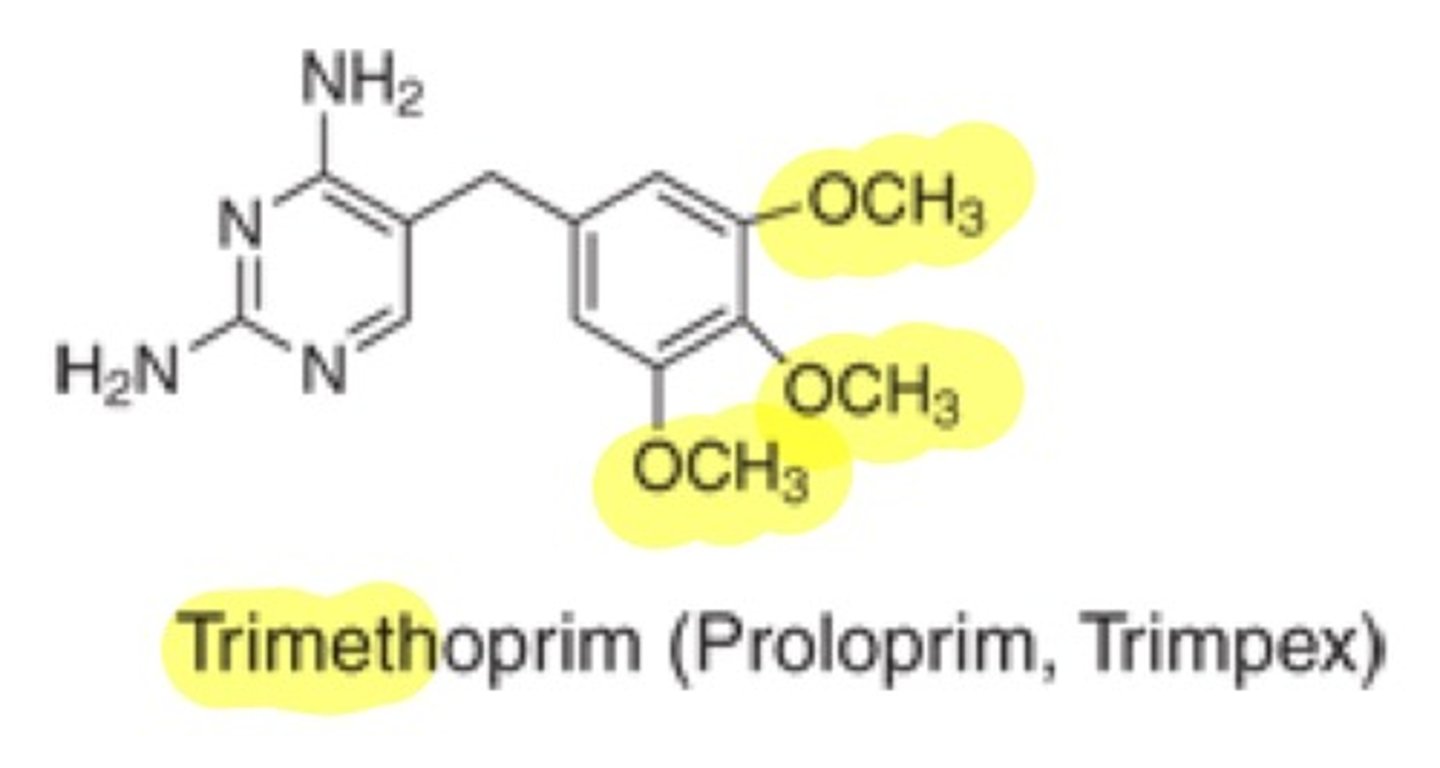
Trimethoprim
- inhibits bacterial dihydrofolate reductase
- less toxic analog of methotrexate (anti cancer)
- 100,000 times more potent against bacterial enzyme than vertebrate enzyme
Trimethoprim structure
Contains three (tri) methoxy (metho)
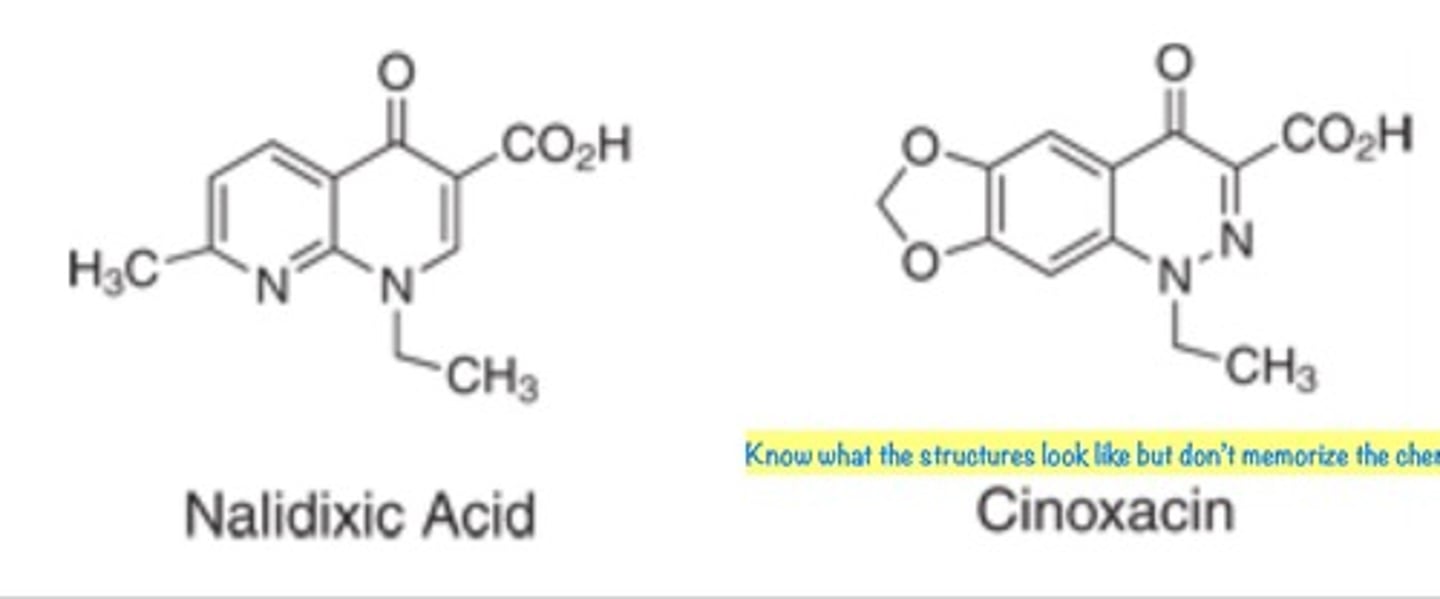
Quinolones
- N-alkylated ring that contains a carboxy on 3rd carbon and ketone on 4th; fused to another aromatic ring
- Inhibit DNA gyrase and topoisomerase IV, enzymes that regulate DNA structure and twisting
- bactericidal <not able to survive if you can’t replicate or make proteins>
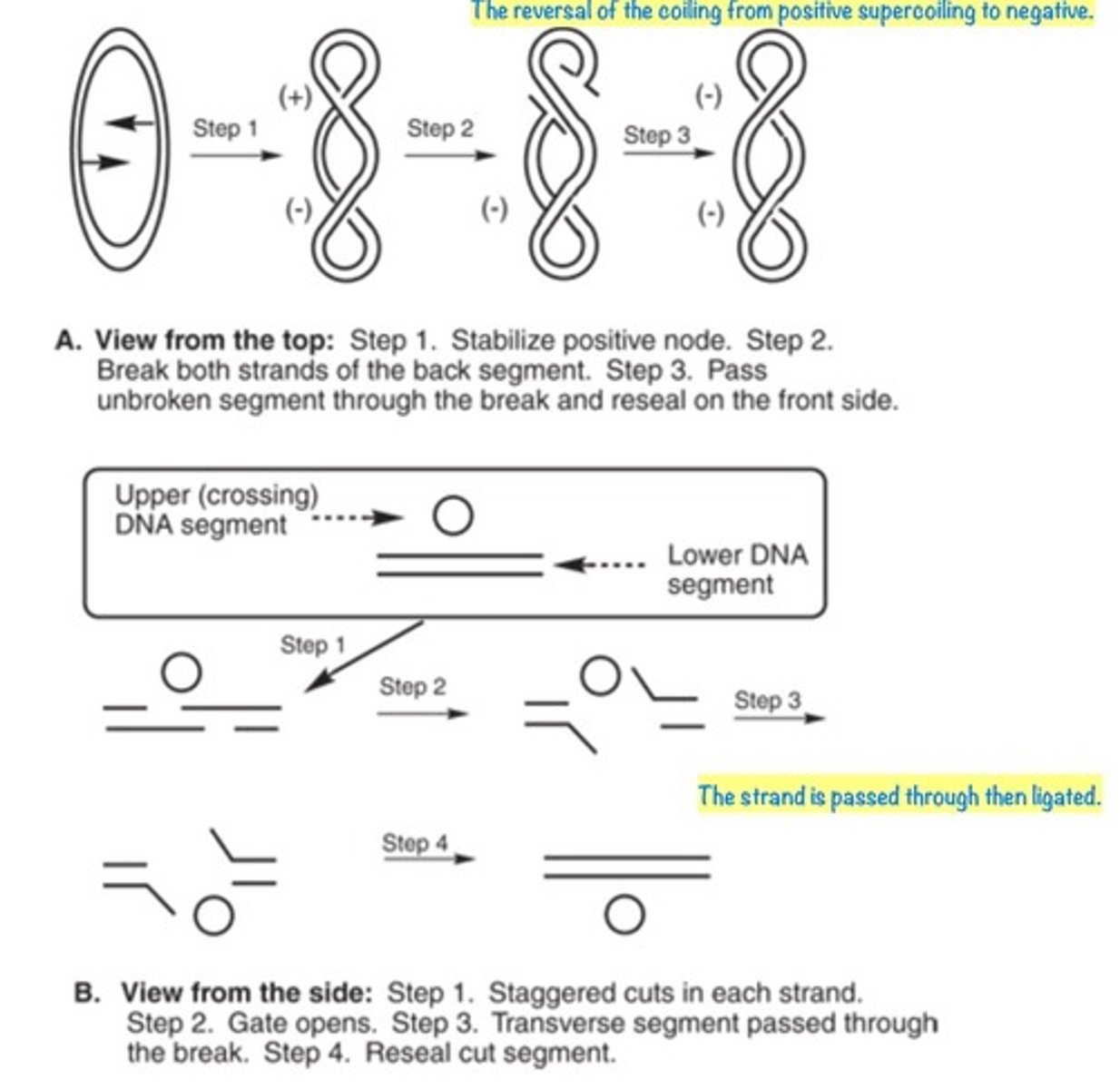
Supercoiling of circular DNA by gyrase
Know that segment cuts then transverse through broken seal and then reseals.
Fluoroquinolones
- different to quinolones by spectra of coverage. <most of 2 enzymes>
- quinolone with fluorine attached to the aromatic ring.
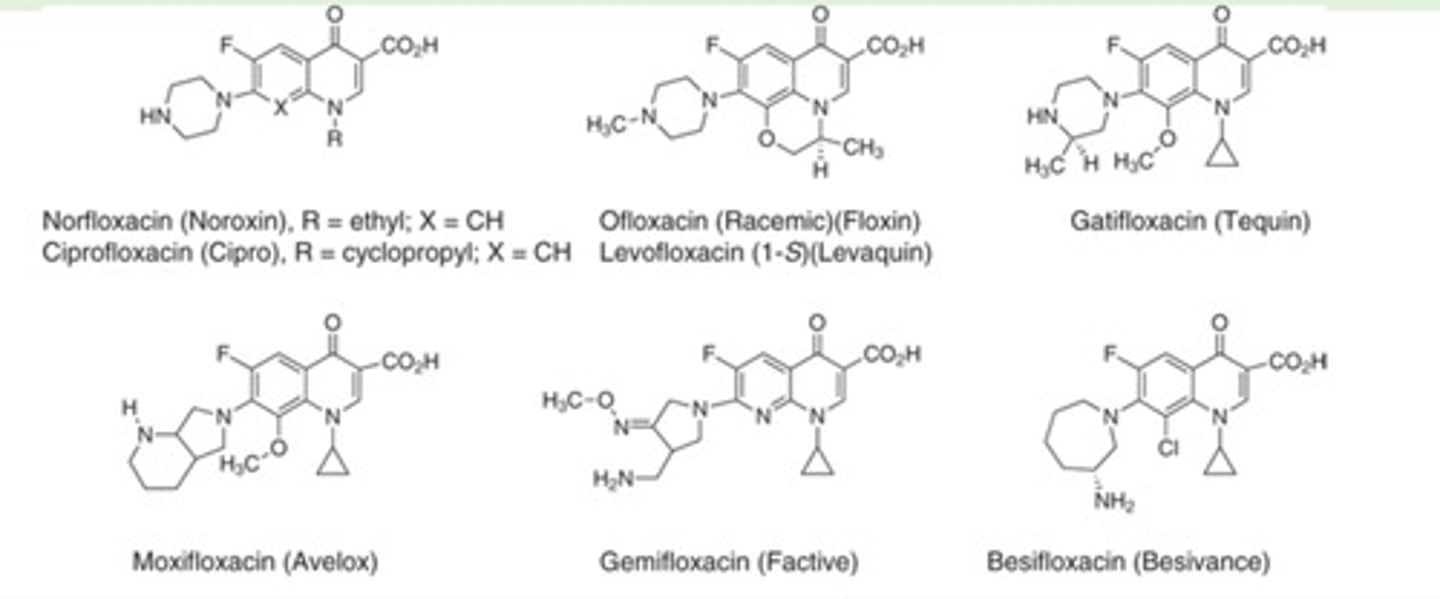
Why is levofloxacin 8- to 128-times more active than (+)-isomer?
Steric hindrance (occupation/affinity)
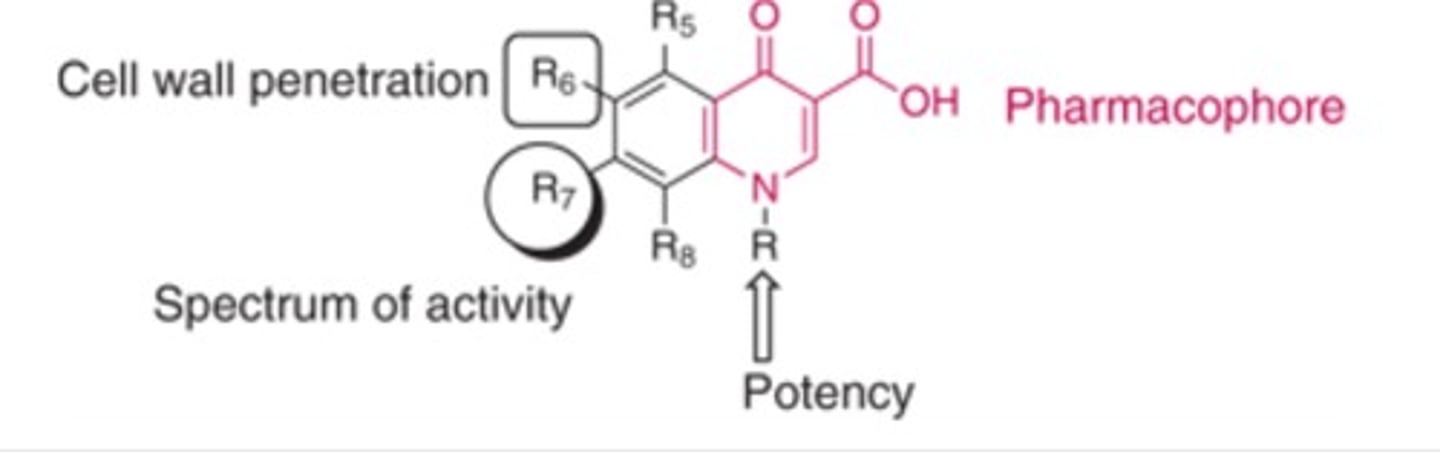
SAR of quinolones
- Ketone and COOH important for DNA/DNA gyrase binding
- reduction of ketone or 2,3 double bond inactivates
- substitution at C-2 negative impact on binding to gyrase
- C-6 Fluorniation improves gyrase/topoisomerase inhibitory potency, antibacterial activity, lipophilicity, and cell wall penetration
- C-8 fluorine improves absorption, half-life, but causes photosensitivity
- C-7 piperazine substituent improve spectra against Gm-; may bind to receptors in CNS leading to s/e
- alkyl sub on piperazine N reduce CNS s/e
- cyclopropyl sub at N-1 adds activity against mycoplasma, chlamydia, and legionella.
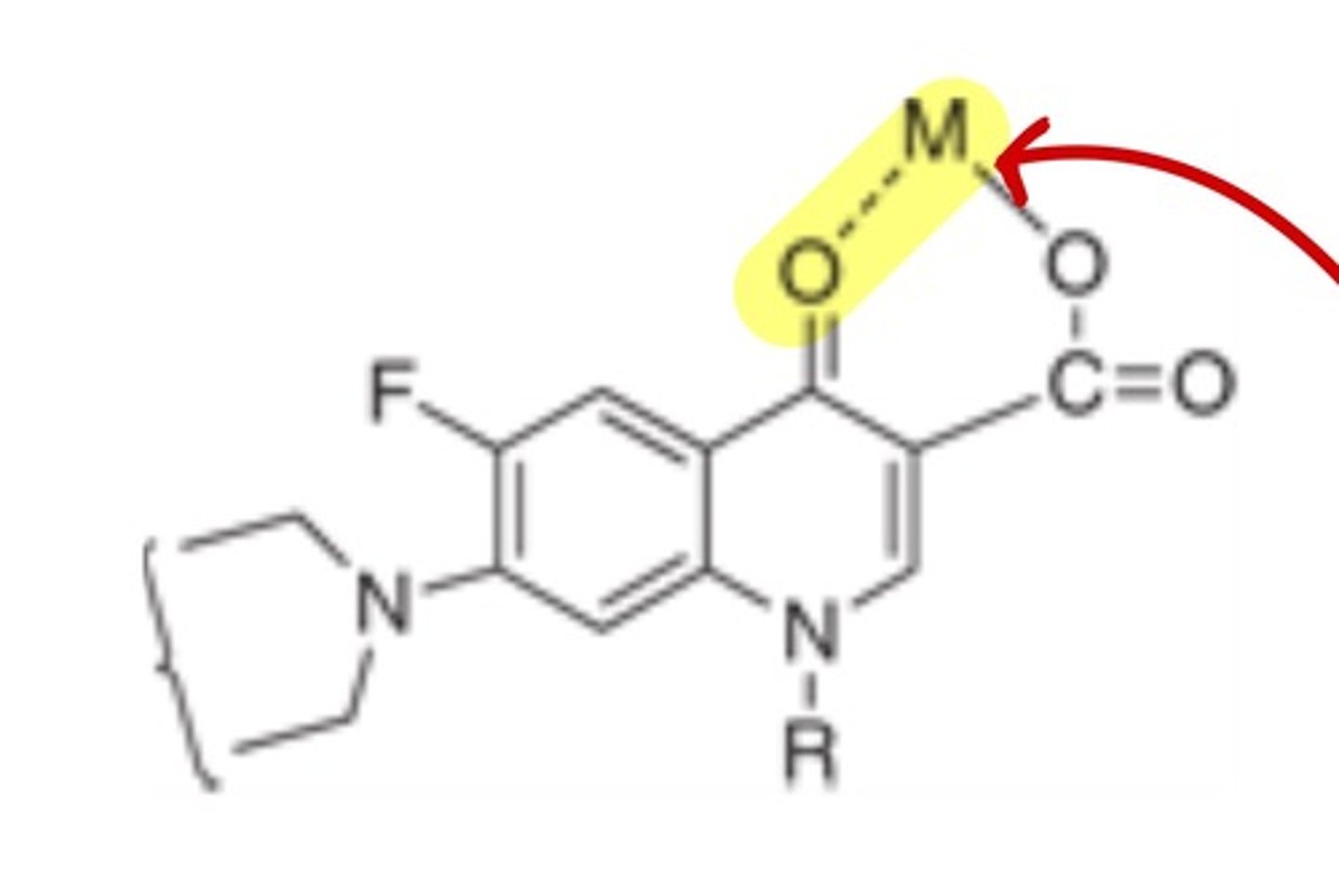
What does complex action to metal ions do to the solubility and absorption of quinolones?
They limit solubility and absorption.
- makes them incompatible with drugs/foods that contain polyvalent metal ions
- milk will cause toxicity because the drug will bind to milk and remain in the body longer.
What causes resistance to quinolones?
Mutations in genes that encode the gyrase and topoisomerase IV genes.
What drugs are the nitroheteroatomic compounds?
Nitrofurantoin and metronidazole
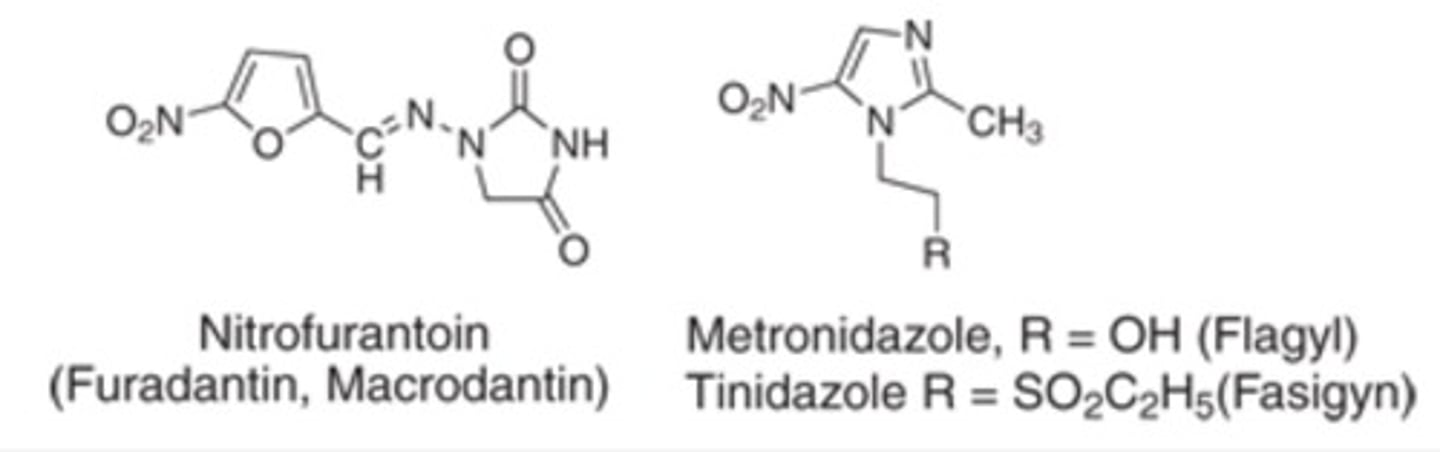
What do nitrofurantoin and metronidazole undergo to interfere with DNA and RNA function?
Bioreductive activation into metabolites
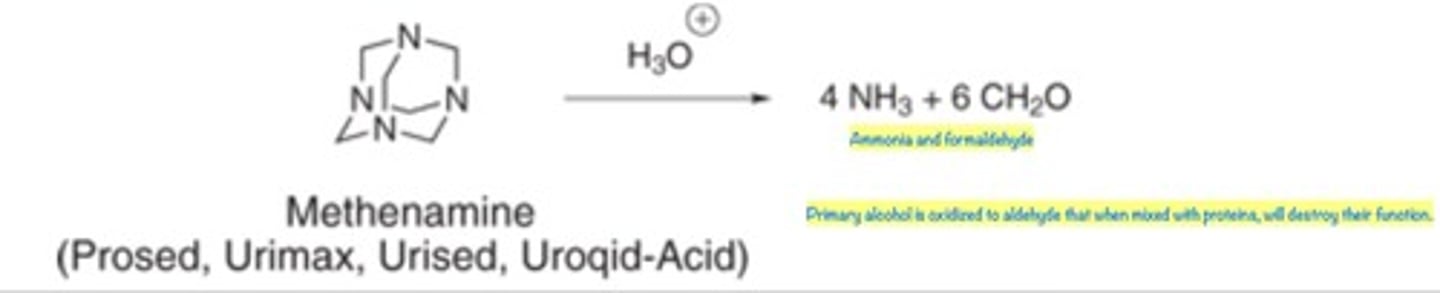
What is methenamine?
Antiseptic that is a low molecular wt polymer of ammonia and formaldehyde
Formaldehyde is an antibacterial component of the drug
- reverts to ammonia and formaldehyde in mild acidic conditions
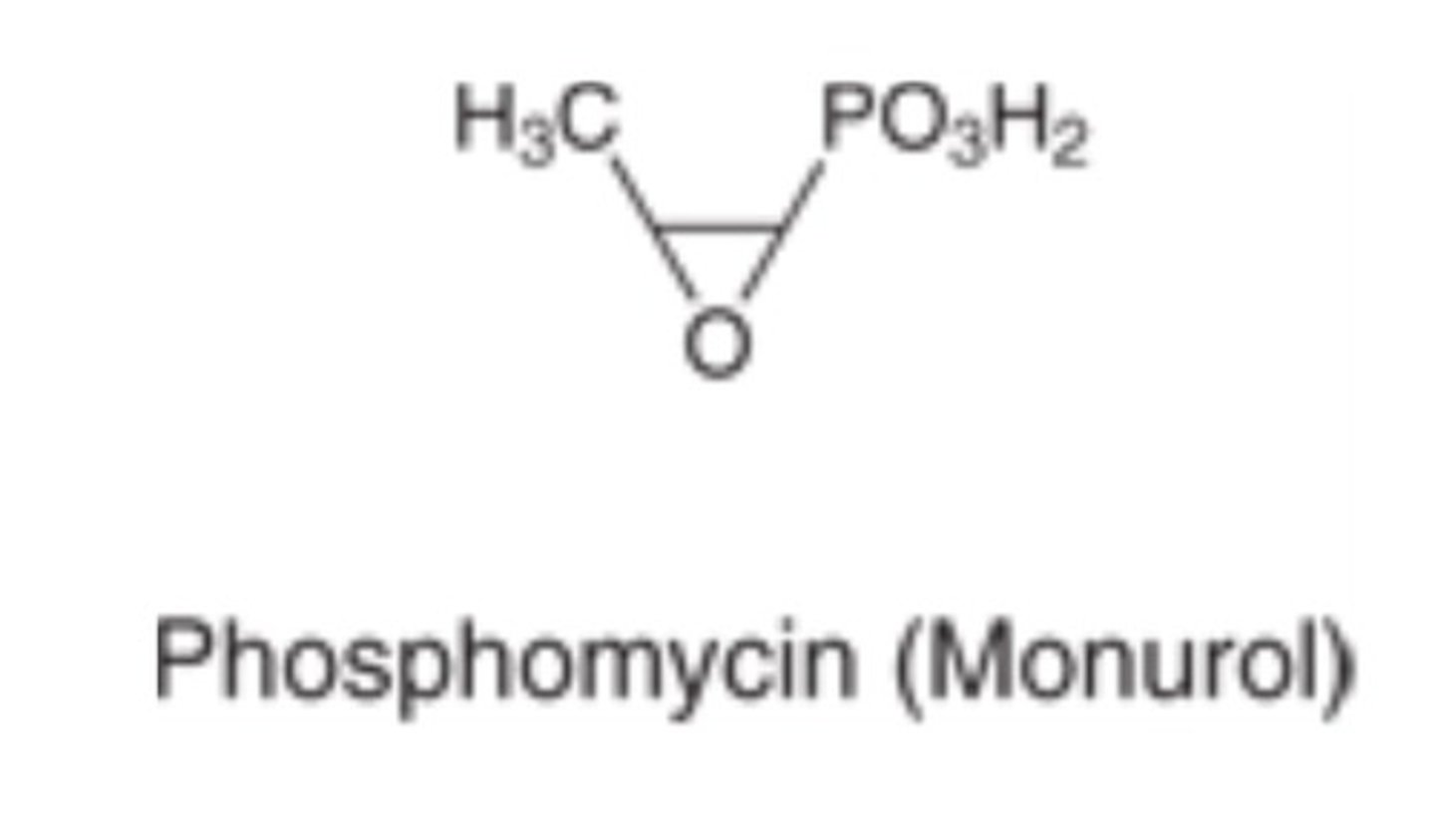
Phosphomycin/Fosphomycin
Inhibits enolpyruvial transferase which is involved in early cell wall biosynthetic steps <catalyze 1st step in cell wall biosynthesis>
What is the other name for penicillin bind proteins?
Transpeptidase or transamidase
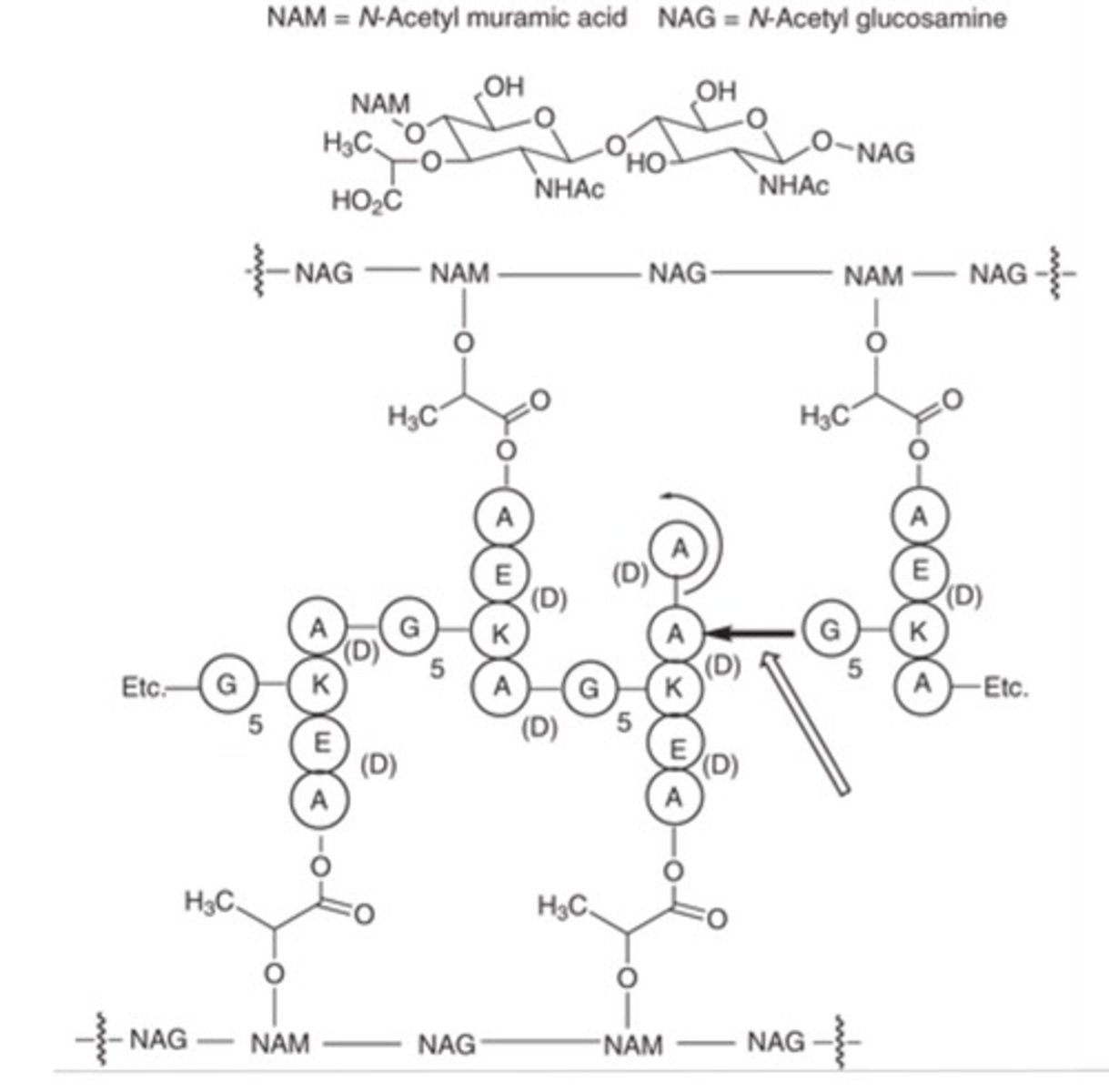
What is the function of PBPs
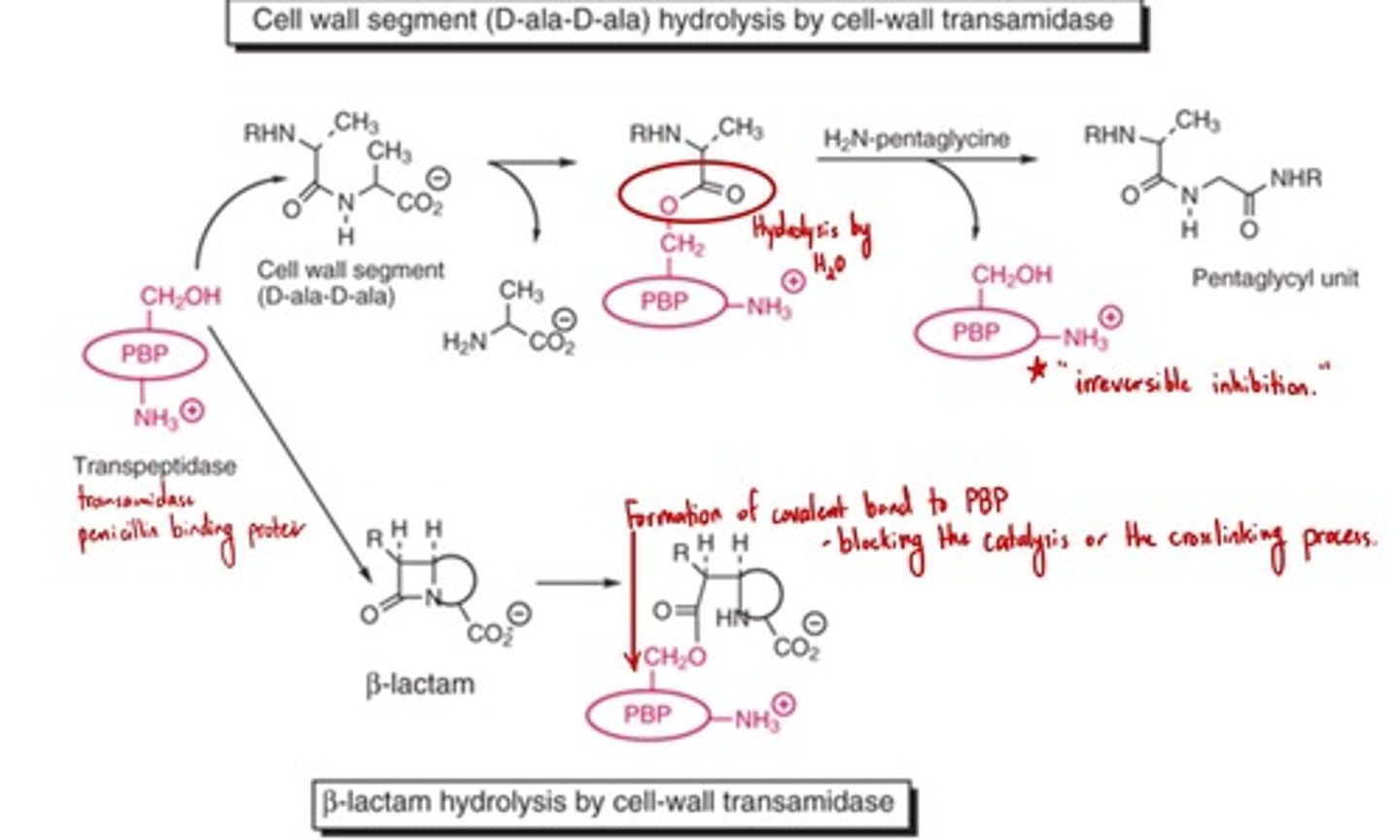
Enzyme that catalyzes cross linking to form strong bacterial cell wall
- R1CONHR2 + R3CONHR4 -> R1CONHR4
- R2 and R3 are chopped off
- trans reaction links R1 to R4 by amide bonds
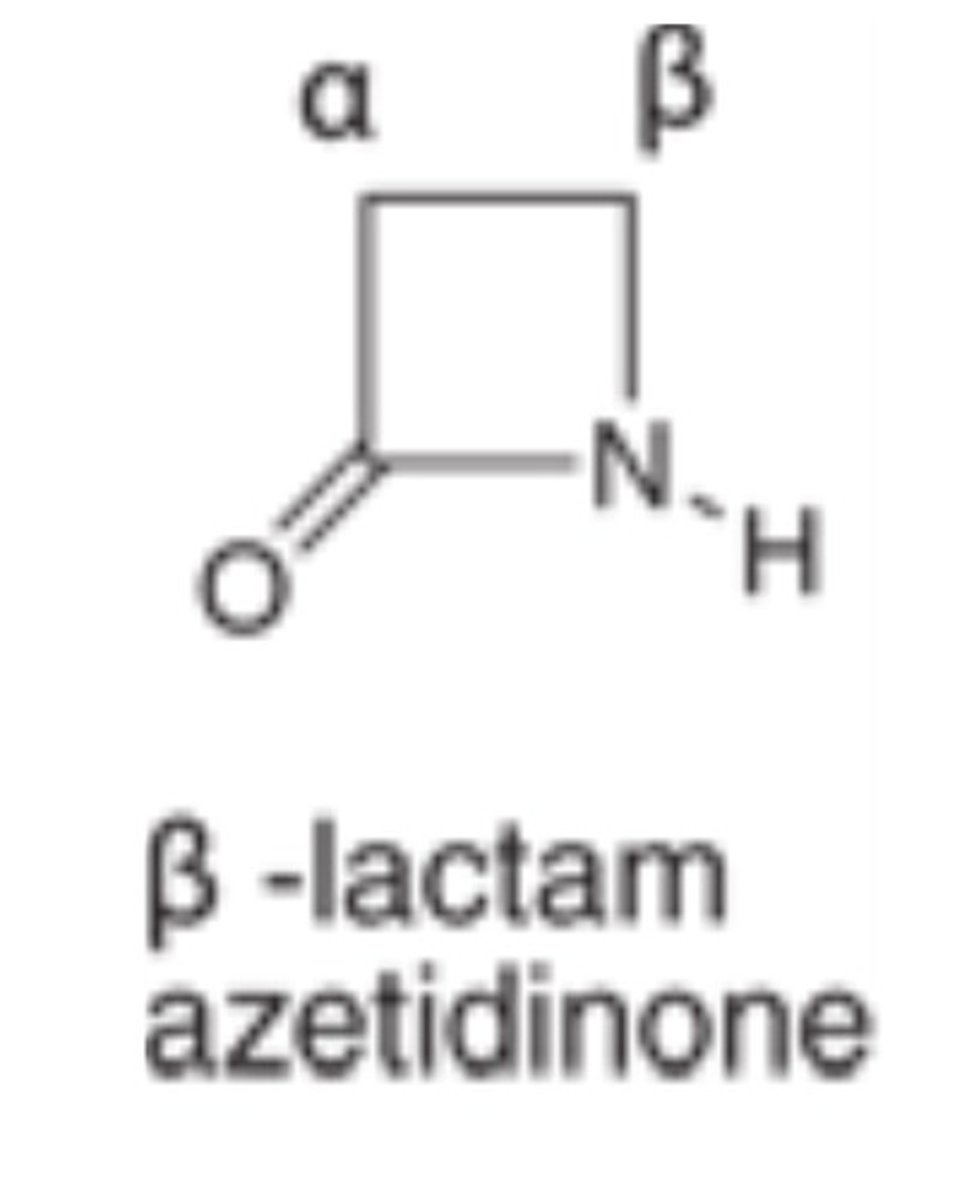
Lactams structure
Cyclic amide
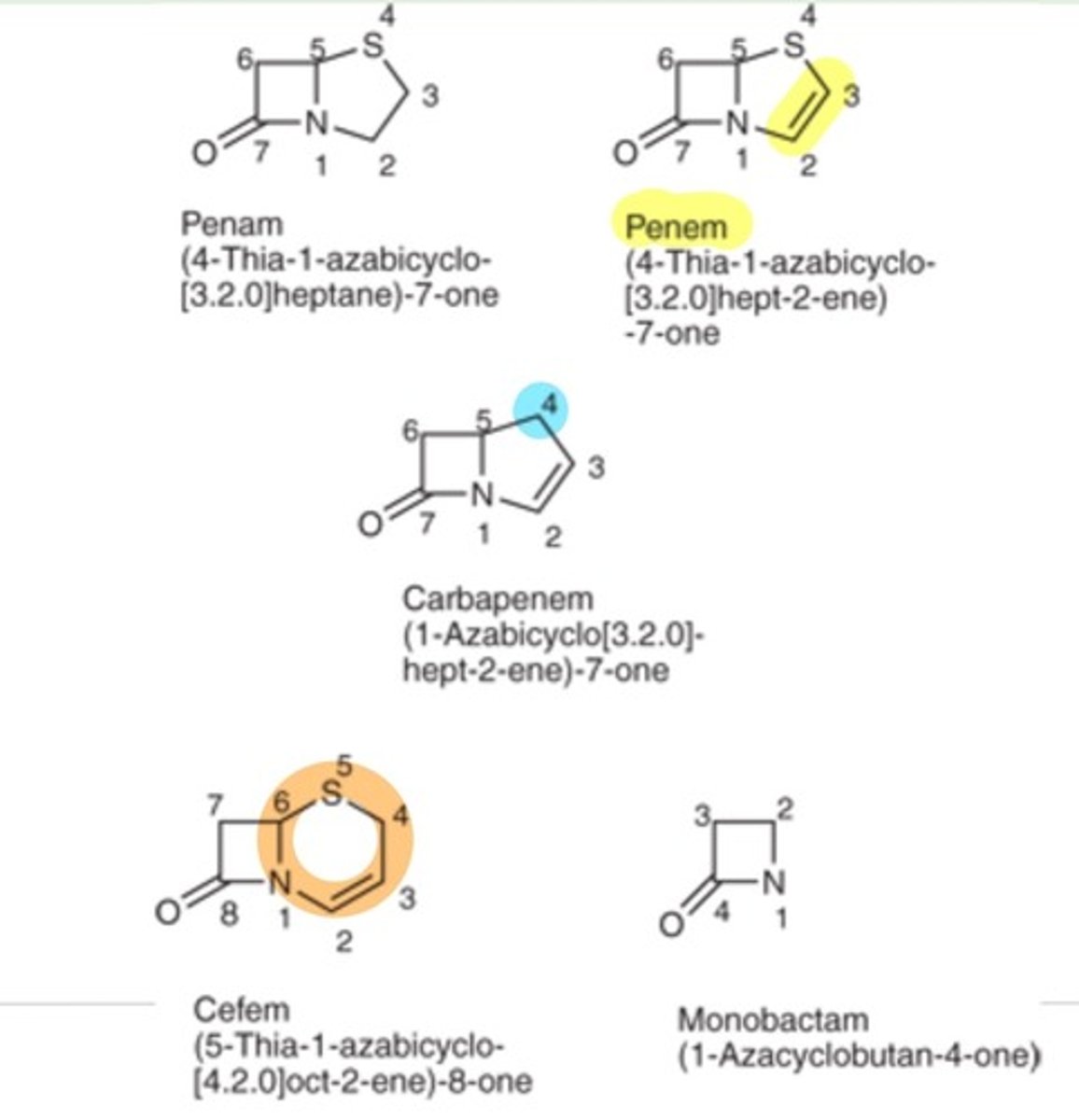
Ring numbering of beta-lactams
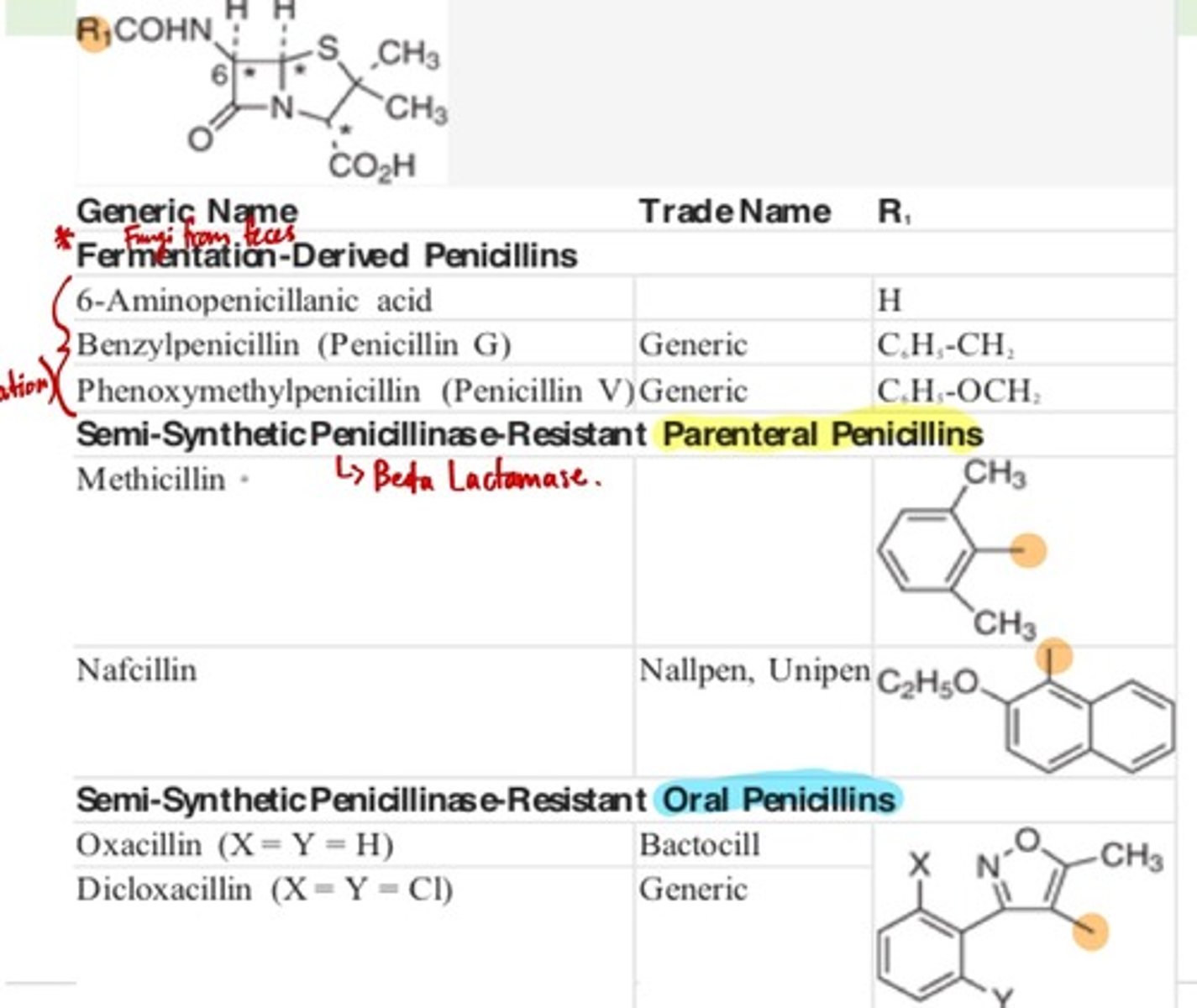
What is the limitation of penicillin?
Easily broken down by stomach acid
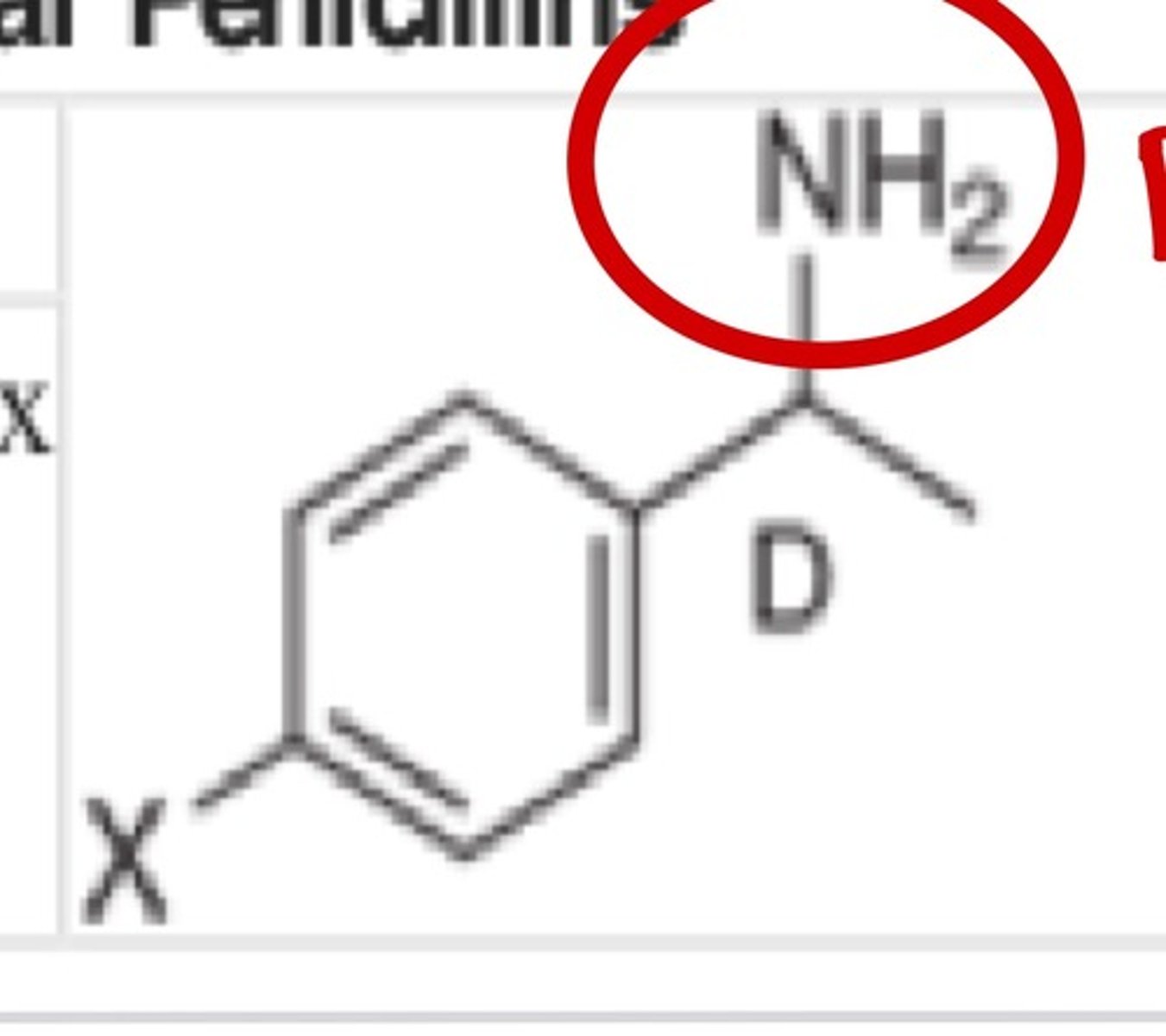
What does the amine of the ampicillin do?
Prevent acid catalysis of beta lactamase
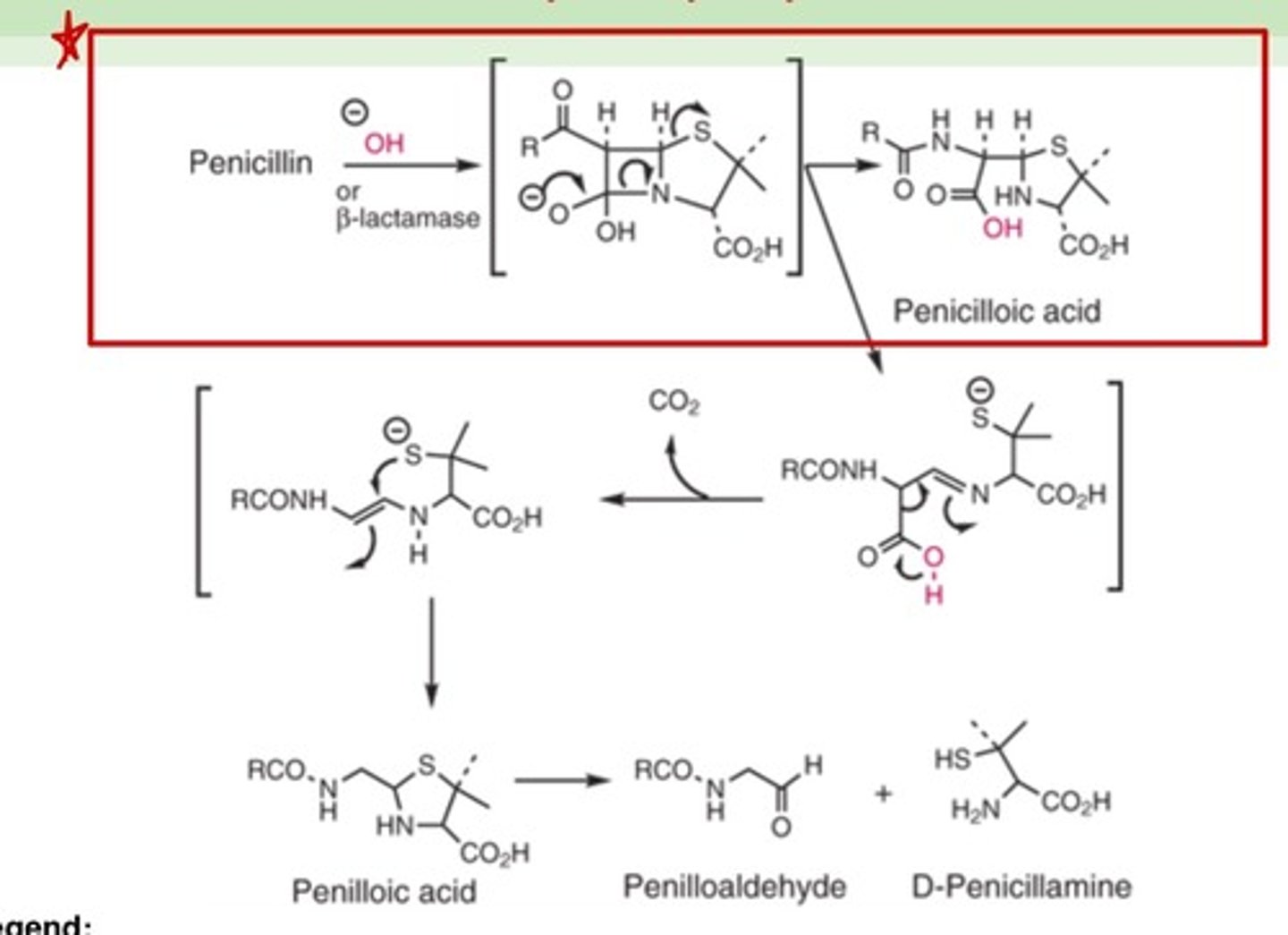
Degradation reaction of penicillin (base-catalyzed hydrolysis)
Most unstable bond is highly strained and reactive B-lactam amide bond.
- cleaves rapidly in hot water and alkaline solution to produce penicilloic acid. (Not stable in acid or hot water)
- amino-containing antibiotics, like aminoglycosides are incompatible w/ B-lactams b/c their amino group reacts w/ penicillin and cephalosporins
- nucleophiles in protein conjugate w/ B-lactam (haptens) to form antigenic conjugates, causing allergies
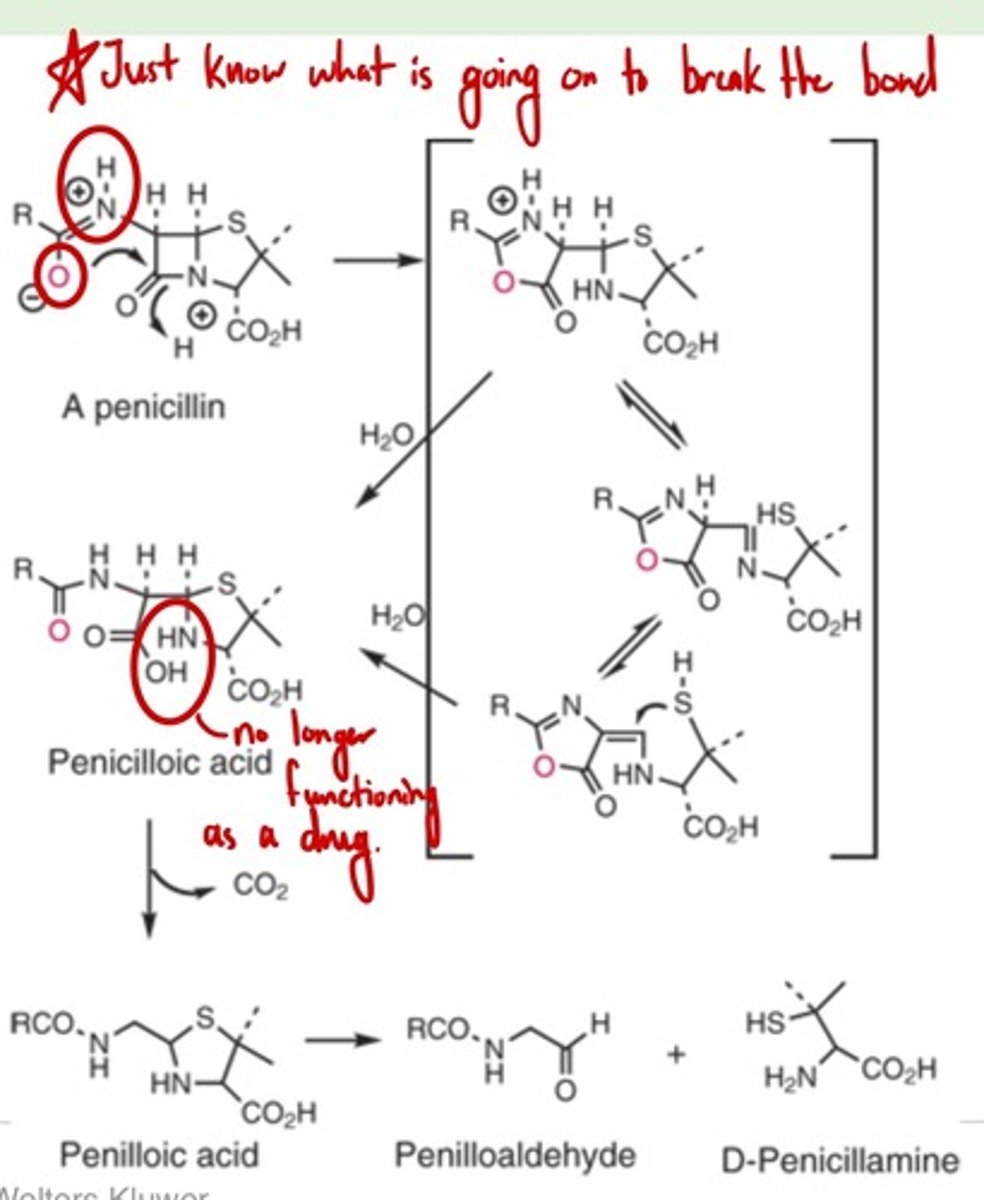
Acid catalyzed hydrolysis of beta lactam bond
Penicillin unstable in acid (Hydrolysis involving C-6 side chain)
- explains poor oral bioavailability of some beta-lactams
The -O- is attacking beta lactam carbonyl carbon. Reducing electron density on the side chain. Carbonyl oxygen is key for orally active beta-lactam drugs.
How does b-lactam work?
Irreversibly bind and inhibit transpeptidase/transamidase/PBP and blocks the catalysis or cross-linking process of transpeptidase.
Causes steric hinderance
How is resistance to B-lactam antibiotics developed?
1. Proteins developed to pump the drug or kept out of the cell
- reduced cellular uptake and lower affinity to PBPs
2. Enzyme developed to break down the drug
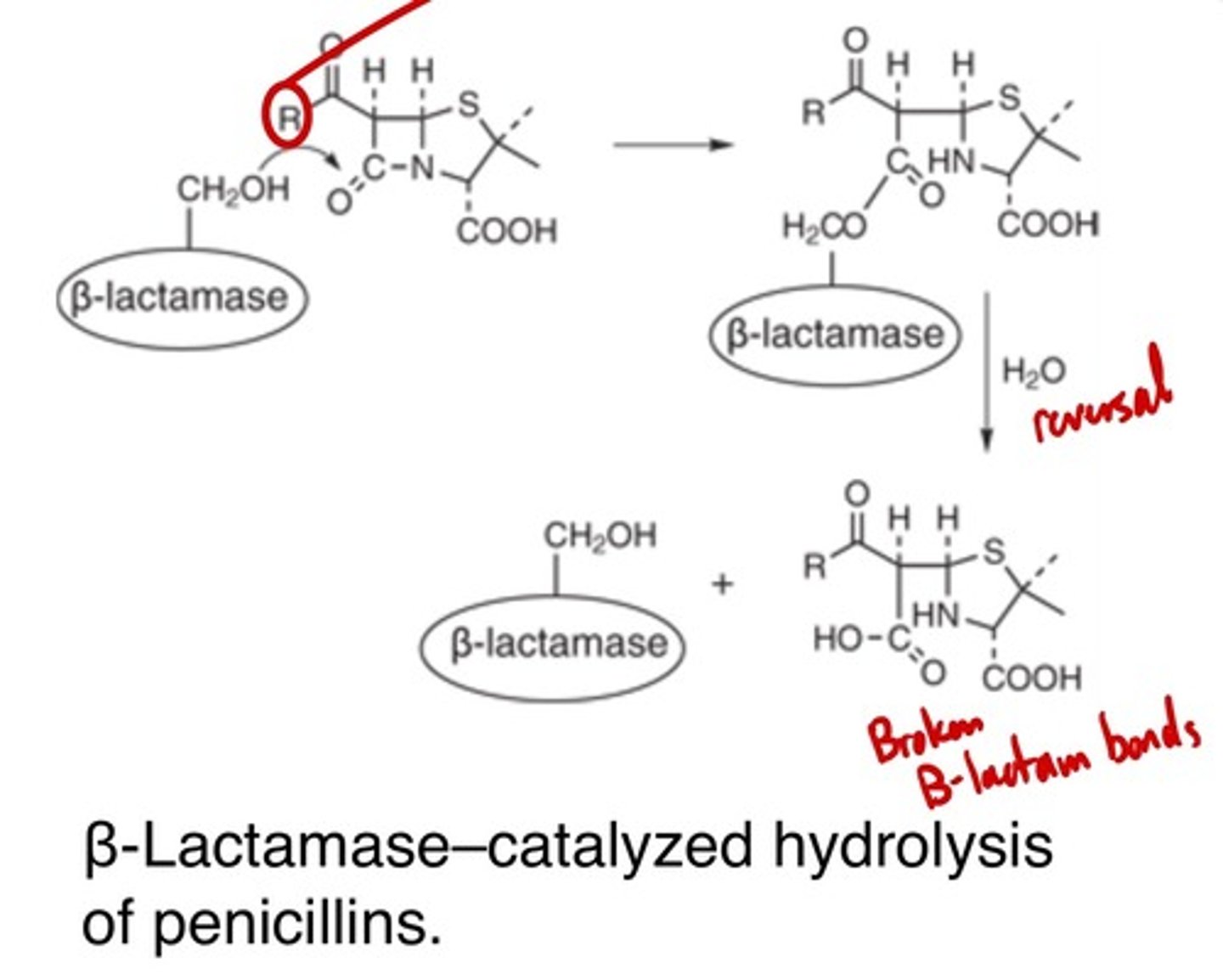
- B-lactamase resembles cell wall transamidase; unlike transamidase, B-lactamase active sites can be regenerated to degrade more B-lactam molecules.
Where do gram positive and gram negative bacteria shed b-lactamase?
Gram + into medium
Gram - into periplasmic space
How does beta-lactamase metabolize beta lactams
Attacks the carbonyl and causes breakage of bond between the carbon of the carbonyl and the nitrogen
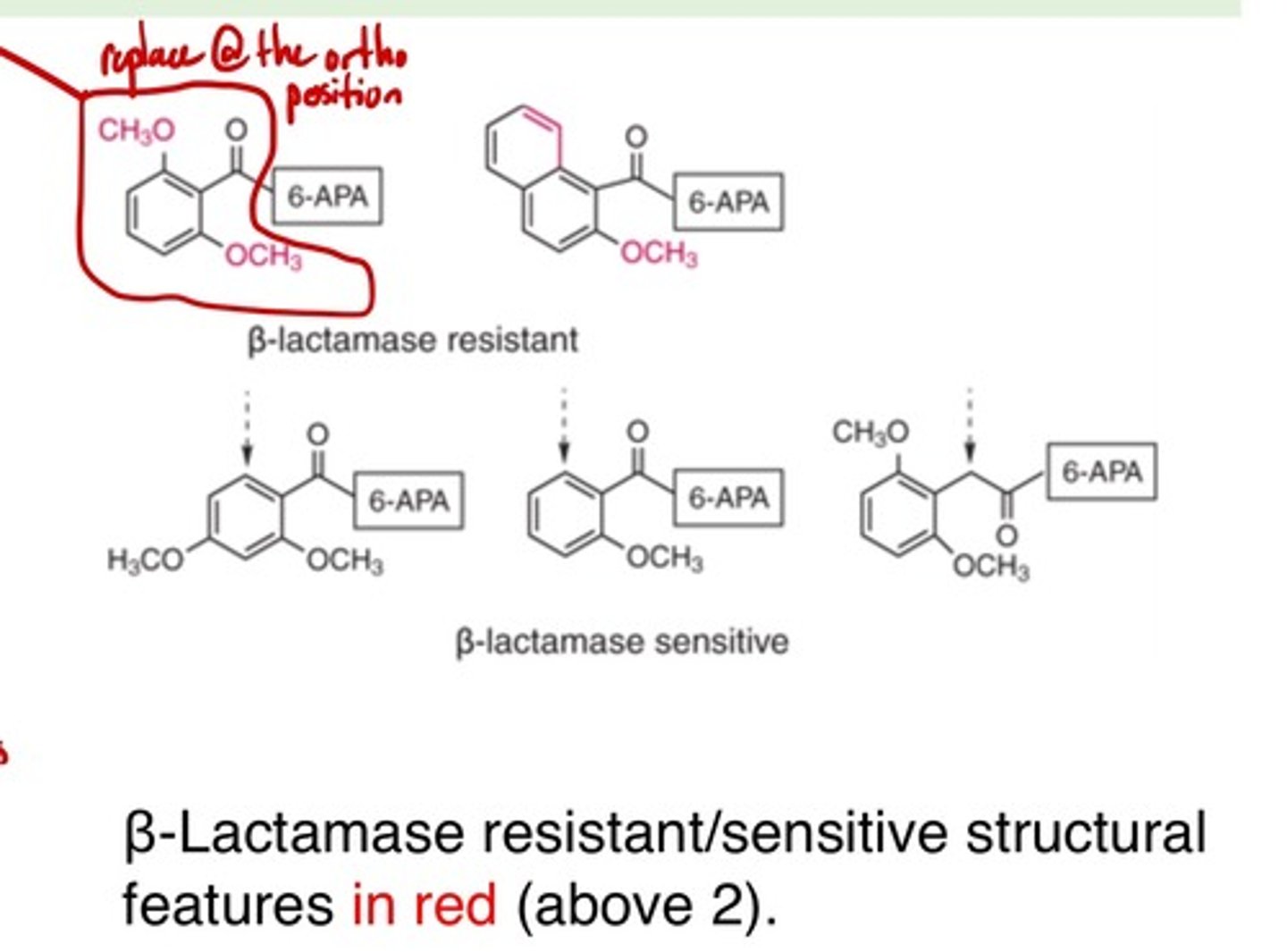
How do you make drugs like 6-aminopenicillanic acid resistant to b-lactamase?
Creating steric hinderance with methoxy group
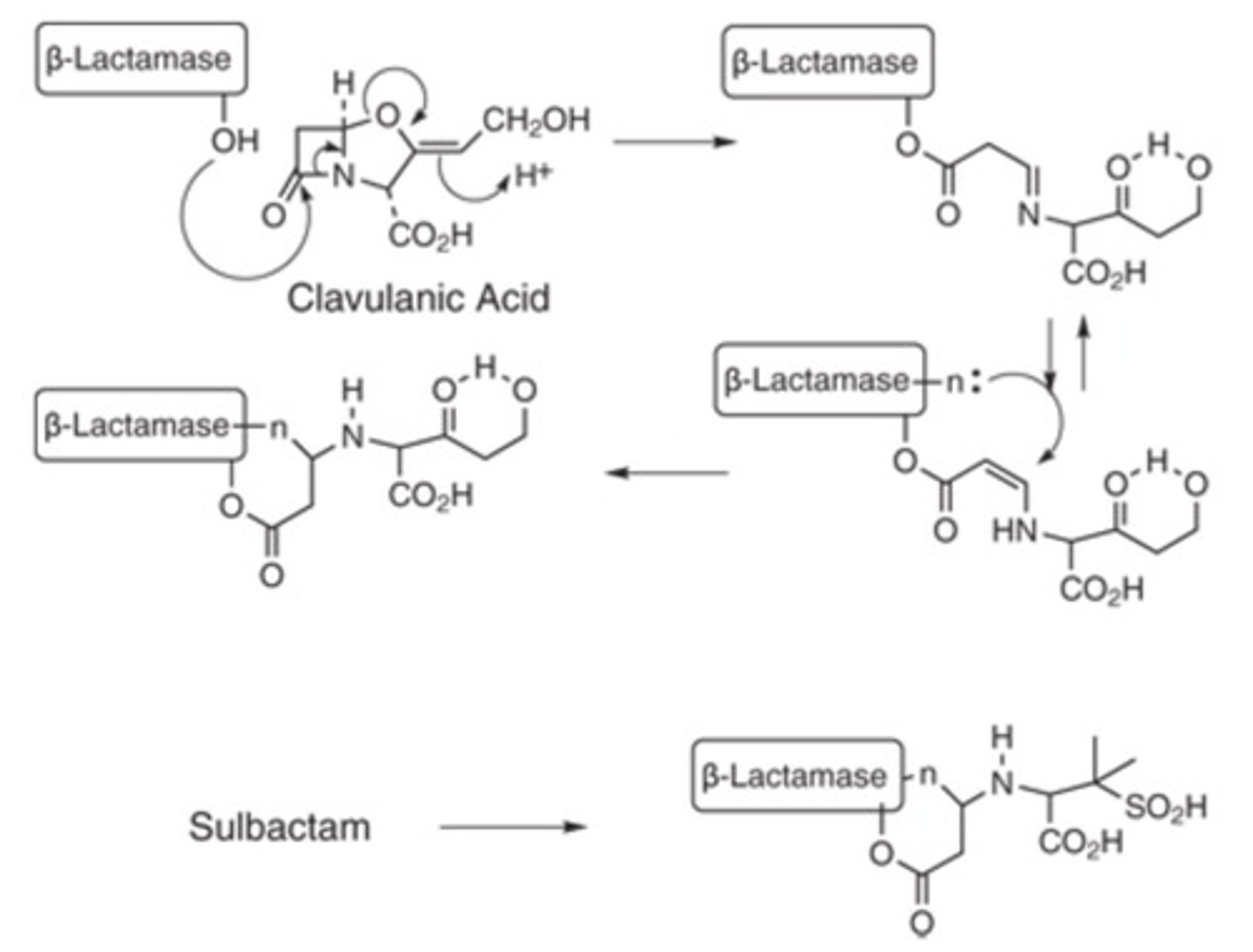
How does b-lactam inactivate?
Formation of covalent bond and irreversible inhibition.
Cephalosporins classification
- 1st gen: active in vitro against mainly Gm+
- 2nd gen: retain activity against Gm+ but add better Gm- activity
- 3rd gen: more active against Gm- than 1st or 2nd. Useful against MDR and Hospital acquired strains
1st to 4th gen associated w/ broadening of Gm- spectrum, reduction in anti-Gm+ activity and enhanced resistance to B-lactamase.
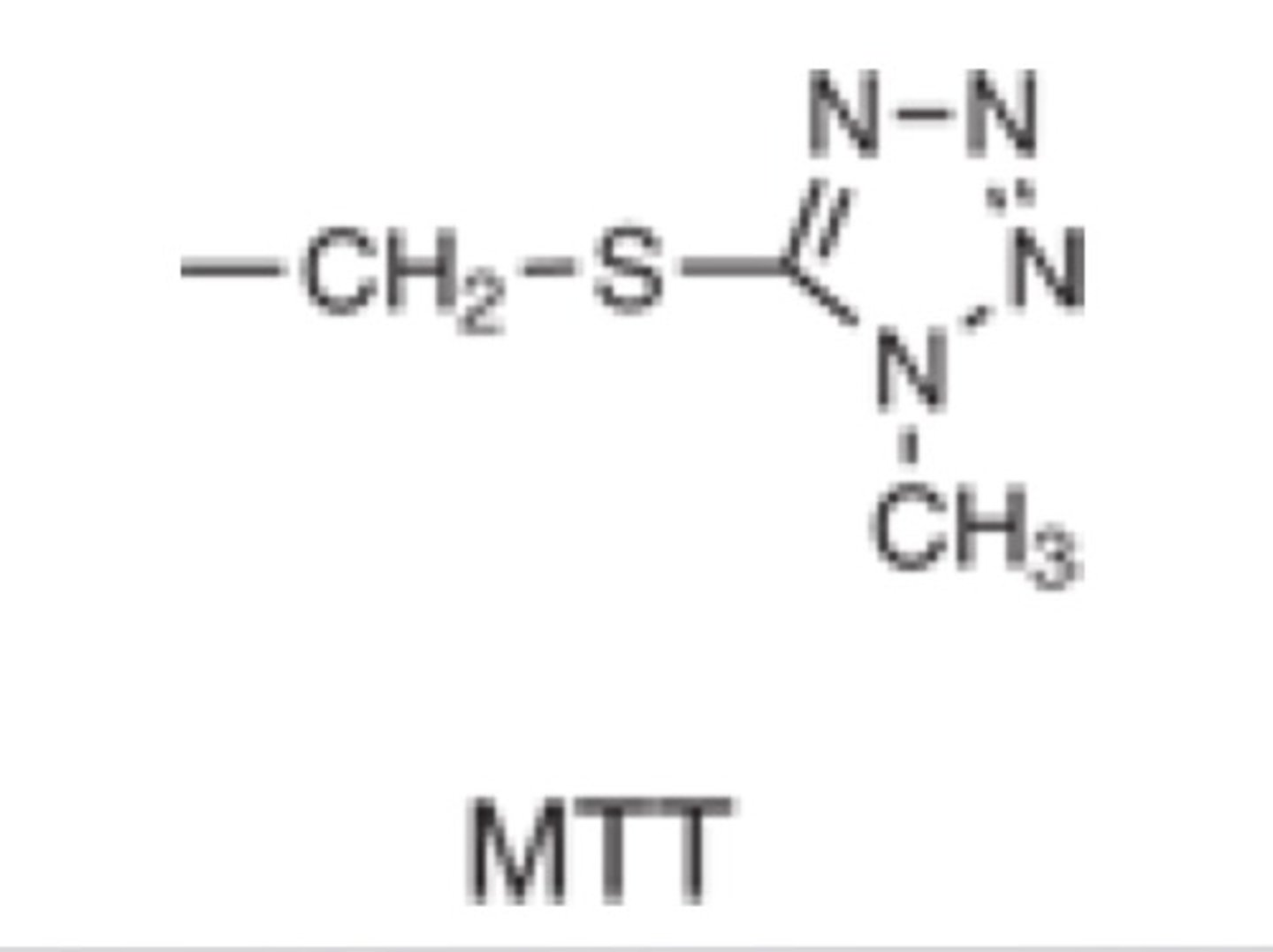
Elimination of this group from cephalosporins interferes w/ clotting and results in acute alcohol intolerance in some patients?
Methylthiotetrazole (MTT)
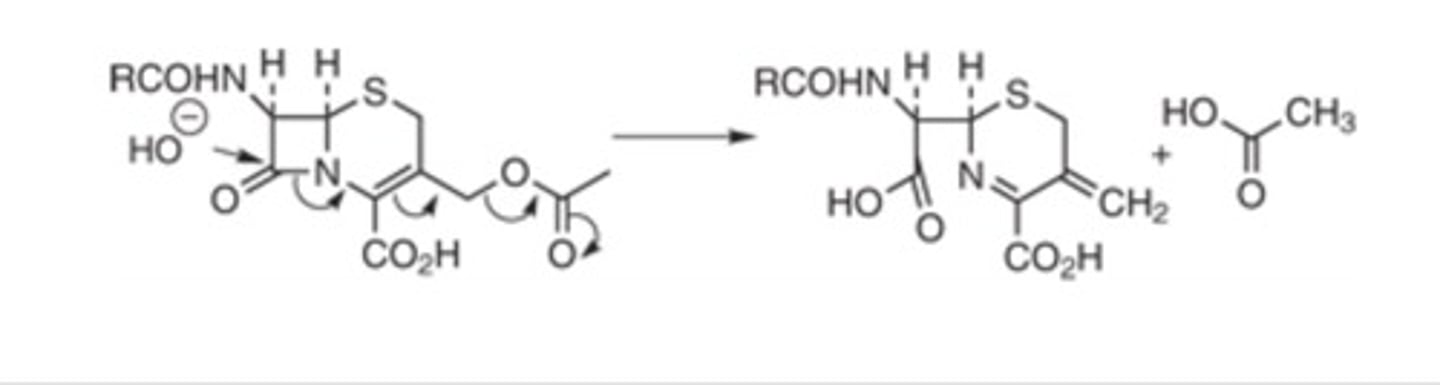
Base-catalyzed hydrolysis of beta-lactam bond
Base: hydroxyl group attacks the carbonyl carbon causing a break in the C-N bond which will cause a shift in electrons that cause the ejection of an acetic acid.
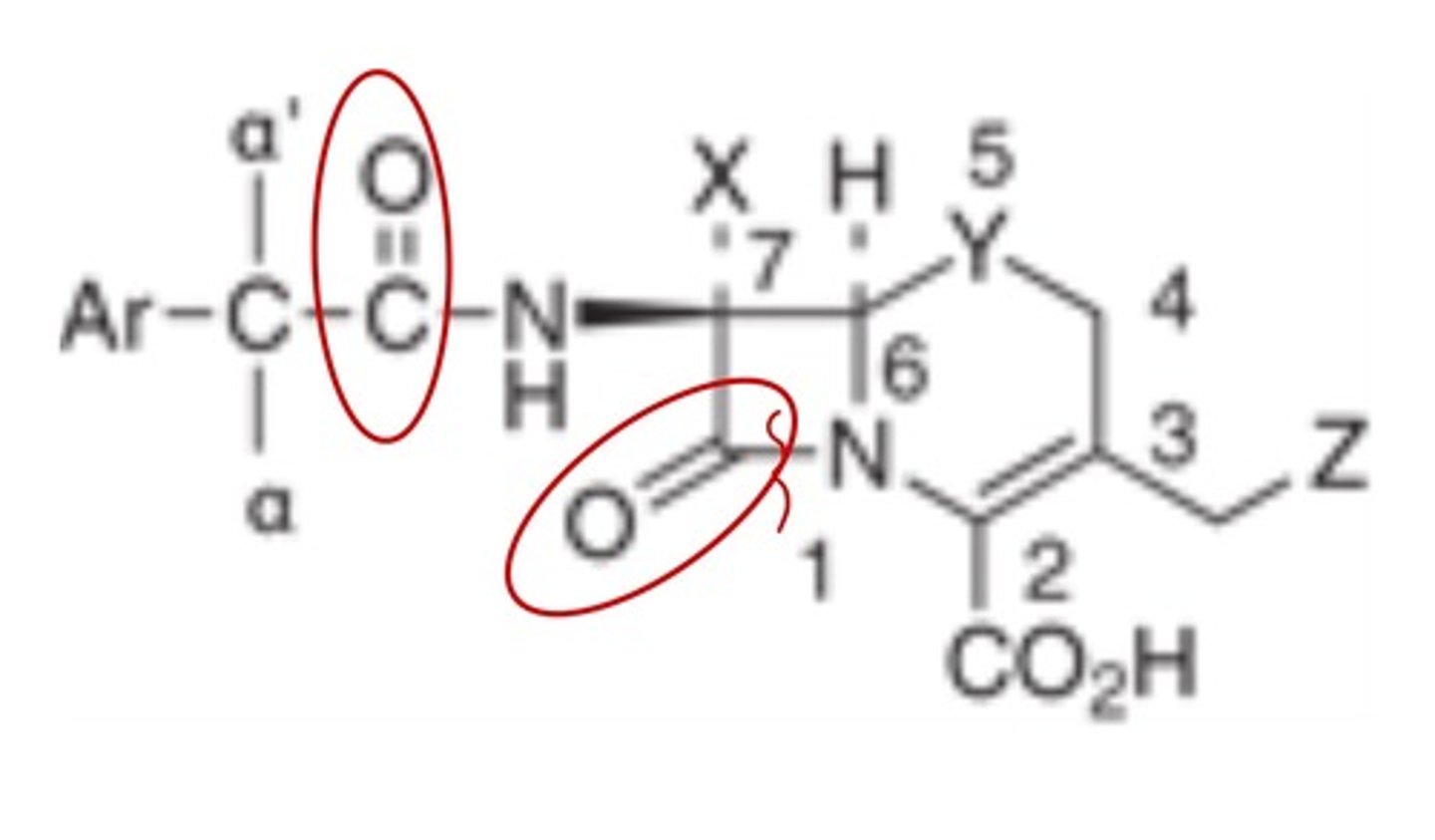
Esterase hydrolysis and spontaneous lactonization
Deactylation followed by lactonization (formation of lactone ring ) masks the acetyl group that binds to PBPs.
- still can bind to D-Ala-D-Ala of PBPs substrate.
Formation of cyclic ester
Amino and H at alpha and alpha' respectively results in oral bioavailability. Why?
Amino and H at alpha and alpha’ respectively results in oral bioavailability because the acid will catalyze hydrolysis of b-lactam bond. Resonance between C-N will cause there to be a double bond between them causing the double bond of the oxygen to break and the charge of the oxygen becomes negatively charged, meaning high electron density on that oxygen that will react with other carbonyl atom where it will break the bond between the nitrogen and that carbonyl.
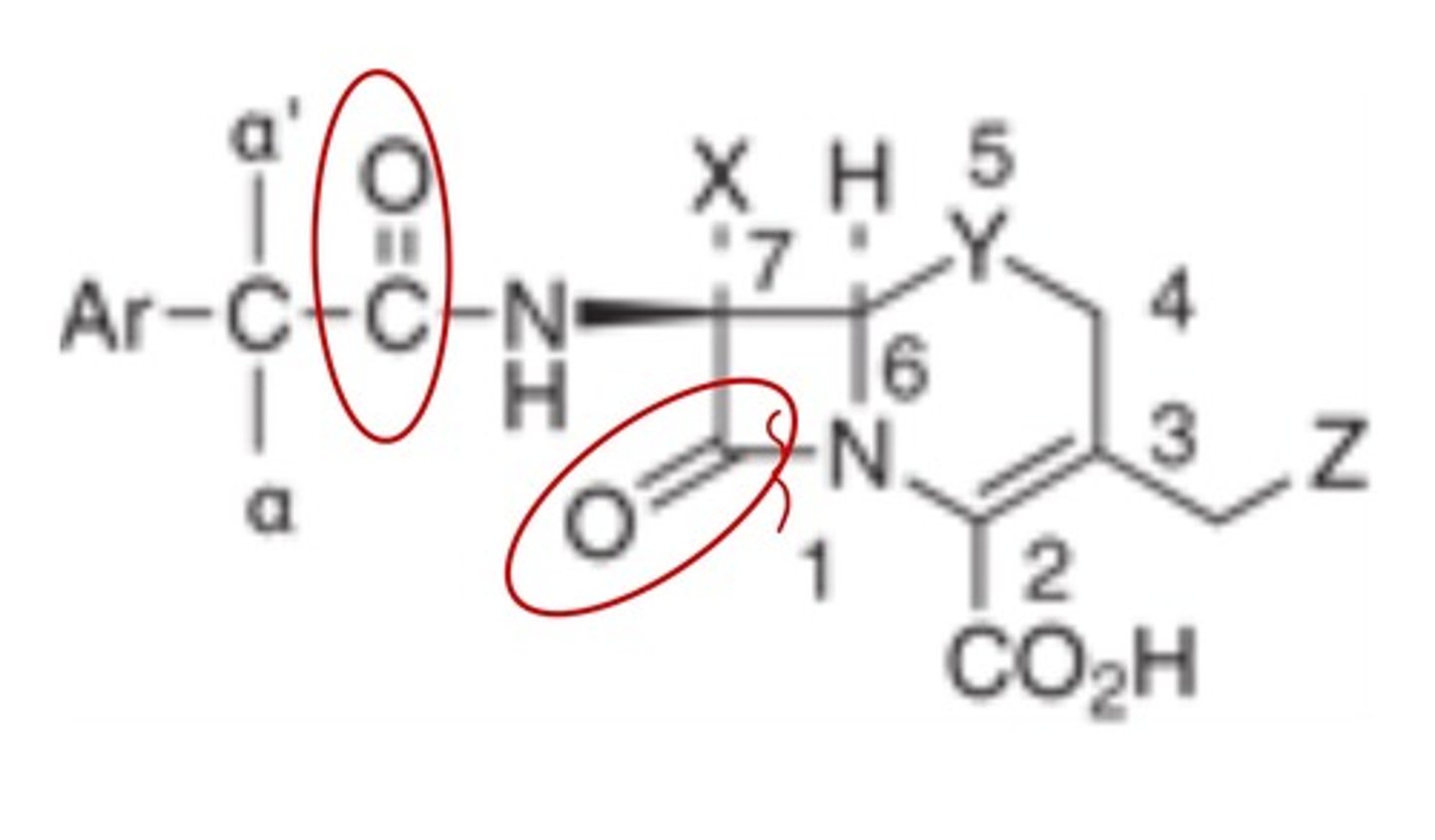
SAR of cephalosporins
- 7b-amino group essential for antibacterial activity
- replacement of C-7 hydrogen w/ alkoxy improves antibacterial activity and b-lactamase stability.
- Y=S, better antibacterial, than when Y=O, but less stable to B-lactamase
- 6a- hydrogen essential for activity against bacteria.
- Z is 5-membered heterocycle, better antibacterial if 6 membered
Which isomer of alpha amino alpha' H of cephalosporins 30 to 40 times more potent than the other?
L-isomer is more potent than the D-isomer
Z-oximes and E-oximes
Z-oximes are 20,000 times more stable than E-oximes
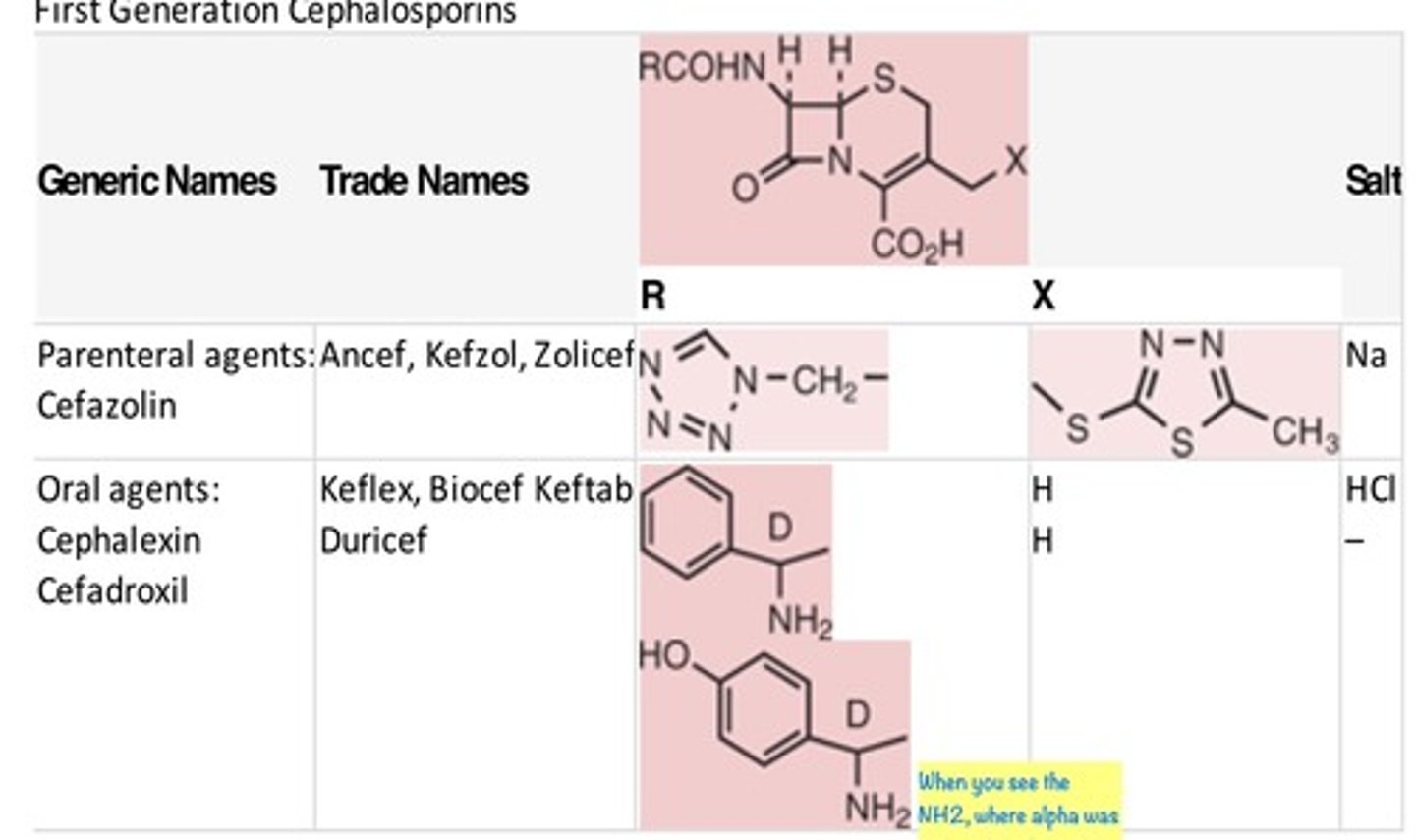
First generation cephalosporins
Parenteral: Cefazolin (Ancef, Kefzol, Zolicef)
Oral: Cephalexin (Keflex, Biocef, Keftab), Cefadroxil (Duricef)
- NH2 seen in oral formulation improves the oral bioavailability of the cephalosporins.
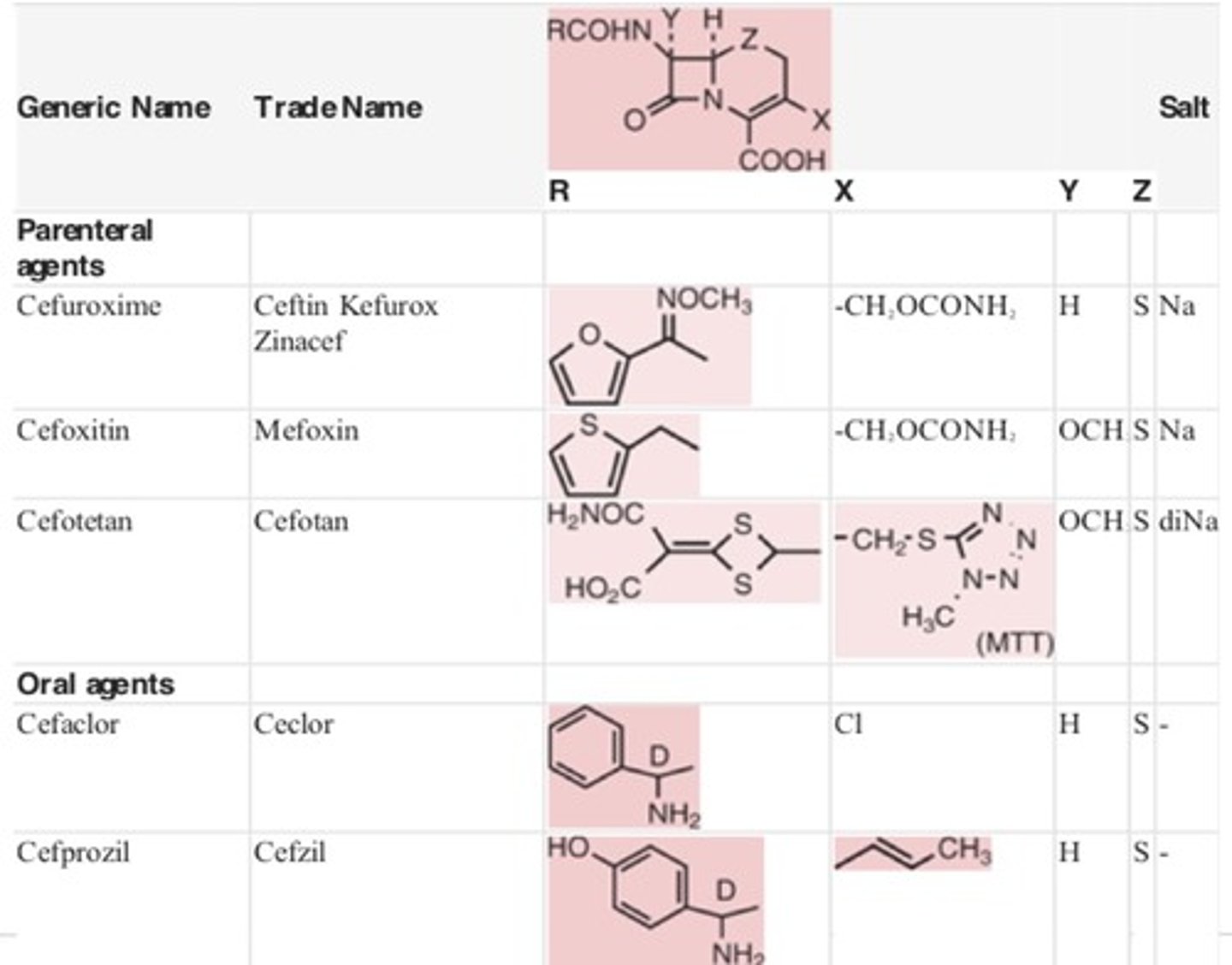
Second generation cephalosporins
Parenteral:
Cefuroxime (Ceftin, Kefurox, Zinacef) - prodrug
Cefoxitin (Mefoxin)
Cefotetan (Cefotan)
Oral
Cefaclor (Ceclor)
Cefprozil (Cefzil)
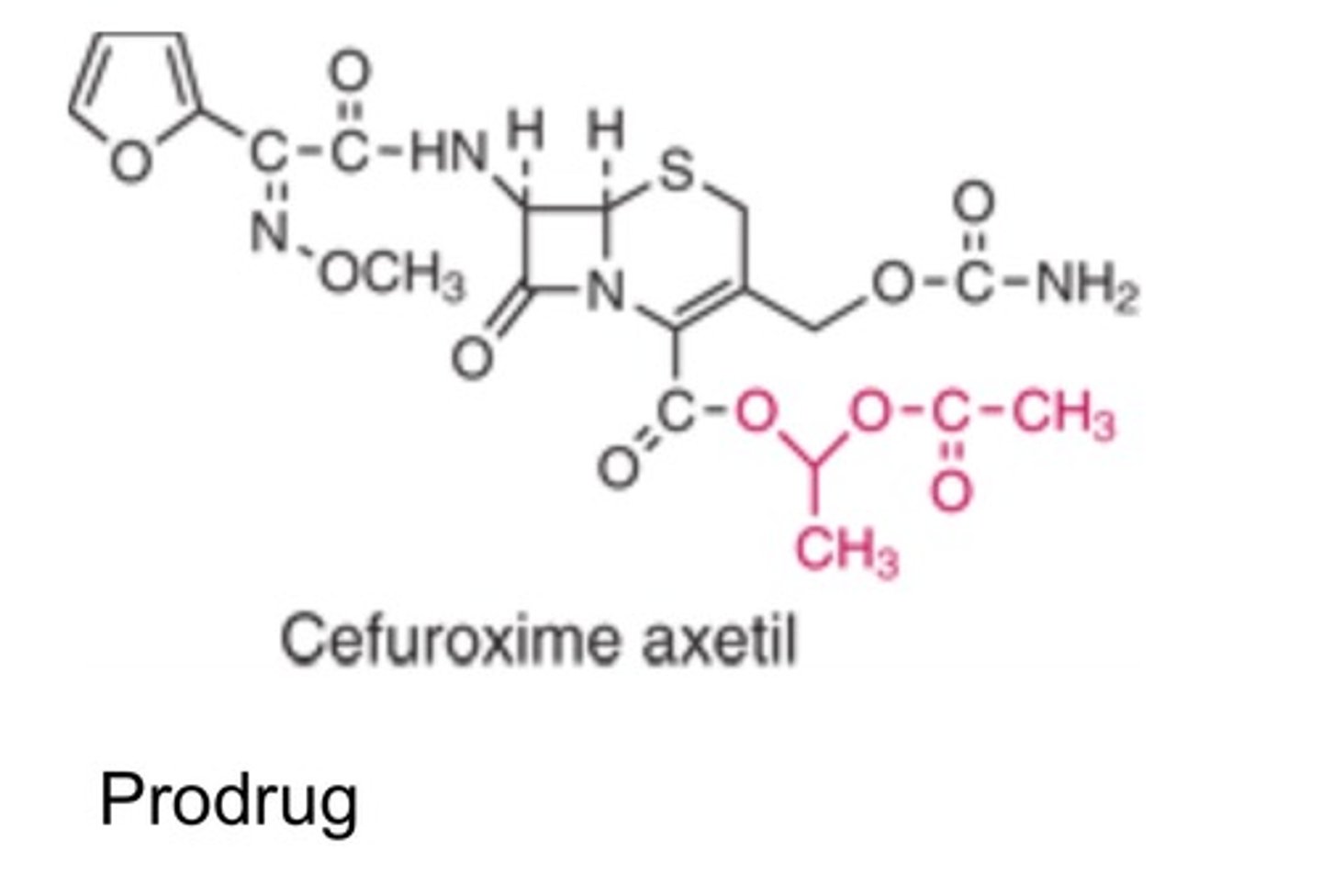
Which of the 2nd generation cephalosporins is a prodrug?
Cefuroxime axetil
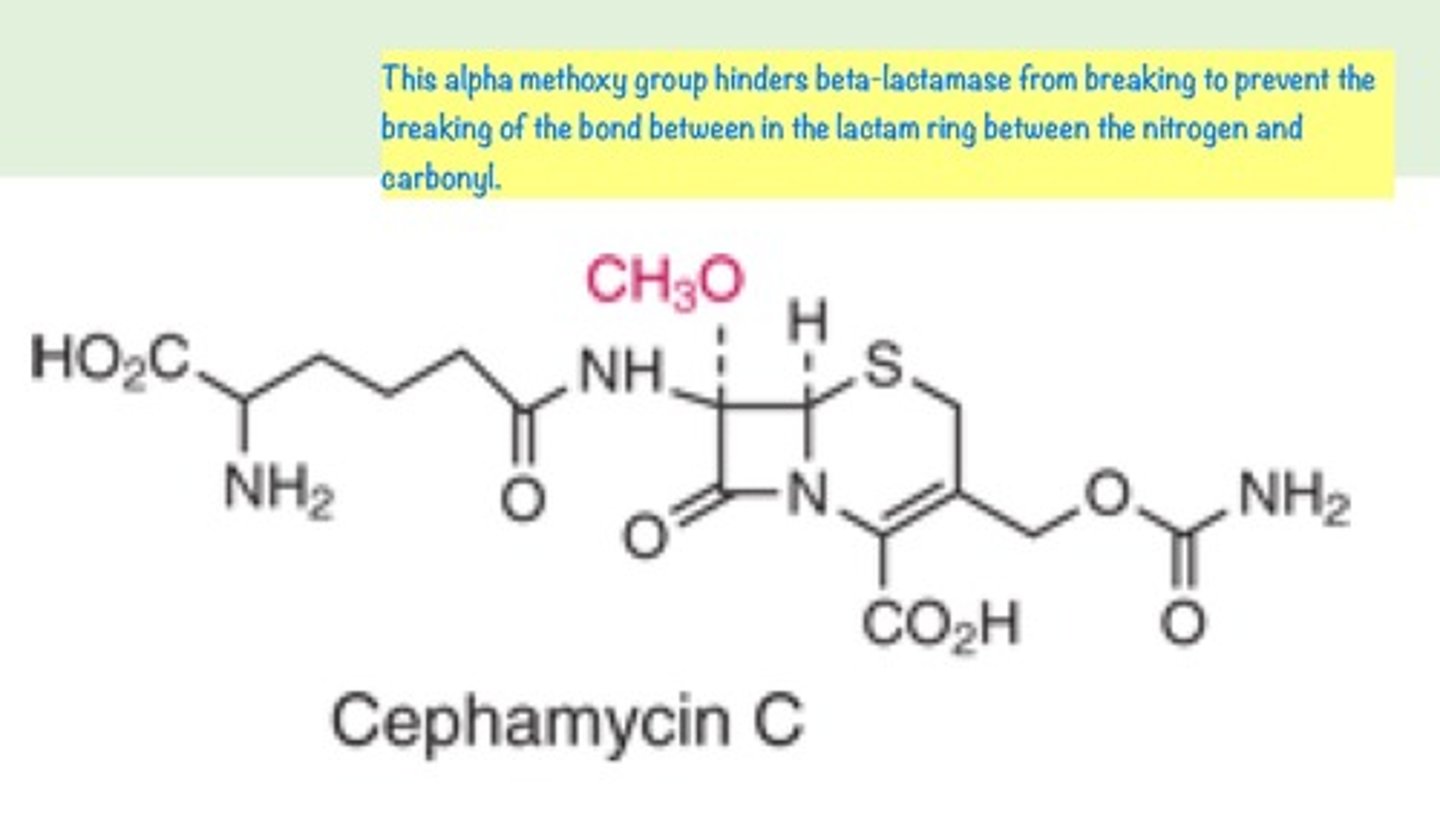
Cephamycin C
Contains alpha methoxy group that hinders beta-lactamase from breaking to break the bond in the lactam ring b/w nitrogen and carbonyl
What is the purpose of the phosphate group in Ceftaroline fosamil (Teflaro) the prodrug of Ceftaroline?
To increase bioavailability because it improves aqueous solubility.
Quaternary N-methylpyrrolidine at C-3 improve Gm- bacterial penetration.
Prodrug has broader spectrum, better B-lactamase stability and increased antistaphylococcal activity.
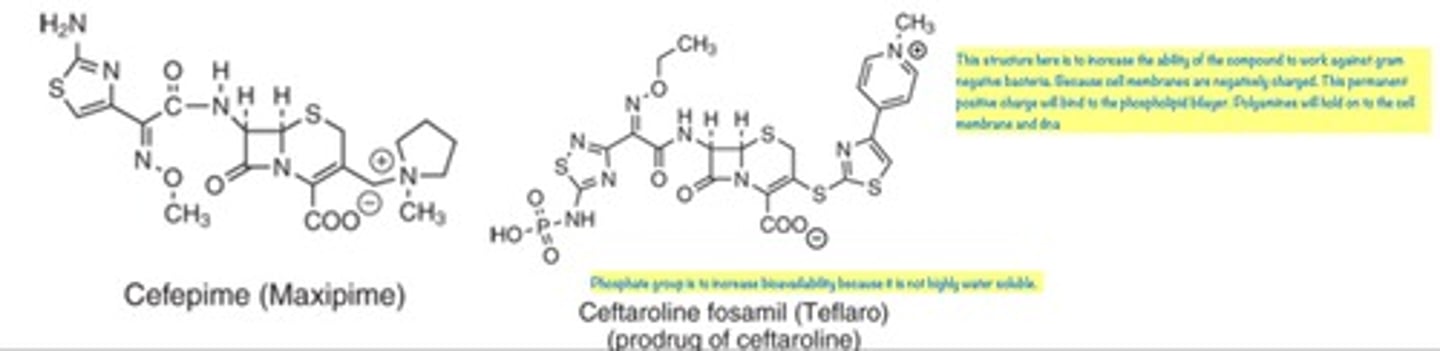
Ceftaroline
Bactericidal against MRSA due to affinity for PBP-2a and Strep pneumoniae due to affinity against PBPs-2x
*remember the phosphate improves aqueous solubility. Phosphate easily hydrolyzed to form active drug.
Carbapenem
Imipenem, Meropenem
- sulfur was replaced by CH2. Endocyclic olefinic bond results in severe ring strain and more reactivity and instability of B-lactam bond.
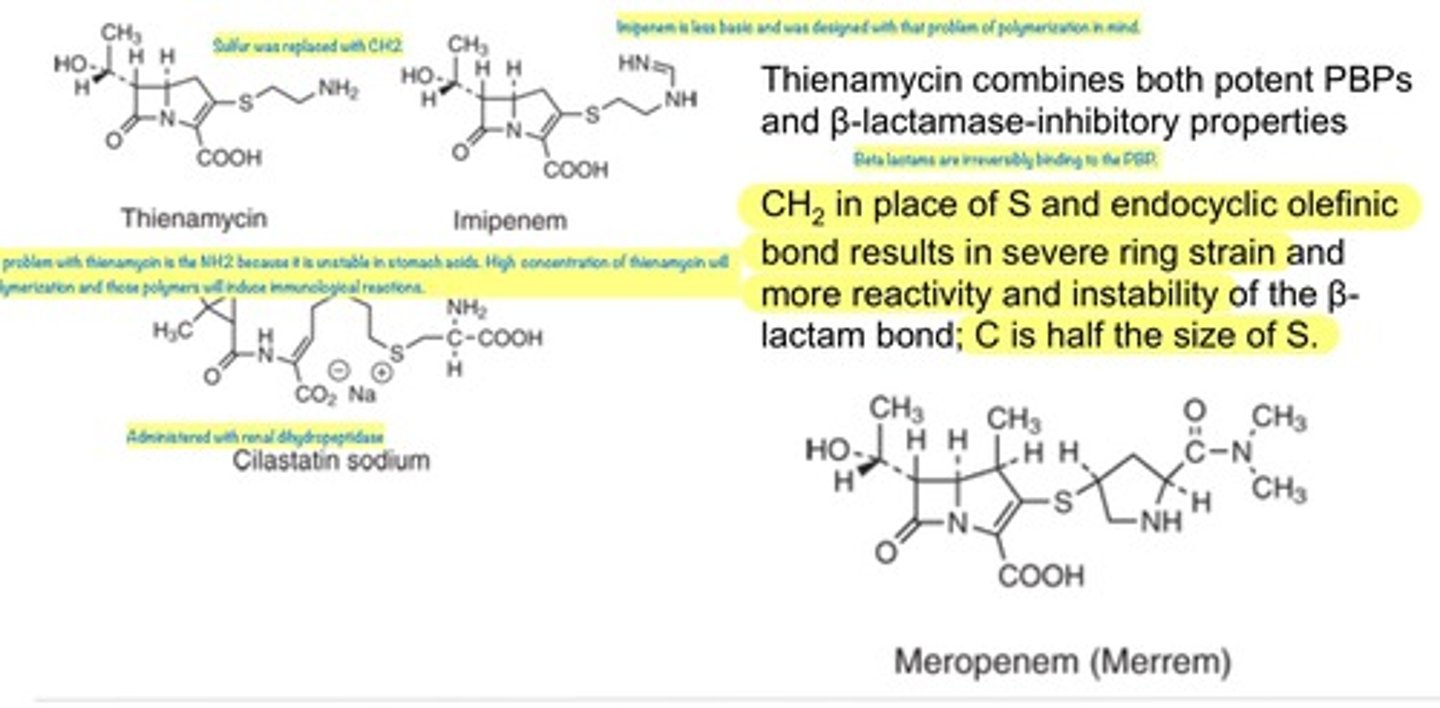
What is the potential issue with thienamycin?
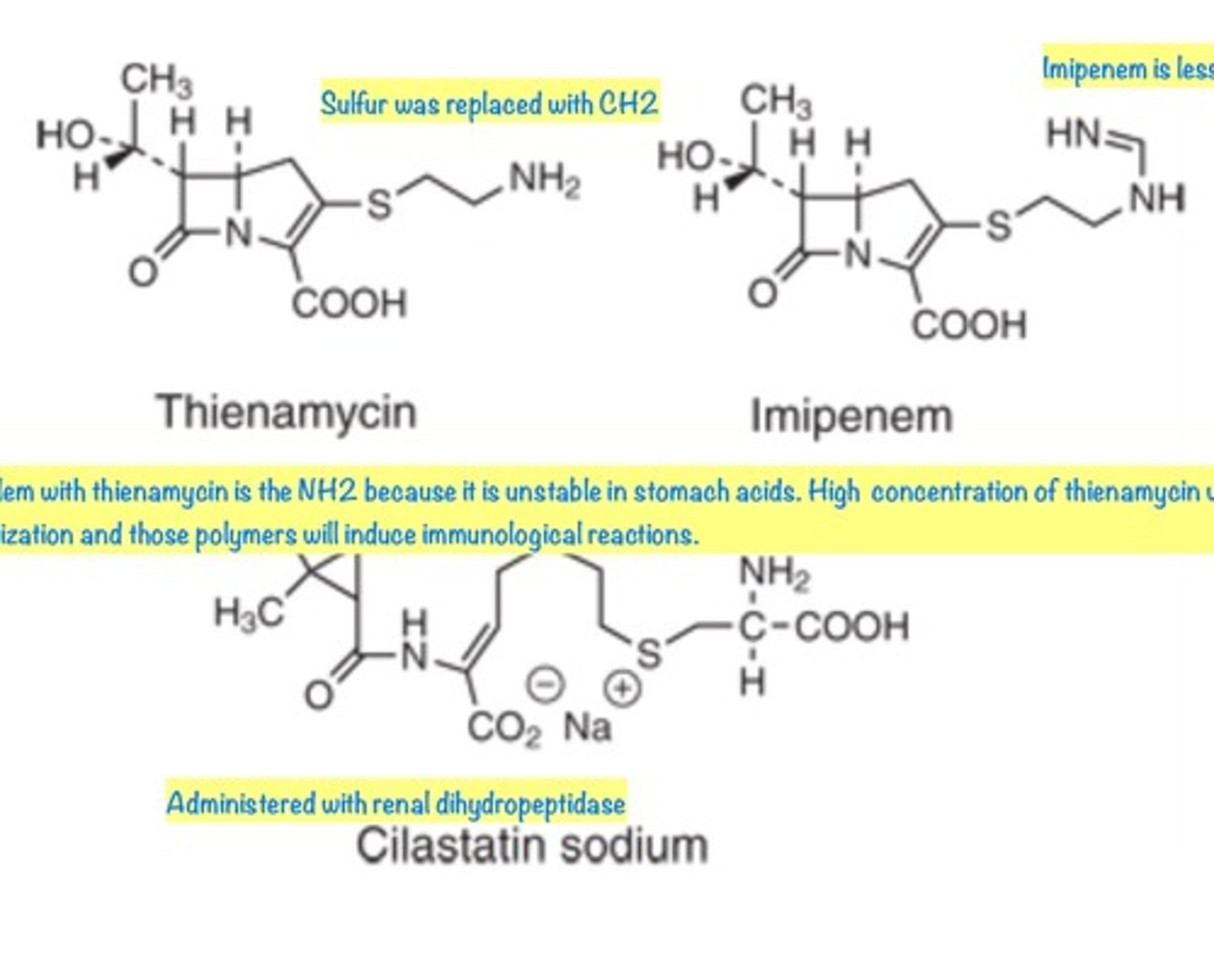
The NH2 is unstable in stomach acids. High concentrations of thienamycin will polymerize and those polymers will induce immunological reactions
- Imipenem designed with this problem of polymerization in mind.

What is coadministered with imipenem and why?
Cilastatin is co-administered to inhibit renal dehydropeptidase-I hydrolysis of the b-lactam bond of imipenem. This does not appear to affect the patients.
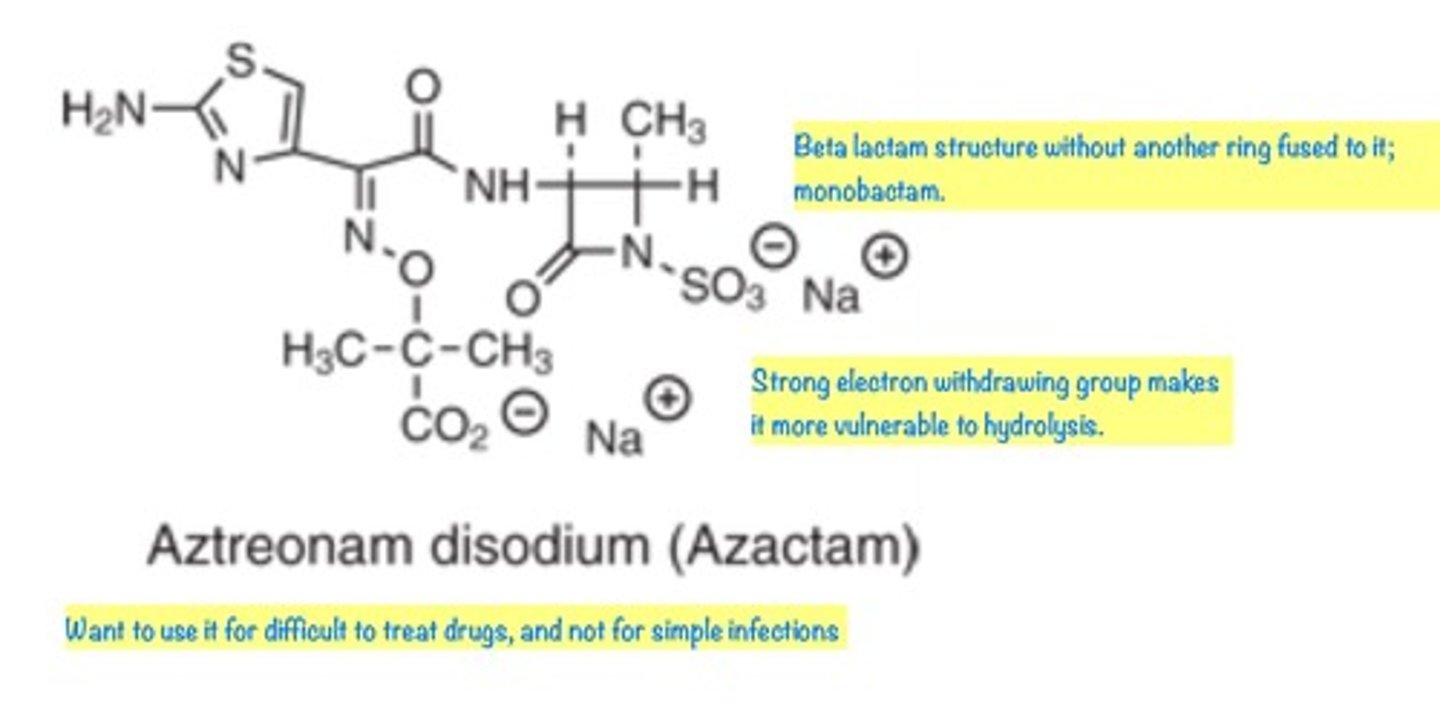
Monobactam
Totally synthetic parenteral antibiotic devoted to tx Gm-.
- covalently binds to some b-lactamase, inactivating them.
- sulfamic acid moiety attached to b-lactam ring.
- e- withdrawing nature of sulfamic acid makes b-lactam vulnerable to hydrolysis
- alpha-methyl at C-2 increases stability to b-lactamase
MOA of monobactam
inhibits bacterial cell wall synthesis by binding one or more PBPs
- similar to penicillin, cephalosporins, and carbapenems
Used to tx hospital-derived severe Gm- infections.
*remember - it’s like using a strong weapon, so it’s not used for hunting small manageable bugs.
What class of antibacterials inhibit protein synthesis?
Tetracyclines
Aminoglycosides (30s)
Macrolides (50s)
Miscellaneous - chloramphenicol, lincosamides (these two bind 50s)
Aminoglycosides pharmacophore
Water-soluble at all pH, they are basic and form acid salts.
Not readily absorbed from GI, oral is mainly for GI infection
Highly excreted by kidneys in active form following IM injection/perfusion.
Amino glycosides structure
Several -OH groups substituted through glycosidic bonds w/ amino sugar characteristic to form pseudo-oligosaccharides.
1,3-diaminoinositol and substituents account for chemistry, spectrum, PK, potency, and toxicity.
Aminoglycoside MOA
Bind to external LPS and diffuse into cytoplasm, where they bind to 16S-ribosomal SU.
- aminoglycosides have potential to become positively charged.
Binds to 30S ribosomal subparticle, impeding proofreading function of ribosome. Cause mistranslation of mRNA, use of wrong AA and synthesis of nonsense proteins.
- semi-perm of membrane is destroyed, irreparable w/out de novo synthesis of functional proteins.
Aminoglycosides resistance mechanism
Increased synthesis of R-factor mediated enzymes; N-acetylate, O-phosphorylate, and O-adenylate specific functional group.
- sterically prevents binding of the aminoglycosides to ribosomes.
Modification by deleting functional group still results in molecules w/ antibiotic properties but no longer substrates for resistance enzymes.
Decreased penetration of aminoglycosides may also result in resistance.
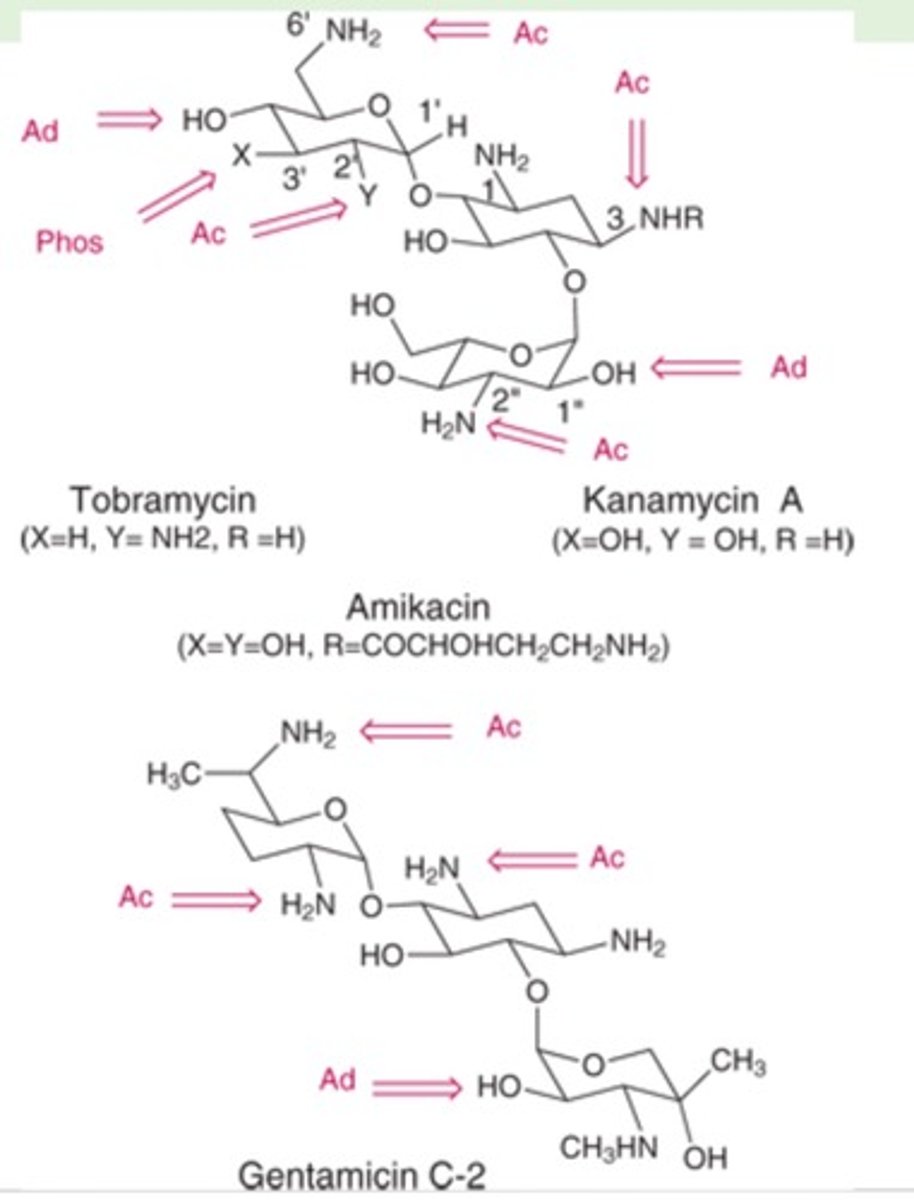
What does APH(3')-1 mean in terms of aminoglycosides and R-factor mediated enzymes?
Enzyme phosphorylates aminoglycosides at the 3'-OH position.
What is the cause of the chemical incompatibility between aminoglycosides and B-lactams?
Aminoglycosides are full of OH and aminogroups, which are neutrophilic. If you mixed beta-lactams and aminoglycosides you get inactivation of the antibiotic. The beta-lactam bond breaks
Macrolides
Large lactone(cyclic ester) ring, with 2 or more characteristic sugars attached to 14-membered ring.
- one of the sugars carries substituted amino group, making them weak base (pKa = 8)
Which of two salts are most water soluble between these choices:
A) glucoheptonic acid
B) lactobionic acid
C) laurylsulfonic acid
D) Stearic acid
A and B. Glucoheptonic and lactobionic acids. These contain sugars which are highly water soluble.
Laurylsulfonic has 12 carbons, Stearic is fatty acids.
Macrolides MOA
Bind to 50S ribosomal subunit, inhibiting translocation of aminoacyl t-RNA.
What are aminoacyl t-RNA?
Molecules that bring AA to the ribosomes. There are at least 20 of them b/c we have 20 AA. 64 possible codons, one is stop codon.
What is the mechanism of resistance to macrolides?
1) R-factor enzyme methylates guanine nucleotide on their own rRNA.
- decreasing protein synthesis efficiency but makes macrolides bind poorly.
2) Mutation of adenine 2058 to guanine
- decrease binding affinity of erythromycin and clarithromycin to 23s rRNA by 10,000 fold.
3) Active efflux
- requires ATP to pump drugs out.
4) Gm- resistance due to lack of penetration, since isolated ribosomes are susceptible.
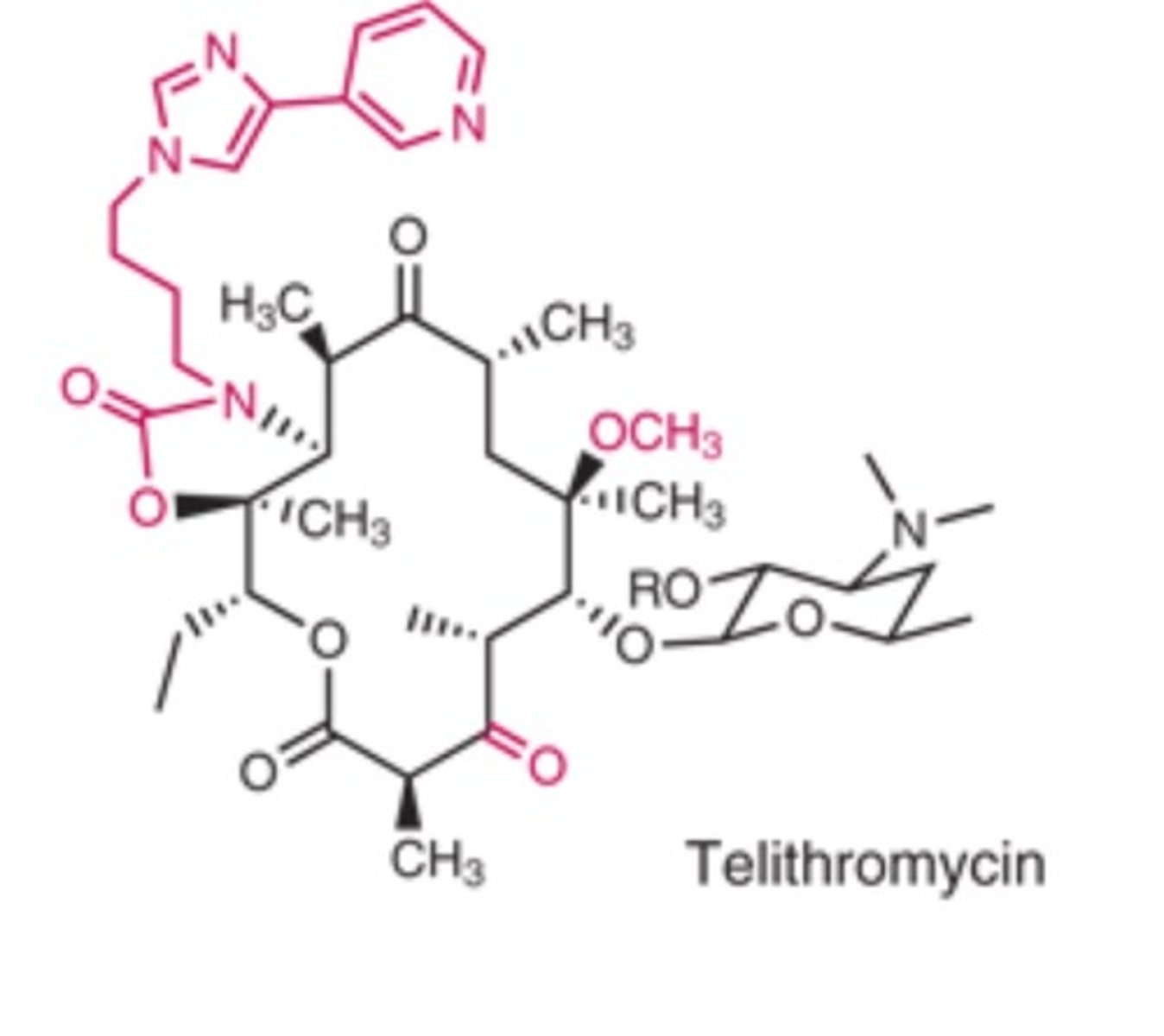
Telithromycin can cause liver toxicity and Anticholinergic effects, therefore it was withdrawn from the market. What caused this to occur?
Pyridine in Telithromycin