OB exam 2 day 3
 Call Kai
 Learn
 Practice Test
 Spaced Repetition
 Match
 Flashcards
 Knowt Play
1/143

There's no tags or description
Looks like no tags are added yet.
144 Terms
subconjuctivical hemorrhage
Blood shot eyes
Result from rupture of capillaries caused by increased pressure during birth.
Goes away after 7-10 days

petechiae
(pinpoint hemorrhagic areas) acquired during birth may extend over the upper trunk and face
Lesions are benign if they disappear within 2 or 3 days of birth and no new lesions appear
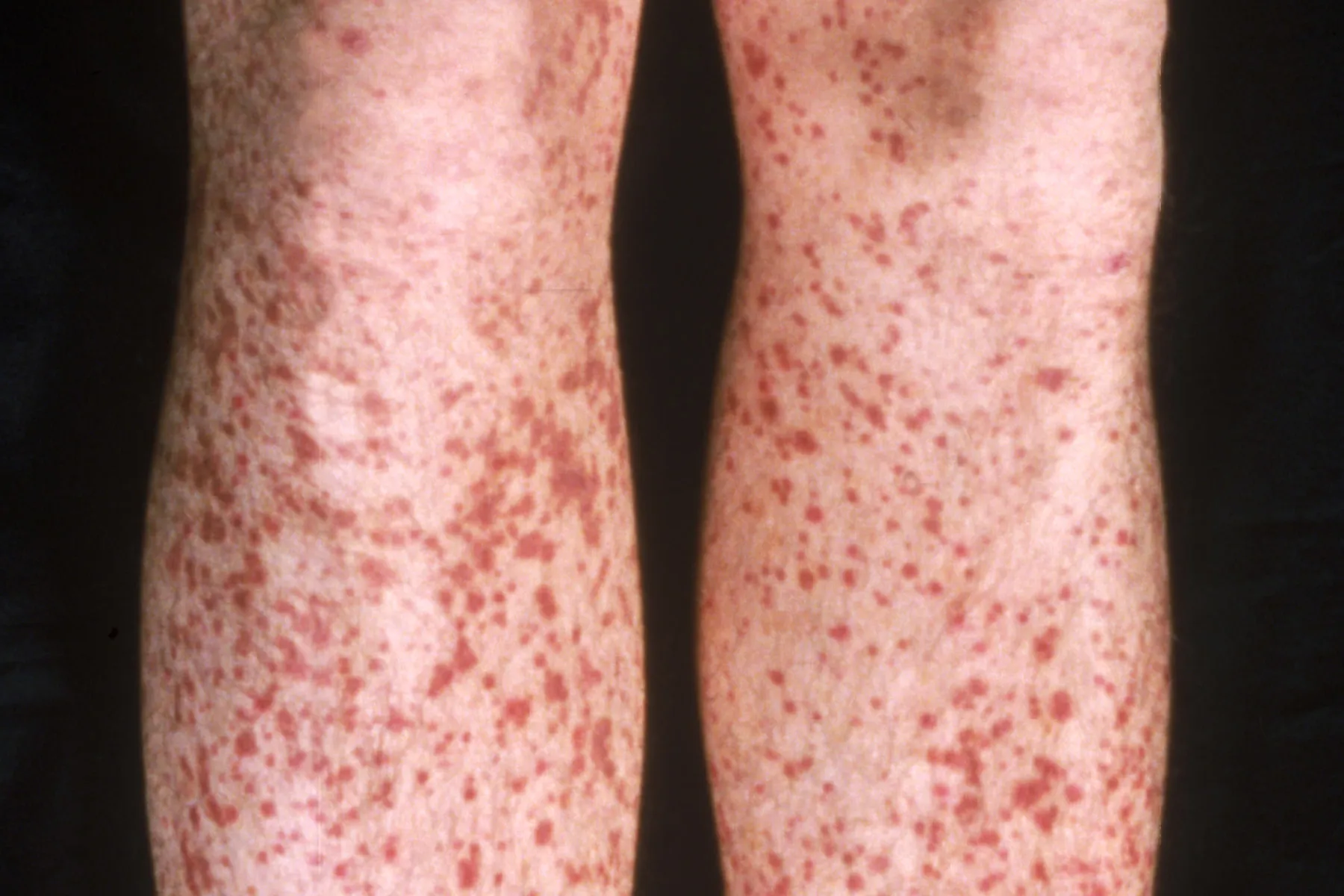
bruises
over the face may be the result of face presentation
communicate this in report bc it can be confused w cyanosis)
hyperbilirubinemia: type 1- physiologic jaundice
Occurs after 24 hours of age in approximately 60% of term newborns and usually resolves without treatment
Caused by immature liver’s inability to keep up with the bilirubin production resulting from normal RBC destruction
risk factors for physiologic jaundice
preterm birth
breastfeeding infants,
Asian or Native American
race
how to assess physiologic jaundice
apply pressure with a finger over a bony prominence (e.g., the nose, forehead, sternum) for several seconds then release the pressure by lifting the finger
if jaundice is present, the blanched area will appear yellowish
always starts in head then goes down
how to assess physiologic jaundice in dark-skinned infants
The conjunctival sacs and buccal mucosa also are assessed
Assessing for jaundice in natural light is recommended because artificial lighting and reflection from nursery walls can distort the actual skin color
no blue walls or pink lights/ tints
how to measure bilirubin levels
Transcutaneous bilirubinometry
bilirubin of 6-7= jaundice
hyperbilirubinemia: type 2- pathologic jaundice
the appearance of jaundice during the first 24 hours of life requires further investigation.
Most dangerous
They can get kernicterus
kernicterus
Build up of bilirubin in babies’ brain
PERMINANT
can cause bilirubin toxicity

consequences of bilirubin toxicity
hypotonia
delayed motor skills
hearing loss
cerebral palsy
gaze abnormalities
phototherapy
Uses light energy to changes structure of unconjugated bilirubin, converting it into a conjugated form that can be excreted through urine and stool.
The infant should only wear a diaper
reposition q2-3h for max skin exposure
fine maculopapular rash may appear but it’ll go away
safety alert w phototherapy
baby wears mask on eyes to prevent retinal damage
remove mask during feeds to clean and so parents can see baby
no lotions or ointments bc it absorbs heat and causes burns
closely monitor baby temp (q 1-2h)
hydrate them
this is how they excrete the bilirubin
output with phototherapy
Monitor urinary output and stools (1g= 1mL)
Urine output may be decreased or unaltered; the urine may have a dark-gold or brown appearance.
loose stools
maintain skin integrity
Fiberoptic Blanket
The newborn can remain in the mother's room in an open crib or in her arms during treatment.

Universal Newborn Screening
Screens for Genetic, Endocrine, and Metabolic Disorders
Samples are usually collected in the hospital after 24 hours of age and before discharge bc the baby has been breastfed or formula fed to get enough protein to get accurate results
Universal Newborn Screening consists of
newborn hearing screen
heel stick (collection of specimens)
newborn hearing screen
When baby hears sound, we look at brain waves
If they fail, it’s usually related to vernix in ears, so repeat it
collection of specimens thru heel stick
Warm the heel before the sample is taken; application of heat for 5 to 10 minutes helps dilate the vessels in the area.
Cleanse the area with an appropriate skin antiseptic, restrains the infant's foot with a free hand, and then punctures the site.
Use a spring-loaded automatic puncture device
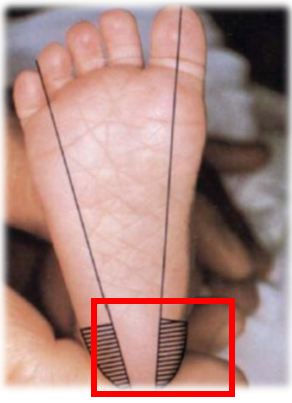
The stick should be made at the outer aspect of the heel.
Draw an imaginary line from between the fourth and fifth toes and parallel to the lateral aspect of the foot to the heel where the stick should be made; a second line can be drawn from the great toe to the medial aspect of the heel
ALWAYS DONE TO OUTSIDE OF FOOT TO AVOID NERVE DAMAGE
Prevention of Infant Abduction
Teach mothers to check the identity of any person who comes to remove the baby from her room.
Hospital personnel usually wear picture identification badges.
On some units, all staff members wear matching scrubs or special badges.
Other units use closed-circuit television, computer monitoring systems, fingerprint identification pads, or infant bracelet security system.
Immunizations
A 25-gauge, 5/8-inch needle should be used for the vitamin K and Hepatitis B vaccine injections.
The preferred injection site for newborns is the vastus lateralis
hep b vaccine
The usual dosage is 0.5 ml, at 0, 1, and 6 months.
For infants of mothers with negative hepatitis B status: administer HepB vaccine before discharge from hospital
Bc fever is a SE and we can monitor them
For infants born to HBsAg–positive mothers: administer HepB vaccine and HBIG within 12 hours after birth in separate sites.
Newborn Male Circumcision
personal parental choice
Procedure of circumcision
Circumcision with Yellen clamp. After hemostasis occurs, the prepuce (over cone) will be cut away
Four types of anesthesia and analgesia are used in newborns who undergo circumcisions
ring block
dorsal penile nerve block
topical anesthetic cream (most common)
nonpharmacologic measures
nonpharmacologic measures for circumcision
oral sucrose
nonnutritive sucking (pacifier)
swaddling
Care of newly circumcised infant
Circumcision site is assessed for bleeding every 15 to 30 minutes for the first hour and then hourly for the next 4 to 6 hours.
Monitors the infant's urinary output, noting the time and amount of the first voiding after the circumcision
Circumcision site is assessed for bleeding every 15 to 30 minutes for the first hour and then hourly for the next 4 to 6 hours
oozing of blood is ok, active bleeding is not ok (aka if diaper has blood)
If bleeding occurs, apply gentle pressure with a folded sterile gauze square. If bleeding does not stop with pressure, notify primary health care provider
circumcision: Monitors the infant's urinary output, noting the time and amount of the first voiding after the circumcision
baby cannot be discharged until they void
Care of the Circumcised Newborn at Home
Wash the penis gently with water (no soap) to remove urine and feces and, if necessary, applies fresh petrolatum around the glans after each diaper change, but do not bock meatus.
Apply the diaper so that it does not press on the circumcised area (loosely).
The glans penis, normally dark red during healing, becomes covered with a yellow exudate in 24 hours.
No attempt should be made to remove the exudate bc it’s scar tissue forming, which persists for 2 to 3 days.
Management of Neonatal Pain (nonpharm)
Swaddling
Non nutritive sucking
Skin-to-skin contact with mother
Distraction (speaking softly to the infant, massaging the face, oral sucrose)
touch, massage
rocking
holding
low noise and lights
How to know if a baby is in pain:
eyes squint shut
prominent eyebrows
mouth wide open
Sleeping, Positioning and Holding of baby
Place the infant in the supine position during the first year of life to prevent SIDS.
When the infant is awake, “tummy time” can be provided under parental supervision so the infant may begin to develop appropriate muscle tone for eventual crawling; this tummy time is also effective in the prevention of plagiocephaly. You have to watch them during tummy time
The sleep surface should be firm and noninclined.
Never put your baby on a cushion, pillow, beanbag, or waterbed to sleep, as the baby may suffocate.
Football and cradle hold are good ways to hold
smoking around baby
Avoid exposing your baby to cigarettes in your home or other places
Passive exposure to tobacco smoke gently increases the likelihood that your infant will have respiratory symptoms and illnesses. It also increases the risk for SIDS
diaper rash
Diapers should be checked often and changed as soon as the infant voids or stools.
Plain water with mild soap is used to cleanse the diaper area; if baby wipes are used, they should be unscented.
Skin should be allowed to dry completely before applying another diaper.
Zinc oxide ointments can be used.
Older child= strip child and let them be exposed to air
clothing in infants
Dress the child as they dress themselves, adding no more than one layer more than they would be wearing as adults.
A hat is needed to protect the scalp and minimize heat loss if the weather is cool or to protect against sunburn. All babied should be wearing hats
Infant sunglasses are available to protect the infant's eyes when outdoors
car seat safety
rear-facing seat until the age of 2
gives the best protection for the disproportionately weak neck and heavy head of an infant.
In cars equipped with air bags, rear-facing infant seats should not be placed in the front seat unless the air bag has been deactivated
pacifiers
pacifier for naps and bedtime are recommended
Pacifier use for breastfeeding infants should be delayed until breastfeeding is well established.
nail care for infants
Do not cut fingernails and toenails immediately after birth.
If the baby scratches themselves: apply loose mitts
When the nails have grown, the fingernails and toenails can be trimmed with clippers
nails should be cut straight across
Trim the nails is when the infant is sleeping
Soft emery boards may be used to file the nails
Nails should be kept short.
Umbilical cord care
Cleaning the cord with plain water.
With special scissors, remove clamp after cord dries (approximately 24 to 48 hours).
The average cord separation time is 10 to 14 days.
The diaper should not cover the cord.
Baby needs sponge bath until cord falls off and circumcision heals
umbilical cord assessment
assess w each diaper change
edema
redness
purulent drainage
amulet
Check if it’s allowed bc it can be considered a choking hazard
Nutrient Needs of the Infant : fluid
NO infants need to be given water, not even those living in very hot climates.
Nutrient Needs of the Infant: energy
Human milk provides 67 kcal/100 ml or 20 kcal/oz.
Nutrient Needs of the Infant: carbs
CHO needed for 6 months of life is 60 g/day
Solid food is given after this
Nutrient Needs of the Infant: fat
Fatty acids found in breast milk are important for growth, neurologic development, and visual function.
Nutrient Needs of the Infant: protein
This whey/casein ratio in human milk makes it more easily digested and produces the soft stools seen in breastfed infants
Less likely to be constipated if breastfed while formula fed is more likely
Nutrient Needs of the Infant: vitamins
According to the AAP, all infants who are breastfed or partially breastfed should receive 400 international units of vitamin D daily, beginning the first few days of life.
Breastfed infants of vegan mothers and mothers who received bariatric surgery may need vitamin B12 supplementation.
Nutrient Needs of the Infant: minerals
Full-term infants have enough iron stores from the mother to last four months. After that time, exclusively breastfed infants are at risk for iron deficiency. They should receive an iron supplement until they are consuming complementary foods that contain iron (e.g., iron-fortified cereals).
From 6 months to 3 years, fluoride supplements are based on the concentration of fluoride in the water supply
Nutrient Needs of the Infant: breastfeeding
AAP recommends exclusive breastfeeding for the first 6 months of life.
Complementary foods are introduced at about 6 months and continue to breastfeed as long as mutually desired by the mother and child, until the child is 2 years or older
Contraindications to Breastfeeding and Feeding Expressed Milk
Galactosemia in infant
Human immunodeficiency virus other countries allow it bc they don’t have access to formula
T-cell lymphotropic virus I or II (leukemia)
Ebola infection
Illicit drugs with the exception of enrollment in methadone treatment program
Other medical conditions require separation of the infant but mother can still express milk (e.g. active tuberculosis)
Anatomy of the Lactating Breast
Size and shape of the breast are not accurate indicators of its ability to produce milk
A very small number of women have insufficient mammary glands to breastfeed exclusively
These women experience few breast changes during puberty and pregnancy
May still be able to breastfeed and offer supplemental nutrition through nursing devices
Lactogenesis
Supply meets demand system
The more you breastfeed your baby, the more you will make
Incomplete emptying of the breasts can lead to decreased milk supply.
As nipple is stimulated by suckling infant, posterior pituitary, prompted by hypothalamus, produces oxytocin
Milk-ejection reflex or let-down reflex
Milk-ejection reflex or let-down reflex
Thoughts, sights, sounds, or odors that the mother associates with her baby, such as hearing the baby cry, can all trigger the Milk Ejection Reflex
Wear nursing pads in bras
may occur during sexual activity because oxytocin is released during orgasm
Breastfeed baby before sex and wear a bra
breastfeeding vs PPH
Oxytocin has the important function of contracting the mother's uterus after birth to control postpartum bleeding and promote uterine involution. Thus mothers who breastfeed are at decreased risk for postpartum hemorrhage
SE of breastfeeding
thirst
have water nearby
prolactin and oxytocin
prolactin: makes milk
oxytocin: contracts uterus
“mothering hormones”
Lactogenesis stage I
Beginning at 16 to 18 weeks of pregnancy
Colostrum: a clear, yellowish fluid. Extremely rich in immune globulins. Higher concentration of protein. Less fat than mature milk prevents infections
Laxative action of colostrum promotes early passage of meconium
Lactogenesis stage II
Occurs by day 3 to 5 of life when copious amount of milk comes into breast
Lactogenesis stage III
Breast milk continues to change in composition for approximately 10 days to meet needs of baby
Lactogenesis stage IV
Cessation of breastfeeding and involution of the glandular tissue of the breast
Babies have fairly predictable growth spurts (at approximately 10 days, 3 weeks, 6 weeks, 3 months, and 6 months), when more frequent feedings stimulate increased milk production
These growth spurts usually last 24 to 48 hours, and then the infants resume their usual feeding pattern
Montgomery glands:
Produce oils helps w breastfeeding
Produces scent to help baby encourage breastfeeding

Breastfeeding Initiation
Feeding-readiness cues
Sucking or mouthing motions
Hand to mouth, hand to hand movements
Rooting reflex
Babies normally consume small amounts of milk during the first 3 days of life.
Milk intake increases from 5 to 15 ml per feeding in the first 24 hours to 60 to 90 ml by the end of the first week.
Breastfeeding Initiation: rooting reflex
infant moves toward whatever touches the area around the mouth and attempts to suck
poisitoning to breastfeed
The four basic positions for breastfeeding are the football or clutch hold (under the arm), cradle, modified cradle or across-the-lap, and side-lying position.
The football or clutch hold is often recommended for early feedings because the mother can easily see the baby's mouth as she guides the infant onto the nipple.
Mothers who gave birth by cesarean often prefer the football or clutch hold.
With football hold, they have full view of babies face
latching
Step 1: wash hands (bc mom has staph aureus on hands and get mastitis if she has a cracked nipple)
Step 2: col breast like a c
Step 3: press breast like a sandwich
Step 4: tickle babies mouth then BABY goes to BREAST
breast and baby
As much of nipple needs to be in mouth as possible (or they’ll get crackled nipples)
Know shes latched when she feels a tugging sensation, gliding jaw, hear baby swallow
breaking suction
inserting a finger in the side of the baby's mouth between the gums and leaving it there until the nipple is completely out of the baby's mouth
Otherwise she’ll get cracked nipples
Milk Ejection or Let-Down
Tingling sensation in the nipples and in the breasts.
The baby's suck changes from quick, shallow sucks to a slower, more drawing, sucking pattern.
Audible swallowing is present as the baby sucks.
In the early days, the mother feels uterine cramping and may have increased lochia during and after feedings. (bc of oxytocin)
The mother feels relaxed or drowsy during feedings.
The opposite breast may leak. (let-down reflex)
size of baby’s belly
Day 1: babies belly Is size of marble
Day3: size of ping-pong ball
Day 10: size of easter egg
frequency of feeds
Newborns need to breastfeed 8 to 12 times in a 24-hour period. (q2-3h bc of size of stomach)
infant: 8 feedings in 24 hours
signs of wanting to eat
Sucking on hand/ rooting
Duration of Feedings
The average time for early feedings is 30 to 40 minutes.
The first breast offered should be alternated at each feeding to ensure that each breast receives equal stimulation and emptying.
Feeding on the first breast until it softens ensures that the baby receives the higher fat hindmilk, which usually results in increased weight gain.
Signs of Effective Feeding
Audible swallowing is present
Infant appears contented after feeding
Has at least 3 substantive bowel movements and 6-8 wet diapers every 24 hours after day 4
Supplements, Bottles, and Pacifiers
no supplements should be given to breastfeeding infants.
It is best to avoid bottles until breastfeeding is well established.
feeding the Sleepy baby
Unwrapping the baby, changing the diaper, sitting the baby upright, talking to the baby with variable pitch, gently massaging the baby's chest or back, and stroking the palms or soles may bring the baby to an alert state
Placing the sleepy baby skin-to-skin with the mother and moving to the breast when feeding readiness cues are apparent.
feeding the fussy baby
Notify HCP if baby has persistent crying or refusing to breastfeed
Weight Loss or Slow weight gain
Stress and fatigue also negatively affect milk production
Adding a feeding or two in a 24-hour period may help.
feeding w jaundice
Newborns should be breastfed frequently during the first several days of life
Increased frequency of feedings is associated with decreased bilirubin levels.
Breastfeeding multiple infants
Parenting multiples may be overwhelming, and mothers, as well as fathers, need extra support and assistance learning how to manage feedings.
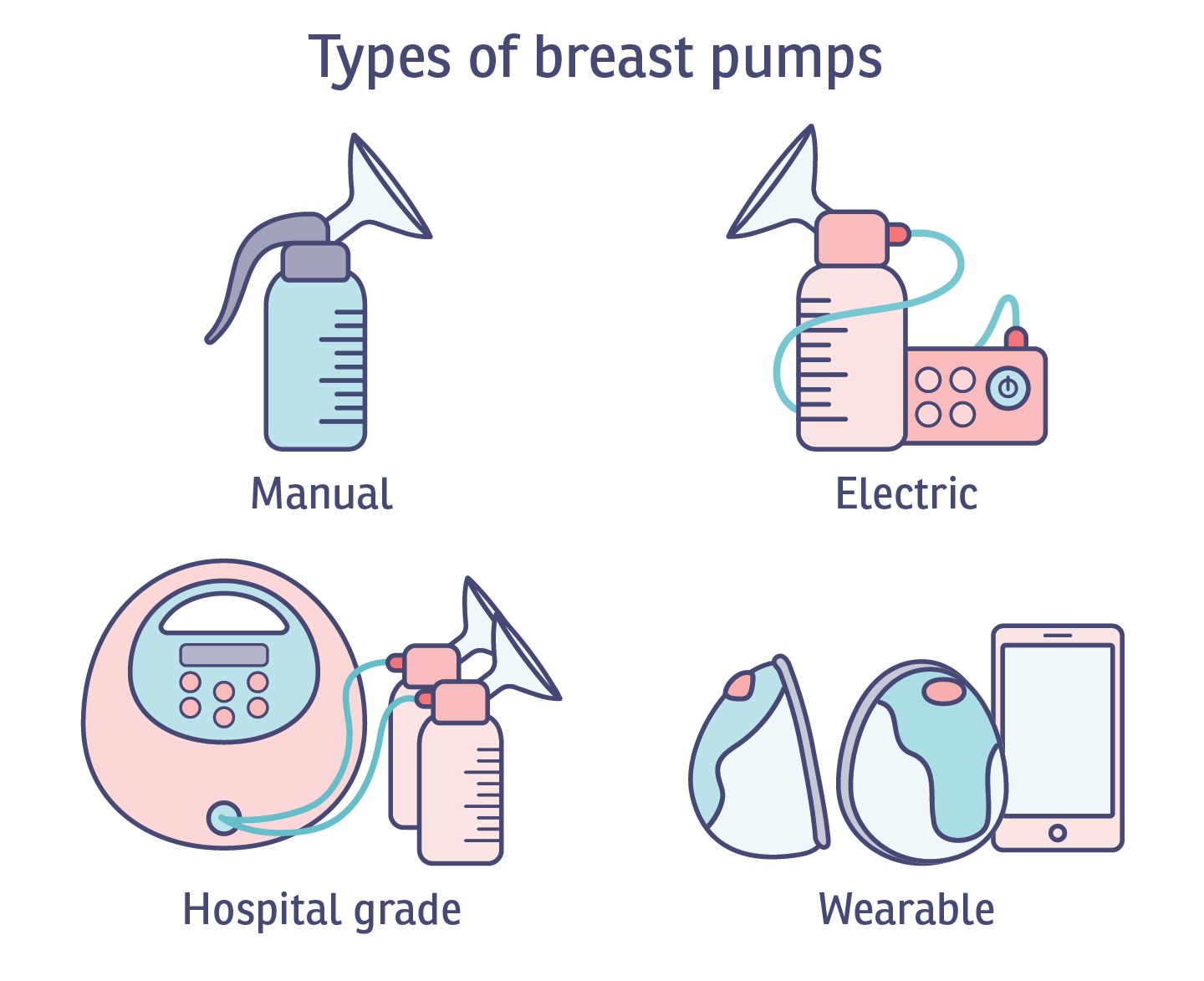
Types of pumps
Manual breast pumps.
Bilateral breast pumping.
Storage of breast milk: short term
short-term storage (<72 hours), plastic bags designed for human milk storage can be safely used.
Freshly expressed breast milk can be safely stored at room temperature for up to 4 hours, and it can be refrigerated safely for up to 4 days.
Best to store milk in glass bc immunoglobulins will stick to plastic
All breastmilk should be labeled w date, time and amount
Storage of breast milk: frozen
freezer: 6 months
deep freezer: 12 months
Storage of breast milk: thawing
Frozen milk is thawed by placing the container in the refrigerator for gradual thawing or in warm water for faster thawing.
After thawing the container needs to be shaken so as to mix the layers that have separated.
Breast milk is never thawed or heated in a microwave
It will destroy vitamin c and immunoglobulins
weaning
Every few days thereafter the mother drops another feeding, and so on, until the infant is gradually weaned from the breast.
Eliminate fav feeding last (usually the one before bed)
nutrition of mother during breastfeeding
Burn Extra 330 to 400 calories per day
Drink to quench thirst.
Caffeine intake of 300 to 500 mg appears safe for normal, full-term infants.
rest of mother during breastfeeding
Fatigue, stress, and worry can negatively affect milk production and milk ejection (let-down).
breast care
Soap can have a drying effect on nipples.
Underwire bras or improperly fitting bras can cause clogged milk ducts.
If leakage of milk between feedings is a problem, mothers can wear breast pads inside the bra.
Herbs and Herbal Preparations when breastfeeding
evaluated for its compatibility with breastfeeding
Substance Use with breastfeeding
Limit alcohol to 1 beer or 8 ounces of wine and wait 2 hours after drinking to breastfeed.
Do no smoke within 2 hours before breastfeeding and never to smoke in the same room with the infant.
Common concerns of the breastfeeding mother
nipple discomfort
plugged milk duct
mastitis
nipple discomfort
During feeding can be caused by issues with the infant’s oral anatomy
Visual examination in combination with assessment of the infant’s suck may reveal problems
baby can be tongue tied
How to prevent Sore nipples
Remove the baby from the breast, break suction with her finger in the baby's mouth; lower jaw. Repositioning the mother or infant may be helpful in resolving the nipple discomfort.
Start the feeding on the least sore nipple bc it’ll cause the let-down reflex
Electric breast pump for 24 to 48 hours to allow the nipples to begin healing before resuming breastfeeding.
plugged milk duct
A milk duct may become plugged or clogged, causing an area of the breast to becomes swollen and tender.
intervention for plugged milk duct
Apply warm compresses to the affected area and to the nipple before feeding helps promote emptying of the breast and release of the plug.
Frequent feeding is recommended, with the baby beginning the feeding on the affected side to foster more complete emptying.
Massage the affected area while the infant nurses or while she is pumping.
Varying feeding positions and feeding without wearing a bra may be useful in resolving a plugged duct.
how do people get mastitis
staph aureus on hands then touching breast w cracked nipple
s/s of mastitis
Sudden onset of flu-like symptoms
fever
chills
malaise
body aches
headache
N/V
Localized breast pain and tenderness
a hot, reddened area of the breast
Most often occurs in the upper quadrant of the breast. One or both breast can be affected.
mastitis interventions
Bedrest
Cephalexin or dicloxacillin and antiflammatory medications.
Motrin
Cold compresses
Adequate fluid intake and balanced diet
Can continue to BF or pump frequently bc infection is in connective tissue, not in breastmilk
Empty the affected side adequately.
formula feeding patterns
In the first 24 to 48 hours of life a newborn will take 15 to 30 ml of formula at a feeding.
Most newborns are drinking 60 to 90 ml at a feeding for the first few weeks.
During growth spurts, increase the amount of formula per feeding by approximately 30 ml.
formula feeding techniques
Sit comfortably, hold the infant closely in a semi upright position with good head support.
A bottle should never be propped with a pillow. May result in choking, deprives the infant of interaction during feeding, and causes decay of the first teeth.
The bottle should be held so that fluid fills the nipple and none of the air in the bottle is allowed to enter the nipple.
Most infants swallow air when fed from a bottle and need a chance to burp several times during a feeding. (burp every .5oz or between breasts)