ID2241 - Greek Art #1
 Call Kai
 Learn
 Practice Test
 Spaced Repetition
 Match
 Flashcards
 Knowt Play
1/13

There's no tags or description
Looks like no tags are added yet.
Name | Mastery | Learn | Test | Matching | Spaced | Call with Kai | Chat |
|---|
No analytics yet
Send a link to your students to track their progress
14 Terms
General
The move towards "Realism"
Geometriciyzing Period of Greek Art
Archaic Greek Art
Classical Greek Art (introduction)

Geometric amphora from Dipylon Cementery, 750 BC (Geometriciyzing)
Physical Attributes:
Athens
5 ft tall
used as a grave marker
hollow base
partially buried or staked to the grave itself
Amphora
two handled vessel
amphomorphiszed whatever
Geometricizing
had lots of shapes painted on
squares, parallel lines, meander pattern
Register - narrative scene
funerary rights
composite view
Schema
triangle
Minoan I guess bro


Mantiklos Apollo, 700-680 BC: (Geometriciyzing)
Physical Attributes:
lost wax bronze casting process
8 inch tall
Geometricizing
text included
identifies who it is
ritual
Apollo
offering
Schema
traingle (body and head)
cylinders
Minoan Schema
Influence from Toreador Fresco Minoans

(Lady of Auxerre, 650 BC, Geometricizing period):
carved in limestone
geometricizing period
found in a museum in Auxerre, France
Schema
Cylinders
Polychromed

Kouros, Metropolitan Museum, 600 BC: (Archaic Greek art:)
6 feet 4
carved in marble
Kouros: Athlete (Olympic Games) (singular)
Kouroi: Plural
Schema
traingle
cylinders for legs (almost like that's how legs are but okay)
Open form
split leg walking pose
Realistic anatomy

Kroisos from Anavysos, 530 BC: (Archaic Greek art:)
Found in Athens
Used as a grave marker
identifies for who it's for
6ft 4 inch
funerary ritual
text on the base
"Stop and show puty besides the marker of Kriosos, dead..."
Schema
Triangle
Anatomical details
"split leg walking pose"
PolyChromed
color added
"Archaic face"
"blank" look, parallel lips, buldging eyes, no emotion

Peplos Kore, 530 BC: (Archaic Greek art:)
Archaic Greek face
Anatomy details
46 inch
marble
found in Acropolis in Athens, 1886
Kore: maiden(singular)
Korai: maidens(plural)
Peplos
a dress, worn by greek females
Polychromed
possibly a headdress
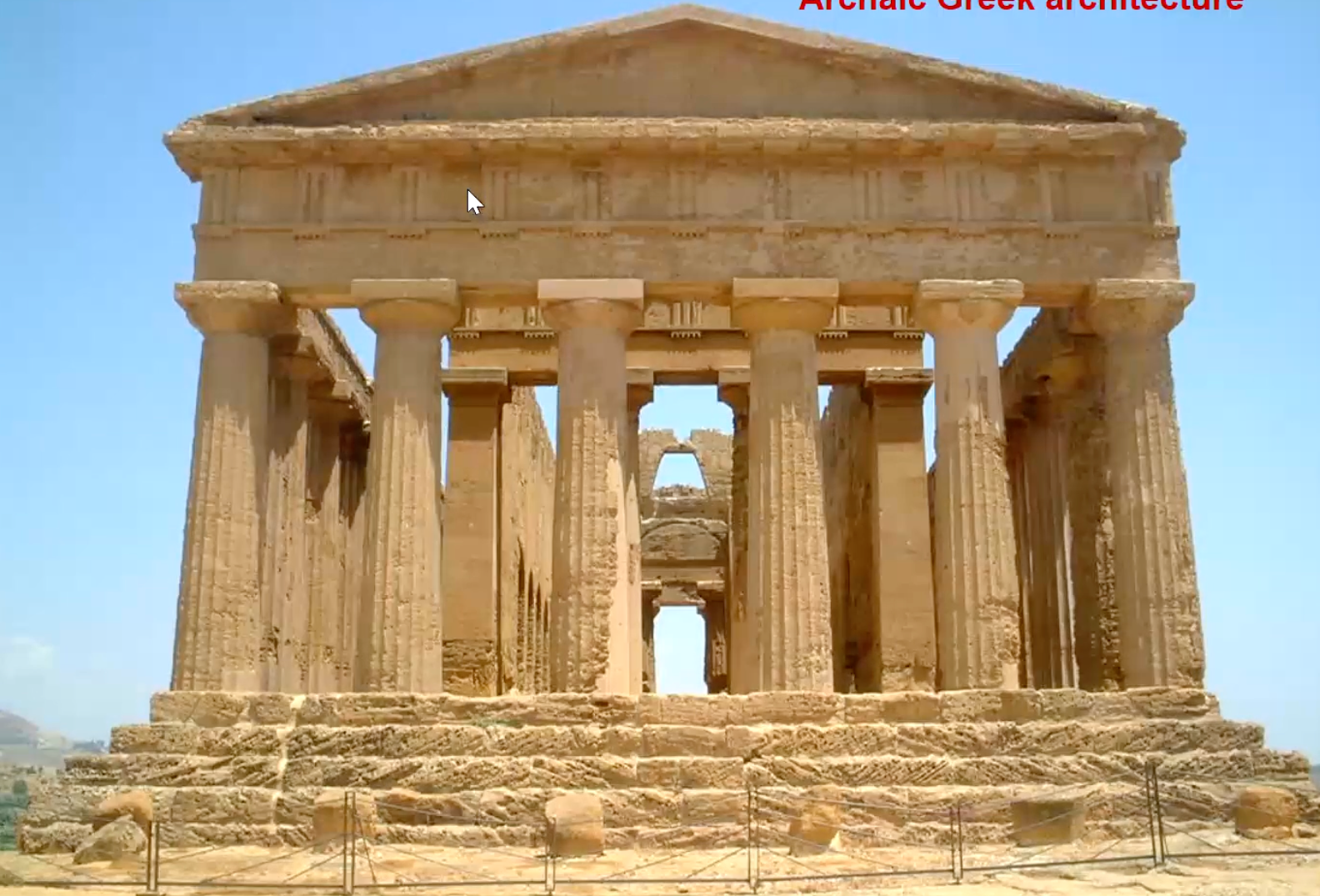
Temple of Artemis, Corfu, 600-580 BC, “Medusa pediment”: (Archaic Greek Art):
Artemis
hunting
moon
bow and arrow
Hosting a cult statue
dedicated to specific gods
ritualized action held for offerings
Greek Temple form
initially were made of wood then stone replaced the wood gradually
post/lintel construction
vertical/horizontal
non-circled besides the base (decorative sculpure)Traingle top
"Medusa Pediment"
9 ft at center
Composite form
female w/ snakes for hair
wards off evil spirits
Naos (cell)
cult statue of Artemis held
Pronaos
"before" inner chamber
Colonnade: line/row of columns
Stylobate: ascending stepped foundation (stairs bru)
hierarchical
exterior altar: where the offerings were presented cuz scum can't enter inside
the first Doric Order Greek temple constructed in stone
no metope I guess
cushion capital
Greek temple: form
Orders (Columns)
423
Doric:
Minoan Column influence
Capital: Doric order ("Cushian Capital)
metope: square
triglyph: three-part

Greek Classical Art
more realistic
life-size
specific reference
more motion

Temple of Aphaia, Aegina, 490-480 BC: “Dying warriors,”: west and east pediments:(Classical)
Aphaia: Greek god
Doric order
Cushion capital
triglyph
metope
The pediments are representing different battles of the trojan War.
life sized, carved in marble
PolyChromed
West Pediment:
"Fallen warrior"
"Archaic face"
left-to-right motion
581
East Pediment:
"fallen warrior"
about 10 years later
specific "older man"
falling forward
"through space"
3D
2 Belly Buttons... (BRU WHO FREAKING CARESAIOUWHSIULDNBIUdfgbhdsy)
424


Polykleitos, Doryphoros (Roman copy), 450-440 BC: (classical)
Polykleitos is the artist
"Spear Carrier" (would've carried a Bronze)
lost wax process of bronze casting
Roman copy cuz they melted the original into a cannon ball (bru)
they couldn't mirror the free standing (lol)
free standing
Contrapposto
"counter-pose"; weight-shift that makes movement possible
one part forward one part backward (like the shoulders) [balance]
one weight-bearing one relaxed
Chiastic balance:
balanced by crossing axis
Canon of Proporitons:
"rules" of proportional relationships
used his handspan as the unit of measurement
handspan = height of head
influence by Pythagoras
binaries (chiastic balance)
cannon of proportions
Aparentally it's post and lintel
at this point whatever

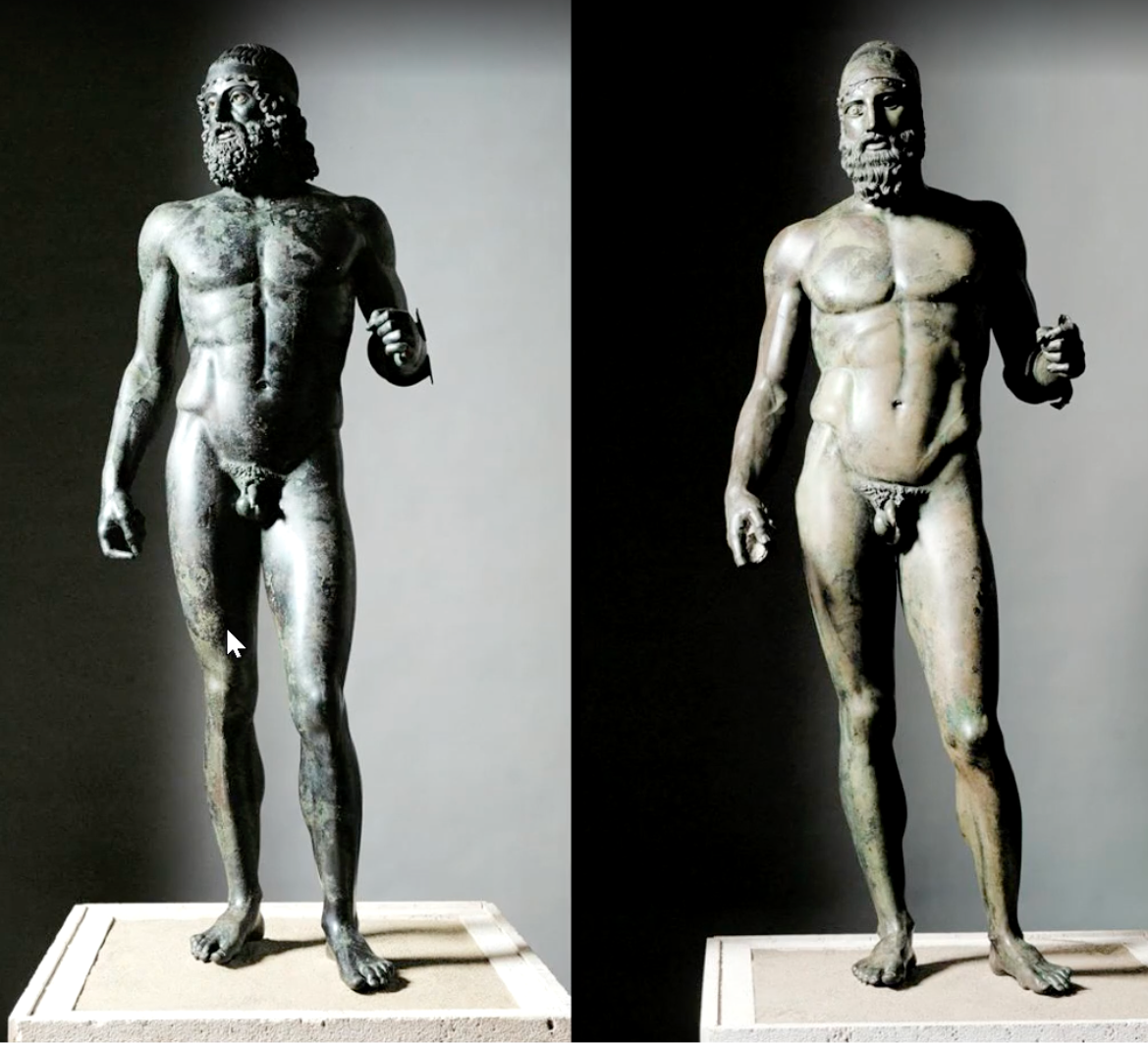
Warriors from Riace, 460-450 BC: (Classical)
6ft tall
life size
spear fisherman found it
work done to restore it
original bronze sculpture (lost wax process of bronze casting)
free-stadning
contrapposto
chiastic balance
cannon of proportions
"carrying" a spear
Anatomical details
silver eyelashes
bronze, copper alloies, plus silver
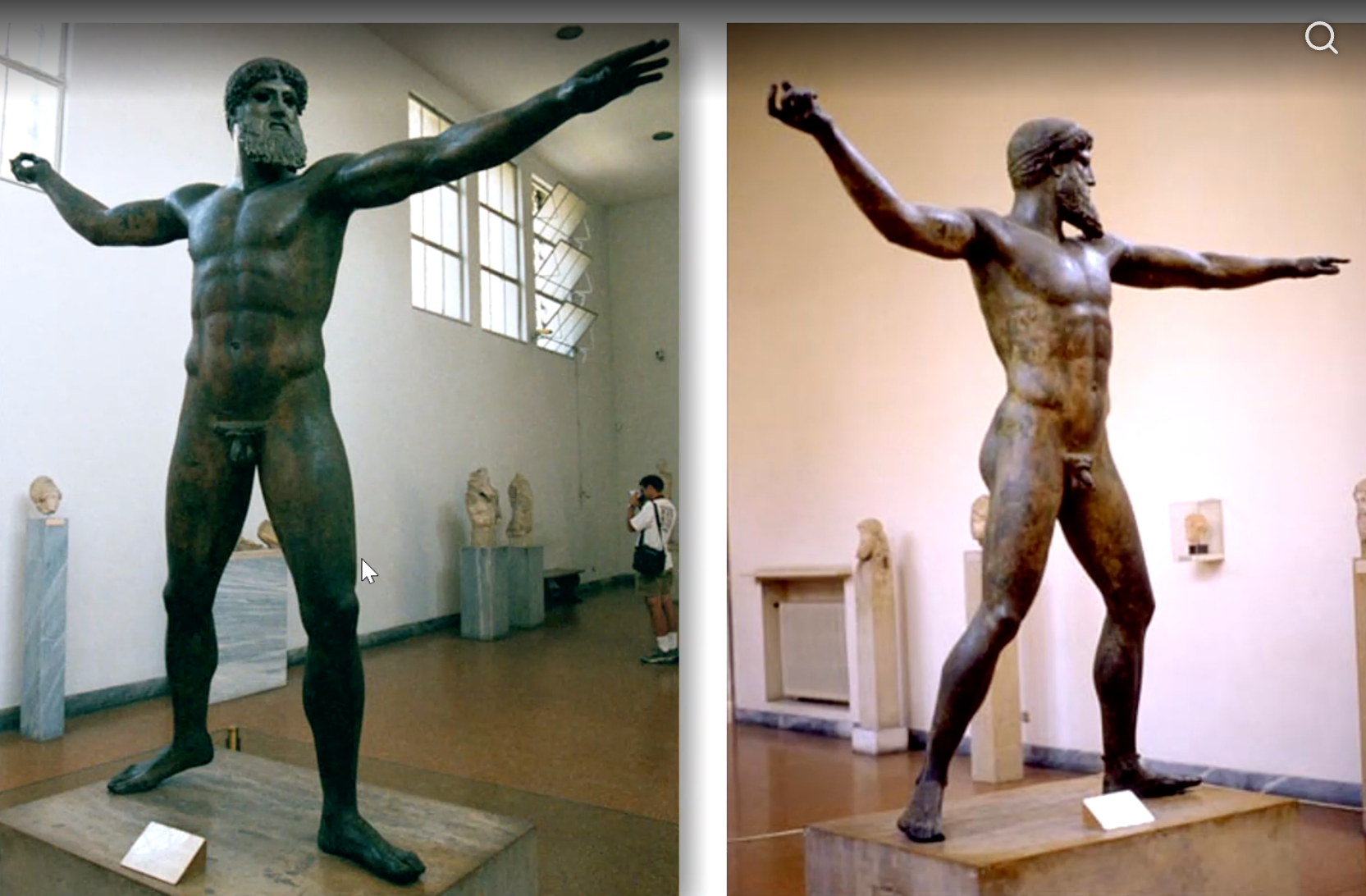
Poseidon from Cape Artemision, 460-450 BC: (classical)
Poseidon: god of the seas: trident
or it could be zeus
Free standing (no support it's on it's own feet)
heel of the ground
open form
Bronze

Myron, Discobolos, 450 BC:(classical)
Bronze
Discus thrower
Free standing
Chiastic balance
curves
there's also a roman marble copy (romans needed support lol)