ch. 11 cell bio flashcards
 Call Kai
 Learn
 Practice Test
 Spaced Repetition
 Match
 Flashcards
 Knowt Play
1/31

Earn XP
Description and Tags
mdqewoifwjd
32 Terms
what kind of barriers are cell membranes, difference in bacterial vs. eukaryotic
selective - only let through specific molecules
bacteria - single membrane
eukaryotic - internal membrane for organelles separate from plasma membrane

3 roles of membrane
communication (receiving info with receptors)
import/export (move molecules w/ channels/pumps)
growth/movement (cytoskeleton, adding new membrane)

why are membranes compartmentalized?
allows chemical rxns (and organelles) to be separate
protects vital structure (DNA)

hydrophilic vs. hydrophobic
hydrophilic: dissolve in water, charged or polar
hydrophobic: insoluble in water, uncharged + nonpolar
most common phospholipid in cell membrane + composition of hydrophilic head
phosphatidylcholine,
choline, phosphate, glycerol

fat molecules vs. phospholipids
fat molecules are hydrophobic
phospholipids are both amphipathic + hydrophobic

properties of phospholipid bilayers
spontaneously close to go from energetically unfavorable → favorable, form sealed compartment, important for creation of living cell

liposomes
pure phospholipids added to water
create drug delivery vesicles, important for pharmacies + drugs research
flip-flop
lipid movement, move from 1 end to another + requires energy + enzyme (flippase), rarely happens,

lateral diffusion
side-to-side movement, moving around + going past ppl in a line
rotation
spinning in a circle
flexion
moving legs while stationary (more bent)
hydrocarbon tail = legs
2 properties of hydrocarbon tails that affect how tightly they’re packed in bilayer
length: short = dec. tail interaction + inc. fluidity
# of double bonds: more difficult to pack together, more double bonds = more fluidity
what does cholesterol do to membrane
stiffens bilayer in animals @ room temp = more rigid + less permeable
short + rigid = fills space btwn adjacent phospholipid molecules left by kinks

functions of lipid bilayer on each side
asymmetrical
red = phosphatidylcholine: structural, found on outside
brown = sphingomyelin: myelin sheathing, found on outside, cell signaling cascade
gray: cholesterol: maintain fluidity + structure of membrane
bilayer synthesis
new membrane synthesis - occurs in ER
new membranes exported to other membranes in vesicles by budding + fusion

flippases
catalyze transfer of phospholipid molecules to opposite monolayer, preserve orientation
keep cytosolic surface facing cytosol + noncytosolic surface away from cytosol

membrane proteins mass
50% of mass of most plasma membranes
transmembrane proteins
amphipathic
interior: hydrophobic
exterior: hydrophilic

monolayer membrane proteins
amphipathic, a-helix exposed on surface of protein, outer part
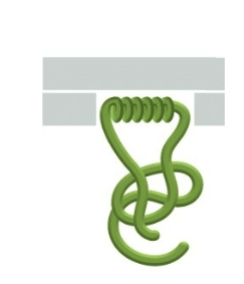
lipid-linked membrane proteins
lie entirely outside on bilayer on cytosolic/extracellular side
attached by 1 or more covalently-bound lipid groups

protein-attached membrane proteins
bound indirectly by weak, non-covalent interactions w/ other membrane proteins
1 or the other face membrane
all except these are integral membrane proteins
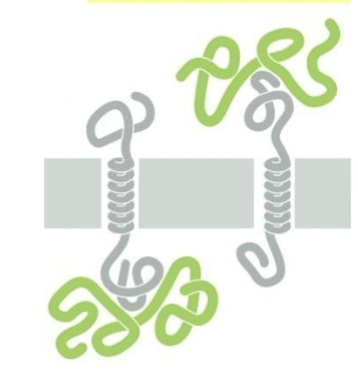
what affects how polypeptide chain crosses bilayer as a-helix
hydrophobicity
a-helix has outer hydrophobic amino acids that attract them to hydrocarbon tails on membrane
peptide bonds are polar → hydrophilic

how are transmembrane proteins related to cell signaling
act as receptors to relay signals from extracellular environment to cell
detergents
destroy lipid bilayer + allowing release of membrane proteins
are amphipathic, disrupt hydrophobic associations
cell cortex
meshwork of fibrous proteins that’s attached to cytosolic face of membrane
reinforces + supports cell membrane
spectrin
main component of cortex for red blood cells
provides support for plasma membrane + maintaining cell’s shape
most simple + researched
spectrin mutations = anemia
spectrin linking to membrane
intracellular attachment proteins link spectrin to specific transmembrane proteins

membrane domains
functionally specialized regions on cell or organelle surface
how cells confine plasma membrane proteins to local areas within bilayer and still let them float around
4 ways protein movement is restricted in membrane
tether to cell cortex inside cell
extracellular matrix molecules outside cell
tether to proteins from another cell
diffusion barriers restrict protein to specific domain

carbohydrate layer
majority of plasma membrane proteins have short sugar chains linked to them (oligosaccharides)
forms sugar coating = carb layer
proteoglycans (heavily glycosylated) attach to glycosaminoglycans (GAGs), provide filler btwn cells

function of carb layer
protect cell surface from mechanical + chemical dmg
absorb water = slimy feeling: helps motility + prevents cells sticking tg
cell-cell recognition + adhesion