Hormonal Control During Exercise
 Call Kai
 Learn
 Practice Test
 Spaced Repetition
 Match
 Flashcards
 Knowt Play
1/20

There's no tags or description
Looks like no tags are added yet.
21 Terms
How to mobilize hormones from liver?
organ/gland → blood → circulatory system
substance released (hormone)
target tissue: tissue must have that hormone’s receptor!
steroid hormones
derived from cholesterol, lipid soluble, diffuse through membranes
nonsteroid hormones
made up of proteins/amino acids, not lipid soluble, cannot cross plasma membranes
divided into 2 groups:
protein/peptide hormones
amino acid derived hormones
what happens to insulin during exercise?
insulin goes down so other hormones can be activated
catecholamines
important for fuel (glucose) mobilization: norepinephrine and epinephrine
in the liver glucagon leads to
gluconeogenesis
what causes changes of hormones during exercise
muscle mass and intensity duration
the largest protein reservoir is
skeletal muscle
hormone sensitive lipase (HSL)
active stimulator of glycolysis
gluconeogenesis
reverse of glycolysis, creation of glucose
growth hormone
gland/location: pituitary gland, anterior lobe (base of brain)
effect on lipolysis (fats)
increase lipolysis
increase in liver gluceneogenesis: creation of new glucose
only activated during low energy state
post exercise promotes muscle growth
as intensity or duration of exercise increase, hormone concentration released into the blood increases
during low intensity exercise minimal mass is active, not much change in hormone [ ]
*Note: growth hormone is one the most potent stimulators of HSL enzyme (mobilizing fats)
thyroxine (T4) triiodothyronine (T3)
permits other hormones for fuel mobilization
gland/location: thyroid gland (midline of neck below larynx)
T3 and T4 share similar functions:
increase basal metabolic rate (BMR)
increase glucose uptake
increase glycolysis and gluconeogenesis
increase lipid mobilization
plays a role in metabolism
hyperthyroidism/hypothyroidism
needed for other hormones to function properly
epinephrine and norepinephrine (catecholamines)
released when sympathetic NS is active
gland/location: adrenal medulla (atop of each kidney)
sympathetic NS innervates adrenal medulla: interaction between NS and endocrine system
NS active → catecholamines released
increases liver and muscle glycogenesis: glycogen phosphorylase breaks. down glycogen in liver/muscle to make glucose
increases lipolysis: HSL breaks down triglycerides into 3FA and glycerol
aerobic training decreases hormone levels at same exercise intensity
cortisol (a glucocoritcoid)
gland/location: adrenal cortex (atop of each kidney)
increases amino acid mobilization that supports gluconeogenesis
from muscle → blood → liver
increases glycogen breakdown
increases lipolysis
anti-inflammatory agent
fuel mobilization during exercise
insulin and glucagon
counter regulatory hormones influenced by glucose [ ]
location: pancreas (behind/below stomach)
insulin: elevated during energy available state ex: after eating
increases glucose uptake and glycogen storage in muscle and liver
increase fatty acid uptake and triglyceride storage in muscle, liver, adipocytes
increases amino acid uptake in cells (protein synthesis)
inhibits liver gluconeogenesis
glucagon: elevated after prolonged endurance exercise, overnight fasting
increases liver gluconeogenesis
increases liver glycogenolysis by activating reversal enzyme
hormone regulation of plasma volume
when active, causes retention of water in kidneys → maintains plasma volume
antidiuretic hormone (ADH)
retention of water in kidneys

playing soccer → sweating → plasma volume: some # of blood cells decrease in water volume (increases blood osmolality which triggers ADH → pituitary gland releases ADH to blood → increase retention of water
activation of ADH: increase in blood osmolality
renin angiotensin-aldosterone (RAA)
causes retention of water in kidneys
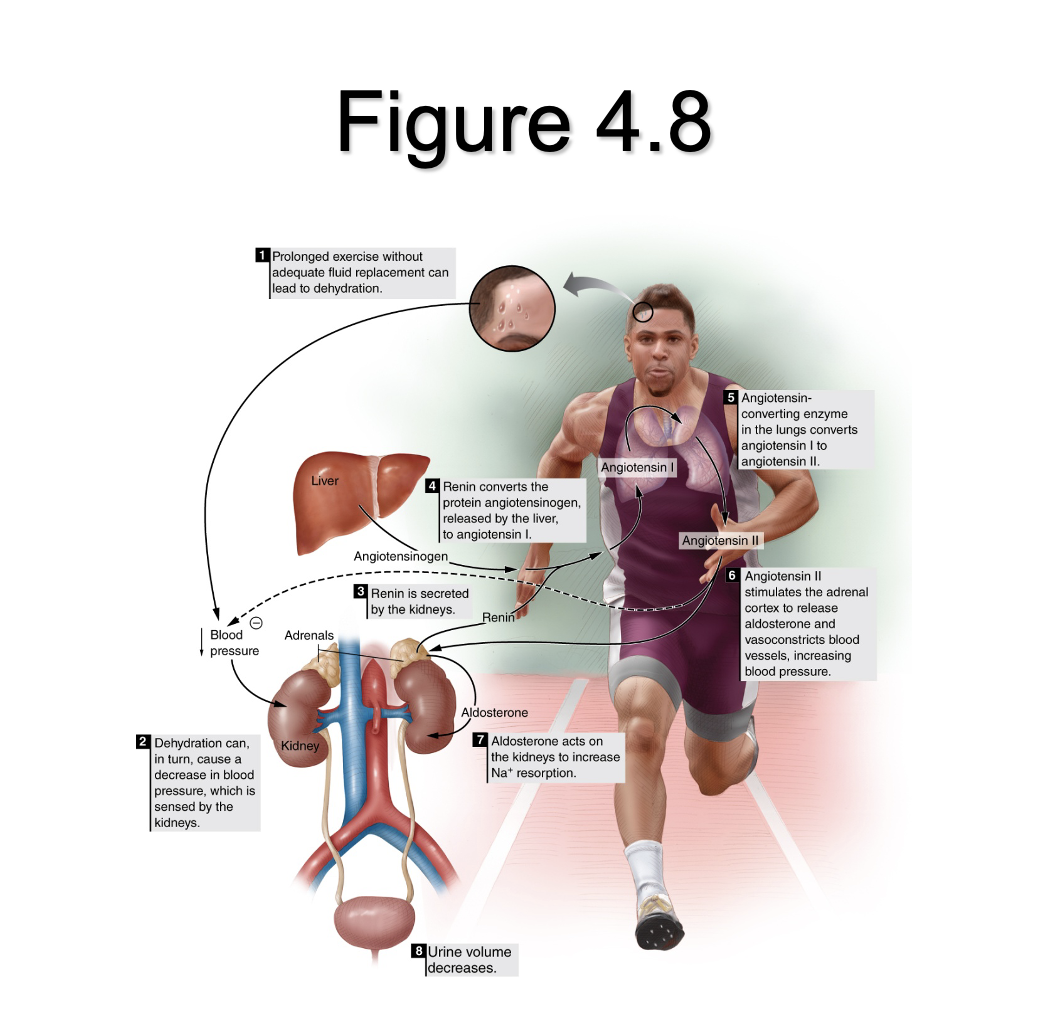
running (prolonged exercise) → dehydration: blood volume goes down → causes reduction in kidney blood flow → aldosterone released in kidney → water is retained in kidney
activation of RAA: reduction in kidney blood flow