A & P Week 1
 Call Kai
 Learn
 Practice Test
 Spaced Repetition
 Match
 Flashcards
 Knowt Play
1/133

There's no tags or description
Looks like no tags are added yet.
134 Terms
tRNA
transfer RNA; type of RNA that carries amino acids to the ribosome
Ribosome
Makes proteins
Amino acid
Building blocks of protein
Transcription
synthesis of an RNA molecule from a DNA template
Translation
Process of synthesizing proteins from mRNA.
Uracil
Nitrogen base that pairs with adenine in RNA.
Codon
three-nucleotide sequence on messenger RNA that codes for a single amino acid
mRNA
messenger RNA; type of RNA that carries instructions from DNA in the nucleus to the ribosome
anatomy
Structures of the body
physiology
Studies function
Levels of organization
chemical, cell, tissue, organ, organ system, organism
Molecules
Groups of atoms working together
Cells
Groups of atoms, molecules, & organelles working together
Tissue
Group of similar cells working together
Homeostasis
all body systems working together to maintain a stable internal environment
Negative feedback
Response of the effector negates the stimulus
ex- sweating, shivering, insulin, glucagon
Positive feedback
Response of the effector increases the change of the stimulus
ex: childbirth, blood clotting
Anatomical position
Hands at sides, palms forward
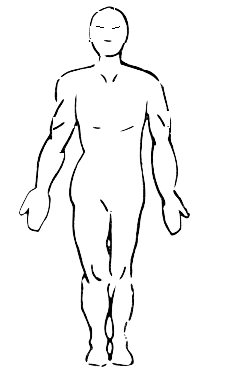
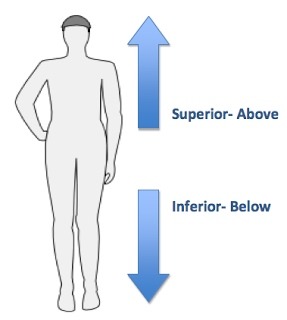
Superior vs Inferior
cranial - caudal
top vs bottom
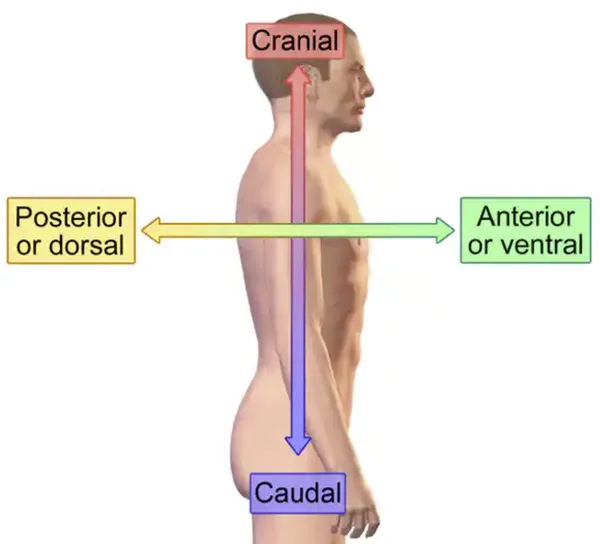
Anterior vs posterior
ventral - dorsal
front vs back
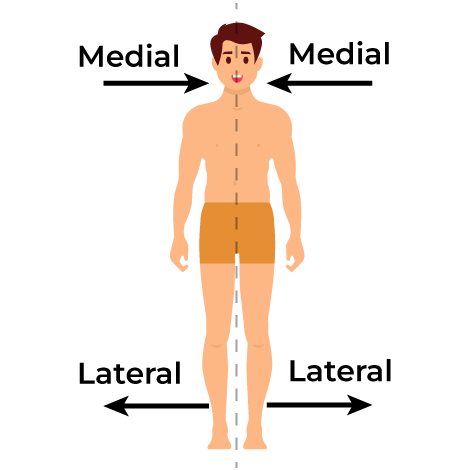
Medial vs lateral
midline - away from midline
midline vs away
Superficial vs deep
Near the surface vs more internal
Proximal vs distal
closer to attachment vs farther from attachment
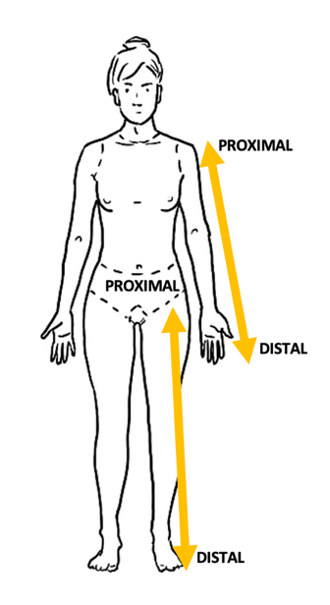
Planes of the body
Saggital, frontal (coronal), transverse
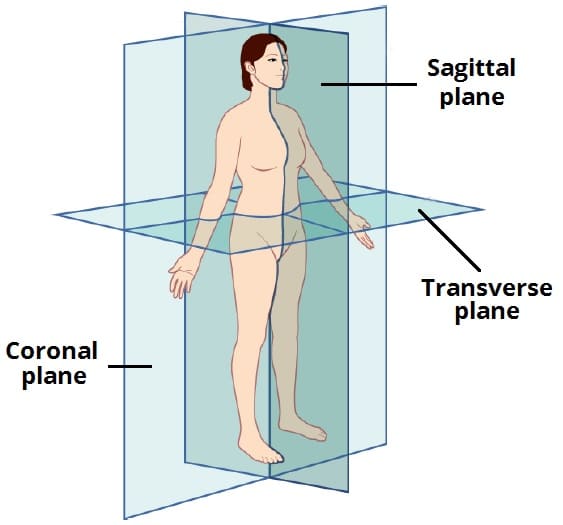
Saggital plane
divides the body into a right and left side down the midline
Frontal plane (coronal)
divides the body into anterior and posterior portions
Transverse plane
divides the body into superior and inferior parts
Abdominopelvic quadrants
right upper, left upper, right lower, left lower
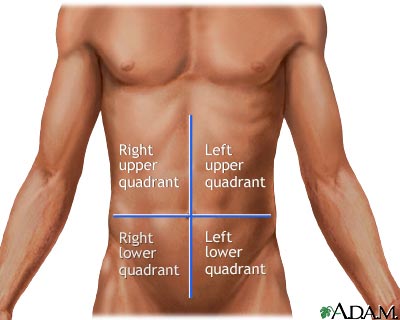
Epigastric region (top)
Right hypochondriac region, left hypochondriac region
Umbilical region (middle)
Right lumbar region, left lumbar region
Hypogastric region (bottom)
Right inguinal region, left inguinal region
atoms
Building blocks of matter
chemicals
atoms combined
atoms are made of
protons (positive charge), neutrons (neutral charge), electrons (negative charge)
atomic number
number of protons
mass number
sum of protons & neutrons
nucleus
Control center of the cell containing protons & neutrons
elements of the human body
oxygen, carbon, hydrogen, nitrogen
most abundant element in the body
Oxygen (65%)
chemical bonds
Forces holding atoms together in molecules.
molecules
two or more atoms joined together
compounds
2 or more elements chemically combined
ionic bonds
transfer of electrons (give and take)
covalent bonds
sharing of electrons
polar covalent bond
unequal sharing of electrons
nonpolar covalent bond
equal sharing of electrons
hydrogen bond
weak attraction between a hydrogen atom and another atom
types of reactions
anabolic and catabolic
anabolic reaction
combines molecules, negative charge
catabolic reaction
breaks large molecules into small, positive charge
enzymes (protein)
catalyze (speed up) reactions, lower activation energy increases speed
inorganic vs organic compounds
inorganic lack carbon, organic contain carbon
pH in the human body
7.35-7.45
pH of 0-7
acidic
pH of 7-14
basic
pH of 7
neutral
carbohydrates
contain carbon, hydrogen, & oxygen
organic macromolecules in carbohydrates
manosaccharides, disaccarides, polysaccharides all used for energy
lipids
hydrophobic molecules (fats, oils, waxes)
fatty acids may be
-saturated w/ hydrogen (no double covalent bond)
-unsaturated (one or more double bonded)
fats
triglycerides used for energy, insulation, protection
steroids
cholesterol, estrogen/testosterone, corticosteroids/calcitrol, bile salts
phospholipids
diglycerides attached to phosphate group
proteins
amino acids
denaturation
loss of normal shape of a protein due to heat or other factor in protein
nucleic acid
DNA and RNA, store & process info
DNA
deoxyribonucleic acid double stranded determines inherited characteristics
RNA
single-stranded nucleic acid that contains the sugar ribose
nucleotides
building blocks of nucleic acids (DNA & RNA), have nitrogenous base
ATP
energy used by cells
cytology
study of cells
interstitial fluid
fluid between cells
plasma membrane
-separates cytoplasm from interstitial fluid
-physical barrier
-controls what enters/exits the cell
membrane lipids
double layer of phospholipid molecules
hydrophilic heads
water loving
hydrophobic fatty acid tails
inside membrane, water fearing
membrane carbohydrates
-glycoproteins & glycolipids
-extend outside cell membrane
-form sticky sugar coat (glycocalyx)
membrane transport
movement of substances into and out of the cell
Permeability
determines what moves in or out of a cell
passive transport
no energy needed, simple diffusion
active transport
requiring energy & ATP
diffusion
Movement of molecules from an area of higher concentration to an area of lower concentration.
-high to low until equilibrium
osmosis
diffusion of water
hypotonic
filled with water in outside
hypertonic
remove water on inside
isotonic
same amount of water inside and out
-0.9% NaCl
carrier mediated transport
transport of ions & organic substrates
facilitated diffusion (passive)
transport glucose & amino acid
exchange pump (active)
counter transports two ions at the same time
vesicular transport (active)
Materials move into or out of cell in vesicles
exocytosis (exit)
granules are released from cell
endocytosis
into the cell
from endocytosis: phagocytosis
solid entering cell
from endocytosis: pinocytosis
liquid entering cell
cytosol
Fluid portion of cytoplasm
organelles
structures w/ specific functions
membranous organelles
-covered w/ plasma membrane
non-membraous organelles
-no membrane
-direct contact with cytosol
cytoskeleton
non-membranous structural protein for shape and strength
microvilli
increase surface area