Holes Anatomy and Physiology Chapter 1
 Call Kai
 Learn
 Practice Test
 Spaced Repetition
 Match
 Flashcards
1/77

There's no tags or description
Looks like no tags are added yet.
78 Terms
anatomy
Branch of science dealing with the form and structure of body parts

physiology
concerns the functions of body parts- what they do and how they do it

Homeostasis
A tendency to maintain a balanced or constant internal state; the regulation of any aspect of body chemistry, such as blood glucose, around a particular level
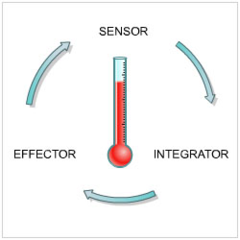
receptors
Special structures that allow living organisms to sense the conditions of their internal or external environment.

set point
the point at which an individual's "weight thermostat" is supposedly set. When the body falls below this weight, an increase in hunger and a lowered metabolic rate may act to restore the lost weight.

effectors
-produces a response e.g.muscle contracts to move hand away from stimulus or gland squeezes and releases hormone into blood.
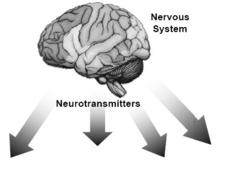
negative feedback
A primary mechanism of homeostasis, whereby a change in a physiological variable that is being monitored triggers a response that counteracts the initial fluctuation.

axial
Relating to head, neck, and trunk, the axis of the body
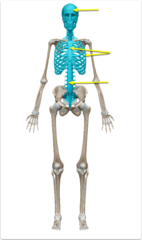
appendicular
Relating to limbs and their attachments to the axis

Anatomical position
To stand erect with arms at the sides and palms of the hands turned forward

Superior
Higher on the body, nearer to the head
inferior
Lower on the body, farther from the head
Anterior
front of the body
Posterior
toward the back
Medial
Toward the midline of the body

Lateral
Away from the midline of the body
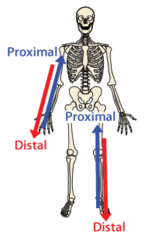
Proximal
Closer to the origin of the body part or the point of attachment of a limb to the body trunk
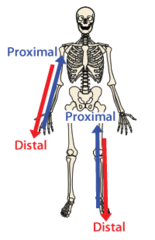
Distal
farther from the origin of a body part or the point of attachment of a limb to the body trunk
Superficial
near the surface

Deep
away from the surface of the body

Sagittal
A plane that divides the body into right and left portions.
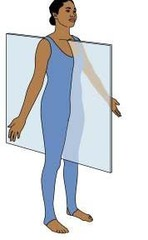
Transverse
Divides body into upper and lower parts
Frontal
pertaining to the forehead

Abdominal
pertaining to the abdomen

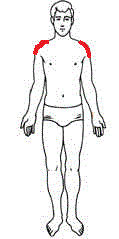
Acromial
point of shoulder
Antebrachial
pertaining to the forearm
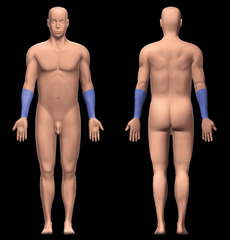
Antecubital
space in front of the elbow
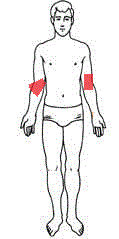
Axillary
pertaining to the armpit

Brachial
pertaining to the arm

Carpal
pertaining to the wrist

Cephalic
pertaining to the head

Cervical
pertaining to the neck

Costal
pertaining to the ribs

Coxal
pertaining to the hip

Cubital
elbow

Crural
lower leg

Digital
fingers, toes
Dorsal
pertaining to the back

Femoral
pertaining to the thigh

Frontal
pertaining to the forehead

Genital
reproductive organs
Gluteal
pertaining to the buttocks

Inguinal
pertaining to the groin

Lumbar
area of back between ribs and hips

Mammary
pertaining to the breast

Mental
pertaining to the chin

Nasal
pertaining to the nose

Occipital
back of head

Oral
pertaining to the mouth

Orbital
eye cavity

Palmar
pertaining to the palm of the hand
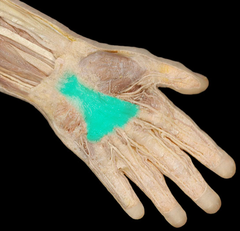
Patellar
kneecap

Pectoral
pertaining to the chest

Pedal
pertaining to the foot

Pelvic
pelvis region

Perineal
region between the anus and the external reproductive organs

Plantar
sole of foot

Popliteal
area behind the knee

Sacral
Posterior region between the hip bones

Sternal
breastbone area

Sural
Calf or posterior surface of the leg

Tarsal
ankle region

Umbilical
pertaining to the navel

Vertebral
area of spinal column

pubic region
Middle Lower Abdominal region

right hypochondriac region
Upper Right region

right inguinal region
Lower-right section of the abdomen,

Right Lower Quadrant (RLQ)
Lower Right Quadrant of Abdomials

right inguinal region
right lower region of Abdominals

Right Upper Quadrant (RUQ)
Upper Right quadfrant of Abdominals

epigastric region
top middle region

left hypochondriac region
left upper region below the rib cartilage

left inguinal region
lower left region of abdomen

Left Lower Quadrant (LLQ)
lower left quadrant of abdomen

left inguinal region
left lower region of the lower row by the groin

Left Upper Quadrant (LUQ)
Upper left quadrant of abdomen

Bilateral
Paired structures, one on each side

Ventral
belly side