Clinical Orthopedics 222 Exam 3 Elbow and forearm special tests
 Call Kai
 Learn
 Practice Test
 Spaced Repetition
 Match
 Flashcards
 Knowt Play
1/24

There's no tags or description
Looks like no tags are added yet.
25 Terms
Special Test for the elbow
-what tests are for the lateral epicondylitis
Cozen’s test
Resisted Tennis Elbow Test
Special Test for the elbow
-what tests are for the medial epicondylitis
Golfer’s elbow test
Special Test for the elbow
-what tests are for instability
Varus stress test
Valgus Stress test
Special Test for the elbow
-what tests are for nerve involvement
Tinel’s sign (cubital tunnel)
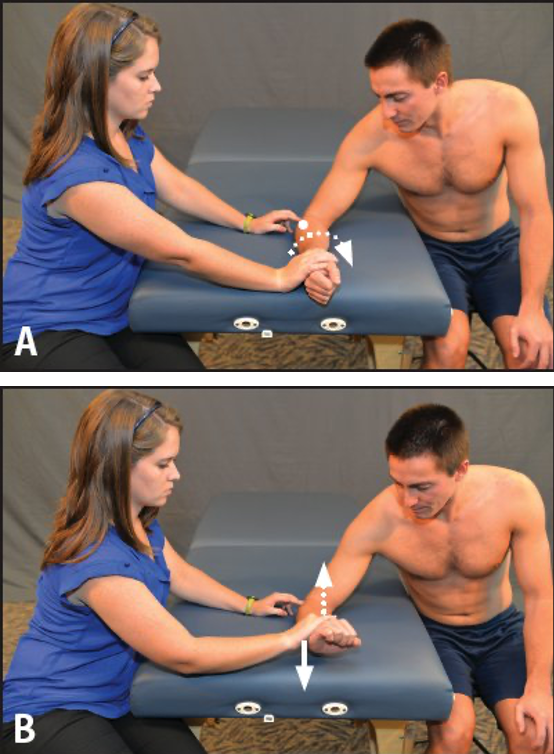
Cozen’s test
-how is this preformed
1.Patient is seated or standing
2.Examiner palpates the lateral epicondyle with their thumb Patient makes a fist with the forearm in pronation and radial deviation of wrist
3.Examiner resists wrist extension

Cozen’s test
-what makes this test positive
Possible lateral epicondylitis with pain reproduction at lateral epicondyle, objective weakness

Cozen’s test
-if there is pain at the wrist then is it positive or negative
it is a negative test

Resisted Tennis Elbow Test (Maudsley’s test)
-how is this done
1.Patient is seated
2.Examiner stabilizes elbow with one hand and places the other on the dorsal aspect of the subject’s hand distal to the PIP of the third digit
-resists third digit extension

Resisted Tennis Elbow Test (Maudsley’s test)
-what makes this test positive
possible lateral epicondylitis with reproduction of pain at lateral epicondyle, objective weakness

Golfer’s elbow test
-how is this preformed
1.The patient sits and makes a fist on the involved side while the examiner faces the subject and palpates along the medial epicondyle while grasping the patient’s wrist.
2.The examiner then passively supinates the forearm and extends the elbow and wrist

Golfer’s elbow test
-what makes this test positive
possible medial epicondylitis if the patient reports pain along the medial epicondyle

Varus Stress Test (radial collateral ligament)
-How is this preformed
1.The patient is seated or standing with their elbow in full extension
2.The Examiner places with their distal hand around the subject’s lateral wrist and the proximal hand over the subject’s medial elbow
3.With the wrist stabilized, the tester applies a varus stress to the elbow with the proximal hand
4.The patient then has their elbow flexed to 20-30 degrees
5.With the wrist stabilized, the tester applies a varus stress to the elbow with the proximal hand
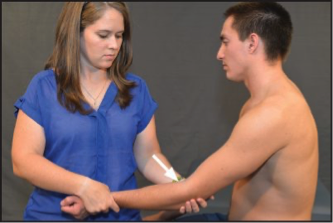
Varus Stress Test (radial collateral ligament)
-what makes this test positive
possible RCL/LCL involvement, reproduction of distraction pain laterally and compression pain at medial joint line, laxity with stress

Varus Stress Test (radial collateral ligament)
-if the patient is hypermobile but gets the same range on both arms ?
it’s negative

Varus Stress Test (radial collateral ligament)
-if the patient is hypermobile but gets different ranges on both arms(one arm gets more laxity) ?
the test is positive
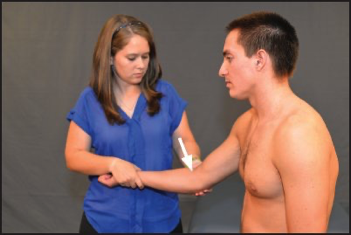
Valgus stress test (ulnar collateral ligament)
-how is this done
1.The patient is seated or standing with their elbow in full extension
2.The Examiner places with their distal hand around the subject’s lateral wrist and the proximal hand over the subject’s lateral elbow
3.With the wrist stabilized, the tester applies a valgus stress to the elbow with the proximal hand
4.The patient then has the elbow flexed to 20-30 degrees
5.With the wrist stabilized, the tester applies a valgus stress to the elbow with the proximal hand

Valgus stress test (ulnar collateral ligament)
-what makes this test positive
possible UCL involvement, reproduction of distraction pain medially and compression pain laterally, laxity with stress
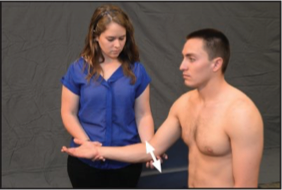
Tinel’s sign at the cubital tunnel
what nerve is this testing
the ulnar nerve
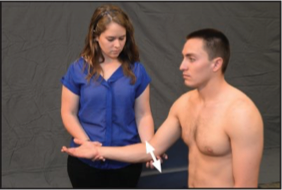
Tinel’s sign at the cubital tunnel
-how is this done
1.The patient is seated with the elbow in slight flexion and the examiner stands with the distal hand grasping the patient’s lateral wrist
2.With the wrist stabilized, tap the ulnar nerve in the ulnar notch between the olecranon process and medial epicondyle with the index finger (proximal to the cubital tunnel).

Tinel’s sign at the cubital tunnel
-what makes this test positive
Tingling along the ulnar nerve distribution of the forearm, hand, and fingers is indicative of ulnar nerve compromise (cubital tunnel syndrome).

Tinel’s sign at the cubital tunnel
-what happens if you do this test a lot of times in a short amount of time
then you will get a false positive then you are directly tapping on the nerve since the ulnar nerve is really superficial

there are 3 tests that test ulnar entrapement
foraminal distraction test
spurling’s compression test
tinel’s sign at the cubital tunnel
there are 3 tests that test ulnar entrapement
foraminal distraction test
spurling’s compression test
tinel’s sign at the cubital tunnel
-if only the tinel’s sign test positive then its what
its ulnar nerve entrapment
there are 3 tests that test ulnar entrapement
foraminal distraction test
spurling’s compression test
tinel’s sign at the cubital tunnel
-if spurling’s and formainal tests positive then its what
radiculopathy
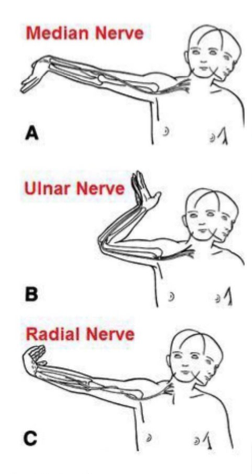
For nerve glides
how can you get max tension
by turn the head away