Ch13 aggregate planning
 Call Kai
 Learn
 Practice Test
 Spaced Repetition
 Match
 Flashcards
 Knowt Play
1/7

There's no tags or description
Looks like no tags are added yet.
8 Terms
how to deal with demand fluctuations ?
demand based options
reactive : using finished goods inventory or backorders (eg inventory)
proactive : shifting demand patterns through incentives (eg yield management)
capacity based options :
overtime or undertime
hiring / firing
subcontracting
each approach has specific advantages and disadvanatges → evaluate the company’s current situation + magnitude and duration of the change
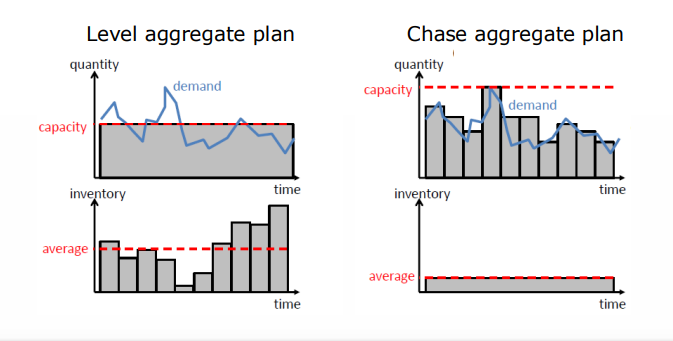
types of agregate plans : level aggregate plan
maintains a constant workforce
capacity of labor and equipment is based on average demand
advantage : same amount produced in each period
disadvantage : risk of inventory build-up and or back orders
often used for make-to-stock products (eg stereos, kitchen appliances, hardware)
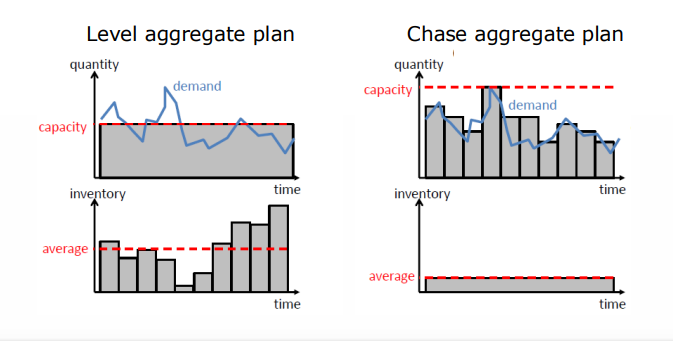
types of agregate plans : chase aggregate plan
produces the amount needed in each period
capacity of labor and equipment are adapted based on period demands
advantage : min holding costs for finished goods
disadvantage : risk of excess capacity in off-peak demand periods, expensive short-term capacity changes
often used for make-to-order products (eg custom cabinets, specialpurpose equipment, one of a kind items, highly perishable products)
types of agregate plans : hybrid aggregate plan
any combination of options, based on the company’s current situation (eg level strategy with avoidance of backorders)
developing the aggregate plan
1) choose the type of plan that matches the company’s objective - level, chase, hybrid
2) determine the aggregate production rate
average demand over all periods vs actual demand per period
3) determine the size of the workforce
4) calculate all required information
inventory and shortages, employees hired and fired, overtime,
5) evaluate the plan’s performance
total costs,
other considerations : customer service, human resources, operations
sales and operations planning (S&OP) affects the whole organization and its supply chain
finance prefers to reduce inventory levels and improve cash flow
marketing prefers to increase inventory levels to improve customer service
operations prefers to level demand peaks for capacity reaosns
human resources monitor the impact on workforce productivity and satisfacton
sypply chain partners prefer stable order/ delivery quantities to avoid uncertainty
→ sales and operation planning might have to be finetuned several times before it is accepted
→ S&OP needs to be flexible to deal with changhing circumstances
aggregate planning in services
building up inventory is not possible for nontangible products
→ chase aggregate plan : no impact
→ level aggregate plan : capacity of labor and equipment must allow to meet peak demand to avoid lost sales
note that back orders are (in some cases) still possible, although they might be undesirable
aggregate planning in services : labor cost is often very critcal and can be controlled by
accurately scheduling labor hours to respond to demand
having an on-call labor pool to meet unexpected demand
having multi-skilled workers who can perform different tasks
having flexible work hours to meet changing demand