Lesson 6 - Microbial Growth
 Call Kai
 Learn
 Practice Test
 Spaced Repetition
 Match
 Flashcards
 Knowt Play
1/13

There's no tags or description
Looks like no tags are added yet.
Name | Mastery | Learn | Test | Matching | Spaced | Call with Kai | Chat |
|---|
No analytics yet
Send a link to your students to track their progress
14 Terms
Why are microorganisms studied in pure cultures, and why are most difficult to culture?
Microorganisms naturally exist in complex, multispecies communities.
Pure cultures allow scientists to study one microbial species independently.
Fewer than 1% of microorganisms are culturable in pure culture.
Many require specific nutrients, environmental conditions, or interactions with other organisms.
How do we measure growth and what is the importance of understanding nutrient requirements?
We measure growth under the optimal nutritional and environmental conditions
Assumes understanding of the growth requirements (nutritional, energy, physical, chemical)
Importance of understanding nutrient requirements;
Characterization of microbes
Increased understanding of beneficial / undesirable microbial impacts: e.g., Plant and animal health & disease, ecosystems, agriculture, etc.
Optimized usage of beneficial microbes: e.g., microbial production of pharmaceuticals, enzymes, recombinant proteins, value-added compounds, food production processors, etc
Why are many prokaryotes (99%) unable to grow independently in laboratory cultures?
Some species have adapted so well to their natural habitats that we still do not know how to grow them in the lab
Some depend on essential factors supplied by other microorganisms in their ecological niche.
Intracellular parasites require living host cells.
Obligate symbionts depend on their partners for survival or growth. Many are considered unculturable because their specific growth requirements remain unknown.
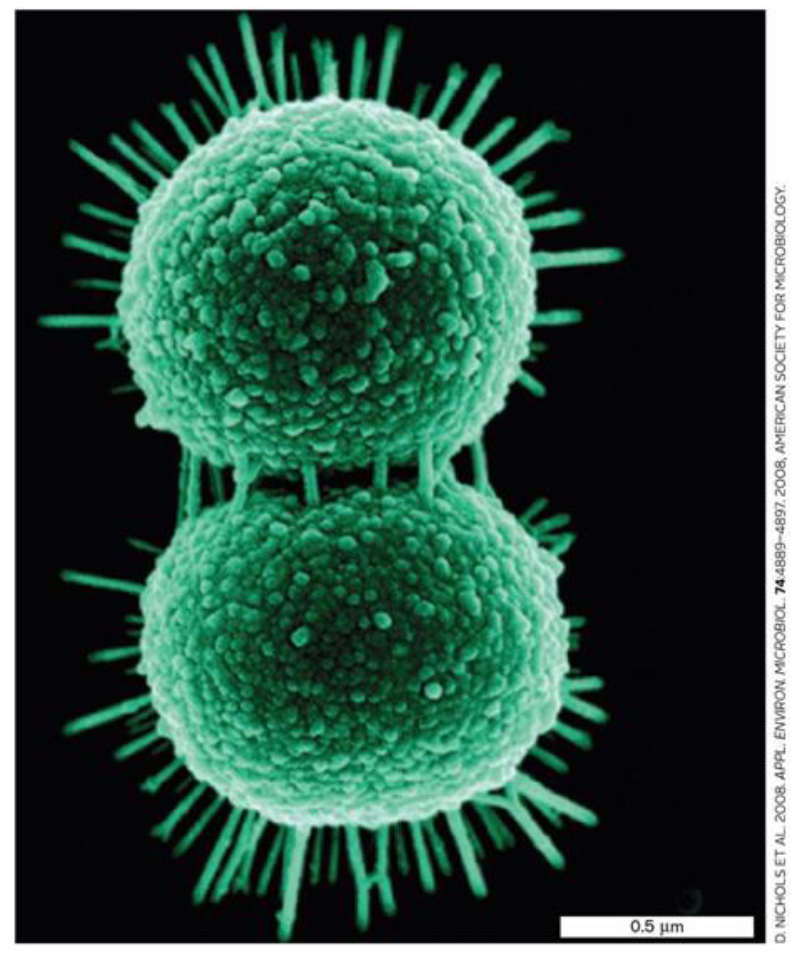
Why do microorganisms have different nutritional requirements?
Microorganisms evolved to inhabit different ecological niches.
Different environments provide different nutrients and growth conditions.
Therefore, microbial species have different nutritional requirements based on their physiology and adaptations.

What is the difference between macronutrients and micronutrients in microbial growth?
Both: Essential nutrients (macro and micro) are those that must be supplied from the environment
Macronutrients:
Required in relatively large amounts.
Used to construct cellular molecules and support cellular functions.
Examples: C, H, O, N, P, S, Mg, K, Ca.
Micronutrients:
Required in relatively small amounts.
Often function as enzyme cofactors.
Examples: Co, Cu, Mn, Mo, Ni, Zn.

What is the difference between nutrition and nutrients?
Nutrition: The process by which chemical substances (nutrients) are acquired from the environment and used for cellular activities.
Nutrients: Substances obtained from the environment and used for catabolism and anabolism.
What is the difference between catabolism and anabolism?
Metabolism = Catabolism + Anabolism
The energy needed to build cells comes from chemical reactions
Catabolism:
Breaks larger molecules into smaller molecules.
Exergonic reactions that release energy.
Anabolism:
Builds larger molecules from smaller molecules.
Endergonic reactions that require energy.
Catabolism provides energy for anabolism.

What three factors are used to classify microorganisms based on their nutritional requirements?
Like all living things, microbes need sources of carbon and energy to grow
Carbon source: Where the organism obtains carbon to construct cellular components (what am I made of?)
Energy source: Whether energy comes from light or chemical reactions.
Electron donor: The substance that gives up electrons during metabolic reactions (Power)
What is the difference between autotrophs and heterotrophs?
How Microbes Build Biomass…All of Earth’s lifeforms are built on carbon which they acquire in different ways!
Autotrophs:
Obtain carbon from inorganic sources (CO₂). (Sun is not the source, can only help fix the carbon)
Fix CO₂ into organic carbon molecules (mainly sugars).
Examples: Plants, algae, autotrophic bacteria.
Heterotrophs:
Obtain carbon from preformed organic molecules.
Examples: Animals and many bacteria.
This classification describes carbon source, NOT energy source.
What is the difference between phototrophs and chemotrophs?
Phototrophs:
Capture light energy to support cellular activities.
Chemotrophs:
Obtain energy from chemical reactions.
This classification describes ENERGY source, not carbon source.

What is the difference between organotrophs and lithotrophs?
Organotrophs:
Use organic compounds as electron/hydrogen donors.
Often heterotrophic - using organic compounds as sources of both electrons and carbon
Lithotrophs:
Use inorganic compounds as electron/hydrogen donors.
Often autotrophic - using inorganic sources of electrons and CO2 as their inorganic carbon source
This classification describes ELECTRON DONORS.
What are the four major microbial nutritional categories?
Photoautotrophs: Light energy + inorganic carbon (CO₂). Example: Cyanobacteria, plants.
Chemoautotrophs: Chemical energy + inorganic carbon (CO₂). Example: Nitrifying bacteria.
Photoheterotrophs: Light energy + organic carbon. Example: Chloroflexus.
Chemoheterotrophs: Chemical energy + organic carbon. Example: E. coli, animals.

What is the difference between chemolithotrophs and chemoorganotrophs?
Chemolithotrophs:
Obtain energy from chemical reactions.
Use inorganic compounds as electron donors.
Often chemoautotrophic.
Chemoorganotrophs:
Obtain energy from chemical reactions.
Use organic compounds as electron donors.
Often chemoheterotrophic.
Carbon source and electron donor are separate classifications.

What are the two major forms of usable energy in microorganisms?
Energy is stored and must be converted to a useful form
Chemical energy: Stored in molecules such as ATP, which can transfer energy to cellular processes.
Electrochemical energy: Stored as ion motive forces, involving ion concentration and electrical gradients across membranes.
