Chemical Reagents and Stock Solutions
 Call Kai
 Learn
 Practice Test
 Spaced Repetition
 Match
 Flashcards
 Knowt Play
1/15

There's no tags or description
Looks like no tags are added yet.
16 Terms
{NaOH} (Sodium Hydroxide)
A clear, colorless liquid that feels slippery like soap (corrosive strong base) stored in plastic screw-cap or dropper bottles (never glass-stoppered bottles, because it can fuse glass shut); used as a standard base in titrations to neutralize acids.
\(\text{HCl}\)

{HCl) (Hydrochloric Acid)
A clear, colorless, watery liquid with a sharp, pungent odor (corrosive strong acid) stored in glass or heavy plastic dropper bottles or inside the fume hood when concentrated; used to dissolve metals, adjust pH, and test acid-base neutralization.
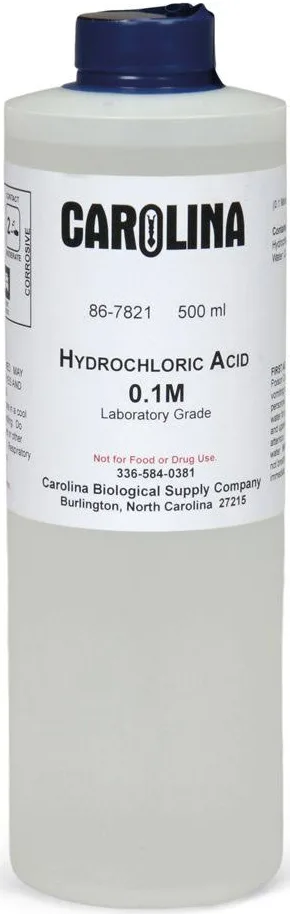
Acetic Acid
A clear, colorless liquid that smells distinctly like vinegar, kept in glass or plastic reagent bottles; serves as the classic example of a weak acid and weak electrolyte in conductivity and titration labs.
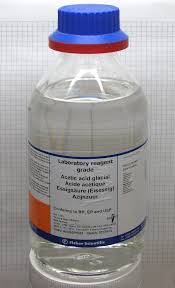
NH3 or Ammonia / Ammonium Hydroxide)
A clear, colorless liquid with a strong, sharp window-cleaner smell, stored in tightly capped glass or plastic bottles; acts as a weak base and weak electrolyte, or forms deep blue complex ions with copper.
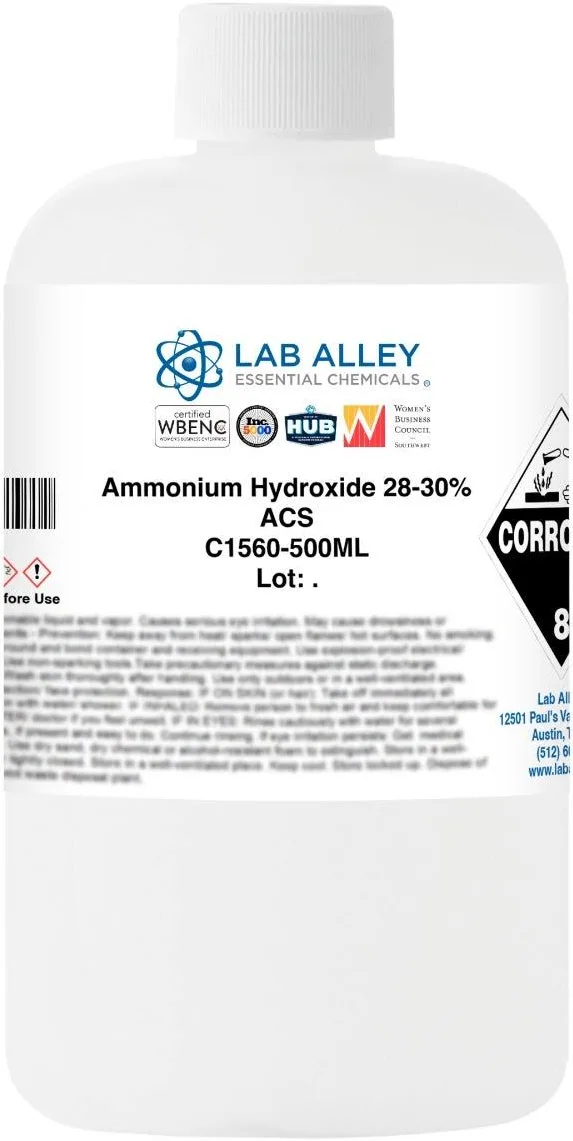
NaCl Sodium Chloride
Either small white table-salt crystals in a wide-mouth plastic jar or a clear, colorless liquid in a plastic bottle; serves as the standard strong electrolyte (completely breaks into \(\text{Na}^{+}\) and \(\text{Cl}^{-}\) ions in water) and provides chloride ions for precipitation tests.
AgNO3 or Silver Nitrate
A clear, colorless liquid stored in a dark brown (amber) glass dropper bottle because light causes it to break down and stain skin/surfaces dark brown or black; used to test for halide ions) by forming cloudy white or yellow precipitates.

CuSO4 Copper ll Sulfate
Bright royal-blue crystals in a plastic jar or a clear, sky-blue solution in a reagent bottle; used in single-replacement reactions (with metals like zinc or iron) and hydrate heating labs (turns white when water is driven off).

CaCO3 Calcium Carbonate
A white chalky powder or small marble chips stored in a wide-mouth plastic jar; reacts with acids like HCl\) to produce fizzing gas bubbles.

NaHCO3 or Sodium Bicarbonate or baking soda
A fine white powder kept in a plastic jar or at lab stations as a spill neutralizer; reacts rapidly with acids to fizz and neutralize spills safely.

Phenolphthalein (Acid-Base Indicator)
A clear, colorless liquid (dissolved in alcohol) stored in a small glass or plastic dropper bottle; stays completely colorless in acidic or neutral solutions, then turns bright pink/magenta the instant a solution becomes slightly basic during a titration.

Deionized (DI) Water H2O
Clear, purified water with all mineral ions removed, kept in large wall taps/carboys and your squeezable wash bottle; acts as a non-electrolyte baseline in conductivity tests and prevents tap-water ions from ruining reactions.

Ethanol or Sucrose/Sugar
Clear liquid (ethanol, flammable alcohol smell) in a solvent bottle or white crystals (sucrose) in a plastic jar; dissolves in water without breaking into ions, making it the go-to non-electrolyte example.

H2O2 Hydrogen Peroxide
A clear, colorless liquid stored in an opaque brown or white plastic bottle to block light; decomposes into water and oxygen gas bubbles (often using a catalyst like
KI

Mg or Magnesium Ribbon
A dull, silvery-gray, thin flexible metal strip coiled up inside a small plastic bag or jar; burns with a blinding white flame or fizzes rapidly when dropped into
Hcl.

Zn Zinc Metal
Dull gray, irregularly shaped metal lumps ("mossy zinc") or small pellets stored in a plastic jar; used to react with acids to generate hydrogen gas or displace copper from blue Solutions

Cu or Copper Metal
Shiny reddish-orange wire, turnings, or small foil strips stored in a plastic jar; does not react with simple
HCl
HCl
and is often recovered at the end of copper-cycle labs.
