IBS (O)
 Call Kai
 Learn
 Practice Test
 Spaced Repetition
 Match
 Flashcards
 Knowt Play
1/29

There's no tags or description
Looks like no tags are added yet.
30 Terms
irritable bowel syndrome (IBS)
functional GI disorder with no specific structural or biochemical alterations
IBS pathophysiology
- visceral hypersensitivity or hyperalgesia
- abnormal GI permeability, motility, secretion, and sensitvity
- postinflammatory IBS
- alteration in gut microbiota
- food allergy or food intolerance
- psychosocial factors
IBS clinical manifestations
- lower abdominal pain
- diarrhea-predominant, constipation-predominant, or alternating diarrhea and constipation
- gas, bloating
- nausea
IBS treatment
- no available cure
- laxative, soluble fiber
- restriction of gluten, FODMAPs
- antidiarrheals
- antispasmodics
- pro-secretory drugs
- visceral analgesics
- low-dose antidepressants
- serotonin agonists/antagonists
- antibiotics
drugs used for IBS-C
- lubiprostone (amitizia)
- linaclotide (linzess)
- tegaserod
lubiprostone (amitizia) administration and uses
- 8 mcg or 24 mcg caps
- taken with food and water
- indicated for tx of chronic idiopathic constipation
- also used for tx of opioid-induced constipation in adults who do not require opioid dosage escalation
lubiprostone MOA and pharmacokinetics
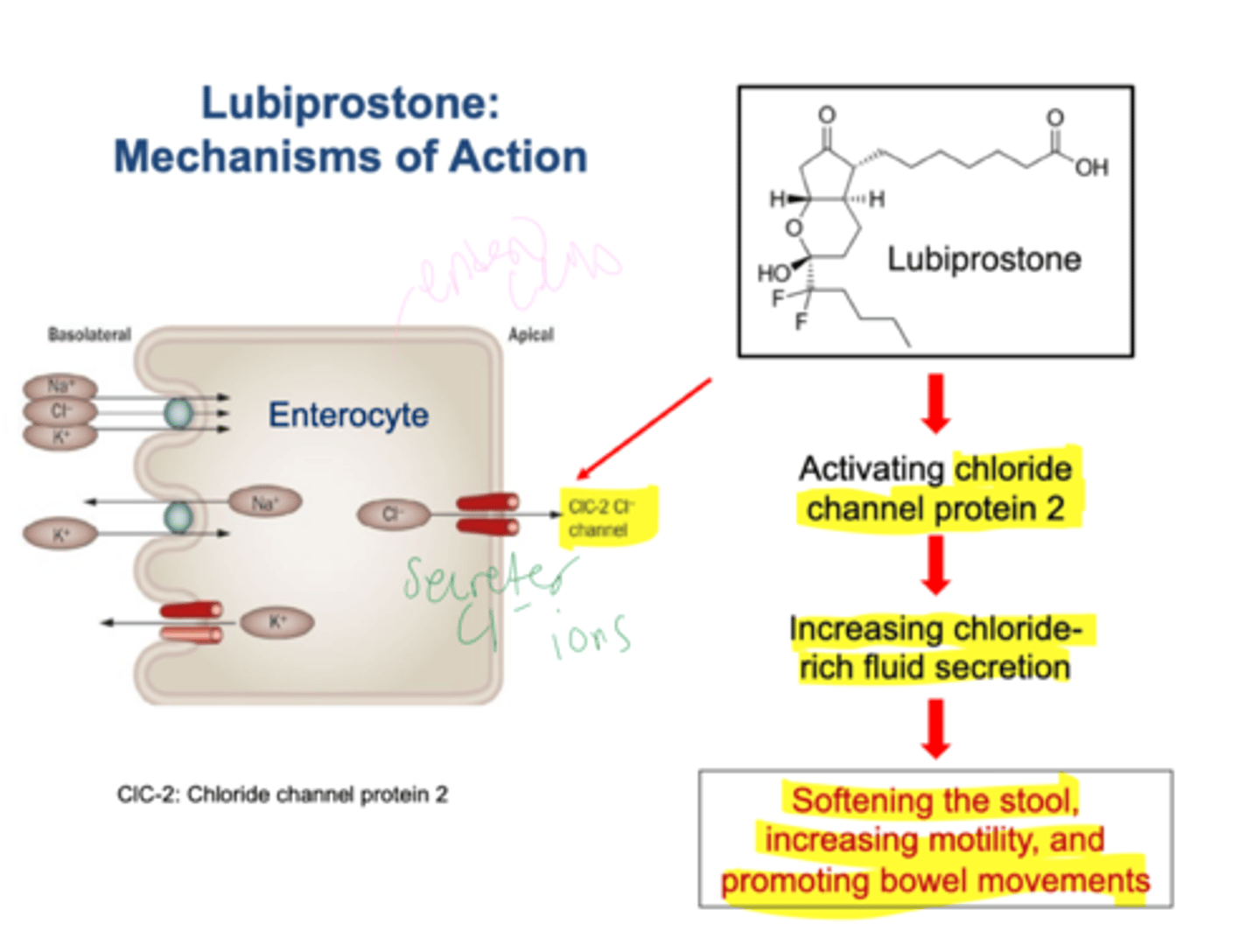
- chloride ion channel activator
> increase chloride-rich intestinal fluid secretion (does not alter Na or K serum levels)
>> easier passage of stool
- metabolized rapidly by reduction and oxidation in stomach and duodenum
lubiprostone drug interactions
methadone may reduce the activation of chloride channels
lubiprostone contraindications
- in pt with mechanical GI obstructions
- pt with severe diarrhea
- may cause dyspnea within 1 hr of 1st dose
- pregnancy
lubiprostone adverse effects
(most common)
nausea, diarrhea, abdominal pain, abdominal distention, HA, and flatulence
linaclotide (linzess) administration and use
- caps
- taken on empty stomach at least 30 min. before 1st meal of the day
- tx of IBS-C
linaclotide MOA and pharmacokinetics
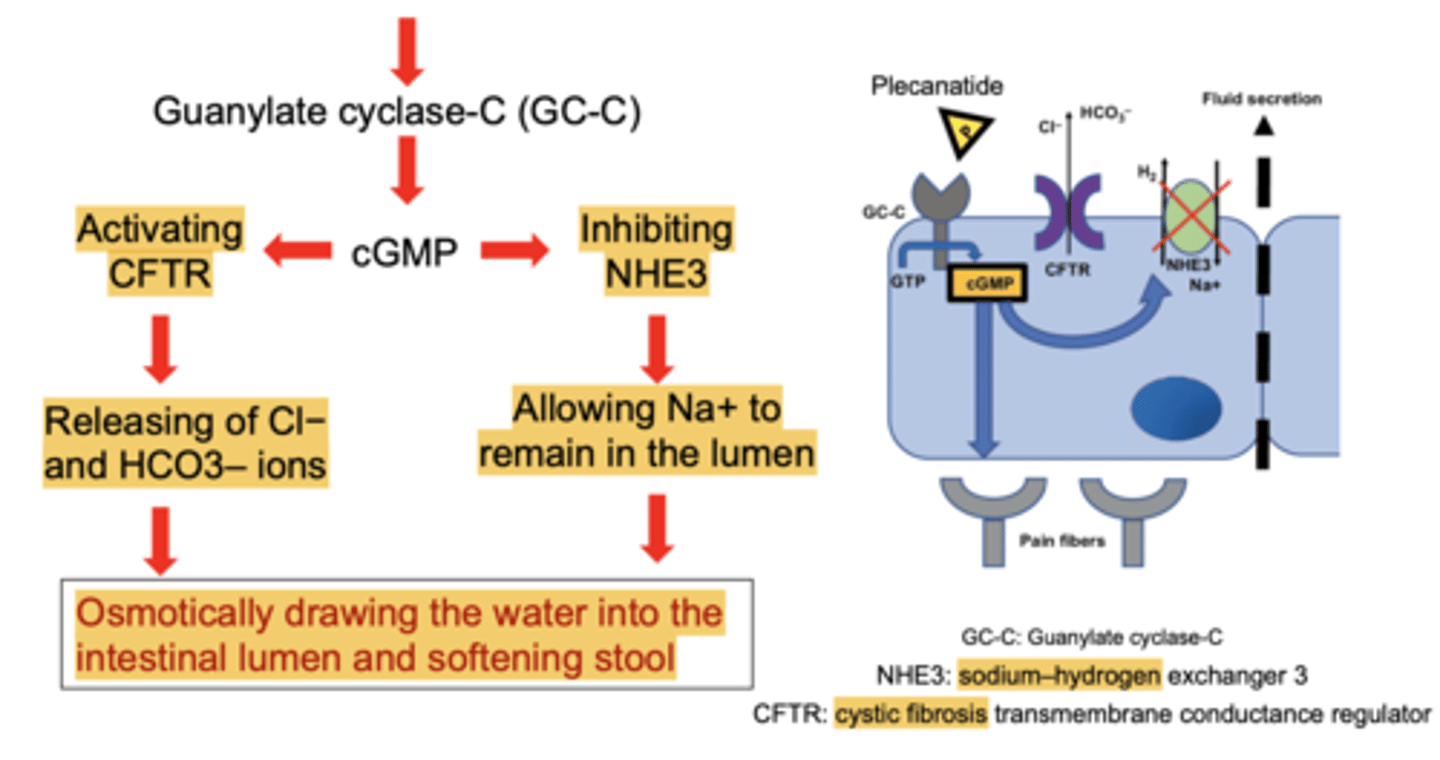
- agonist of guanylate cyclase-C (GC-C)
> once its active metabolite binds to GC-C, has local effect on luminal surface of the intestinal epithelium
> results in intra- and extracellular increase of cGMP. this elevation stimulates the secretion of chloride and bicarbonate into the intestinal lumen via activation of cystic fibrosis transmembrane conductance regulator (CFTR) ion channel
- ultimately, helps IBS pt (esp. constipation) as GI transit is accelerated and the release of intestinal fluid is increased
- metabolized to an active and inactive metabolite
linaclotide contraindications/precautions
- risk of serious dehydration in pediatric pt (< 6 yo) *contraindication*
- avoid use in pt 6 yrs to less than 18 yrs
> safety and effectiveness has not been established in pt <18
- pregnancy category C
linaclotide adverse effects
- diarrhea (16-22%)
- GI: abdominal pain, flatulence, abdominal distension
- respiratory: upper respiratory tract infection,sinusitis
drugs used for IBS-D
- alosterone (lotronex)
- eluxadoline (viberzi)
- rifaximin (xifaxan)
- loperamide (imodium)
alosetron (lotronex) uses
used for tx of:
- diarrhea
- pain
- cramps
- feelings of an urgent need to have bowel movements caused by IBS
> in women who have diarrhea as main symptom and have not been helped by other tx
alosetron MOA
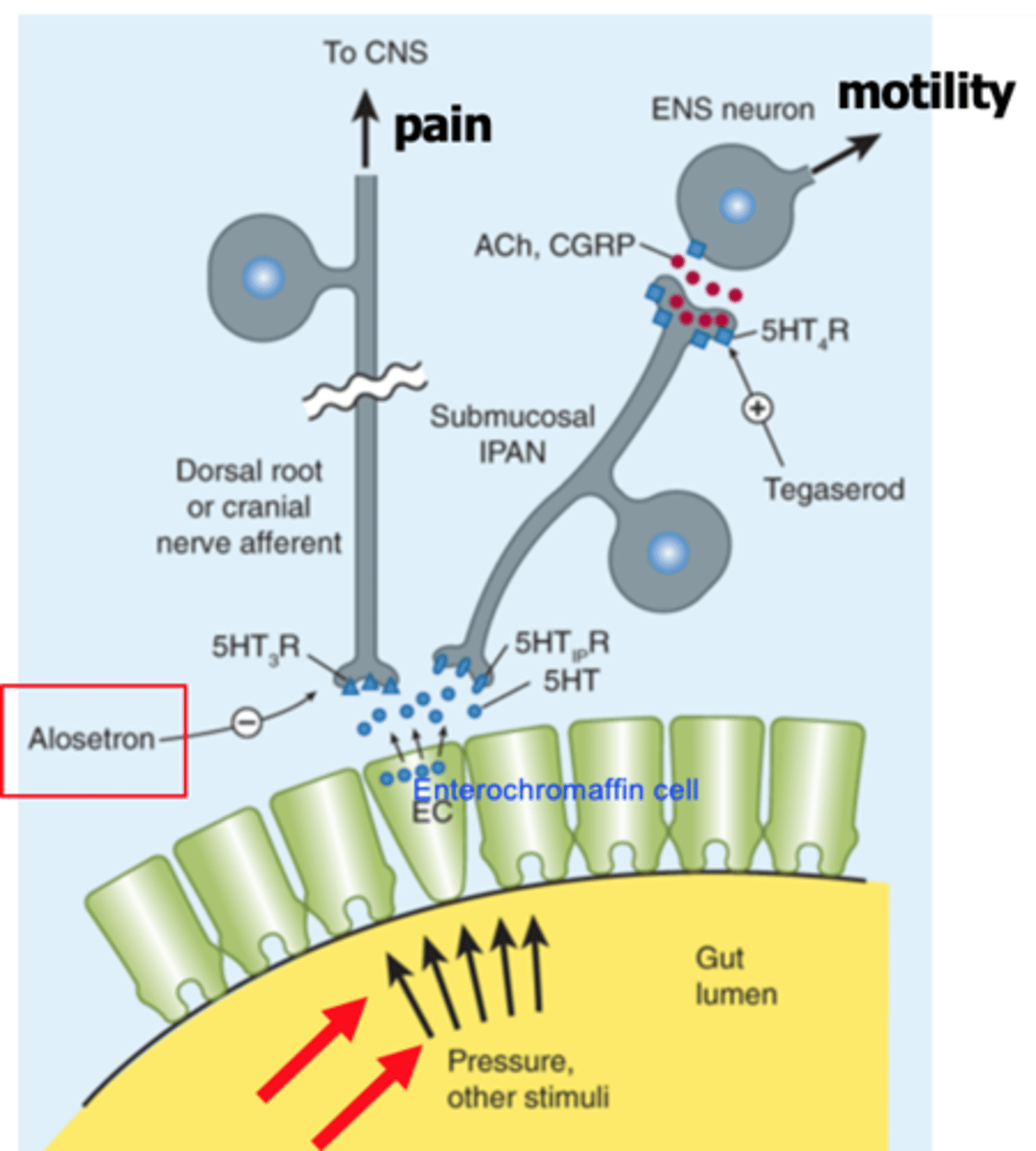
- potent and selective 5-HT3 antagonist
- blocks the actions of serotonin at 5-HT3 sites in the peripheral nervous system
> particularly on enteric and nociceptive sensory neurons, thereby affecting the regulation of visceral pain, decreasing GI contraction and motility, and decreasing GI secretions
alosetron side effects
(more common)
constipation
(rare)
bloody diarrhea, new or worsening stomach pain or discomfort, rectal bleeding
eluxadoline (viberzi) administration and uses
- coated tabs
- tx of IBS-D
eluxadoline MOA
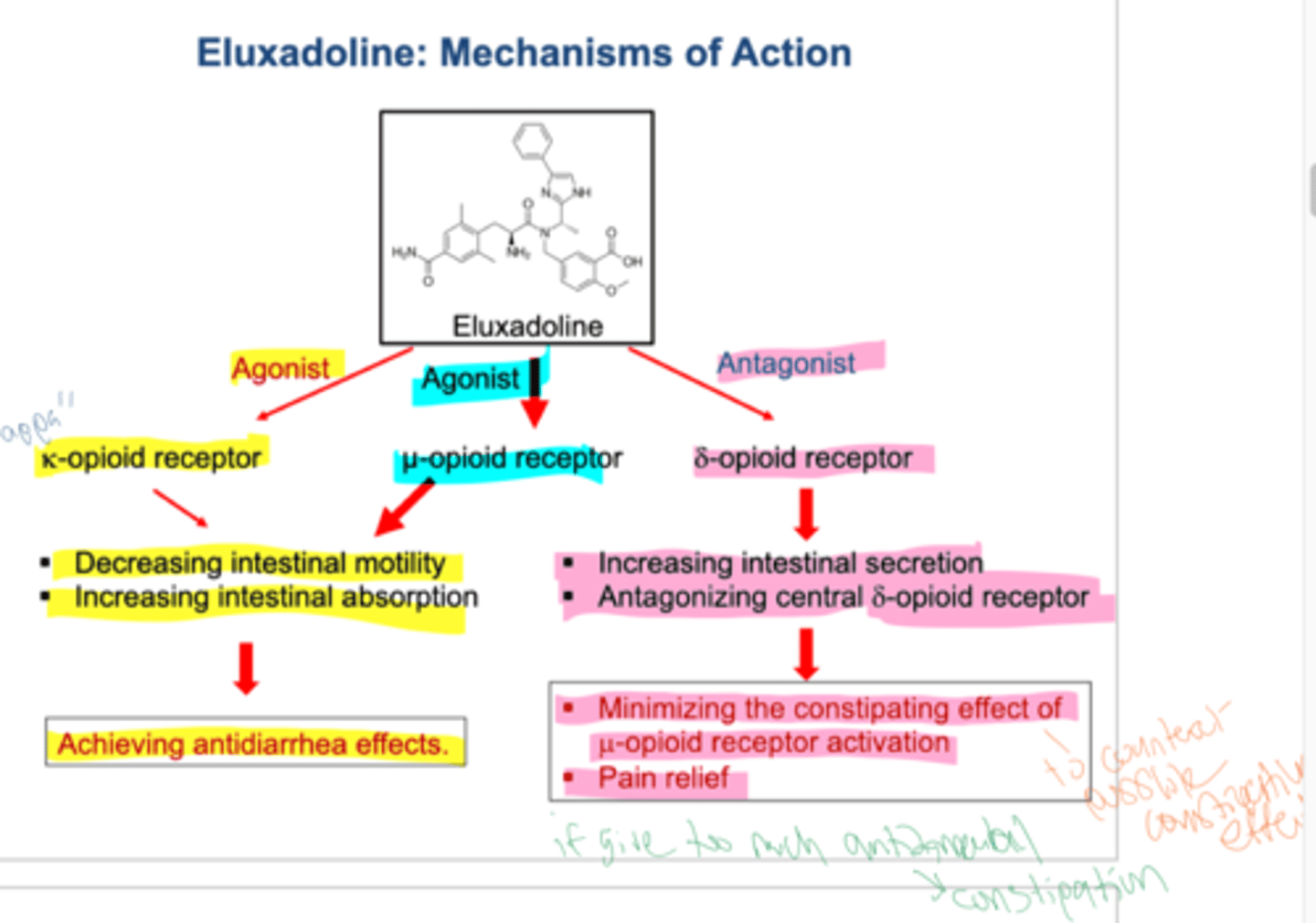
- mixed mu-opioid receptor agonist, delta opioid receptor antagonist, and kappa opioid receptor agonist
> acts locally to reduce abdominal pain and diarrhea in pt with IBS-D without constipating side effects
eluxadoline contraindications
- hypersensitivity to eluxadoline or any component of the formulation
- pt w/o gallbladder; known or suspected biliary duct obstruction or sphincter of Oddi disease or dysfunction
- history of pancreatitis or structural diseases of the pancreas, including known or suspected pancreatic duct obstruction alcoholism, alcohol abuse, or alcohol addiction, or in pt who drink >3 alcoholic bev per day
- severe hepatic impairment (child-pugh class C); history of chronic or severe constipation or sequelae from constipation
- mechanical GI obstruction (known or suspected)
eluxadoline adverse effects
GI: constipation, nausea, abdominal pain, vomiting, abdominal distention, flatulence
respiratory: upper respiratory tract infection (5%)
rifaximin (xifaxam) uses
hepatic encephalopathy
> reduction in the risk of overt hepatic encephalopathy recurrence in adults
IBS-D
> moderate-severe
travelers' diarrhea
> caused by noninvasive strains of e. coli in adults and pediatric pt > 12 yo
rifaximin MOA
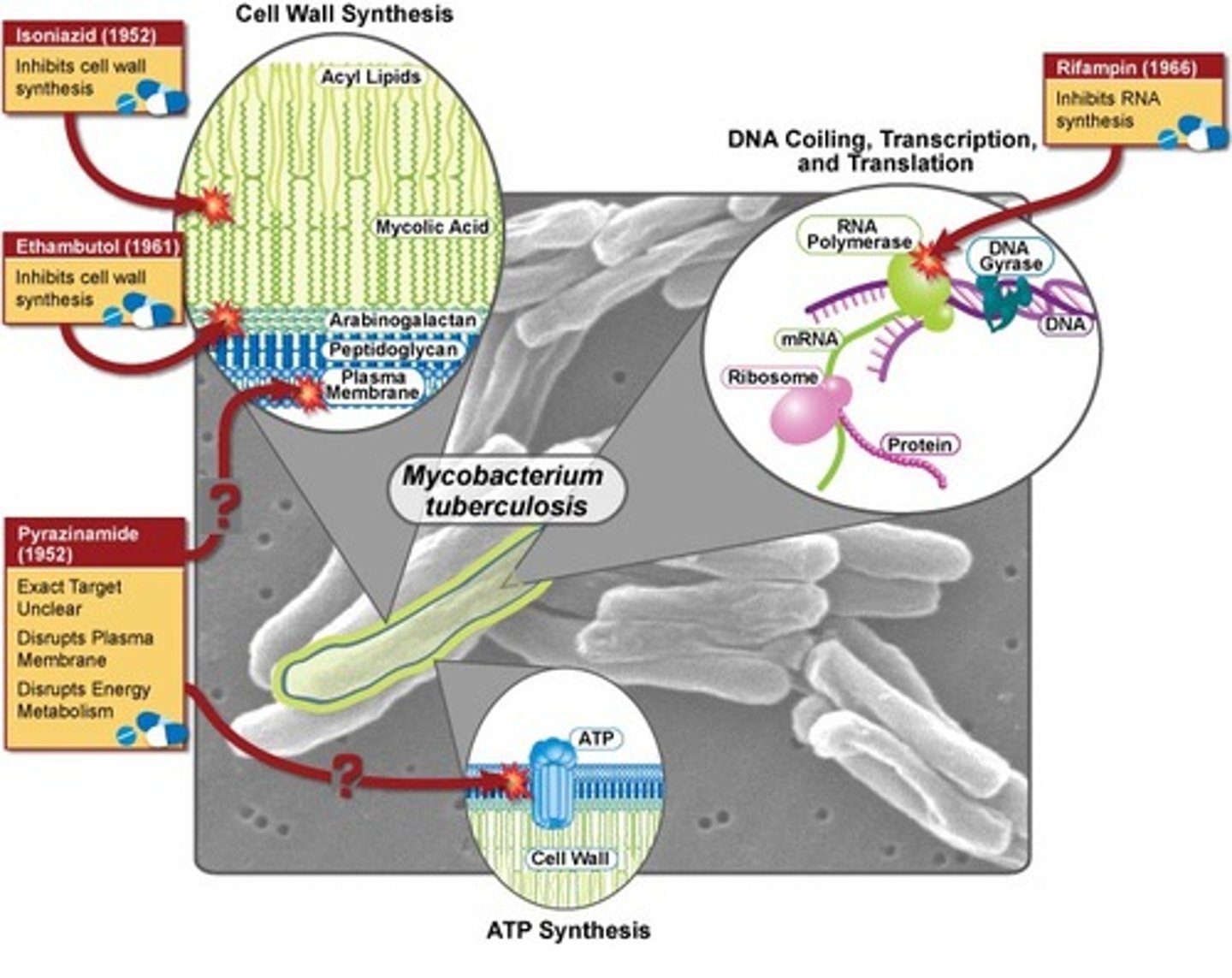
- inhibits bacterial RNA synthesis by binding to bacterial DNA-dependent RNA polymerase
> inhibition of bacterial relocation across the gut mucosal epithelium and subsequent release and/or absorption of endotoxin and bacterial metabolites
- modulation of gut - immune signaling
rifaximin drug interactions
cyclosporine (systemic) and P-glycoprotein ihibitors
> may increase serum conc'n of rifaximin
rifaximin adverse effects
(most common) peripheral edema, ascites, dizziness, fatigue, nausea, headache
loperamide (imodium) uses
- tx of IBS-D
- control and symptomatic relief of chronic diarrhea associated with IBS in adults
- acute nonspecific diarrhea in patients > 2 years; to reduce volume of ileostomy discharge
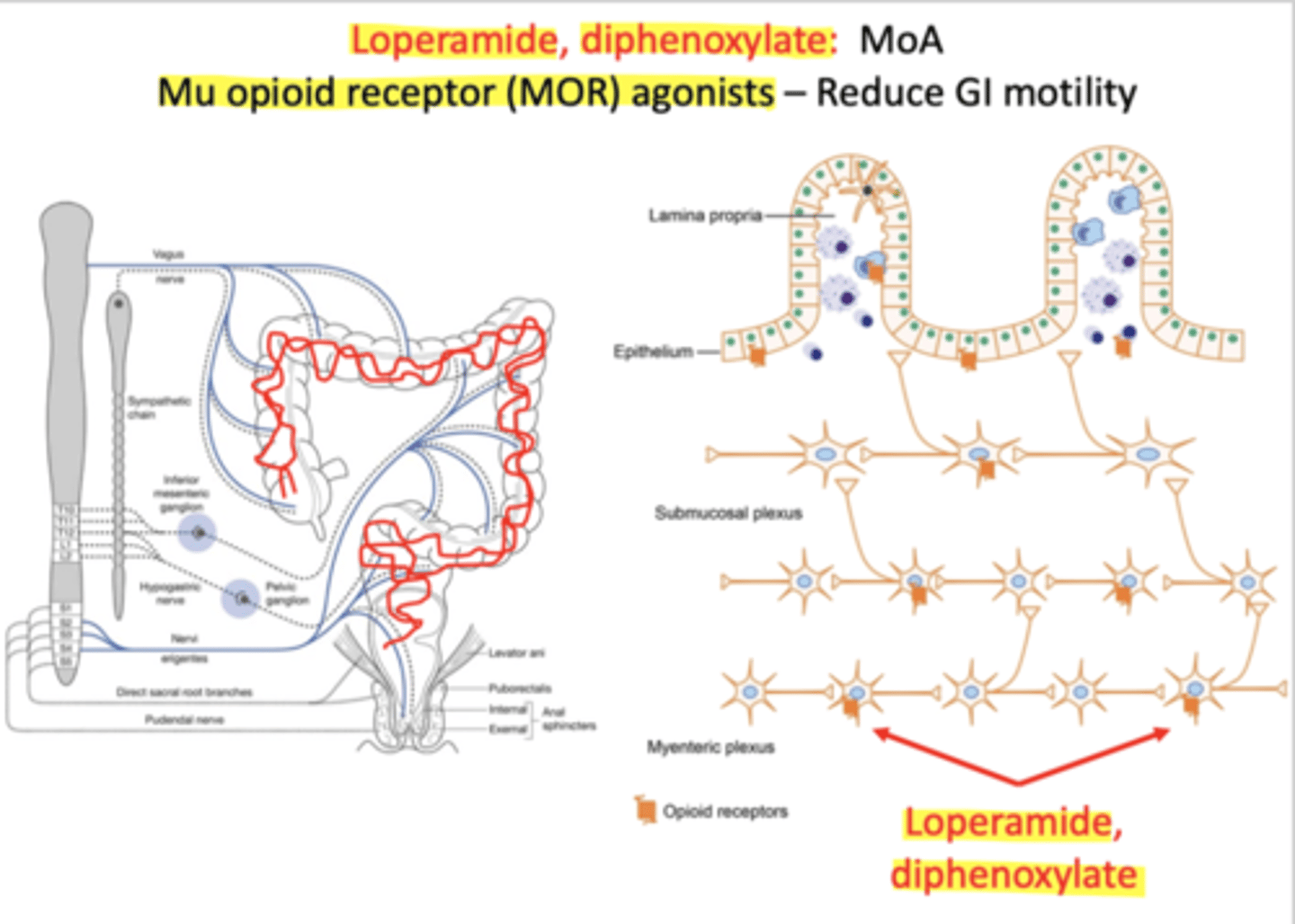
loperamide MOA
- binds to opiate receptor in gut > inhibits release of Ach and prostaglandins > reduction of peristalsis and increasing intestinal transit time
- increases the tone of the anal sphincter > reduction in incontinence and urgency
- acts directly on circular and longitudinal intestinal muscles, through the opiate receptor
- reduces fecal volume, increases viscosity, and diminishes fluid and electrolyte loss; demonstrates antisecretory activity
loperamide contraindication
- hypersensitivity to loperamide or any component of the formulation
- abdominal pain w/o diarrhea
- children <2 years; acute dysentery
- acute ulcerative colitis
- bacterial enterocolitis (caused by salmonella, shigella, and campylobacter)
- pseudomembranous colitis associated with broad-spectrum antibiotic use
loperamide adverse effects
(common) constipation, dizziness