BIO1100 Dr. Morris Troy University Exam 2 - Module 3, Cells
 Call Kai
 Learn
Learn Practice Test
 Spaced Repetition
 Match
Match Flashcards
 Knowt Play
1/86

There's no tags or description
Looks like no tags are added yet.
Name | Mastery | Learn | Test | Matching | Spaced | Call with Kai | Chat |
|---|
No analytics yet
Send a link to your students to track their progress
87 Terms
Why are cells so small?
efficient exchange of substances w/the environment;
ideal cell size has large SA:V ratio
Prokaryotic Cells
no nucleus
no membrane-bound bodies
Prokaryotic vs. Eukaryotic cell size?
Prokaryotic = small — 1-10 micrometers
Eukaryotic = larger — 10-100 micrometers
How do scientists identify types of prokaryotic cells?
Their SHAPE
Types of prokaryotic cells:
bacillus
coccus
spirillum
vibrio
Bacillus
= rod-shaped
Commercial use — dairy products for digestion
Environment — decomposition agents

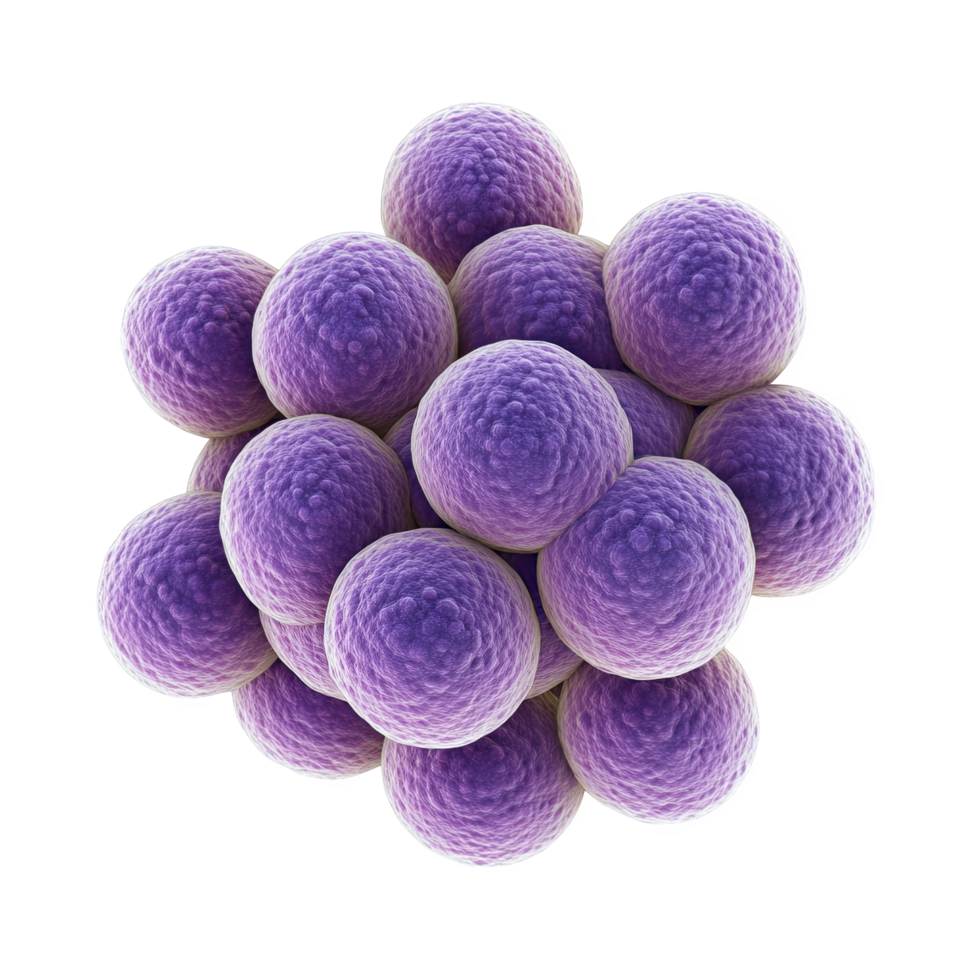
Coccus
= spherical
Commerical use — source of antibiotics
Environment — agents of disease
Spirillum
= twisted rod / “s”-shape
Lyme disease-causing bacteria
Can be chronic, affects multiple organ systems

Vibrio
= shape of comma
Flesh-eating bacteria
On beach in AL, in seafood during months without “r”

Eukaryotic cells
Have a nucleus
Have membrane-bound bodies
Plant vs. Animal cells:
Plant Cells: | Animal Cells: |
|
|
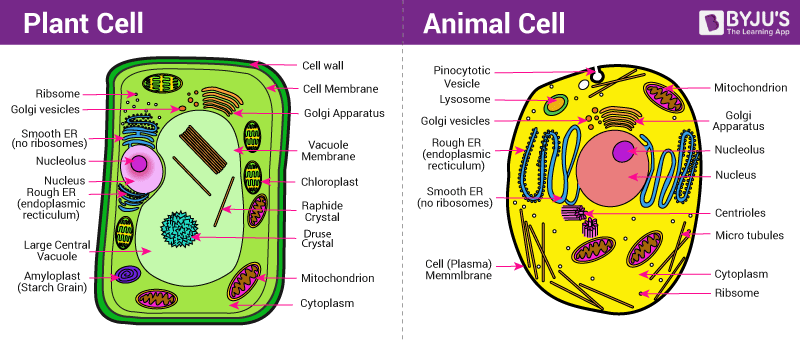
Protoplasm
in all eukaryotic cells
contains cell contents (nucleus & cytoplasm)
Nucleus
control center of cell
contains genetic material (DNA)
Types of genetic material in nucleus:
Chromatin
in non-dividing cells
sandpaper-like (little dots)
Chromosomes
in dividing cells
thread-like
Nucleolis
= center of nucleus
cells have 1-4 nucleoli
Make ribosomes
Ribosomes
make proteins to result in characteristics
Cytoplasm
area of cell that isn’t nucleus
contains cytosol and membrane-bound bodies
Cytosol
= liquid surrounding all membrane-bound bodies
2 types of Membrane-bound bodies
Endomembrane system
Organelles
Parts of the Endomembrane system:
RER
SER
Golgi Body
Lysosome
LCV
Organelles:
Mitochondrion
Chloroplast
RER
aka Rough Endoplasmic Reticulum
Makes proteins to result in characteristics
covered in Ribosomes
More found in muscles
SER
aka Smooth Endoplasmic Reticulim
Makes lipids to detoxify cell
NOT covered in ribosomes
More found in liver
Golgi Body/Apparatus
makes carbs for cell
LCV
aka Large Central Vacuole
only in PLANT cells
Big water bag in mature plant cell
4 functions of the LCV:
Structure (balance of 2 pressures keeps plants upright)
Storage
Crystals
Pigments
Turgor pressure
water pushes out on flexible LCV —> pushes on flexible Cell Membrane —> pushes on rigid Cell Wall
Wall pressure
rigid Cell Wall pushes back
What happens when plants don’t get enough water?
lack of pressure balance —> wilting
What does the LCV store?
Water, Vitamin C, energy
Crystals in LCV
made of Calcium Oxalate
2 shapes
Defense against herbivores;
numbs muscles in oral cavity —> loss of speech
discomfort —> feel like walking pincushion

What pigments the LCV?
bright colored
Anthocyanins (blue, purple, crimson, & black)
In what are anthocyanins found?
Flowers (attracts insects for pollination)
Fruit (attracts animals for dispersal)
Leaves in fall (temp drops, day gets longer, gets dryer —> denatures chloroplasts, LCV pigments show through)
Mitochondrion (in what & what they do)
in every eukaryotic cell
extra in muscles
Mitochondria = “powerhouse” of cell — transforms food —> energy thru Cellular Respiration
Chloroplast (in what & what they do)
only in plants, algae, seaweeds, & a FEW bacteria
do Photosynthesis
3 ways photosynthesis benfits the world:
“FOG”;
kickstarts the Food chain
puts Oxygen into atmosphere
slows down Global climate change by taking in CO2
What is the Fluid-Mosaic Model?
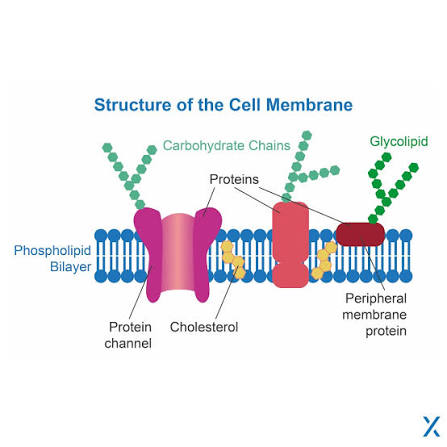
Models cell membrane structure — “Fluid” = almost liquid in texture, “Mosaic” = different components working together
Parts of Cell-Membrane / Fluid-Mosaic Model
Phospholipid bilayer
Protein
Carbohydrate
Cholesterol
Extracellular Matrix (ECM)
Phospholipid Bilayer (what it is & what it does in cell membrane)
“Regulator” — controls what goes in/out of cell
made of 2 layers of phospholipids, base of membrane
heads = glycerol + phosphate, more hydroPHILIC
tails = 2 fatty acids, very hydroPHOBIC

What passes easily through the Phospholipid Bilayer?
Characteristics:
small
hydroPHOBIC (just like fatty acid tail portion)
ex. O2 ; CO2
Protein (what it is & what it does in cell membrane)
“Ships” in a “sea” of lipids — transport “cargo” (esp. hydrophilic substances that have a harder time getting through hydrophobic fatty acids) through p.b.
Tube-like blobs running through membrane, can move left ←→ right to allow things to pass through anywhere

Carbohydrates (what it is & what it does in cell membrane)
“Gatekeepers” — work w/immune system to allow self-molecules and reject non-self-molecules from crossing p.b.
tissue/organ transplants, doctors must suppress immune system so body doesn’t attack foreign carbohydrates
Linked glucose (pentagon-shaped sugar) units, hang off edge of membrane
Cholesterol (what it is & what it does in cell membrane)
maintains proper texture of membrane — more rigid / fluid when needed
go along with fatty acid tails

Extracellular Matrix (what it is & what it does in cell membrane)
aka ECM
Support, Protection, & Controls activity inside cell
Different consistencies in different connective tissues; in BONE tissue = SOLID, in BLOOD = LIQUID (plasma)
Collagen found here
Fibrous-like structures on INNER edge
2 kinds of transport processes
Passive & Active
Passive transport (ATP/cost, charge, hydro-, size, concentration gradient?)
DON’T require ATP from cell, NO cost
happen SPONTANEOUSLY
Usually UNcharged, hydroPHOBIC, SMALL molecules moving WITH concentration gradient

4 types of Passive transport:
Bulk Flow
Diffusion
Osmosis
Facilitated Diffusion
Bulk Flow
= COORDINATED movement of LIQUID molecules ACROSS membrane from region of HIGH concentration —> LOW concentration; aided by GRAVITY
ex. waterfalls, sap flowing down trees
Diffusion
= RANDOM movement of ANY KIND of molecules from a region of HIGH concentration —> LOW concentration ACROSS or NOT across a membrane until DYNAMIC EQUILIBRIUM is reached

Dynamic Equilibrium
= equal rates of movement back & forth

Osmosis
= DIFFUSION of WATER molecules ACROSS SELECTIVELY PERMEABLE membrane
ONLY movement of water
MUST be membrane involved
Essential for Osmoregulation

Osmoregulation
= maintenance of a proper water balance
very important for proteins
Solute
Substance being dissolved; solid (ex. salt)
Solvent
Substance the solvent is being dissolved into; liquid (ex. water)
**remember by “dissolVENT”
Solution
Mixture of solvent & solute
Hypertonic
solute (salt) > solvent (water)
in solution on one side compared to other side of selectively permeable membrane
Isotonic
solute (salt) = solvent (water)
in solution on one side compared to other side of selectively permeable membrane
Hypotonic
solute (salt) < solvent (water)
in solution on one side compared to other side of selectively permeable membrane
** remember because rhymes w/H2O —> more water / solvent
What cells prefer an isotonic environment?
Land animal, human

What cells prefer a hypotonic environment?
Aquatic animal, plant

2 special adaptations of fish:
Gills — release CO2 and excess H2O
Efficient bladders — pee filters out excess H2O
What cells prefer a hypertonic environment?
Some bacteria
ex. bacteria in Great Salt Lake, Utah
Facilitated Diffusion
RANDOM movement of ANY KIND of molecules from region of HIGH concentration —> LOW concentration ACROSS membrane; aided by PROTEIN (boosts reaction) in cell membrane
ex. movement of glucose from small intestine —> bloodstream
When do proteins help most with Facilitated Diffusion?
****SMALL difference in concentrations, happens SLOWer (not as urgent?) —> needs protein’s help (ex. 60% —> 40%)
vs.
BIG difference in concentrations, happens FASTer (ex. 90% —> 10%)
Active transport (ATP/cost, charge, hydro-, size, concentration gradient?)
DO require ATP from cell, MORE costly
usually CHARGED, hydroPHILIC, BIG molecules moving AGAINST concentration gradient

2 types of active transport:
Endocytosis
Exocytosis
Endocytosis
= movement of BIG molecules AGAINST concentration gradient INTO cell
2 types;
2 kinds of Endocytosis:
PHAGOcytosis
PINOcytosis
Phagocytosis
= large SOLIDS taken in; “cell is EATING”
ex. white blood cells eating viruses, foreign substances
Pinocytosis
= large LIQUIDS taken in; “cell is drinking”
generalized / widespread in plants & animals
**remember because “pino” sounds like “pinot noir” wine
Exocytosis
= movement of BIG molecules AGAINST concentration gradient OUT of cell
ex. hormones
Hormones & exocytosis
HGH (human growth hormone); pituitary gland —> bones, muscles, etc.
Insulin; pancreas —> bloodstream
All living things must ______.
Take in and use energy
Thermodynamics
= study of energy transformation
2 laws of thermodynamics:
Law of Conservation of Energy
Entropy
Law of Conservation of Energy
“Energy is neither created nor destroyed in an energy transformation”
total Reactant energy = total Product energy
Entropy
“There is an increase in the amount of disorder in a system in an energy transformation”
Living things try to fight it
Catabolic
= BREAKING DOWN larger molecules to smaller molecules to GENERATE energy
**remember because “cat-astrophe” = something breaking down or being destroyed
Anabolic
= USING energy to PUT TOGETHER small molecules into bigger molecules
Exogenic
= MORE p.e. in REACTANTS, LESS p.e. in PRODUCTS, & RELEASE of energy to do work
**ex-ITing is leaving
Endogenic
= LESS p.e. in REACTANTS, MORE p.e. in PRODUCTS, & NO release of energy to do work
**en-TERING is NOT releasing
Cellular Respiration (goal, what does it, enzymes?, -bolic / -genic, where it happens, equation)
Goal = getting ATP to do work
done by ALL living things
each step in chain of reactions has special enzyme
happens in Mitochondria in eukaryotes (in cytosol/cytoplasm in bacteria)
Catabolic
Exogenic
2 kinds;

Aerobic Cellular Respiration
= takes place IN presence of oxygen; NORMAL cellular resp.
Anaerobic Cellular Respiration
= takes place WITHOUT oxygen when undergoing strenuous activity you’re not used to (heart can’t pump O2 fast enough to make sugar to supply muscles); leads to Alcohol / Lactic Acid fermentation
Lactic Acid (made in what, what it causes)
made in humans, animals, & bacteria that do c.r.
forms and builds up in muscles —> causes burning cramping
Goes away when resting —> O2 levels go back up —> lactic acid converted too another substance that doesn’t cause cramping
Alcohol / Ethanol (made in what, what it is used for)
produced in plants & fungi that do c.r.
Process is impportant to fuel, baking & brewing industries
ex. Yeast = unicellular, can’t survive in the alcohol (toxin) it makes
ex. plants like Corn = source of ethanol added to gasoline
Photosynthesis (goal, what does it, -bolic / -genic, where it happens, equation)
Goal = storing up energy to be used later on
happens in Chloroplasts in eukaryotes (in cytosol/cytoplasm in bacteria)
Anabolic
Endogenic
