biochemistry - DNA structure
 Call Kai
 Learn
 Practice Test
 Spaced Repetition
 Match
 Flashcards
 Knowt Play
1/37

There's no tags or description
Looks like no tags are added yet.
38 Terms
explain the hershey-chase experiment
used to confirm that DNA is the genetic material
used bacteriophages than infect bacteria
DNA contain sulfur but not phosphorus
protein contains sulfur but no phosphorus
→ radiolabel phages protein with sulfur-35 or phage DNA with phosphorus-32
put mixture in a blender to separate the phage particles from cell
centrifuge mixtures to separate entities by size/shape + check location of radioactivity
radioactivity found in cell pellet. phosphorus (of DNA) entered the cell
radioactivity found in supernatant. sulfur (of protein) has not entered the cell
what was DNA first discovered as and in what year
discovered as nuclein in 1869
outline the tetranucleotide hypothesis
proposed by Levene
suggests that DNA is made up of 4 nucleotides repeated in the same pattern, no variation
outline the basis of hereditary
gregor mendel publishes his experiments on plant hybridisation which rejects blended inheritance and defines the concept of genes
states that phenotypes are determined by proteins (including enzymes)
explain the griffith pneumococus experiment
demonstrated that bacteria can transfer genetic information via bacterial transformation allowing them to change their traits
explain how it was discovered that DNA is the transforming principle
discovered by scientists Avery, MacLeod and McCarty
isolated the cytosol of heat-killed smooth pneumococcus
transforming principle - the substance that carries hereditary traits and converts harmless bacteria into a virulent form
what evidence do we have against the tetranucleotide hypothesis
chargaff determined the relative amounts of A,G,T,C in DNA from different organisms
disproved the tetranucleotide hypothesis
determined that A and T + G and C pair with eachother due to having equal amounts (base pairing)
what evidence do we have for the structure of purines and pyrimidines
worked out by Bill Cochran, June Broomhead and Clews
realised the potential for hydrogen bonding
what was the role of rosalind franklin in determining DNA structure
used x-ray diffraction images of B-form DNA
what was the role of watson & crick in determining DNA structure (blurt) mention past scientists’ findings that were built upon
Levene - DNA is a polymer composed of phosphate-sugar-bases (nucleotides)
x-ray diffraction images show regular repeating structure and are consistent with helical structure (franklin & wilkins)
fibre density suggests two polymer strands in each helical molecule (franklin & wilkins)
DNA wound into a right-handed helix (watson & crick)
phosphates must be on the outside of the helix (the negative charges would repel one another if on the inside) (watson&crick)
base pairs found on the inside of the helix (cochran, broomhead, clews, watson&crick)
purines (A,G) pair with pyrimidines(C,T) (watson and crick)
A pairs with T, G pairs with C (chargaff)
nature of pairing implies that the strands are antiparralel (watson& crick)
what are the purine nucleotides
adenine and guanine
what are the pyrimidine nucleotides
cytosine and thymine
how many hydrogen bonds are found between bases
adenine and thymine bond with 2 hydrogen bonds
guanine and cytosine bond with 3 hydrogen bonds
differentiate ribose and deoxyribose sugars
deoxyribose sugar found in DNA
ribose sugar found in RNA
deoxyribose does not have a hydroxyl group on the 2’ carbon
what is the direction that DNA runs in
each backbone strand runs 5’ to 3’
draw the cytosine nucleotide structure

draw the uracil nucleotide structure

draw the thymine nucleotide structure

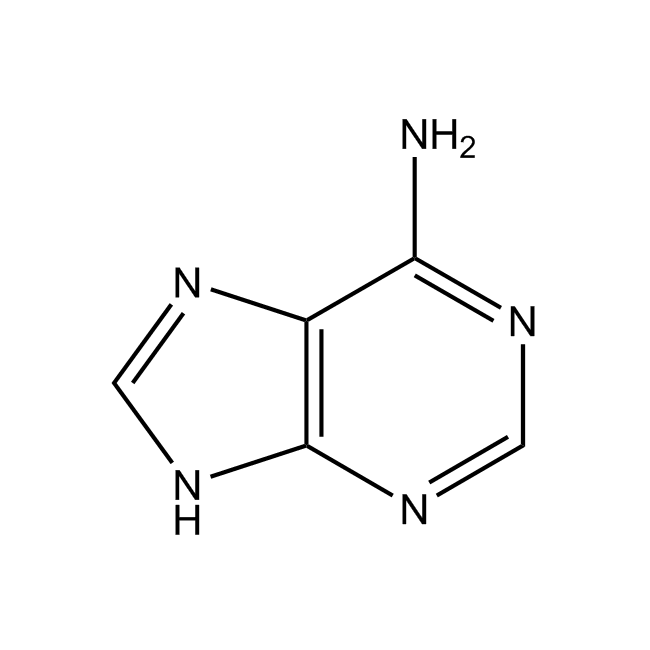
draw the adenine structure
draw the guanine structure

explain the grooves of nucleotide bases
edges of bases are accesible in the major and minor grooves
each base pair has a chemically different profile in the major and minor groove
accesory factors (for e.g DNA replication and transcription) can recognise specific sequences
what is the length of one complete turn in DNA
pitch of helix = 3.4nm
how many nucleotide pairs per turn in DNA
10 therefore distance between succesive pairs is 0.34nm
what is the helix diameter of DNA
2nm
what is a nucleoside and give examples
base + sugar = nucleoside
cytidine
deoxycytidine
what is a nucleoside triphosphate
base + sugar + triphosphate
e.g. deoxycytidine triphosphate
what is a nucleotide and give examples
base + sugar + phosphate
e.g. cytidine monophosphate
deoxycytidine monophosphate
list the RNA ribonucleosides
adenosine
cytidine
guanosine
uridine
list the DNA deoxyribonucleosides
deoxyadenosine
deoxycytidine
deoxyguanosine
deoxythymidine
list the ribonucleoside triphosphates of RNA
adenosine triphosphate (ATP)
cytidine triphosphate (CTP)
guanosine triphosphate (GTP)
uridine triphosphate (UTP)
list the deoxyribonucleoside triphosphates of DNA
deoxyadenosine triphosphate (dATP)
deoxycytidine triphosphate
deoxyguanosine triphosphate
deoxythymidine triphosphate
list the ribonucleotides of RNA
adenosine monophosphate (AMP)
cytidine monophosphate
guanosine monophosphate
uridine monophosphate
list the deoxyribonucleotides for DNA
deoxyadenosine monophosphate
deoxycytidine monophosphate
deoxyguanosine monophosphate
deoxythymidine monophosphate
compare where genomic DNA is found in eukaryotes vs prokaryotes
multiple homologous pairs of linear chromosomes in the nucleus (eukaryotes)
single cellular chromosome in cytoplasm (prokaryotes)
compare where extrachromosomal DNA is found in eukaryotes vs prokaryotes
eukaryotes:
mitochondria: variable number of copies of circular mitochondrial DNA (mtDNA)
chloroplast: usually single copu of cpDNA per chloroplast. generally considered circular
prokaryotes:
small circles of DNA called plasmids
state the properties of the human genome
46 chromosomes, 22 pair plus XX or XY
3.2 × 10^9 nucleotide pairs
around 21,000 genes
around 2 metes of DNA per nucleus
nucleus is around 5um
explain the winding of DNA
genomic DNA in eukaryotes is wound around histone proteins and further looped and supercoiled to enable it to fit in the nucleus
state functions of DNA in the cell
genetic info can:
be carried from one generation to the next (DNA replication)
can be decoded to produce gene products (proteins) through transcription and translation