EQ dentistry interactive cases notes
 Call Kai
 Learn
Learn Practice Test
 Spaced Repetition
 Match
Match Flashcards
 Knowt Play
1/18

There's no tags or description
Looks like no tags are added yet.
Name | Mastery | Learn | Test | Matching | Spaced | Call with Kai | Chat |
|---|
No analytics yet
Send a link to your students to track their progress
19 Terms
What are the category one equine dental procedures?
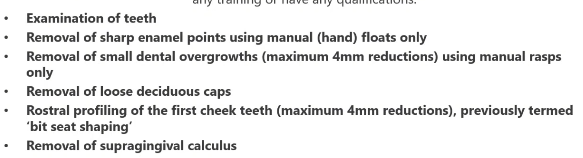
Anyone can do these
What are the category two equine dental procedures?
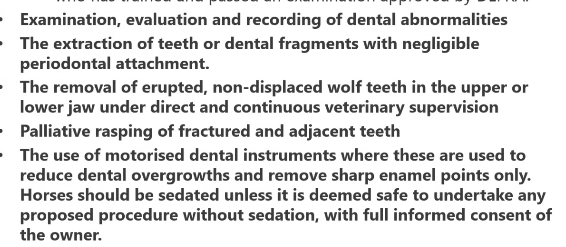
EDT can carry this out (person who has undergone training)
In which arcade are wolf teeth more common?
Maxillary
May be blind (always feel along the bars of the mouth for these)
6-year-old gelding. Owner says he has been ‘balling’ up his hay since switching onto a new batch. What is the most likely cause?
Periodontal disease due to diastema(ta)
This is aka quidding (dropping food)
No clinical signs due to enamel points (this would occur in ridden work if it does)
Why can diastema develop?
Imbalances in the arcades
Tall 308 and 408
Rostral overgrowths on 6s and 11s
Important to rasp!!
Lower 10/11 and upper 6/7 diastemata common
What is the most common cause of periodontal disease?
Food trapping in the diastema in horses
What does periodontal dx lead to?

When would you consider diastema widening?
When the horse had already been rasped recently
Should do this endoscope-guided
What would you suspect in a younger horse (3/4) which is quidding?
Periodontal disease due to food trapping under a loose deciduous tooth (cap)
What are the ddx for quidding horses/ inap horses?
Choke
Colic
Pyrexia
What is being shown here?
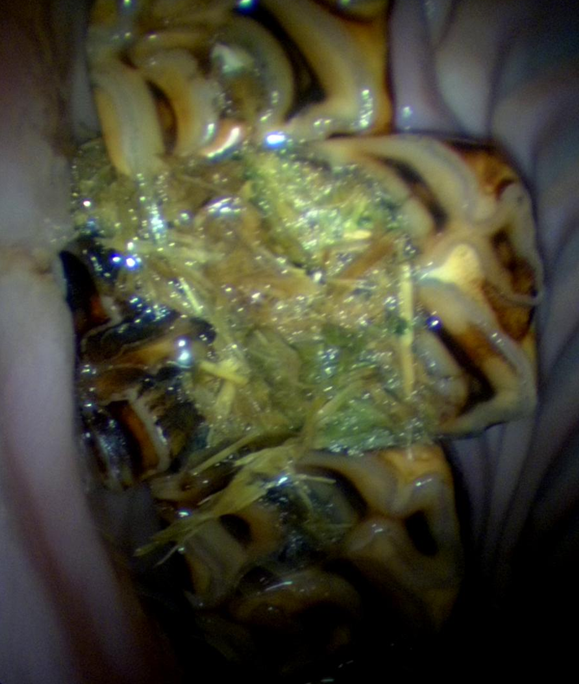
Midline sagittal fracture (due to progression of/ end stage infundibular caries)
Tooth looks wide and there is food in the middle
What causes infundibular caries and what horses is this often seen in?
Cemental hypoplasia
Teenage yrs onwards
What can infundibular caries lead to?
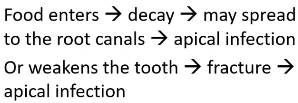
What would you do if you come across a midline sagittal fracture due to end stage infundibular caries
Refer for extraction to someone able to perform a oral extraction
Surgical extraction is an option if there are complications (keyhole surgery)
What would you do about this lump, it is hard, the horse isn't showing a clinical signs and it isn't growing or changing shape?
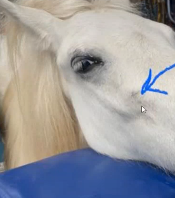
Examine the oral cavity plus radiography
(periapical infection is causing this swelling)
What should you do when you have discharging tracts on the horses face?
Put a metallic marker into the tract when radiographic - helps when getting a second opinion
Infection of which teeth is usually associated with sinusitis?
Maxillary 8-11 teeth
How do you deal with sinusitis?
Trephination into sinus
Flush out the infection (may not come out nasally because sinus drain angle blocked due to inflammation)
Would administer anti-inflammatories
Then look into the sinus endoscopically (may have solid bits of pus)
What can be an indicator of pulp death?
No dark staining secondary dentine (this is produced by pulp)