PNS
 Call Kai
 Learn
 Practice Test
 Spaced Repetition
 Match
 Flashcards
 Knowt Play
1/169

There's no tags or description
Looks like no tags are added yet.
170 Terms
cranial nerve I
olfactory
cranial nerve II
optic
cranial nerve III
oculomotor
cranial nerve IV
trochlear
cranial nerve V
trigeminal
branches of trigeminal nerve
ophthalmic, maxillary, mandibular
cranial nerve VI
abducens
cranial nerve VII
facial
cranial nerve VIII
vestibulocochlear
cranial nerve IX
glossopharyngeal
cranial nerve X
vagus
cranial nerve XI
accessory
cranial nerve XII
hypoglossal
cribriform plate, olfactory bulb
olfactory
optic canal, occipital lobe and thalamus
optic nerve
superior orbital fissure, ventral midbrain
oculomotor nerve
superior orbital fissure, dorsal midbrain
trochlear
superior orbital fissure, trigeminal ganglion and pons
opthalmic
foramen rotundum, inferior orbital fissure, infraorbital foramen, trigeminal ganglion and pons
maxillary nerve
foramen ovale, trigeminal ganglion and pons
mandibular nerve
superior orbital fissure, pons-medulla junctions
abducens nerve
internal acoustic meatus to stylomastoid foramen, pons lateral to abducens
facial nerve
internal acoustic meatus, medulla oblangata
vestibulocochlear
jugular foramen, medulla obl0ngata
glossopharyngeal nerve
jugular foramen, medulla oblongata
vagus nerve
jugular foramen, ventral rootlets C1-C5
accessory nerve
hypoglossal canal, medulla oblangata
hypoglossal nerve
sensory: olfactory epithelium for smell
olfactory
sensory: retina for vision
optic
motor: most eye muscles, levator palpebrae, iris, ciliary body; pupil constriction and focusing lens
oculomotor
motor: superior oblique eye muscle
trochlear
sensory: forehead skin, upper eyelid, nose, cornea
opthalmic
sensory: lower eyelid, upper teeth/lip, nasal cavity, cheek
maxillary
sensory: tongue, lower teeth/lip motor: mastication and swallowing
mandibular
motor: lateral rectus eye muscle
abducens
sensory: anterior 2/3 tounge-taste motor: facial expression muscles, lacrimal, submandibular, and sublingual glands
facial
sensory: inner ear for balance, equilibrium, hearing
vestibulocochlear
sensory: posterior 1/3 tongue-taste, upper pharynx, carotid body, carotid sinus-blood pressure; motor: pharynx swallowing, parotid gland salivation
glossopharyngeal
sensory: thoracic and abdominal viscera, carotid sinus-blood pressure, carotid and aortic body; motor: soft palate, pharynx, larynx, heart, lungs, abdominal viscera
vagus
motor: trapezius, sternocleidomastoid
accessory
motor: tongue muscles, swallowing, speech, moving food
hypoglossal
how many spinal nerves are there
31 pairs
how many cervical spinal nerves
8
how many thoracic spinal nerves
12
how many lumbar spinal nerves
5
how many sacral spinal nerves
5
how many coccygeal spinal nerves
1
a network of intersecting nerves carrying sensory and motor info and formed by ventral rami
nerve plexuses
cervical plexus
ventral rami C1-C5, terminal branches (phrenic nerve)
order of brachial plexus structures
ventral rami, trunks, divisions, cords, terminal branches
which ventral rami are involved in the brachial plexus
C5-T1
trunks of brachial plexus
upper, middle, lower
divisions of brachial plexus
anterior and posterior
cords of brachial plexus
lateral, medial, posterior
nerves of posterior cord
axillary nerve, radial nerve
nerves from lateral cord
musculocutaneous nerve, contribution to median nerve
nerves from medial cord
ulnar nerve, contribution to median nerve
ventral rami involved in lumbar plexus
L1-L4
terminal branches of lumbar plexus
genitofemoral, femoral nerve, obturator nerve
ventral rami involved with sacral plexus
L4-S5
terminal branches of sacral plexus
lumbosacral trunk, superior and inferior gluteal nerves, pudendal nerve, sciatic nerve
what branches from sciatic nerve
common fibular and tibial nerve
what branches from common fibular nerve
superficial fibular nerve, deep fibular nerve
iliacus origin
iliac fossa, ala of sacrum
iliacus insertion
lesser trochanter of femur
iliacus action
flexes thigh, flexes trunk
psoas major origin
transverse process of t12-l5
psoas major insertion
lesser trochanter of femur
psoas major action
flexes thigh, flexes trunk laterally
quadratus lumborum origin
iliac crest and lumbar fascia
quadratus lumborum insertion
transverse processes of L1-L3
quadratus lumborum action
flexes vertebral column laterally
what innervates diaphragm, pleura, pericardium
phrenic nerve
what innervates deltoid, teres minor
axillary nerve
what innervates triceps brachii, brachioradialis, forearm extensors, supinator, anconeus, abductor pollicis longus
radial nerve
what innervates coracobrachialis, biceps brachii, brachialis
musculocutaneous
what innervates flexor carpi ulnaris, flexor digitorum profundus, dorsal interossei, lumbricals
ulnar nerve
what innervates forearm flexors, pronator teres and quadratus, palmaris longus, flexor pollicis longus
median nerve
what innervates internal oblique, transverse abdominis, cremaster, skin of scrotum
genitofemoral
what innervates quadriceps, iliacus, sartorius, pectineus
femoral
what innervates pectineus (rare), adductor longus, brevis, magnus, gracilis
obturator nerve
what innervates gluteus maximus
superior gluteal nerve
what innervates gluteus medius and minimus, tensor fasciae latae
inferior gluteal nerve
what innervates external genitalia, anus, external anal sphincter
pudendal nerve
what innervates biceps femoris long head
common fibular nerve
what innervates fibularis longus and brevis, foot joints and muscles
superficial fibular nerve
what innervates tibialis anterior, external digitorum longus, hallucis longus, foot joints and muscles
deep fibular nerve
what innervates posterior thigh and leg muscles except biceps femoris short head and adductor magnus
tibial nerve
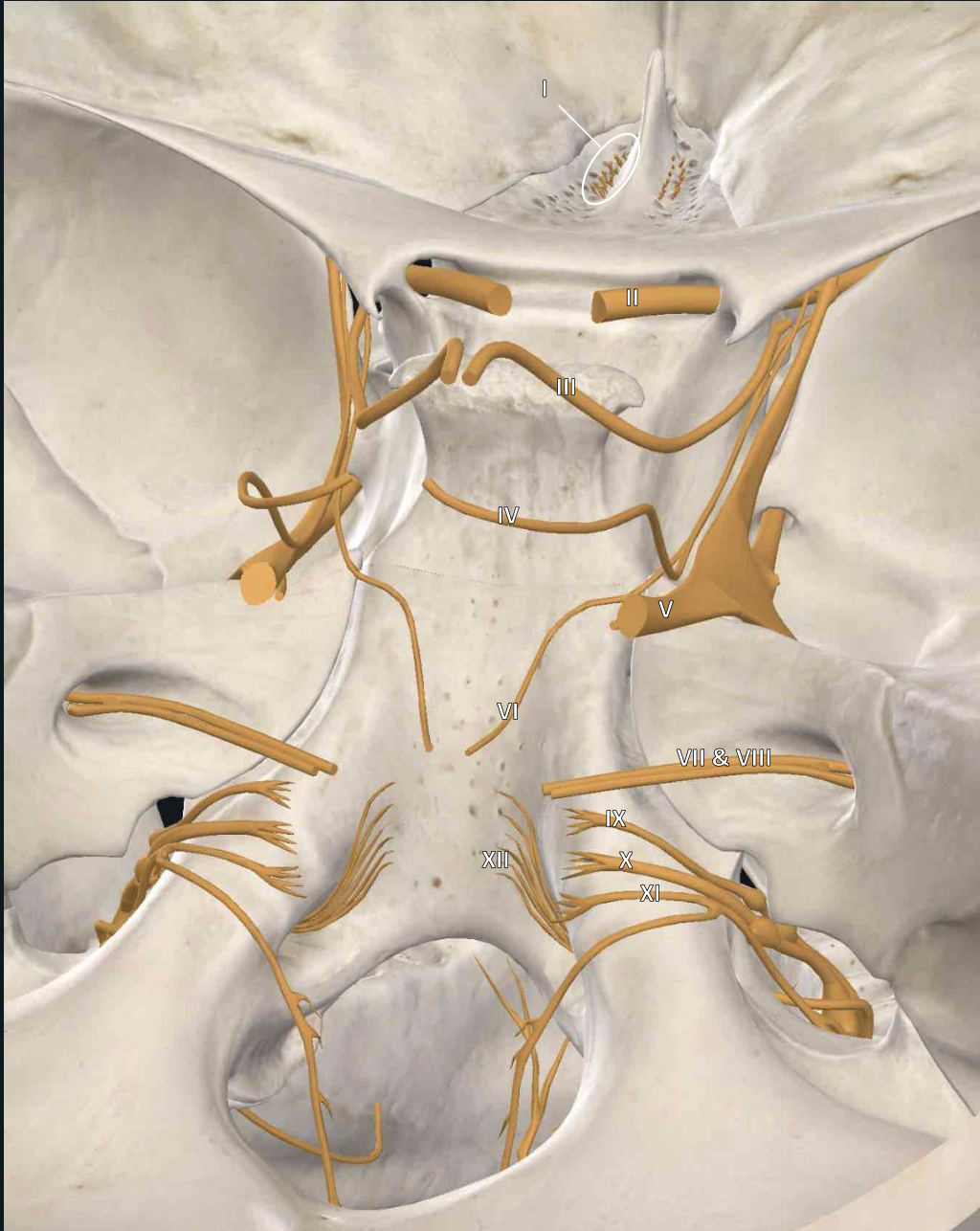
structure #I
olfactory nerve
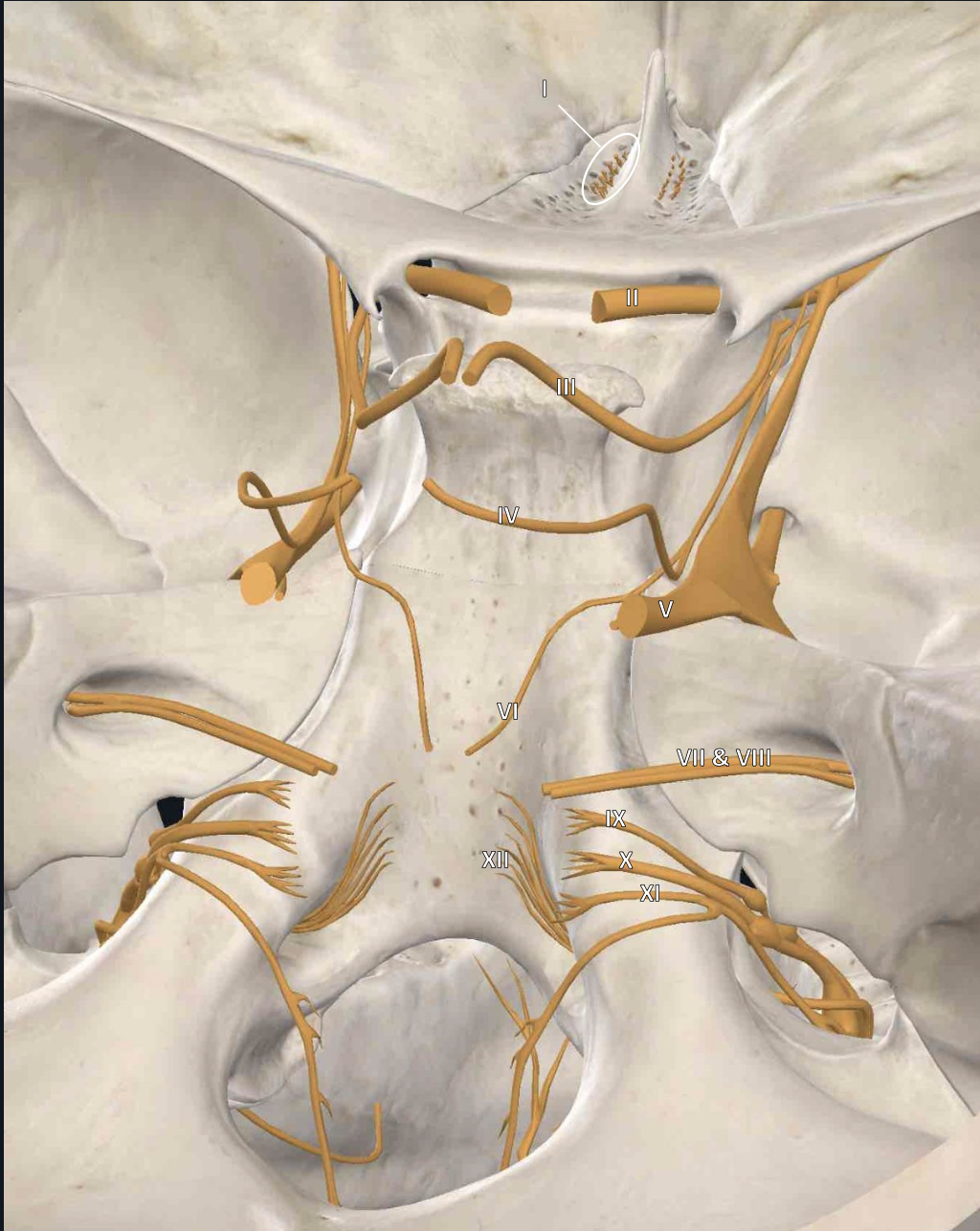
structure #II
optic nerve
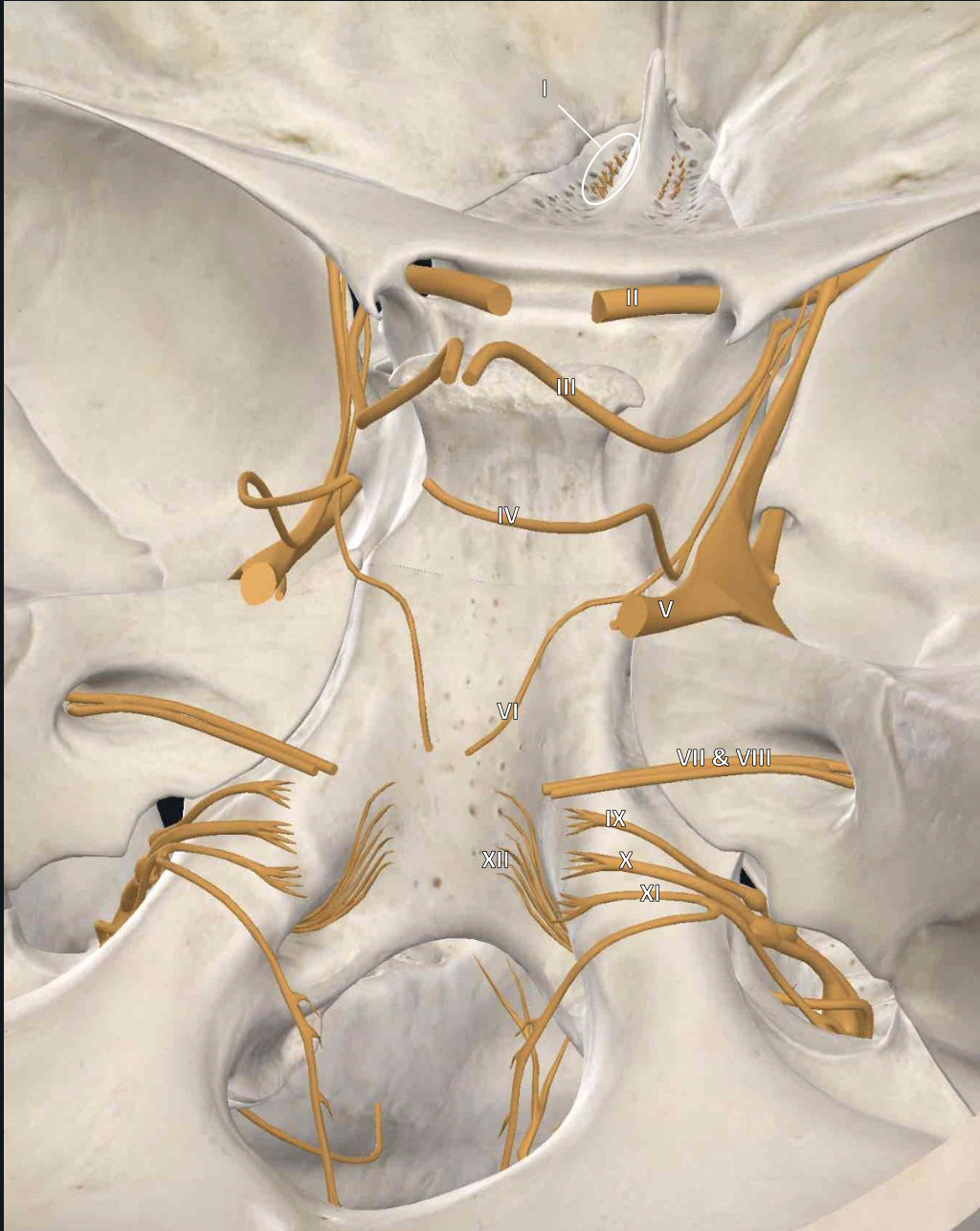
structure #III
oculomotor nerve
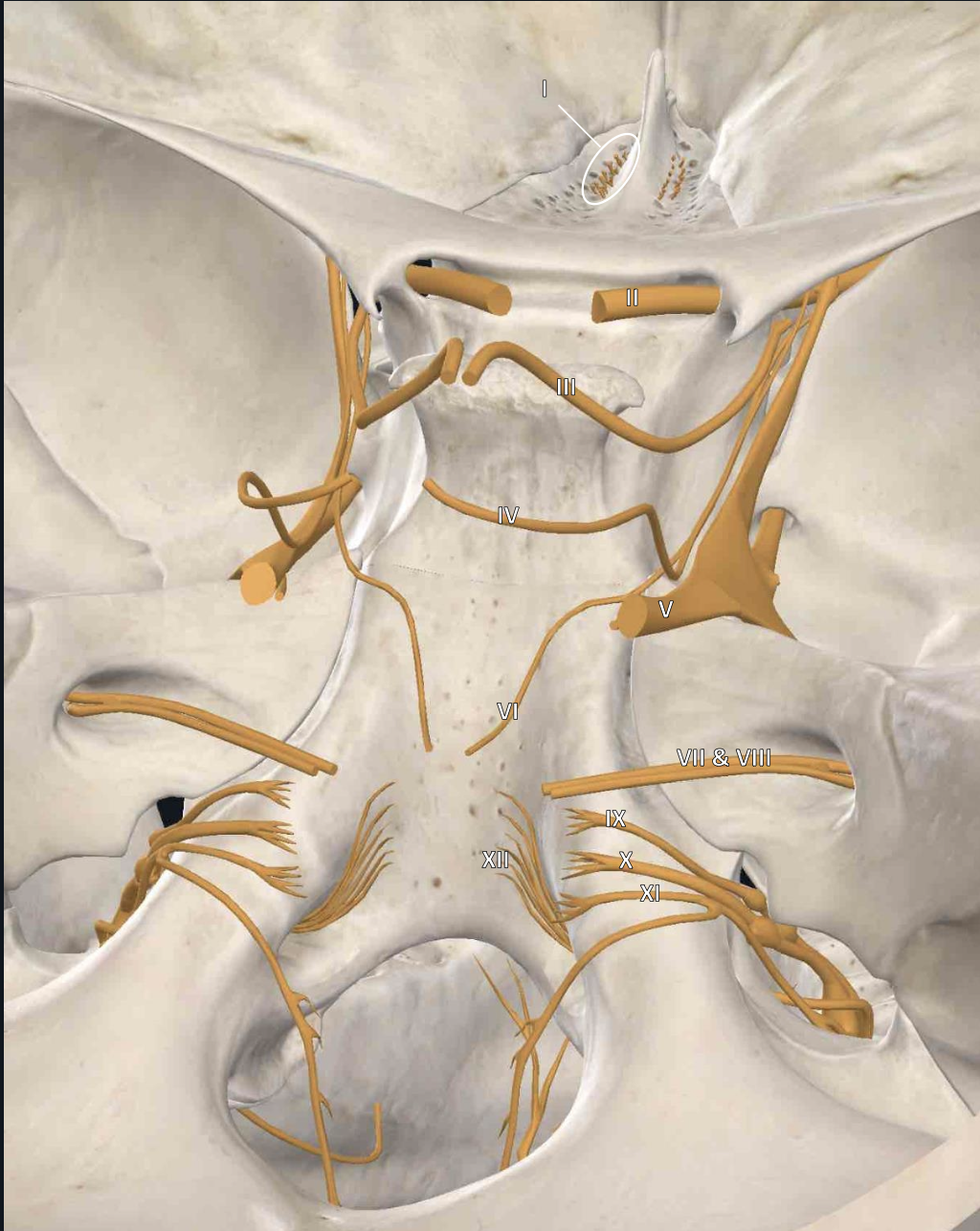
structure #IV
trochlear nerve
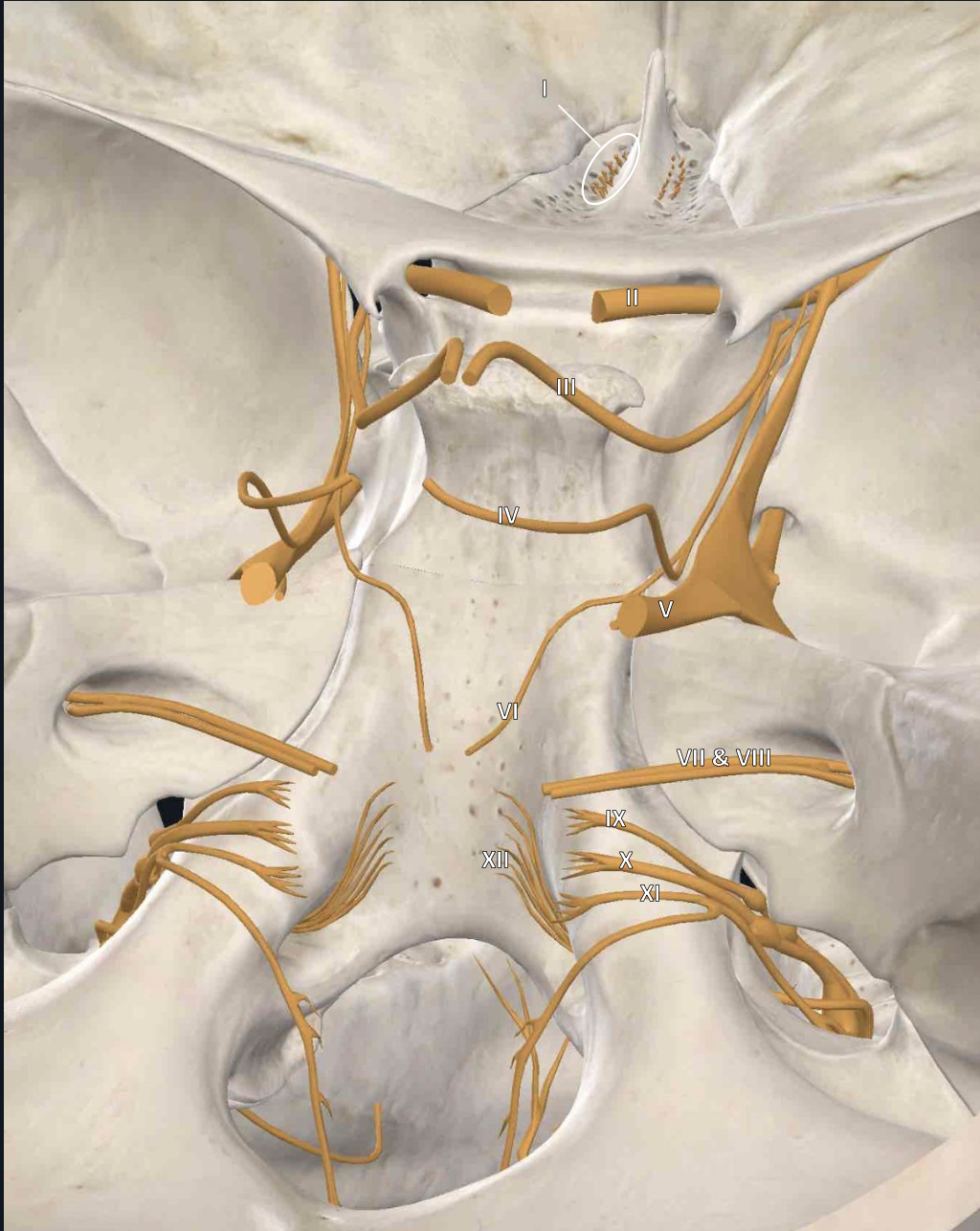
structure #V
trigeminal nerve
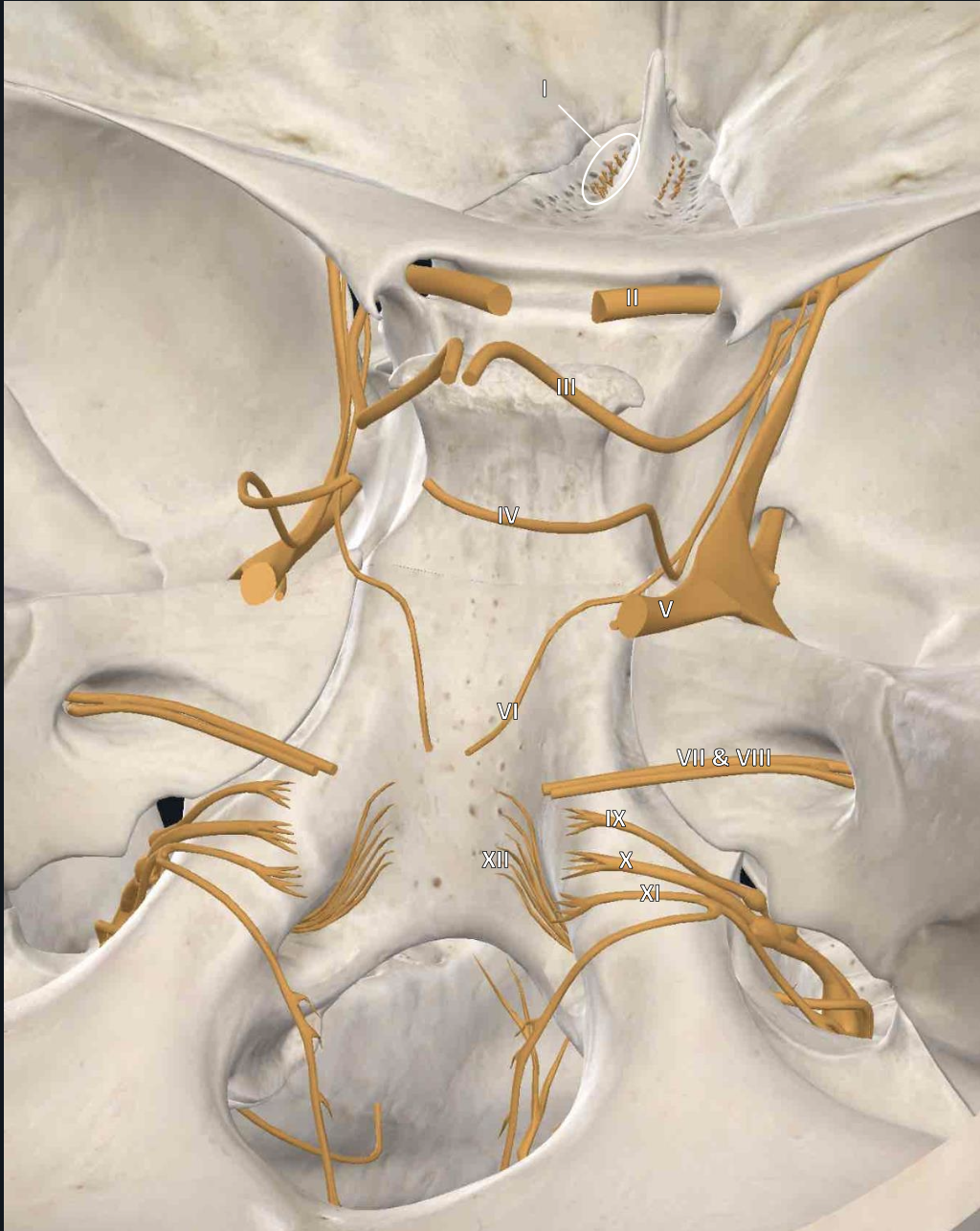
structure #VI
abducens nerve
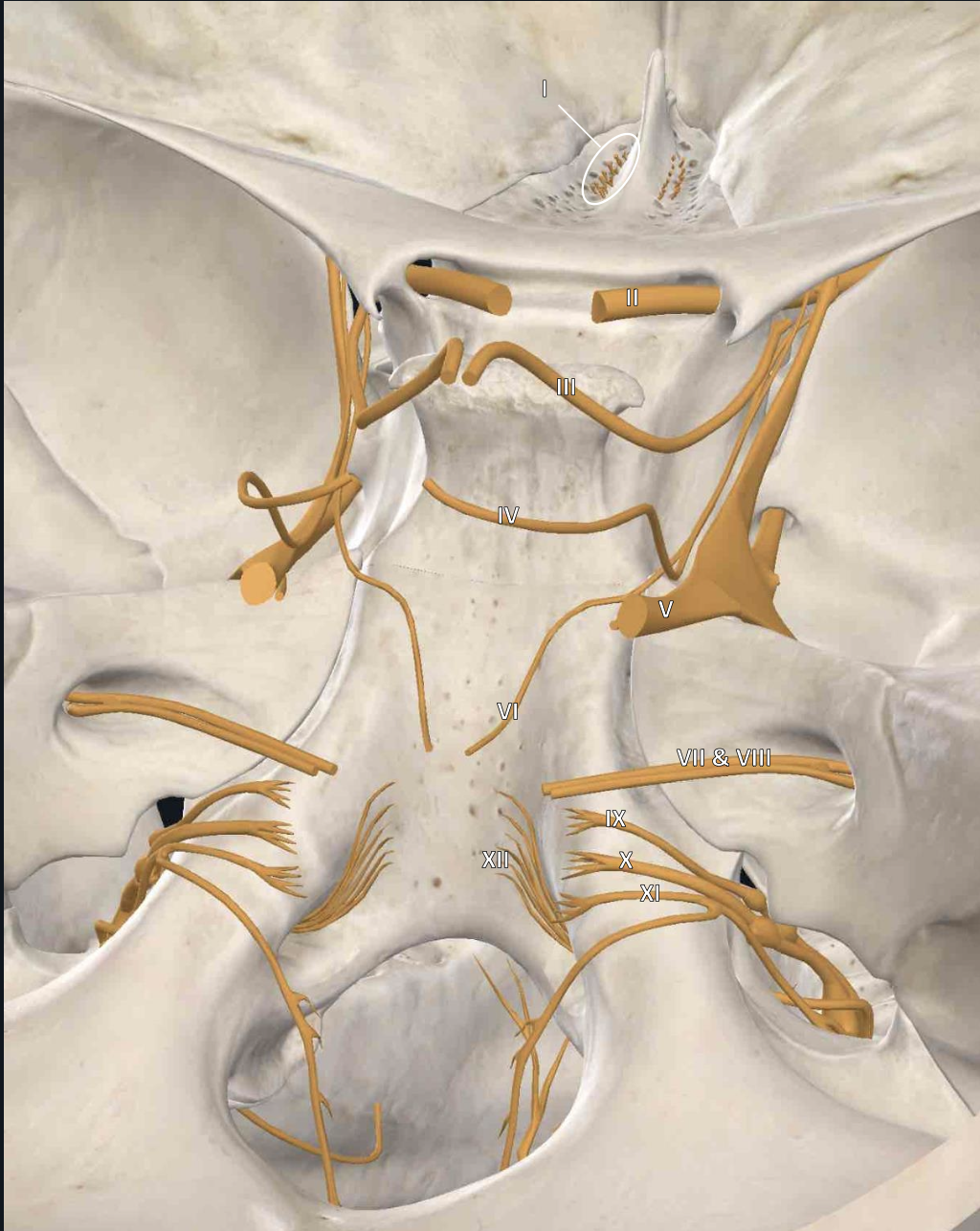
structure #VII
facial nerve
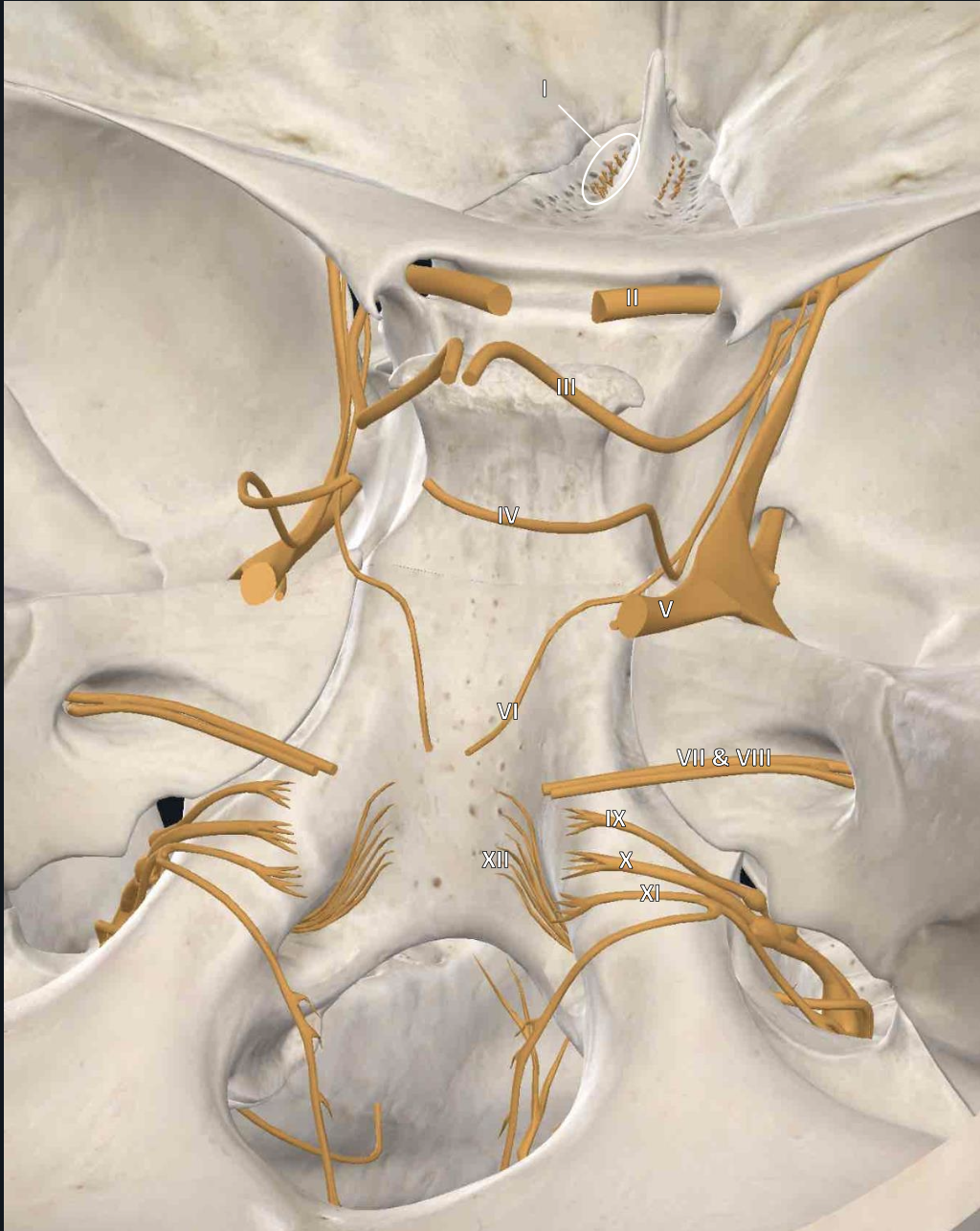
structure #VIII
vestibulocochlear nerve
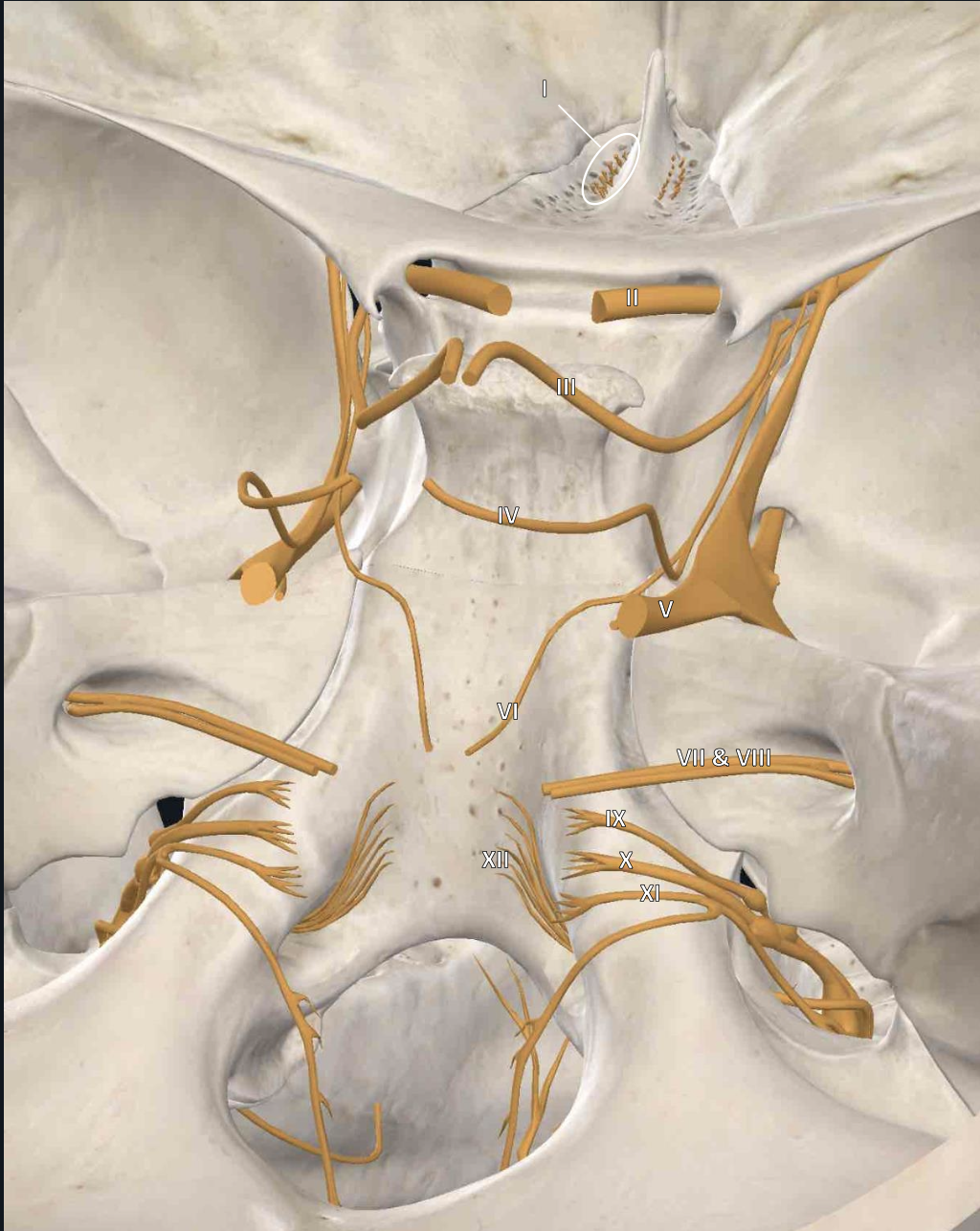
structure #IX
glossopharyngeal nerve
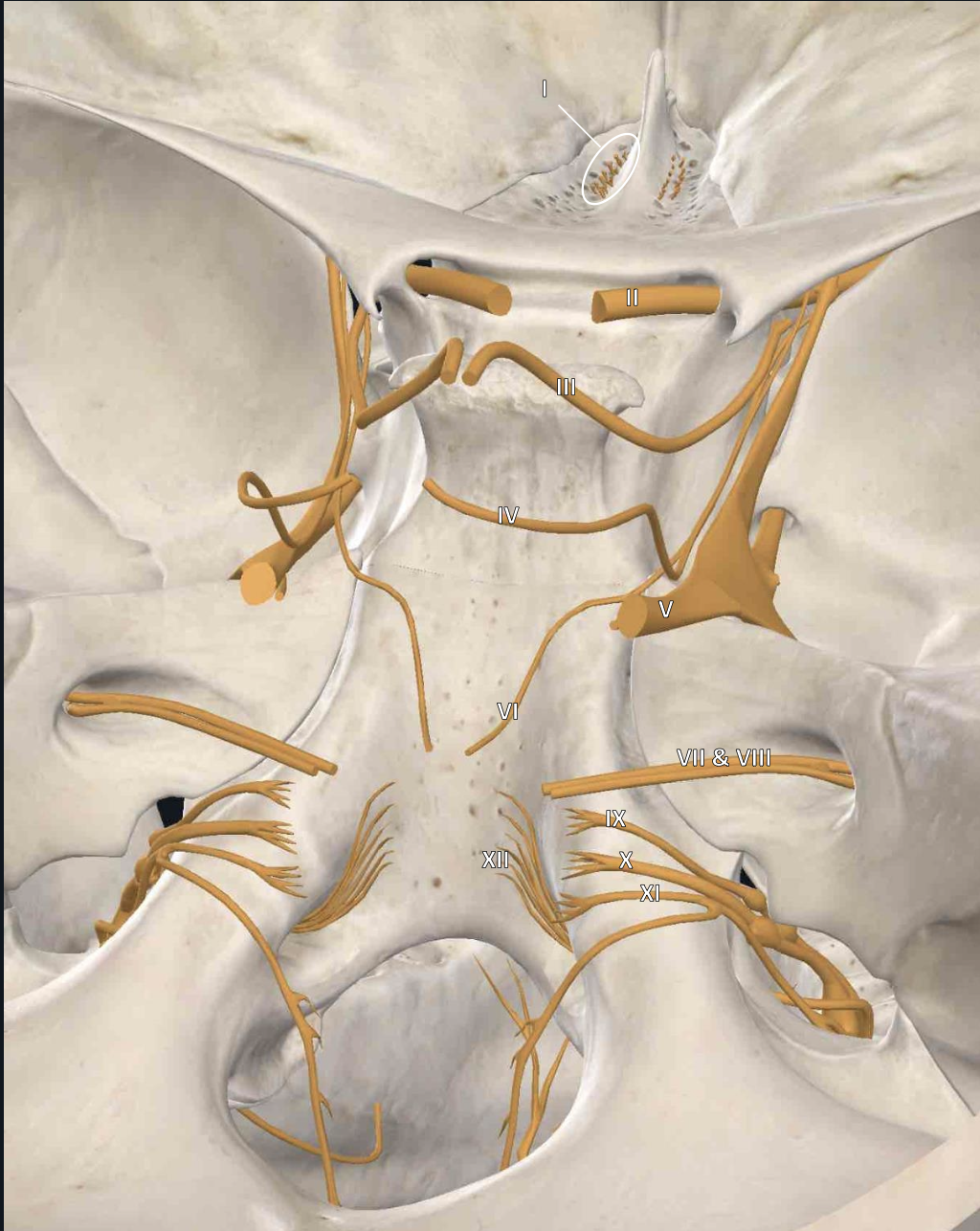
structure #X
vagus nerve
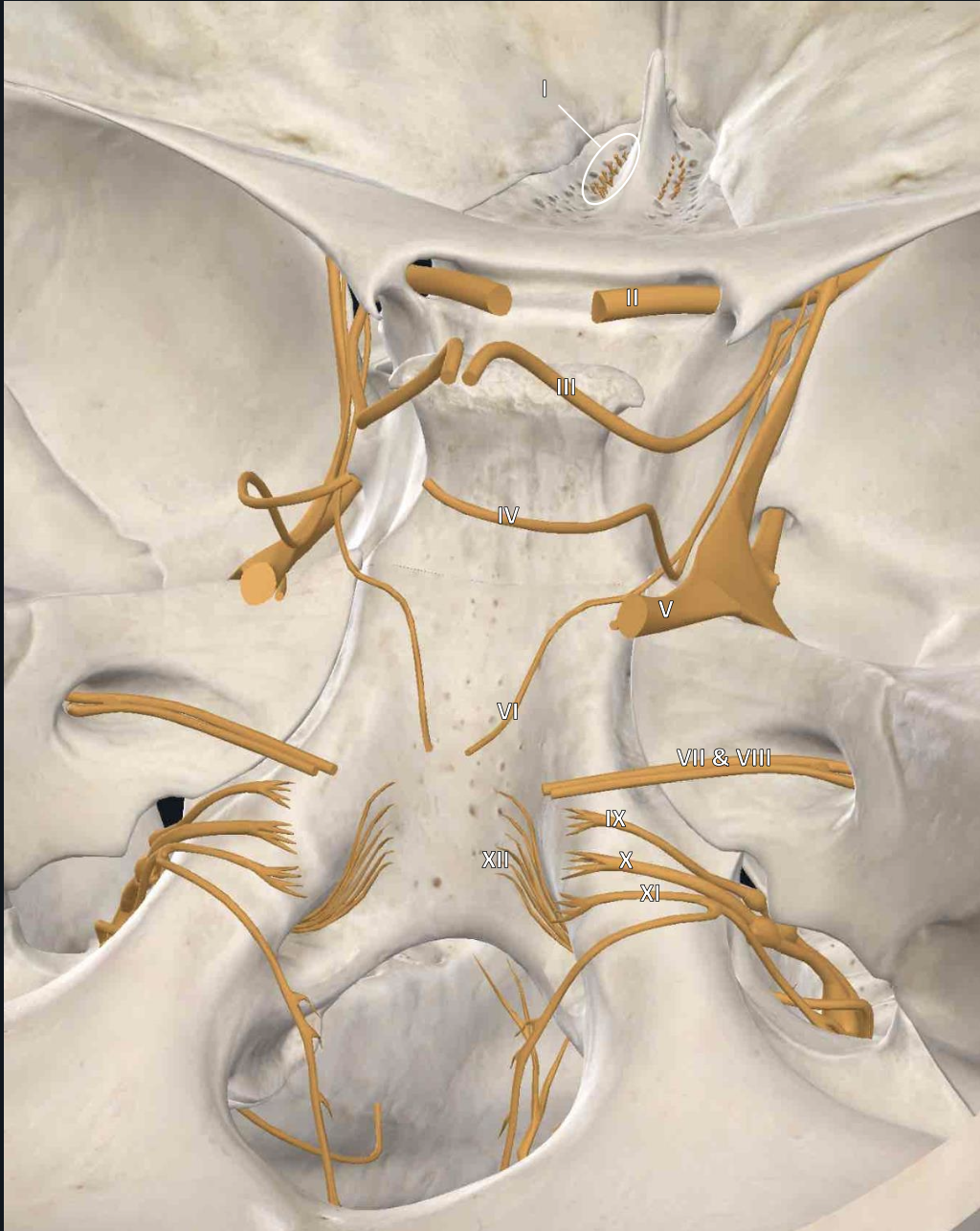
structure #XI
accessory nerve
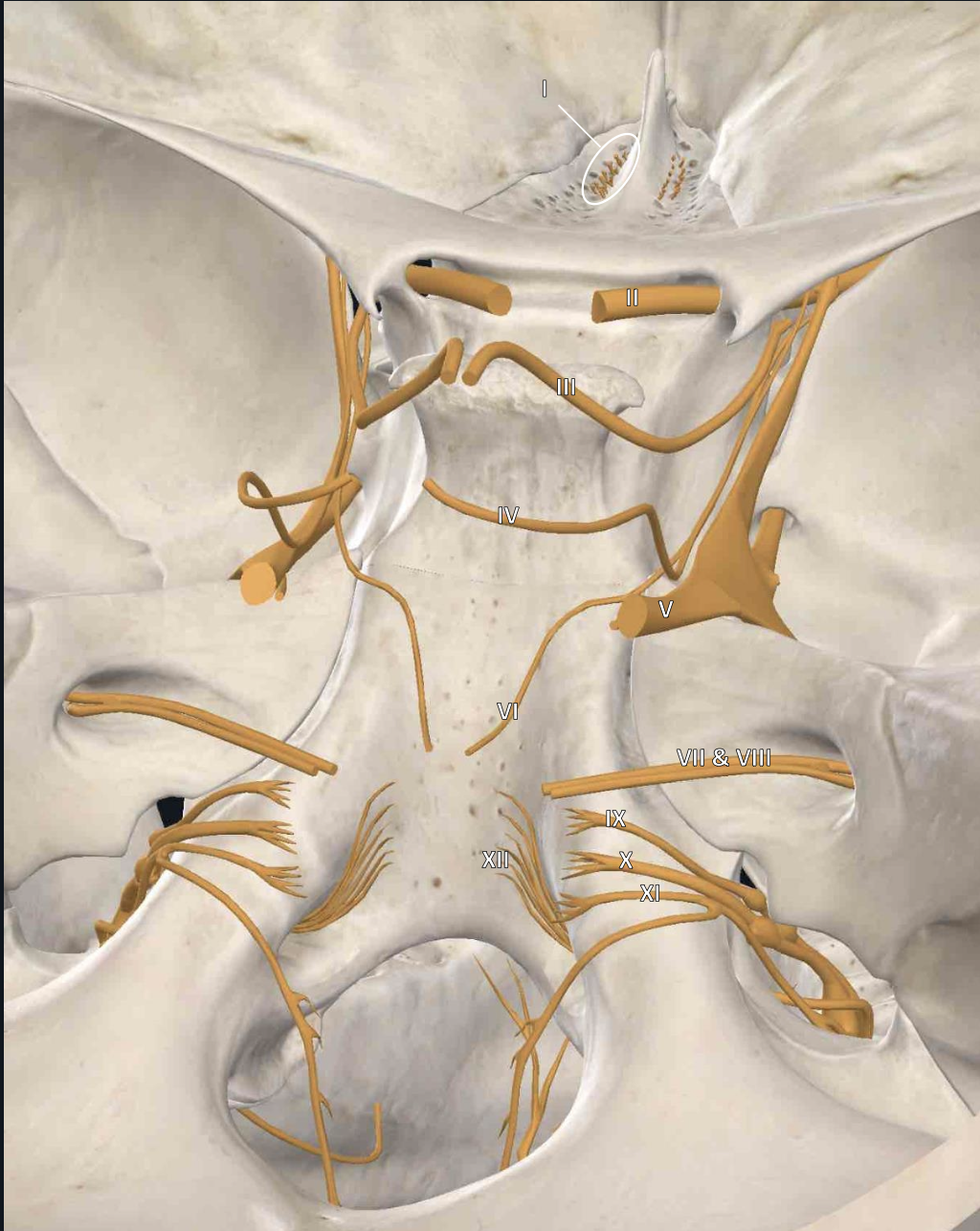
structure #XII
hypoglossal nerve