Understanding Earth EXAM 3
0.0(0)
Studied by 0 people Call Kai
 Learn
 Practice Test
 Spaced Repetition
 Match
 Flashcards
 Knowt Play
Card Sorting
1/79

Earn XP
Description and Tags
UNI, Dr. Iqbal
80 Terms
1
New cards

What is A?
Trough
2
New cards
What is B? (pretend it extends down to the trough)
wave height (H)
3
New cards
What is C?
Crest
4
New cards
What is D?
wavelength (L)
5
New cards
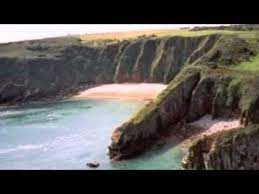
What 2 formations does this picture show?
Bays and Headland
6
New cards
Oceanic waves
the transfer of energy from wind to water
7
New cards
What is needed to cause oceanic waves
strong consistent winds and a very large water body
8
New cards
Wavelength (L)
distance between crest to crest
9
New cards
Wave height (H)
from trough to crest
10
New cards
Perdiod (T)
time between when one crest hitting the shore and the next crest
11
New cards
Short period means what?
stronger waves
12
New cards
Wave equation
V= L/T
13
New cards
What does V in the wave equation represent?
velocity
14
New cards
What does the L in the wave equation represent
wavelength
15
New cards
What does T in the wave equation represent?
period
16
New cards
What is velocity measured in?
feet per second
17
New cards
How do you figure out how deep below the surface you need to go before you won’t feel the waves?
½ the wavelength deep will be calm
18
New cards
Breaker
as waves approach the shore (becoming shallower) they become too steep to support themselves and break in the surf zone
19
New cards
If the breaker is close to the shore, what does that do to the beach?
high erosion
20
New cards
Headland
an extension of land into the ocean
21
New cards
Wave refraction
a change in wave direction due to a change in depth, pointing towards the projecting part of the shore
22
New cards
Is a headland or a bay facing more erosion?
headland
23
New cards
Rip current
a current that drags water back out to sea because there is something above or below the water that it cannot easily move past
24
New cards
Longshore drift
wavy pattern left on the beach from movement of sand particles by swash and backswash
25
New cards
Swash
water going up on the beach
26
New cards
Backwash
water going back to the sea after washing up on beach
27
New cards
Longshore current
a zigzag pattern current caused by boundary between two different currents, parallel to the shoreline
28
New cards
What kind of bottom topography will cause breakers to be close to the shore?
steep and eroded
29
New cards
Moon Tide
the moon’s gravitational pull on Earth’s ocean water
30
New cards
Why are there two bulges of maximum pull?
centrifugal force, and one side of the Earth is unaffected by the moon’s pull (that side is less of a bulge and more like unaffected water)
31
New cards
How long is a solar day (don’t overthink this)
24 hours
32
New cards
How long is a lunar day
24 hours and 50 minutes
33
New cards
How often do we get a high tide?
12 hours and 25 minutes
34
New cards
Sun tide
the sun’s gravitational pull o Earth’s water
35
New cards
Which type of tide causes a larger bulge?
moon
36
New cards
When does the sun and moon tide happen at the same time?
during a new and full moon
37
New cards
What is it called when the sun and moon tide happen at the same?
spring tide
38
New cards
Neap tides
when the moon tide and sun tide do not happen at the same, sun cancels out some of the moon’s pull
39
New cards
At what phases of the moon do neap tides occur?
3rd quarter and 1st quarter
40
New cards
What is the lowest possible high tide?
a neap tide
41
New cards
Tidal flat
an area where water recedes from, but when the tide comes back in, it happens quickly
42
New cards
List the ocean features
tidal flat, tidal valley, stack, wavecut terrace, sea arch, spit, Atoll
43
New cards
Shoreline of erosion
a shoreline that faces high rates of erosion, often have stacks
44
New cards
Stacks
can show where the shoreline previously was, erosional
45
New cards
Wave cut terrace
where the water level used to be
46
New cards
Sea arch
a window through a rock, shows high erosional power
47
New cards
Spit
a hooked shaped sandbar, product of longshore drift, hook end is where the end of the current is, depositional feature
48
New cards
Is a tidal valley depositional or erosional?
erosional
49
New cards
Is a tidal flat depositional or erosional?
depositional
50
New cards
Tidal valley
valleys carved out by ocean water (not rivers)
51
New cards
Atoll
a ring shaped island or sandbar with water in the middle
52
New cards
Is an atoll depositional or erosional?
depositional
53
New cards
What can cause an atoll?
an underwater volcano or hotspot
54
New cards
Characteristics of wind
low viscosity and density, no confining channel, turbulent flow
55
New cards
Modes of sediment transport
suspended load, bed load, saltation load
56
New cards
Capacity
suspended + bed + saltation load
57
New cards
Competence
the largest type of mode of sediment transport
58
New cards
Erosional features of wind
deflation, desert pavement, sandblasting
59
New cards
Deflation
an area where wind has caused a slight dip in the landscape due to small particles being swept away
60
New cards
What is the most powerful depositional and erosional agent?
running water
61
New cards
Desert pavement
areas of clean gravel or pebbles from wind moving fine particles away
62
New cards
Sandblasting
creates ventifact, fast moving sand particles in the wind polish surfaces
63
New cards
Ventifact
a rock that has been polished by sandblasting, can show which direction the wind was moving
64
New cards
Depositional features of wind
sand dunes,
65
New cards
Preconditions that cause sand dunes
very wide open area, availability of sand, strong consistent winds, an obstacle
66
New cards
Do sand dunes grow indefinitely, why?
no, at some point the wind will start taking off the top of the dune
67
New cards
Are sand dunes in a fixed spot?
no, they shift as their volume increases
68
New cards
What kind of dune is this?

Barchan dune
69
New cards
What kind of dune is this?

Blowout
70
New cards
What kind of dune is this?

Longitudinal
71
New cards
What kind of dune is this?

Transverse
72
New cards
What kind of dune is this?

Star
73
New cards
What is this glacial feature?

U-shaped valley
74
New cards
What is this glacial feature?

Striation
75
New cards
What is this glacial feature?

Hanging valley
76
New cards
What is this glacial feature?

Cirque
77
New cards
What is this glacial feature?

Arete
78
New cards
What is this glacial feature?

Horn
79
New cards
What is this glacial feature?

Tarn
80
New cards
What is this glacial feature?

fjord