BIMM final real
 Call Kai
 Learn
 Practice Test
 Spaced Repetition
 Match
 Flashcards
 Knowt Play
1/29

There's no tags or description
Looks like no tags are added yet.
30 Terms
different types of RNA polymerase
RNA polymerase I: pre-rRNA
RNA polymerase II: mRNA, snRNA, siRNA, miRNA
RNA polymerase III: tRNA and other small stable RNAs
all have 2 b subunits, 2a, and 1 w

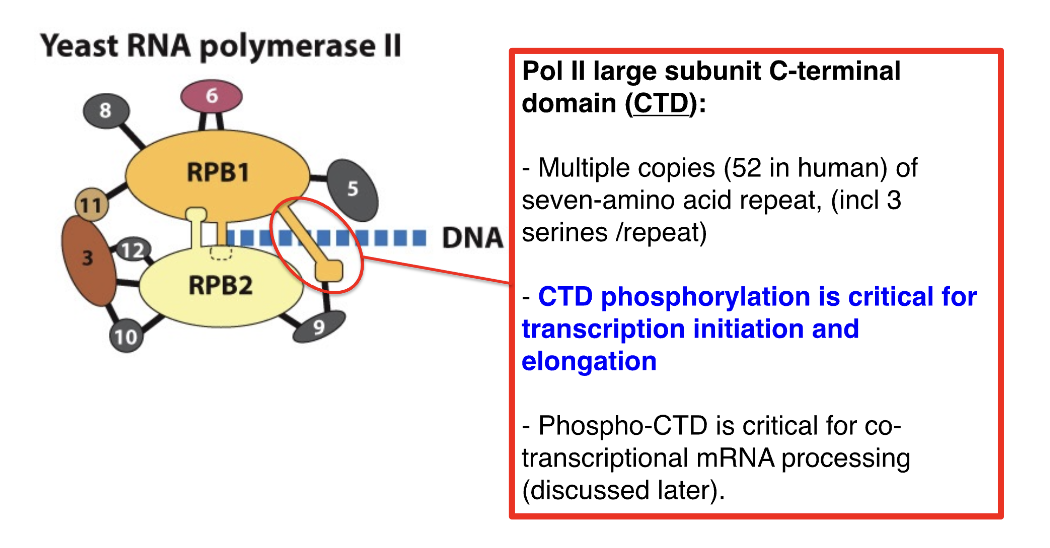
c-terminal domain (CTD)
a 7 amino acid repeat on RNA pol II. Phosphorylation of CTD is critical for transcription initiation and elongation.
conserved sequence
the sequence in the gene core promoter that allows RNA pol to interact with the DNA by providing a place where required proteins bind.
lies close and upstream to +1, around 20 or 35 basepairs
This is typically the TATA box and TATA binding proteins (TBP).

TFIID
general RNA pol II transcription factor made of TBP and TBP associated factors (TAFs). — tata box binding

TFIIB
bridges RNA pol and TFIID

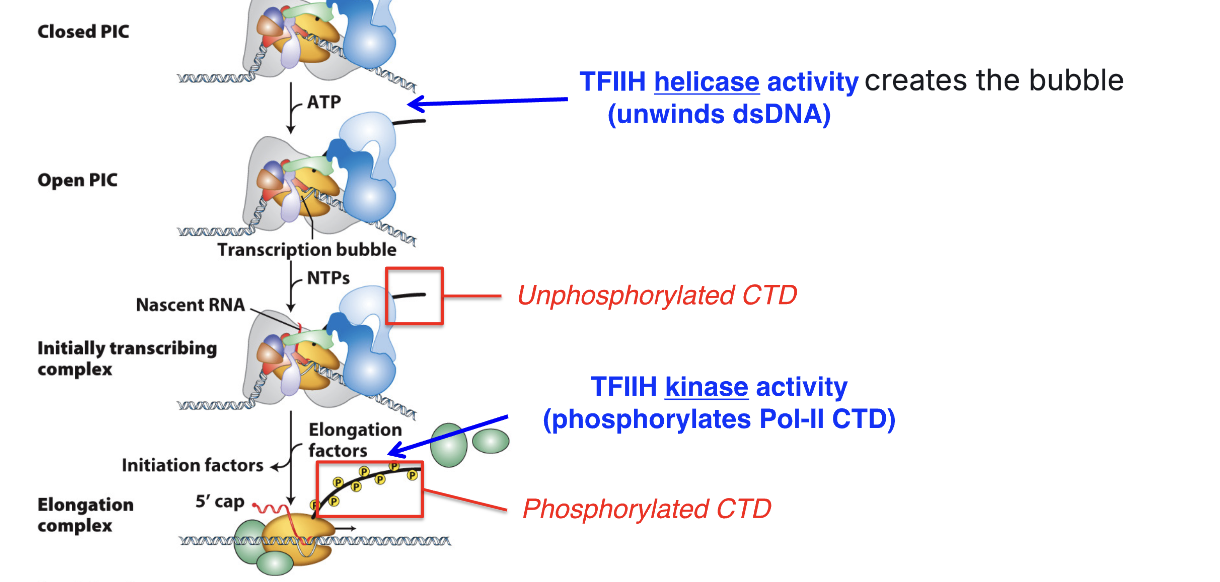
transcription pre-imitation complex (PIC)
RNA pol-II with its transcription factors
TFIIE
involved with DNA melting
TFIIH
has DNA helices and pol II CTD kinase function
Promoter-reporter gene fusion
using recombinant DNA to have a promoter code a reporter gene. Then observing the color to determine how active promoter is
Electrophoretic mobility shift assay (EMSA)
running dna and proteins in a gel, if the proteins bind, then the band will be higher
linker scanning
systematically deleting sequences in the promoter to identify essential sequences for transcription.
transcription
production of a primary RNA transcript from a gene
RNA polymerase
requires a ssDNA template strand and rNTPs. works by using the 3’ OH to polymerize the alpha phosphate on the incoming rNTP
steps of transcription
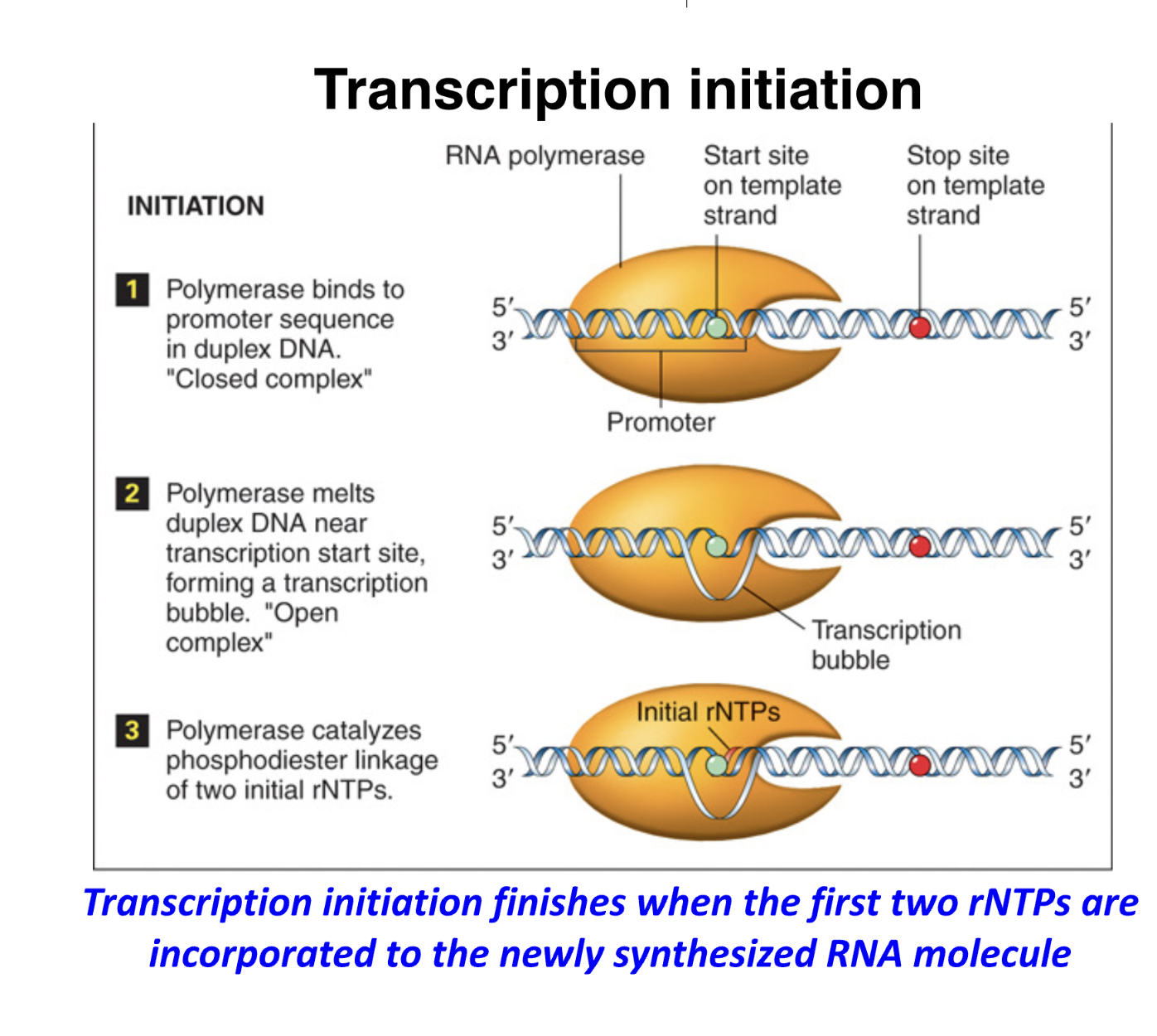
initiation (promoter recognition and binding, DNA melting, RNA synthesis starts
elongation (RNA synthesis)
termination (release of RNA pol and primary RNA transcript)
Transcription initiation
binding
melting
putting down 2 bases
northern blot
just like southern blot but with RNA molecules instead of DNA. this way can identity if a gene was transcribed into RNA or not.
core promoter regions
This is a specific region of DNA (typically about 50 to 100 base pairs long) located right around the transcription start site (TSS) of a gene that dictates transcription start site (+1) and direction of transcription.
It acts as the primary docking and assembly platform where RNA polymerase and general transcription factors bind to start transcribing a gene.
it is required for transcription.
sigma factor
in bacteria, RNA poly interacts with sigma factor that bind to conserved sequence motifs in core promoter regions
transcription rate regulation types
global transcriptional regulation (transcriptional co-regulation of multiple genes for example in response to heat shock)
ex) regulating sigma factors
gene specific transcription regulation (transcriptional regulation of specific genes)
ex) regulation of lac operon
global transcription regulation
accomplish this by regulating the availability/activity of specific sigma factors.
gene specific transcription regulation example (LAC operon)
LAC operon allows for the cell uptake and breakdown of lactose into glucose
in low/no lactose environments, lac repressor binds to lac operator and prevents transcription.
in high lactose conditions, the repressor dissociates from the operator.
in low glucose, the CAP binds (after cAMP binds to it) to upstream primer and activates transcription.
high glucose, CAP dissociates.
this way lactose in metabolized only is glucose is not available

how glucose regulates lac operon through CAP

core elements found in eukaryoktic promoters
Tata box
TFIIB recognition element (TRE)
Initiator element
downstream prmomoter element
CpG island

DNA elements controlling RNA pol II transcription
core promoter: dictates start site and direction of transcription
promoter proximal elements: enhances or represses, positioned -1 to -200 (~6bp)
enhancers or silencers: can be 1000s of nucleotides upstream or downstream of promoter (~200bp)
domains of transcription factors

specific binding of TF
major grooves
interaction with bases give specificity and interaction with backbone gives affinity
TF regulation in transcription initiation
pioneer TF can bind to condensed chromatin and decondense it and expose all the dna for transcription
can also stabilize or destabilize the PIC

enhancers
distant DNA elements that can activate or repress transcription and is distance and orientation independent
linearly distant but comes closer in folding
TF expression in only some cells
?
if the chromatin is decondensed or not
is the co factor is present