BIOCHEM 2: Metabolism of Sphingolipids and Other Lipids
 Call Kai
 Learn
Learn Practice Test
 Spaced Repetition
 Match
Match Flashcards
 Knowt Play
1/68

There's no tags or description
Looks like no tags are added yet.
Name | Mastery | Learn | Test | Matching | Spaced | Call with Kai | Chat |
|---|
No analytics yet
Send a link to your students to track their progress
69 Terms
sphingolipids
these are membrane lipids found in the membranes of nerve cells
true
True or False: Structurally, sphingolipids are the amide derivative of the amino alcohol called sphingosine
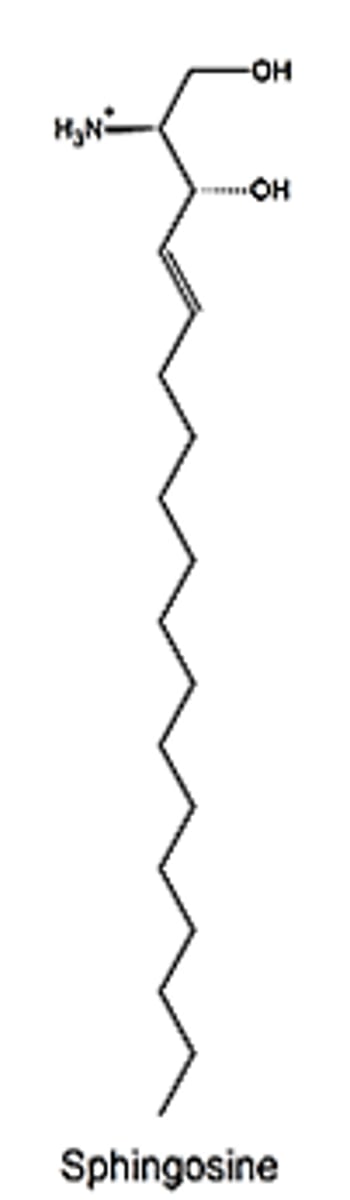
1. ceramides
2. sphingomyelins
3. cerebrosides
4. gangliosides
What are the 4 groups sphingolipids can be classified into?
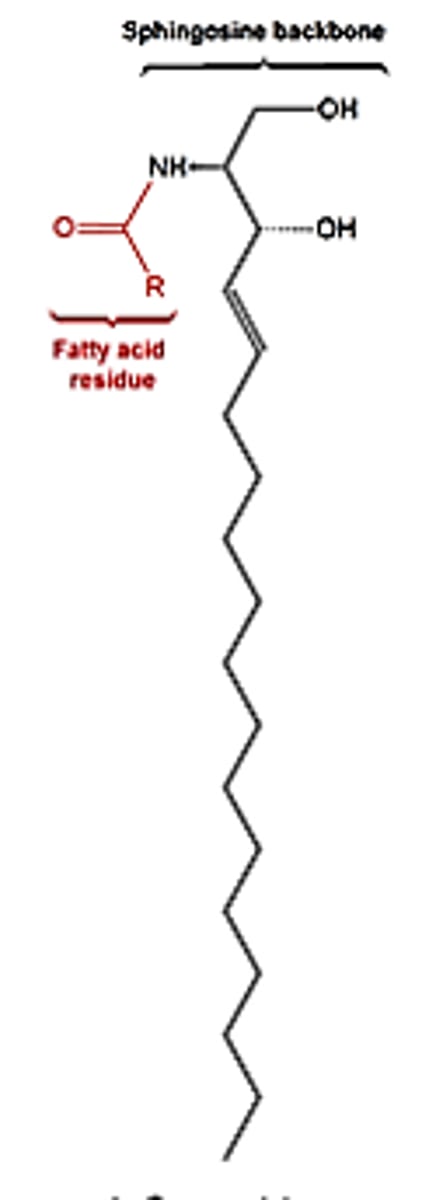
ceramides
these consist of a fatty acid covalently linked to a sphingosine molecule through an amide bond.
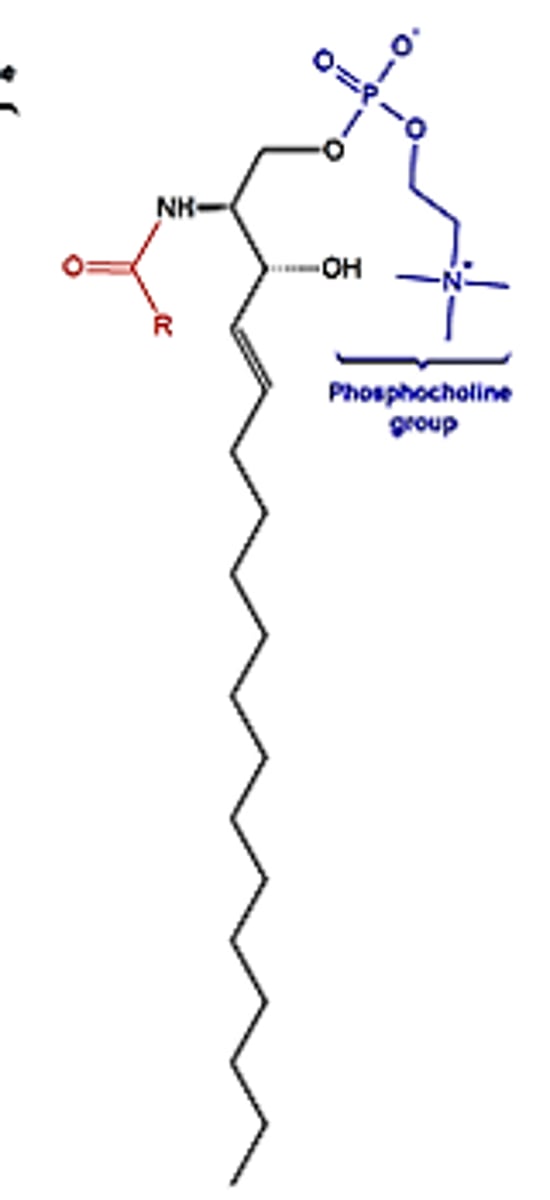
sphingomyelins
these are ceramides with a phosphocholine group linked to the sphingosine’s OH group.
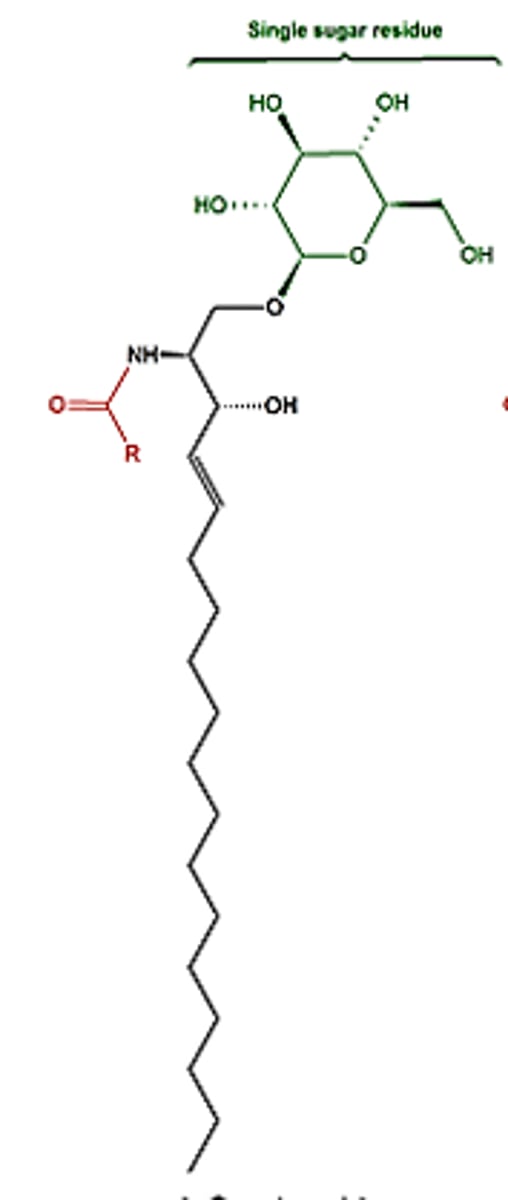
cerebrosides
these are ceramides that have only one sugar unit linked to the sphingosine’s OH group.
gangliosides
these are ceramides that have MORE than one sugar unit linked to the sphingosine’s OH
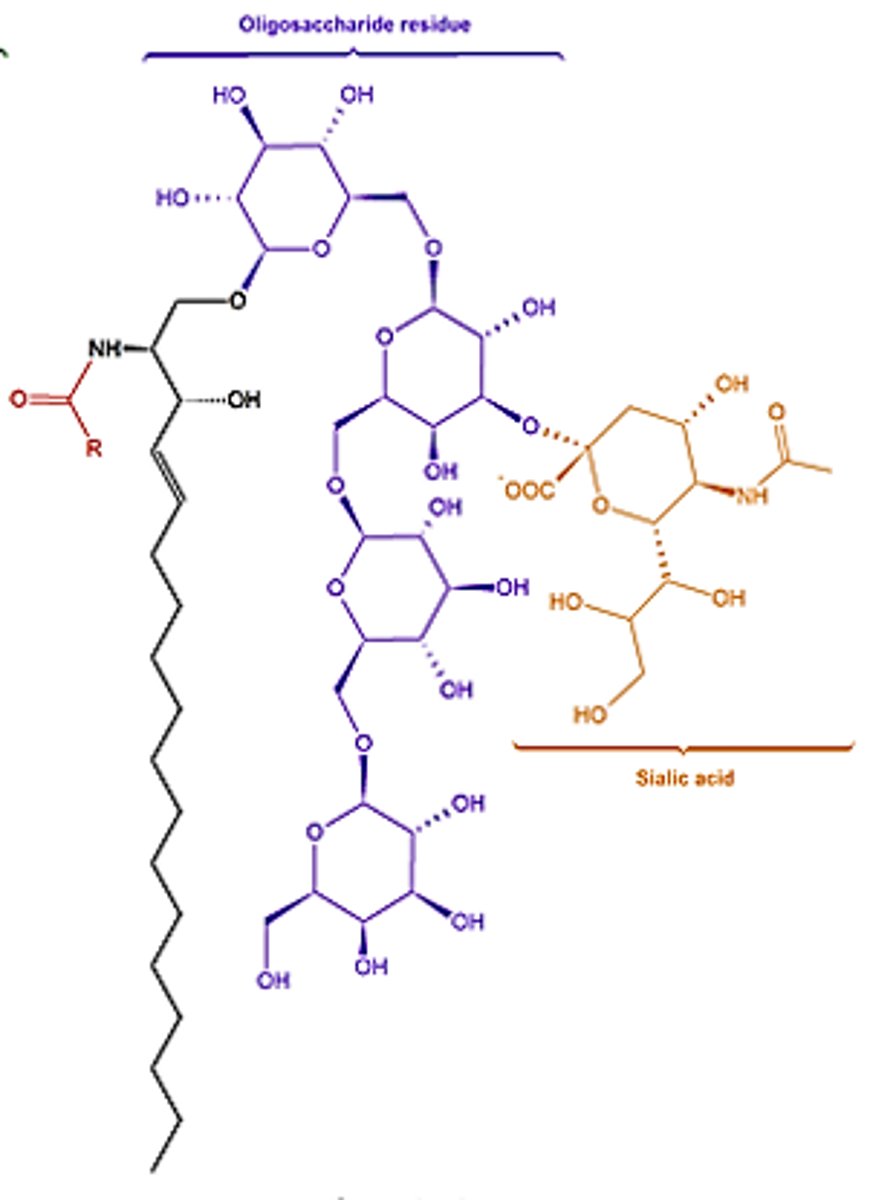
ceramides
What is the precursor to all other sphingolipids?
true
True or False: Cells make ceramides by condensing together an activated molecule of palmitic acid (i.e. palmitoyl CoA) and a molecule of the amino acid serine
condensation
The first rxn in the biosynthesis is a _____________ rxn where palmitoyl CoA and serine to give 3-ketosphinganine
synthase
What is the enzyme that catalyzes this condensation rxn?
reduced
In the second reaction in the biosynthesis, 3-ketosphinganine is _______ by addition of hydrogen to the carbonyl group to obtain sphinganine.
NADPH
What is the cofactor that is required in order to have hydrogens to reduce something?
true
True or False: In the third reaction of biosynthesis of sphingo, a FA is added to the amino group of sphinganine to give the dihydroceramide.
lysosomes
This is where sphingolipids are broken down into
these are structures in the cytoplasm that contain a large number of digestive enzymes that break down any biomolecule (lipid, protein, or carbohydrate)
1. FA
2. sphingosine
These are the final end products of sphingolipid degradation, THESE ARE SAFE PRODUCTS
cytotoxic
The intermediates in the degradation of sphingolipids are ________ and their accumulation in neurons lead to cell death.
true
True or False: In sphingolipid degradation, Mutations that render any of the degradative enzymes dysfunctional lead to accumulation of cytotoxic intermediates that kill neurons.
Tay-Sachs disease
this is a disease that results from a deficiency in the enzyme HEX A
deficiency in HEX A enzyme cause the accumulation of the cytotoxic ganglioside GM2
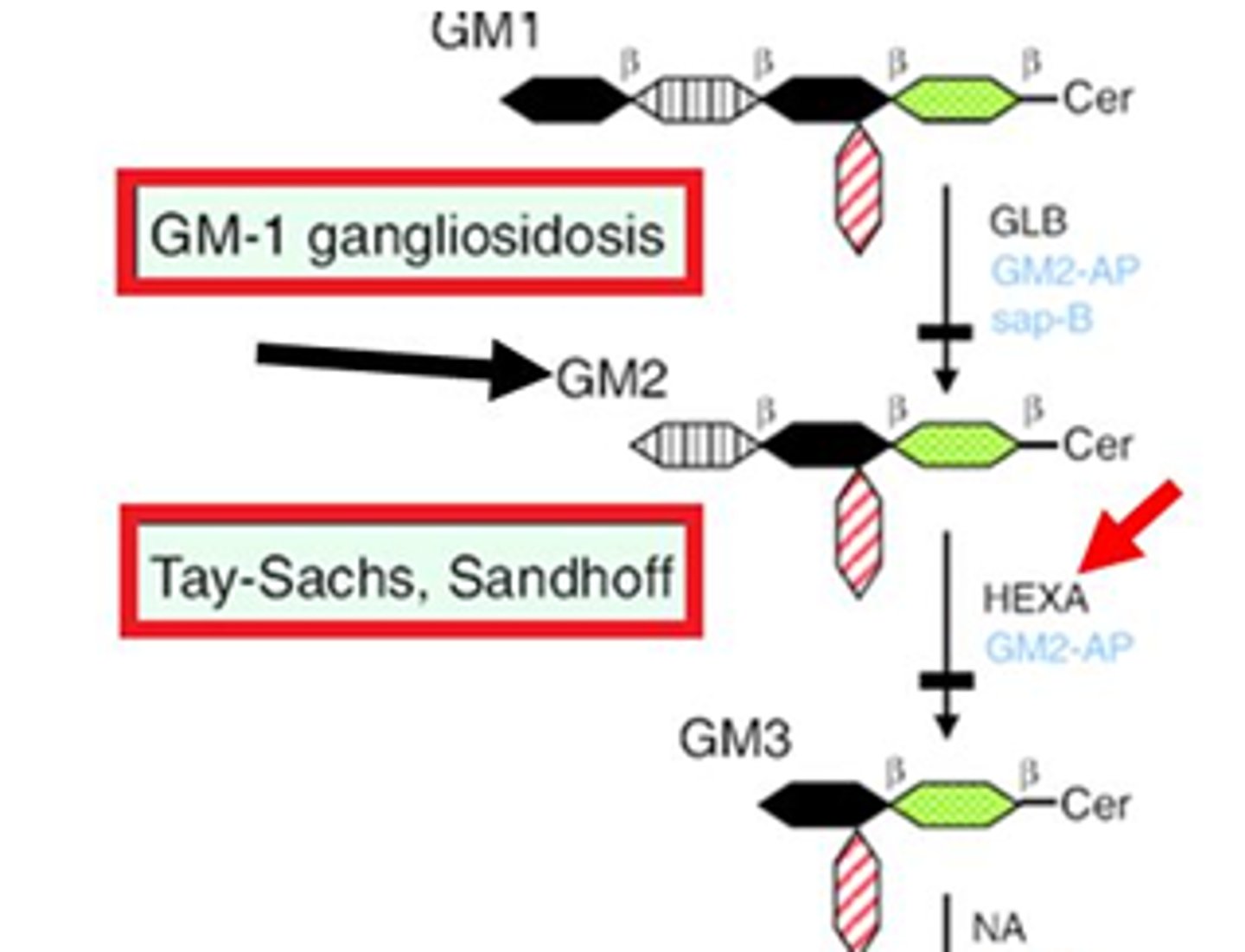
50%
About _____% of the cholesterol in the body is used to make bile acids in the liver.
10%
About ____% of the cholesterol is used to make steroid hormones by the endocrine glands.
40%
About ____% of cholesterol is used to make membranes.
consuming more plant products than animal products in our diet
Cholesterol is in animal fat, so how would one lower their cholesterol levels?
acetyl CoA
What is the precursor for cholesterol biosynthesis?
liver
Where does the biosynthesis of cholesterol mainly occur?
1. Condensation of three Acetyl CoA molecules to isoprenoid intermediates
2. Condensation of isoprene intermediates a linear hydrophobic molecule called squalene
3. Cyclization of the linear squalene to cholesterol
What 3 rxns are involved in the biosynthesis of cholesterol?
1. endogenous (cholesterol made by body)
2. exogenous (cholesterol obtained from diet, beef)
What are the 2 sources of cholesterol?
receptor mediated endocytosis
All cells in the body absorb LDL particles by ____________ to obtain the cholesterol they need.
rise
If you have a cholesterol rich meal, your LDL levels will rise or fall?
HMG CoA reductase
Cholesterol inhibits the _____________ enzyme which stops cells from making their own cholesterol.
feedback inhibition
Cholesterol inhibiting the HMG CoA reductase enzyme is an example of what?
ribosome
Cholesterol also stops the _______ from making the HMG CoA reductase enzyme to completely shut down cholesterol biosynthesis.
true
True or False: Cholesterol stopping ribosomes from making HMG CoA reductase and inhibits someone from making their own cholesterol then allows for the body to import more LDL from circulation
LDL
Sustained high levels of ______ in circulation lead to atherosclerosis and increases the heart attack/stroke risk
HDL
Cells then start to eliminate the excess cholesterol that they do not need by packaging it into ___________ particles and release that into circulation for liver to absorb it and incorporate it into bile for excretion in feces.
NO: heredity and genetics play a role
Are bad diet and poor food choices the only reason why people elevated LDL levels?
1. Drugs that inhibit the synthesis of indigenous cholesterol by inhibiting HMG CoA reductase
2. Drugs that block intestinal absorption of dietary cholesterol
What are the 2 groups of cholesterol lowering drugs?
statins
What is an example of drugs that inhibit the synthesis of indigenous cholesterol by inhibiting HMG CoA reductase?
^^^ these kinds of drugs also increase HDL levels, allowing the body to excrete more cholesterol
Ezetimibe (Zetia)
What is an example of drugs that block intestinal absorption of dietary cholesterol?
^^^ these are resin molecules that bind to cholesterol in the GIT blocking its absorption into the main circulation and let it be eliminated in feces
steroid hormones
these are synthesized from CHOLESTEROL in the endocrine glands
androgens and estrogens
these are the male and female sex hormones
progestins
these are steroid hormones that regulate events during pregnancy
glucocorticoids
this is a steroid hormone that has anti-inflammatory roles
mineralocorticoids
these are steroid hormones that regulate salt and water retention in the body
eicosanoids
these are biologically active FA that are made from arachidonic acid, and they are responsible for inflammatory response
1. prostaglandins
2. thromboxanes
3. leukotrienes
What are the 3 families that make us eicosanoids?
synthesis
An eicosanoids action is localized to their site of _______
erythrocytes
Eicosanoids are synthesized by all cells except what?
mediators of inflammation
these get released in a case of injury or infection and they bind to the cell surface receptors which activates the phospholipase A2 enzyme
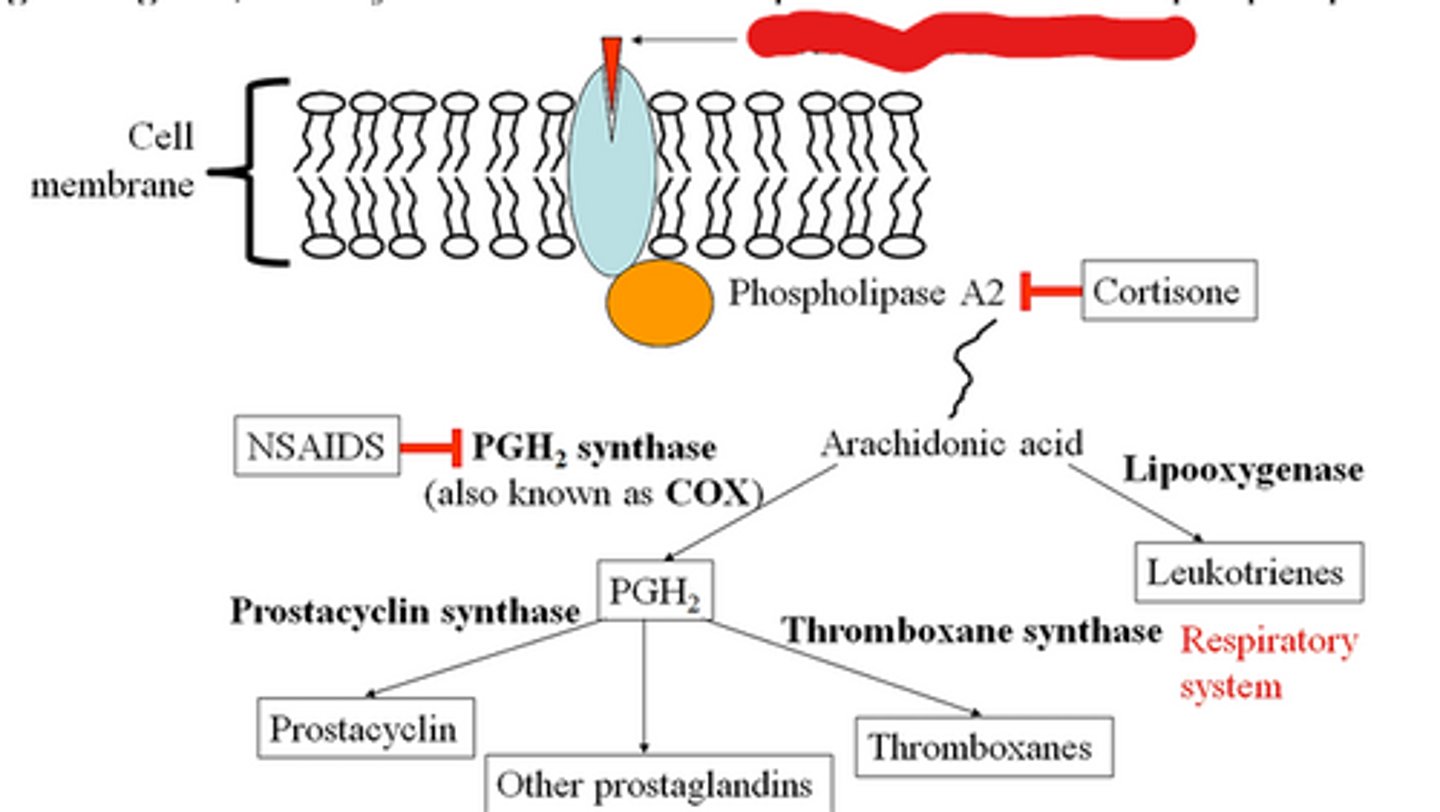
cylooxygenase (COX)
this converts arachidonic acid to the prostaglandin known as PGH2
thromboxane synthase
this enzyme converts PGH2 to thromboxanes
lipoxygenase
this enzyme converts arachidonic acid to leukotrienes
1. leukotrienes
2. prostaglandins
____________ + ____________ are made from the same starting molecule (arachidonic acid) by the effect of two different enzymes.
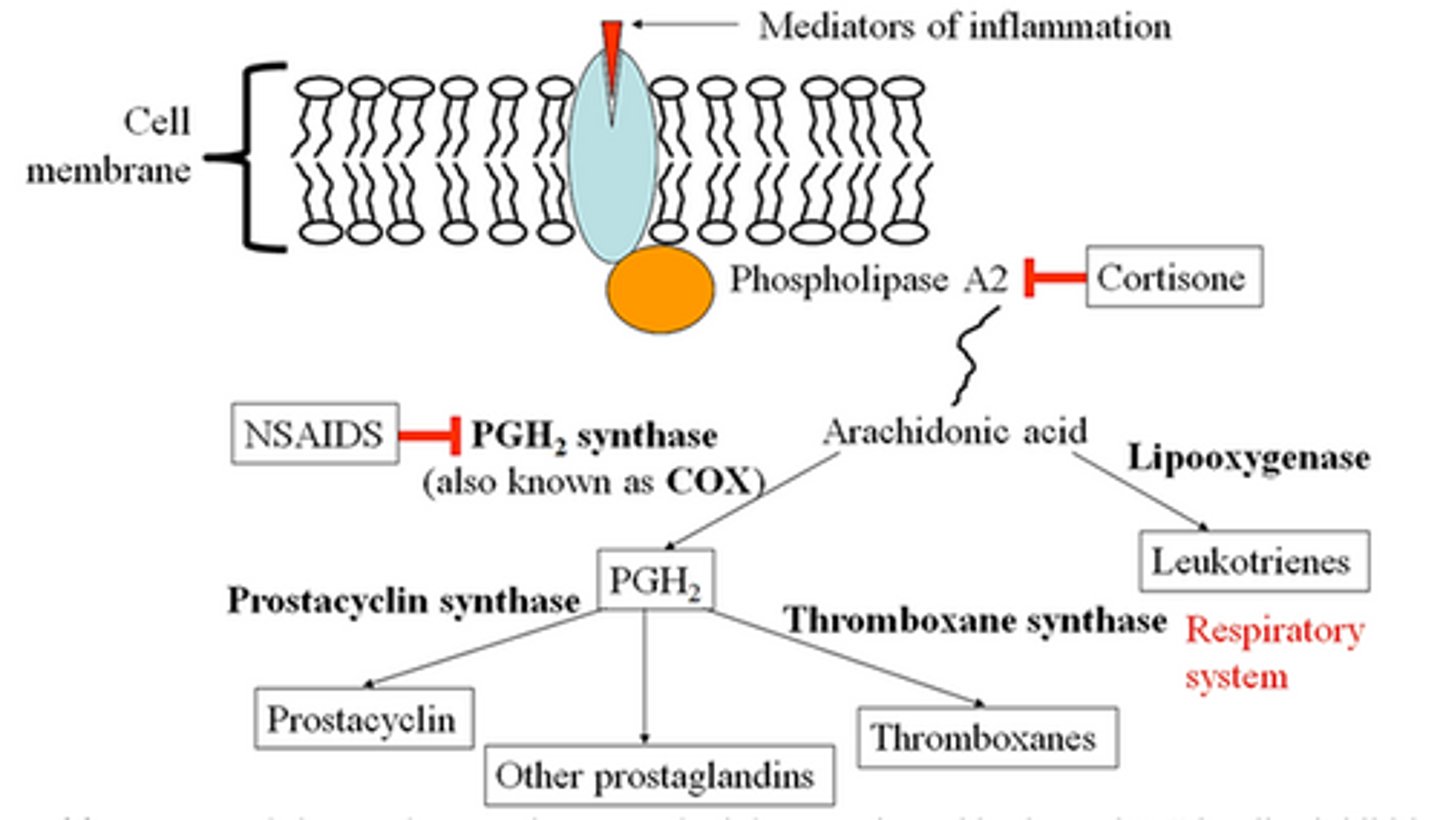
true
True or False: Leukotrienes and prostaglandins both being made from arachidonic acid by different enzymes explains why inhibitors of COX (i.e. the NSAIDs), e.g. Aspirin, are used to treat inflammation but not asthma.
Cox 1
this is an enzyme required to maintain the integrity of the mucous lining in the stomach to protect it from the highly acidic environment required for digestion
weakens the mucous lining resulting in stomach ulcers
What happens if I inhibit COX-1?
COX-2
this is an enzyme that is responsible for prostaglandin synthesis
non-selective COX inhibitors
these inhibit both COX-1 and COX-2 and therefore causes stomach ulcers
NO
If an inhibitor is selective to COX-2 only will there be gastric side effects?
1. A
2. D
3. E
4. K
What are the 4 lipid soluble vitamins?
vitamin A synthesis

1. Retinal is the form important for vision
2. Growth and differentiation of cells.
3. Reproduction (spermatogenesis, oogenesis, and embryonic growth).
4. Regulation of the immune system.
What are the biological roles of vitamin A?
blindness (retinal)
Vitamin A deficiencies can lead to ______
true
True or False: The production of vitamin D3 in humans is adequate when sufficient sunlight is available
1. Induces biosynthesis of proteins required for the absorption of Ca2+ and PO43-
2. Essential for forming and maintaining integrity of bones
What are the biological roles of vitamin D?
1. Essential for reproduction (its deficiency causes infertility in both males and females).
2. Antioxidant (protect fatty acid chains from oxidation).
3. High vitamin E intakes are correlated with a reduced risk of cardiovascular diseases.
What are the biological roles of vitamin E?
true
True or False: Deficiency in vitamin E occurs due to genetic abnormalities in the α-tocopherol transfer protein and as a result of various fat malabsorption syndromes.
required for normal blood clotting
What are the biological roles of vitamin K?
bleeding disorders
A deficiency in vitamin K can cause what?