Meiosis
 Call Kai
 Learn
 Practice Test
 Spaced Repetition
 Match
 Flashcards
 Knowt Play
1/79

There's no tags or description
Looks like no tags are added yet.
80 Terms
secual reproduction produces offspring that contain
a unique combination of genes from the parents
secual reproduction depends on
the cellular processes of meiosis and fertilization
Different individuals of a single species have
the same number and types of chromosomes
A human somatic cell is
a typical body cell and has 46 chromosomes
To produce a karyotype, a technician can break open a human cell in
metaphase of mitosis,
To produce a karyotype, a technician can stain the
chromosomes with dyes
To produce a karyotype, a technician can take a picture with
the aid of a microscope, and arrange the chromosomes in matching pairs by size
Homologous chromosomes resemble each other in
length and centromere position
Homologous chromosomes carry
genes controlling the same inherited characteristics
Chromosome
A structure made of DNA and proteins that carries genetic information
Homologous Chromosomes is a matching pair of
chromosomes, one inherited from the mother and one from the father.
Homologous Chromosomes contain the same
genes in the same locations, but may have different alleles (versions of a gene).
Humans have
23 pairs of chromosomes (46 total).
Duplicated Chromosome Consists of
two identical sister chromatids joined together.
Sister Chromatids
Two identical copies of a chromosome after replication
Sister Chromatids is formed during
DNA replication
Sister Chromatids connected at
centromere
Centromere
The constricted region where sister chromatids are attached.
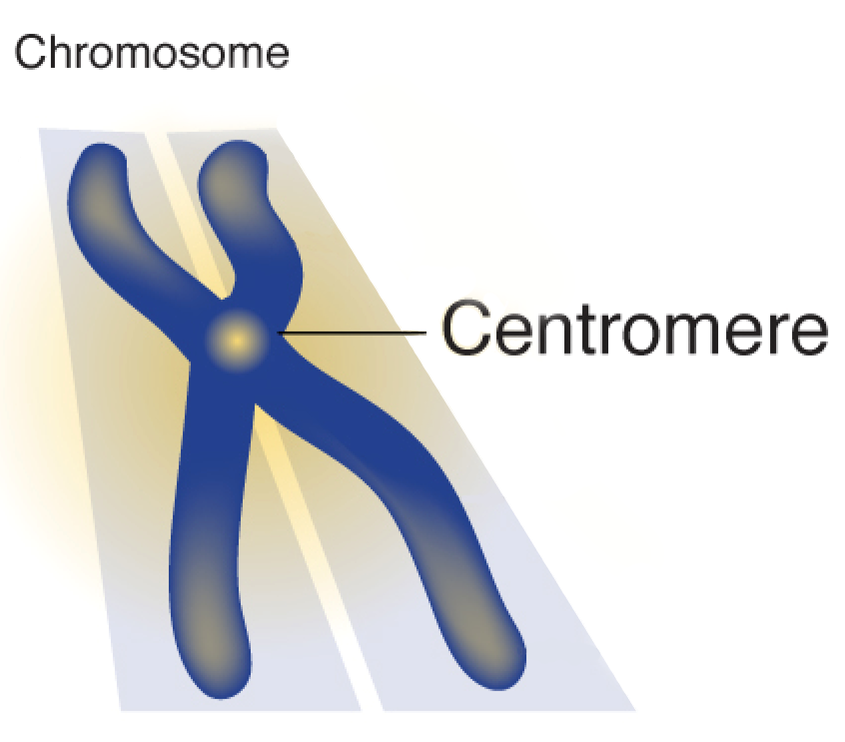
Centromere Helps ensure
chromosomes separate correctly during cell division.
Karyotype
A display of all chromosomes arranged in pairs according to size and shape.
Chromosomes 1-22 are called
autosomes
The 23rd pair are the
sec chromosomes
X chromosome is larger than
Y chromosome
Presence of XY indicates a
male karyotype
Before cell division, each chromosome replicates to form
two sister chromatids
Sister chromatids are held together by a
centromere
Homologous chromosomes have
same genes, shape, length but different version of genes (alleles)
Sister chromatids are identical copies of
one chromosome
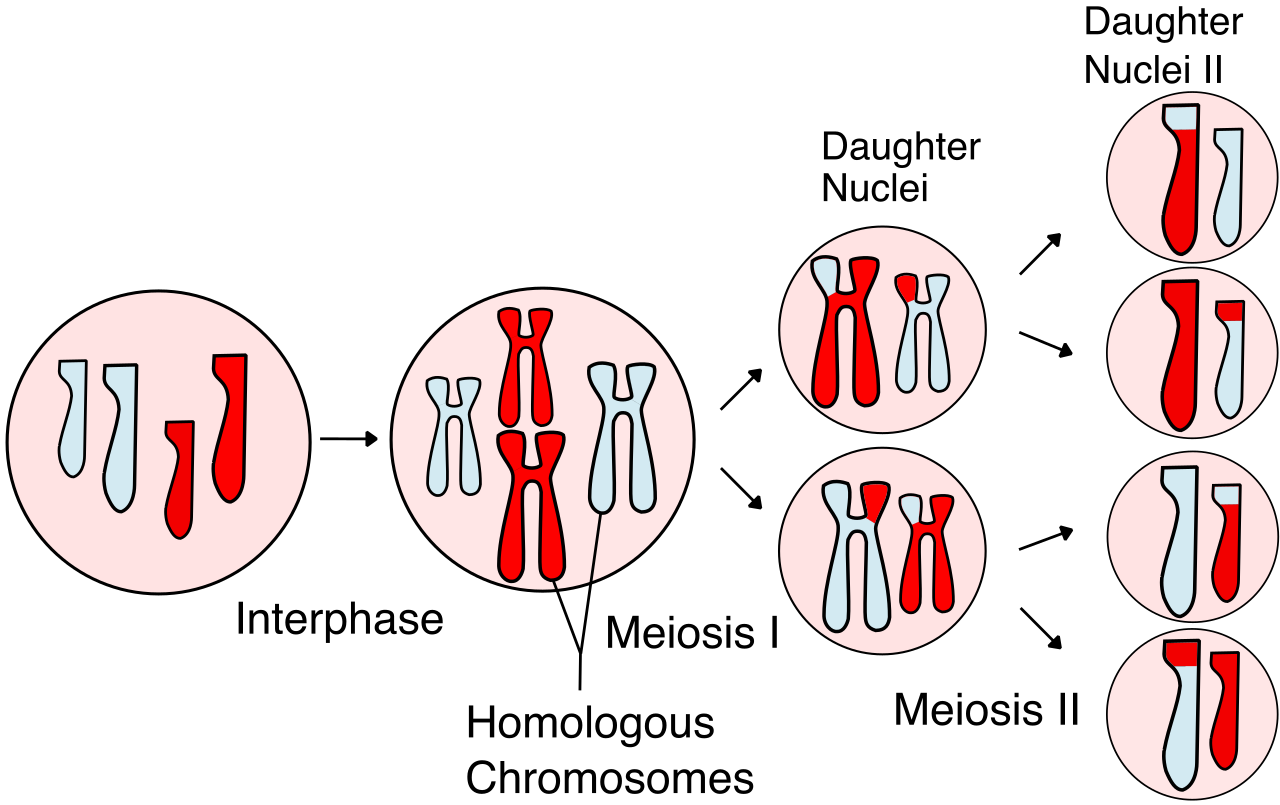
Meiosis
the process of cell division that produces haploid gametes in diploid organisms,
resembles mitosis
first difference of meiosis between mitosis
number of chromosomes during meiosis is cut in half
2nd difference of meiosis between mitosis
exchange of genetic material—pieces of chromosomes between homologous
chromosomes
exchange of homologous chromosomes (crossing over) occurs
during the first prophase of meiosis
Meiosis is a type of cell division that produces
haploid gametes (sperm or egg cells)
meiosis reduces
chromosome number by half
divisions of meiosis
Meiosis I and Meiosis II.
Step 1 cell cycle with meiosis
Chromosomes Duplicate
Step 2 cell cycle with meiosis
Homologous Chromosomes Separate
Step 3 cell cycle with meiosis
Sister Chromatids Separate
Diploid (2n)
Contains two sets of chromosomes.
Haploid (n)
Contains one set of chromosomes
Independent Assortment
homologous chromosome pairs line up at the cell's equator, the orientation of each homologous pair is random
Each homologous chromosome pair acts independently of
every other pair
Metaphase I of meiosis
when homologous chromosome pairs align randomly before being separated in Anaphase I
result of independent assortment
Sperm and egg cells are genetically different from one another, gamete receives unique mix of chromosomes
Anaphase I
homologous chromosomes separate.
many chromosome combinations can be produced in
gametes
Possible chromosome combinations eq
2^n
ex Possible chromosome combinations eq
human (n = 23) there are 2^23, or about 8
million possible chromosome combinations
Crossing over
exchange of corresponding segments between nonsister chromatids of
homologous chromosomes
recombinant chromosomes
a chromosome that contains DNA from both the maternal and paternal homologous chromosomes - results due to crossing over
With crossing over, gametes arise with
recombinant chromosomes
recombinant chromosomes result from
genetic recombination
genetic recombination
production of gene combinations different from those carried by the parental chromosomes
Nonsister chromatids exchange
DNA
Sister chromatids do NOT exchange
DNA because they are identical copies
Crossing Over
Exchange of DNA segments
Independent Assortment
Random chromosome orientation
crossing Occurs in
Prophase I
Fertilization
Random sperm and egg unite
Fertilization occurs
After meiosis
Fertilization equation
sperm + egg → zygote (2n)
Zygote grows by
mitosis
Adults produce gametes through
meiosis
Gametes are
haploid (n)
Prophase I
crossing over occurs
Metaphase I
homologous chromosomes line up randomly (independent assortment)
Anaphase I
homologous chromosomes separate
Anaphase II
sister chromatids separate
where does homologous chromosomes come from
One chromosome from mom and one from dad.
Diploid Humans
46 chromosomes
Haploid Humans
23 chromosomes
In the equation number of possible gamete chromosome combinations 2^n, n is
haploid number
Meiosis produces
4 haploid cells
Mitosis produces
2 diploid cells
Life cycle of a person
Meiosis → Fertilization → Zygote → Adult
Gametes
sperm and egg
Zygote
fertilized egg
Meiosis Makes
gametes
Fertilization Forms
zygotes
Stages leading to and of meiosis
Interphase, Meiosis I, Meiosis II