1 Decision Making in Value Issues
 Call Kai
 Learn
 Practice Test
 Spaced Repetition
 Match
 Flashcards
 Knowt Play
1/13

There's no tags or description
Looks like no tags are added yet.
14 Terms
What is Clinical Decision Making?
Values play a part in everyday clinical decisions
Basis for subjective vs. objective determinations
Often involve strong convictions
Involves a spectrum of differing opinions
Worldview-based decision making
What are the Predominant Theories in Value Decision making?
Telelogical (consequence oriented)
Deontological (duty-oriented)
Virtue Ethics
What are Telelogical Theories
Telos – Greek for “end”
Consequence-oriented
Utilitarianism
Act utilitarianism
Modulated by an equal consideration of interest
Rule utilitarianism
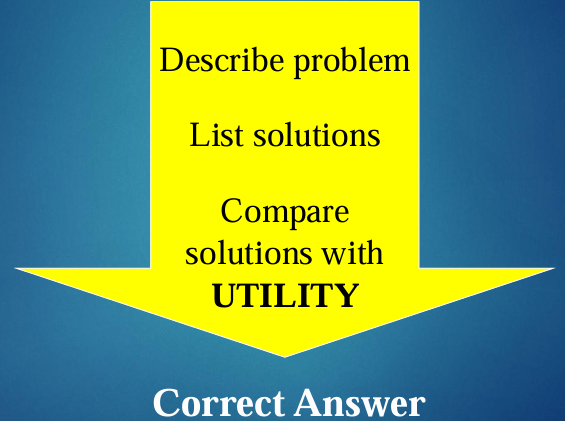
What is the Consequence- oriented Reasoning?
Describe problem
List solutions
Compare solutions with UTILITY
Correct Answer
What are the Criticisms of Utilitarianism?
Impossible to calculate all possibilities
May be used to sanction unfairness or violation of rights
Questionable respect for persons
Does not provide for moral convictions
What is intrinsically good and how do you quantify it.
What are Deontological Theories?
Duty-oriented.
Acts are either right or wrong.
Based in religious worldviews.
Immanuel Kant.
Categorical imperatives.
An action can be judged apart from its circumstance
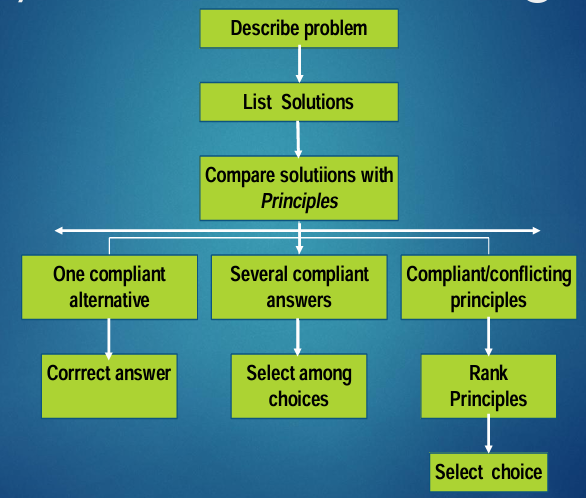
What is Duty-oriented Reasoning?
What are the Criticisms of Kant’s Deontology?
Too rigid for real life.
Morality involves pleasure and pain and not based in pure reason
Can’t disregard consequences
No independent moral standing for animals
Possible conflict between equal duties
How Are the Principles Derived for Duty-oriented Theories?
Natural Law
Religious dictate
Institution
Social Contract
Pure reason
Common sense.
What are Virtue Ethics?
Revisits Aristotle’s philosophy virtuous character
Expounded on by MacIntyre: Idealized characters
Practices are the arena in which virtues are exhibited.
Social roles provide standards of excellence and obedience to rules.
Example: Physician – once the person accepts that practice, duty is determined by the role and the history of medical ethics.
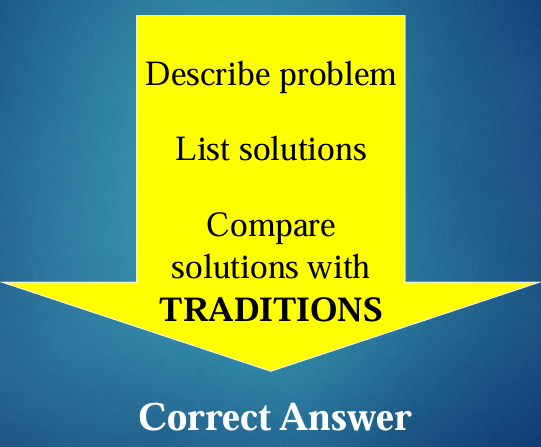
What is Virtue-oriented Reasoning?
Describe problem
List solutions
Compare solutions with TRADITIONS
Correct Answer
What are the Criticisms of Virtue Ethics?
Fails to provide specific direction regarding decision making.
Does not respond quickly to changes in practice morality.
May tend to perpetuate classism or sexism.
Morality depends on past experience rather than reason.
Possible to find oneself trying to address conflicting idealized roles.
What is the Systems Approach to Health Care Professional Decision Making?
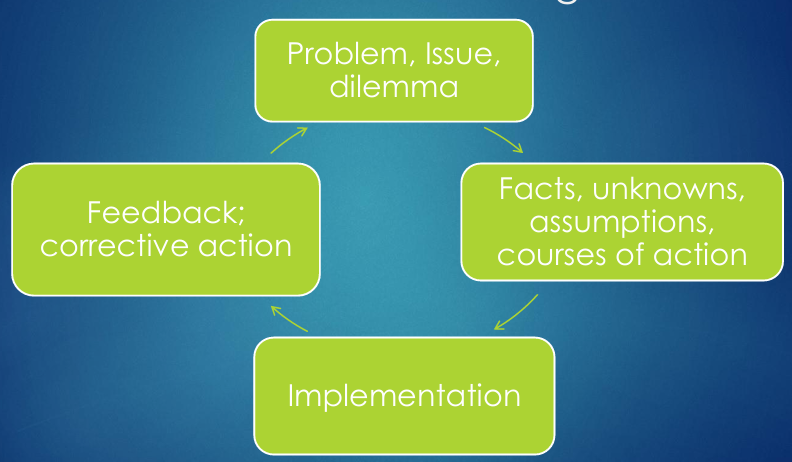
What is the Six Step Model for Ethical Decision Making?
Identify the characteristic of the problem.
Gather the facts of the case.
Examine the options.
Weigh and evaluate potential options.
Make a decision and act on it.
Assess and evaluate the results