Back Muscles
 Call Kai
 Learn
 Practice Test
 Spaced Repetition
 Match
 Flashcards
 Knowt Play
1/32

There's no tags or description
Looks like no tags are added yet.
33 Terms
Superficial
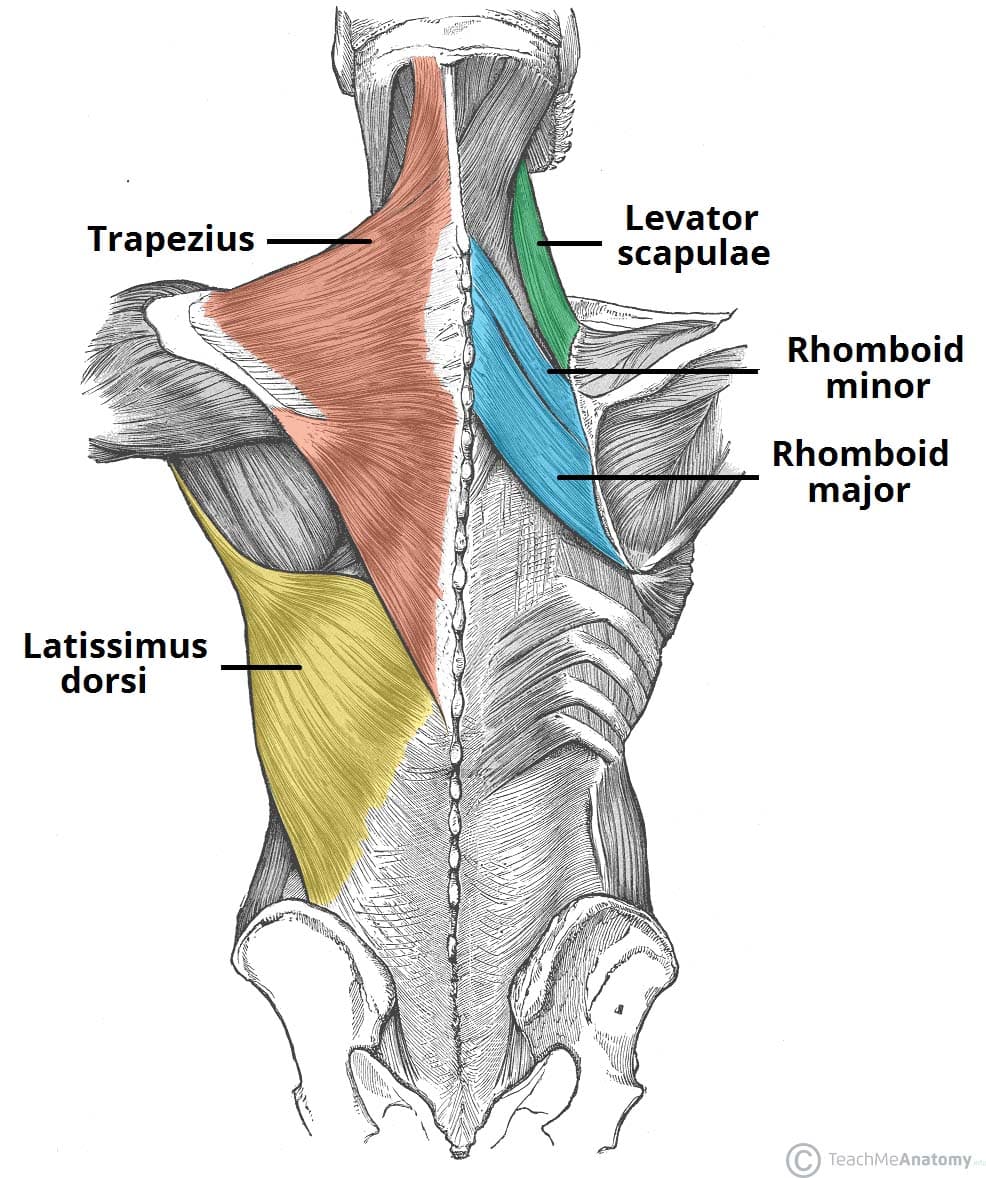
first layer: trapezius, latissimus dorsi
second layer: levator scapulae, rhomboid major, rhomboid minor
Intermediate
serratus posterior superior
serratus posterior inferior

Deep
spino-transverse group: splenius capitis and splenius cervicis
rotate vertebral column ipsilaterally (same side)
erector spinae: I Love Standing muscles
extends and laterally flexes vertebral column
iliocostalis
longissimus
spinalis
runs from sacrum to skull; arises from sacrum, crest of ilium, T11-L5
transverso-spinal: deepest
rotate vertebral column contralaterally
semispinalis
multifidus
rotatores

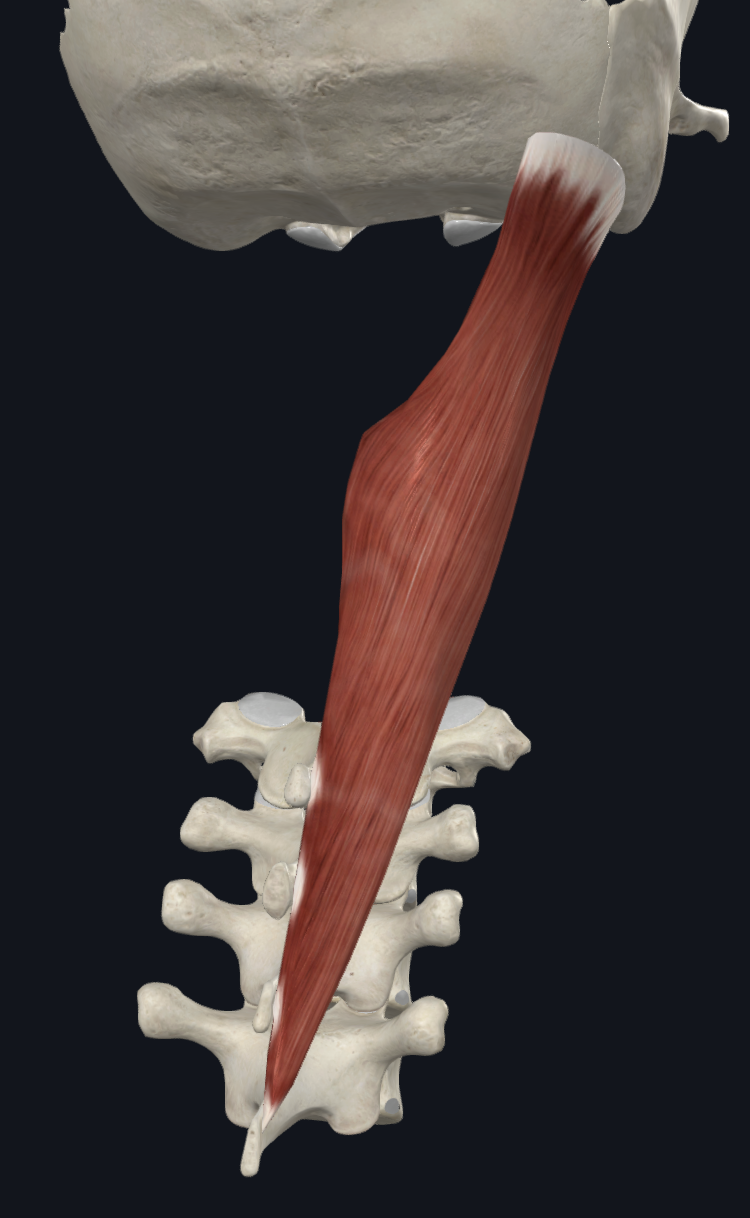
Splenius Capitis
P: lower nuchal ligament, spinous processes of C7-T3 or T4
D: mastoid process, lateral superior nuchal line
bilaterally- extends neck
unilaterally- laterally flexes head and neck; rotates head slightly

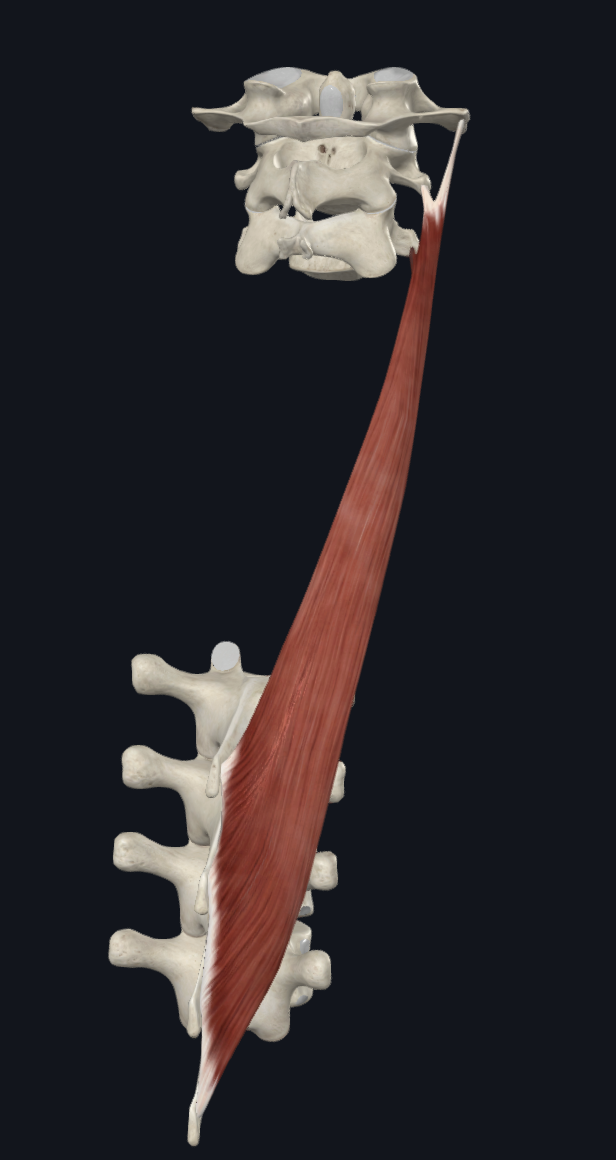
Splenius Cervicis
P: spinous processes of T3-T6
D: transverse processes of C1-C3
bilaterally- extends neck
unilaterally- laterally flexes head; rotates head and neck

spinalis capitis
P: C6-C7, T1-T2, nuchal ligament
D: occipital bone
BL- extends cervical spine and head
UL- laterally flexed and rotates cervical spine and head ipsilaterally
absent in 70% of ppl; 30% blended w/ semispinalis capitis


spinalis cervicis
P: spinous process of C5-T2
D: nuchal ligament, C2-C5
extends vertebral column


spinalis thoracis
P: spinous process T11-L2
D: spinous process T1-T8
extends vertebral column

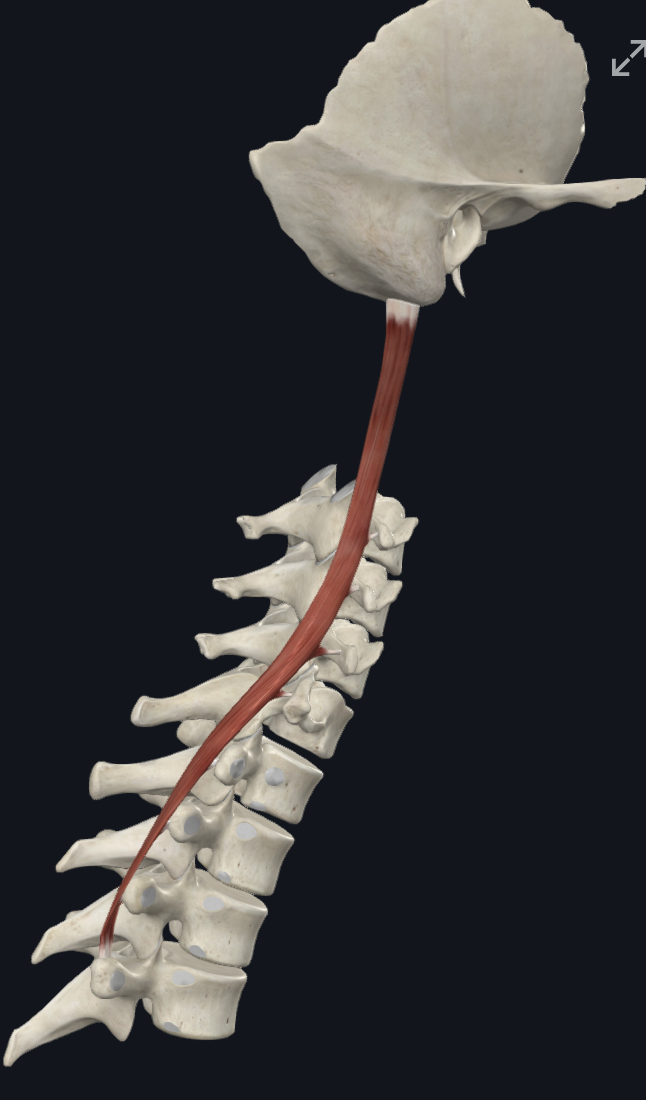
longissimus capitis
P: transverse processes of T1-T5, articular processes of C5-C7
D: posterior part of mastoid process
extends and rotates head


longissimus cervicis
P: transverse processes of T1-T5
D: transverse processes of C2-C6
extends and laterally flexes vertebral column

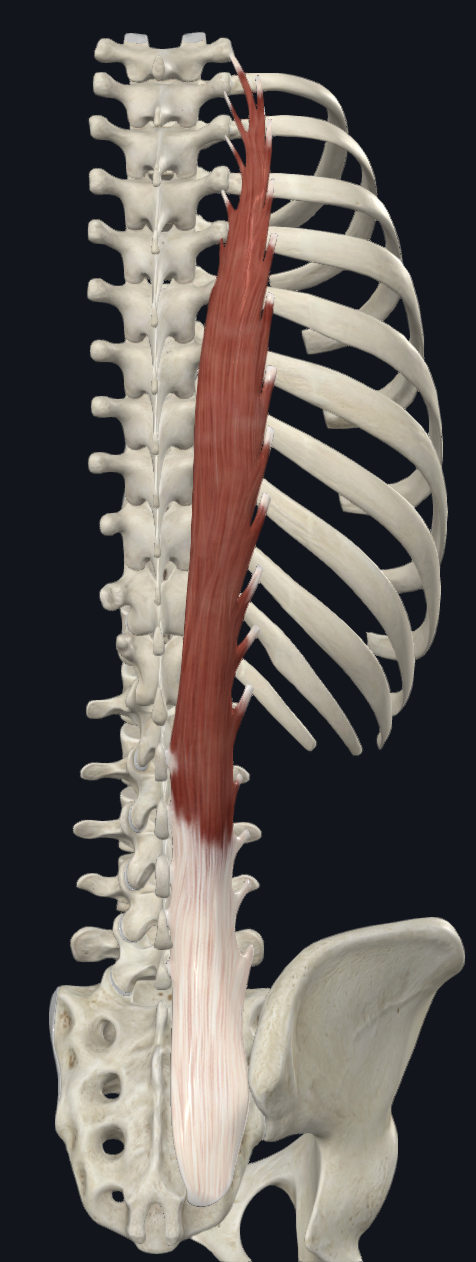
longissimus thoracis
P: medial and lateral sacral crests, spinous process and supraspinous ligament of T11-L5, medial of iliac crest
D: transverse processes of all thoracic vertebrae, between tubercles and angles of lower 9-10 ribs
extends and laterally flexes vertebral column, rotates ribs for forceful inspiration

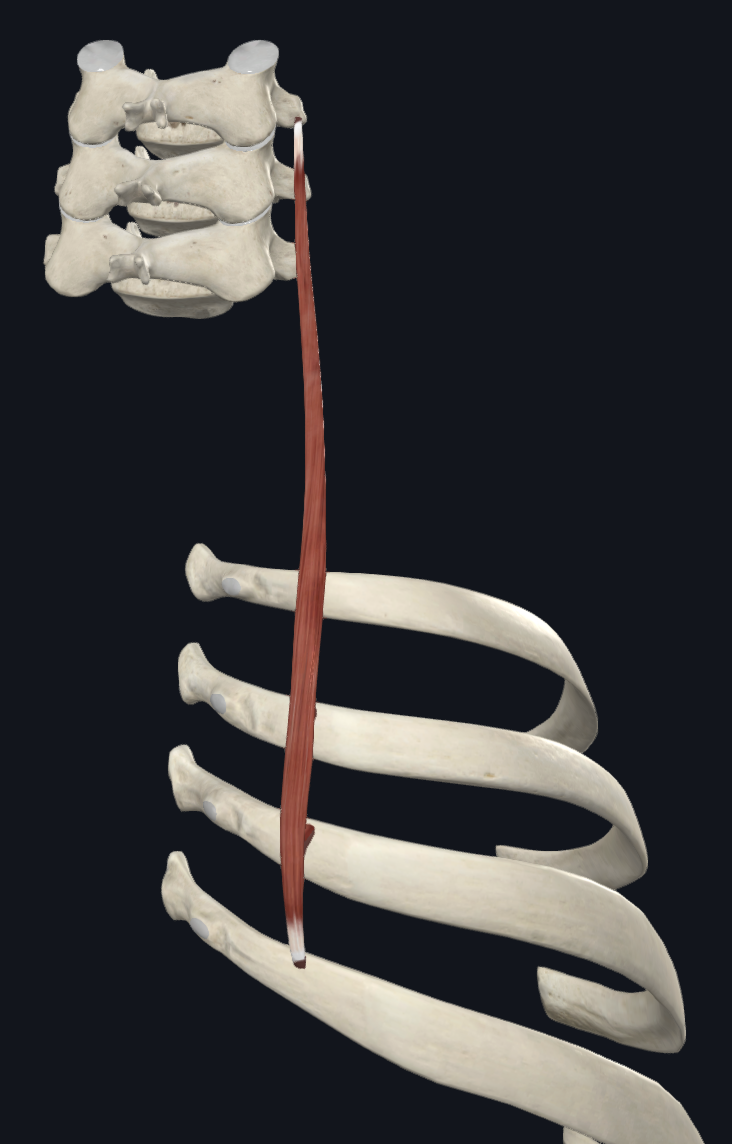
iliocostalis cervicis
P: transverse processes of C4-C6
D: angles of ribs 3-6 (posterior tubercles)
extends and laterally flexes vertebral column


iliocostalis thoracis
P: angles of upper 6 ribs and transverse process of C7
D: angles of lower 6 ribs (medial to lumborum)
extends and laterally flexes vertebral column, rotates ribs for forceful inspiration

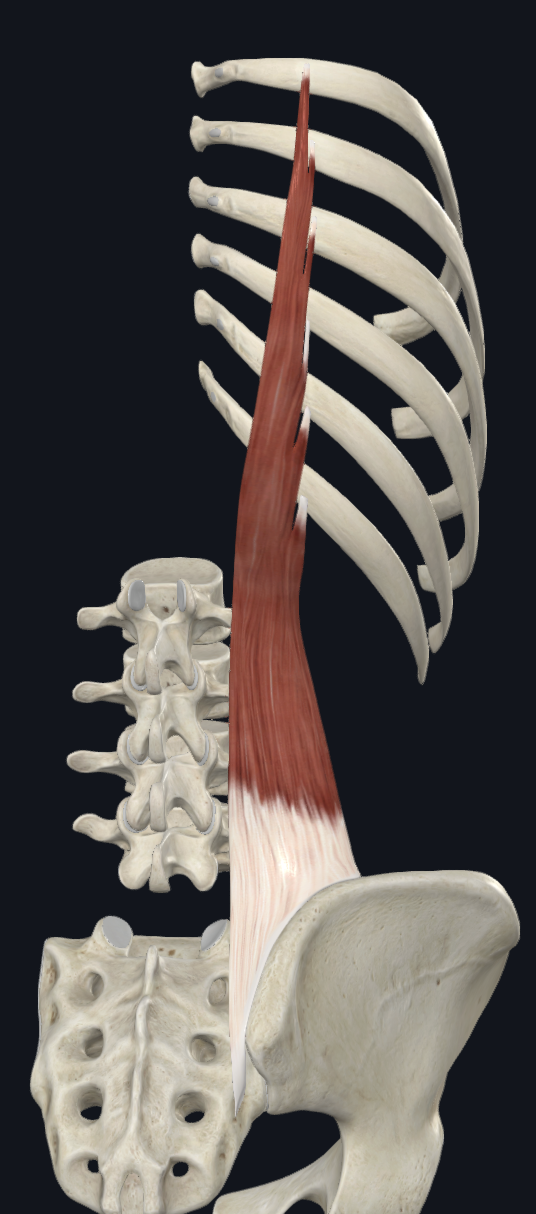
iliocostalis lumborum
P: medial and lateral sacral crests, medial of iliac crest
D: angles of lower 6 ribs
extends and laterally flexes of vertebral column, rotates ribs for forceful inspiration

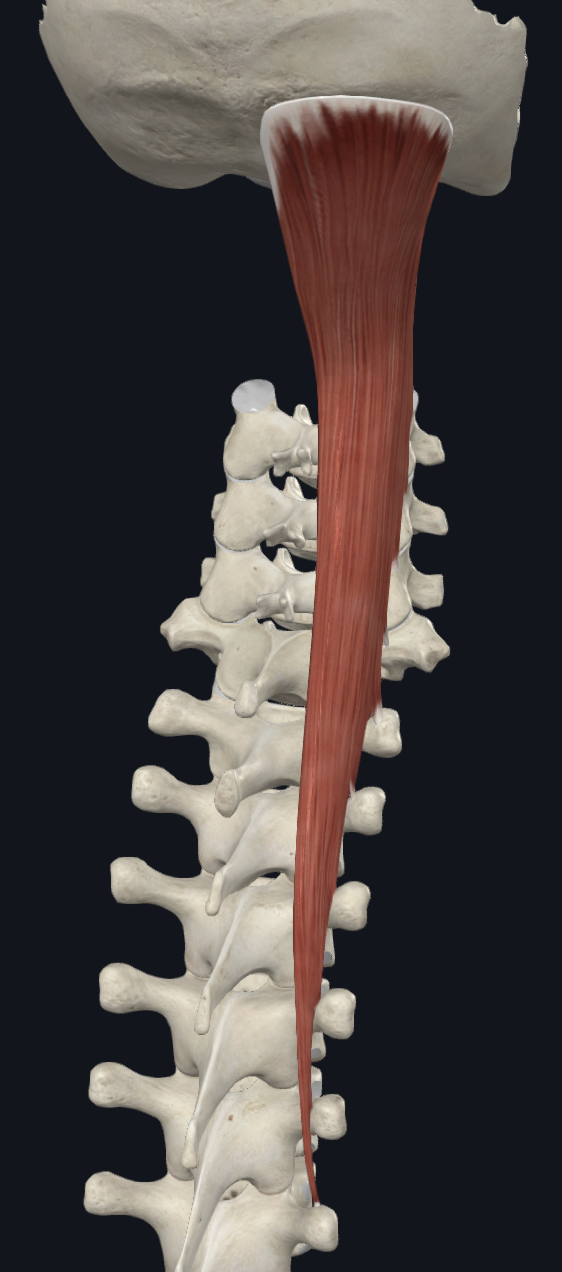
semispinalis capitis
P: transverse process of C3-T6
D: between superior and inferior nuchal line
extends and rotates vertebral column


semispinalis cervicis
P: transverse processes of T1-T6
D: spinous processes of C2-C7
extends and rotates vertebral column


semispinalis thoracis
P: transverse processes of T6-T12
D: spinous processes of C6-T4
extends and rotates vertebral column

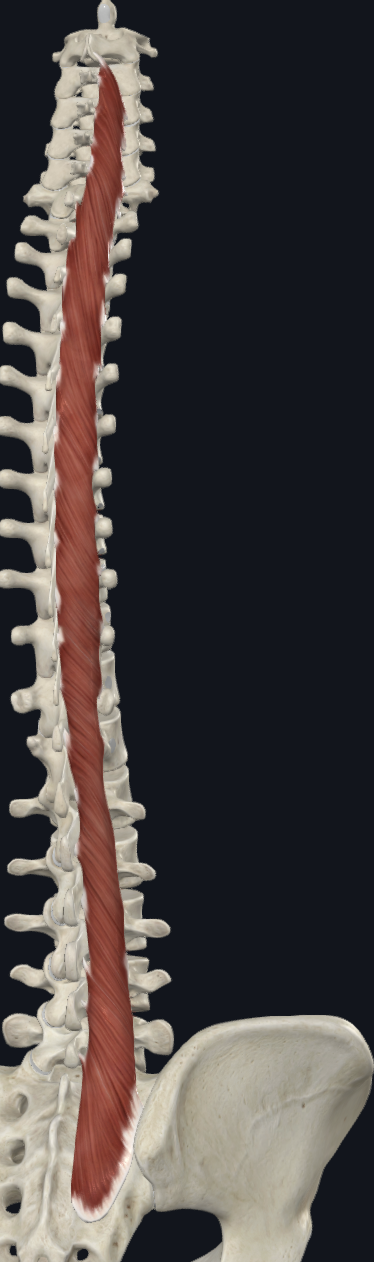
multifidus
P: spinous processes of 2-4 vertebrae above
D: cervical- articular processes of C4-C7; thoracic- transverse processes; lumbar- mammilary processes; sacral- along sacral foramina to PSIS
strong extensor, compression of spine
extends and laterally flexes vertebral column

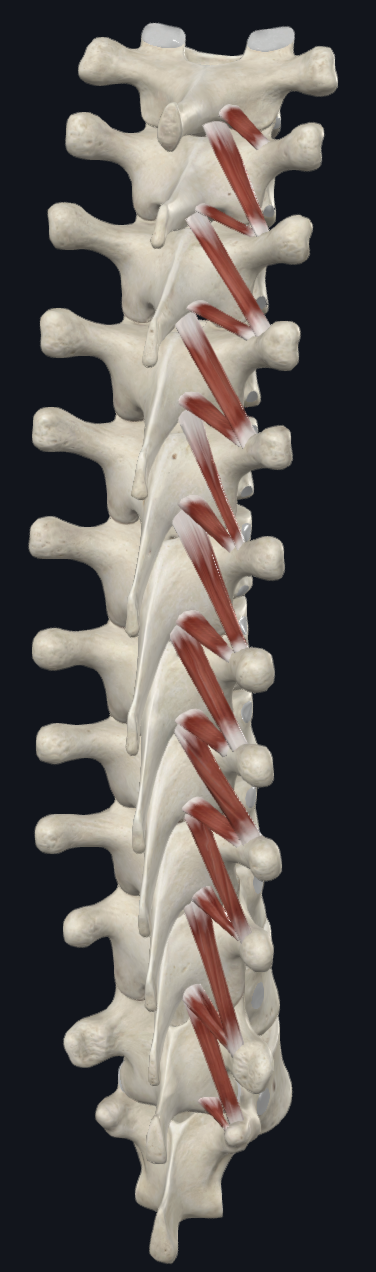
rotatores
P: brevis- spinous process 1 above; longus- spinous process 2 above
D: transverse processes
rotate vertebral column


interspinales
between spinous processes
extends vertebral column
intertransversarii
between adjacent transverse processes
laterally flexes vertebral column


serratus posterior superior
P: nuchal ligament, spinous process of C7-T2
D: external surface of 2nd-5th ribs
elevates ribs, inhalation/inspiration

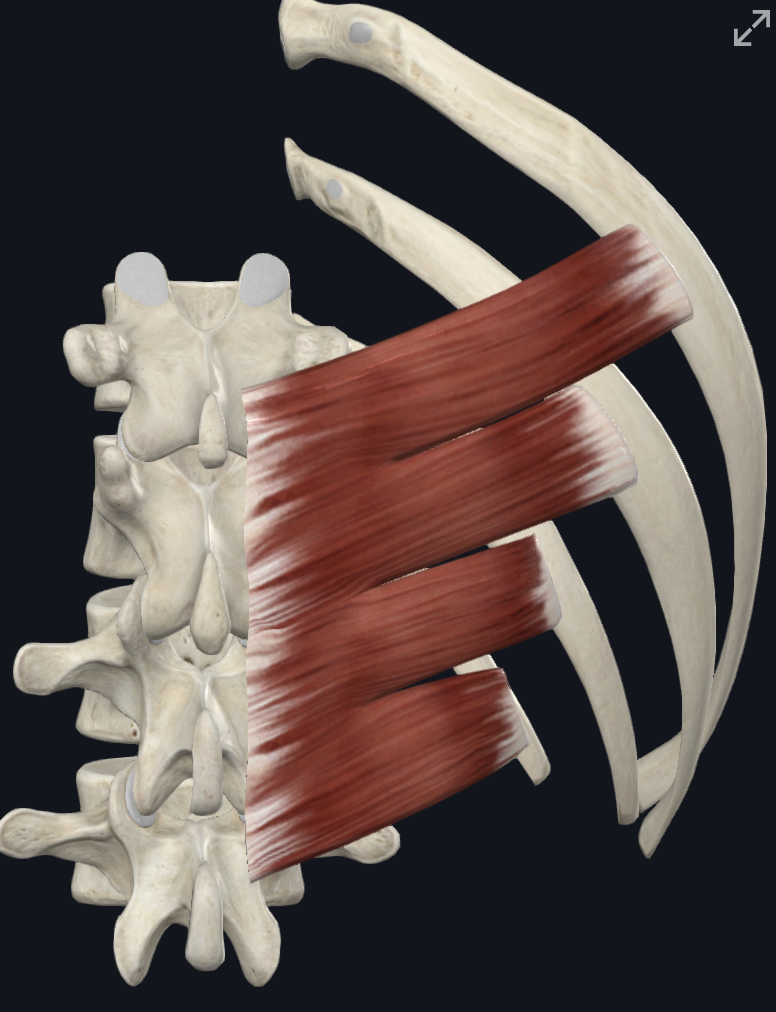
serratus posterior inferior
P: T11-L2, lumbar fascia
D: external surfaces of 9th-12th ribs
fixes lower ribs, draws them down and back, exhalation/expiration

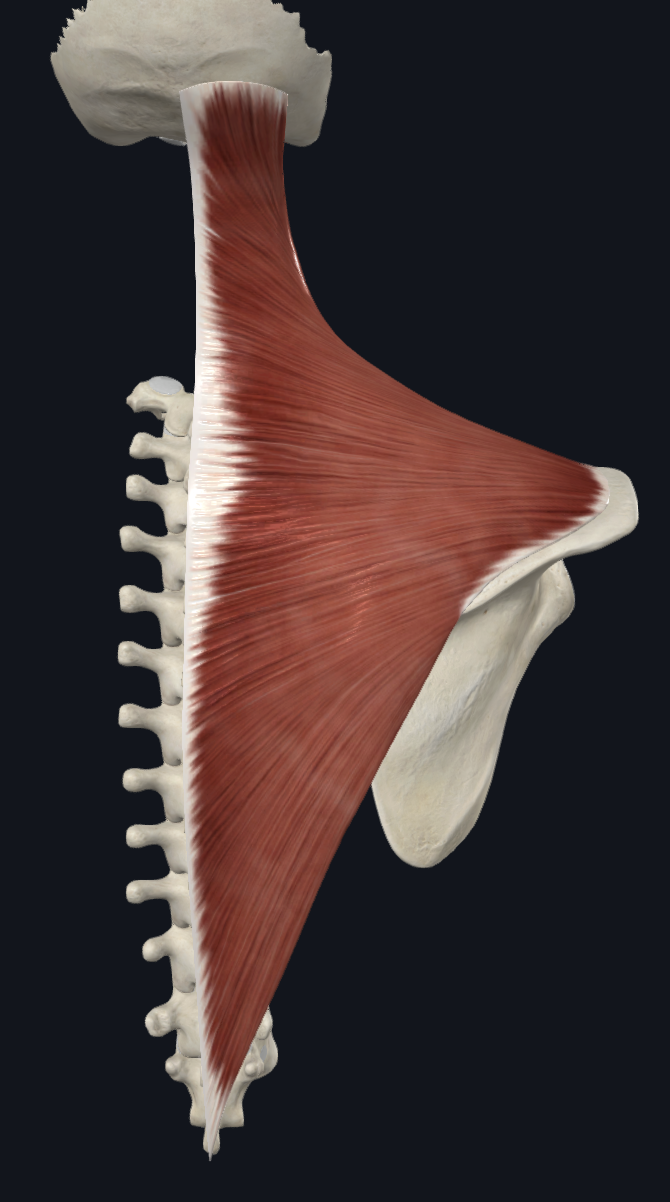
trapezius
P: external occipital protuberance, superior nuchal line, nuchal ligament from spinous processes of C7 and all thoracic vertebrae
D: lateral third of clavicle, spine of scapula, acromion
upper- elevates, upward rotation of scapula
ipsilateral- scapula fixed, cervical extension, lateral flexion and rotation to opposite side
bilateral- scapula fixed, cervical extension
middle- adducts scapula
lower- depresses, adducts, upward rotation of scapula
accessory nerve, C3 and C4 cervical nerves
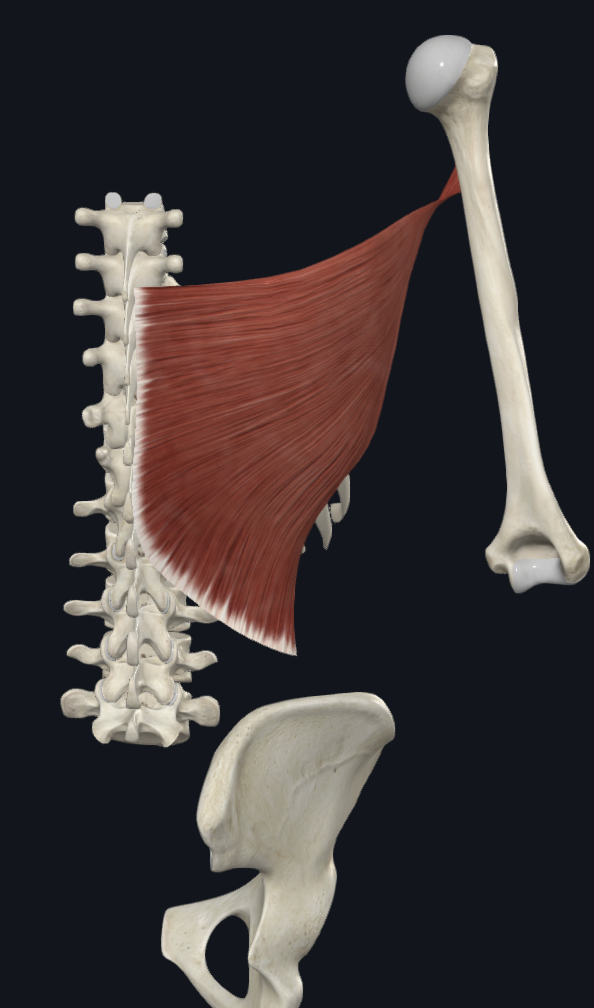
latissimus dorsi
P: spinous processes of T7-T12, thoracolumbar fascia, iliac crest
D: floor of bicipital groove of humerus
adducts, extends, and medially rotates humerus
thoracodorsal nerve (C6, C7, C8)


levator scapulae
P: transverse processes of C1-C4
D: medial border between superior angle and spine of scapula
raises or elevates scapula, downward rotation of scapula
ipsilatral- if scapula fixed, laterally flexes neck
bilateral- scapula fixed, cervical extension
dorsal scapular nerve (C4, C5)


rhomboid minor
P: nuchal ligament, C7-T1
D: root of spine of scapula
adducts and downward rotation of scapula
dorsal scapular nerve (C4, C5)

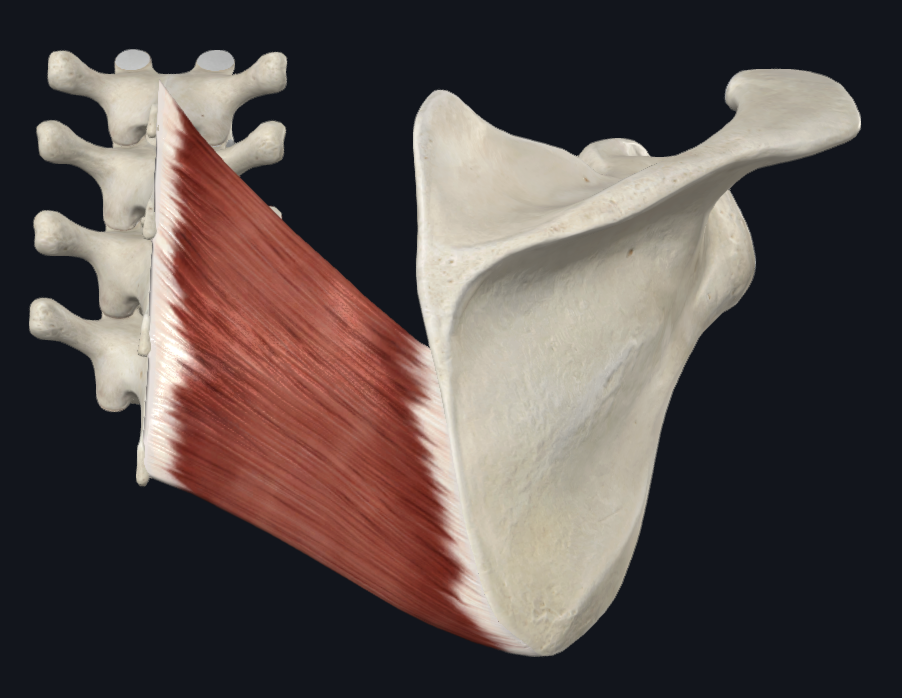
rhomboid major
P: spinous process of T2-T5
D: medial border between root of spine of scapula and inferior angle
adducts and downward rotation of scapula
dorsal scapular nerve (C4, C5)


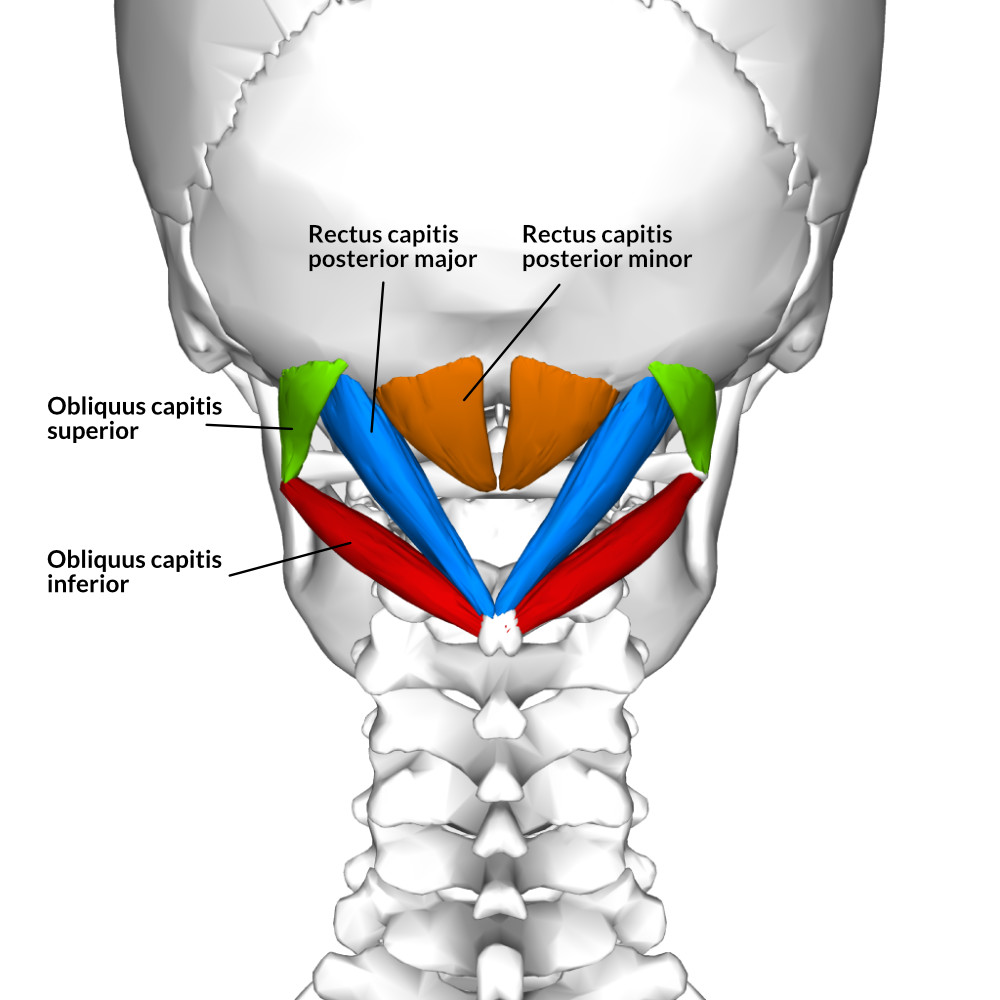
Suboccipital triangle
rectus capitis posterior major
rectus capitis posterior minor
obliquus capitis superior
obliquus capitis inferior
contains vertebral artery, suboccipital nerve, no sensory component (no dorsal root), motor to suboccipital muscles
all innervated by dorsal ramus (C1) and suboccipital nerve
muscles overlying this region include: trapezius, splenius capitis, semispinalis capitis and sternocleidomastoid

rectus capitis posterior major
P: spinous process of C2
D: lateral inferior nuchal line of occipital bone
extends head, rotate face to same side

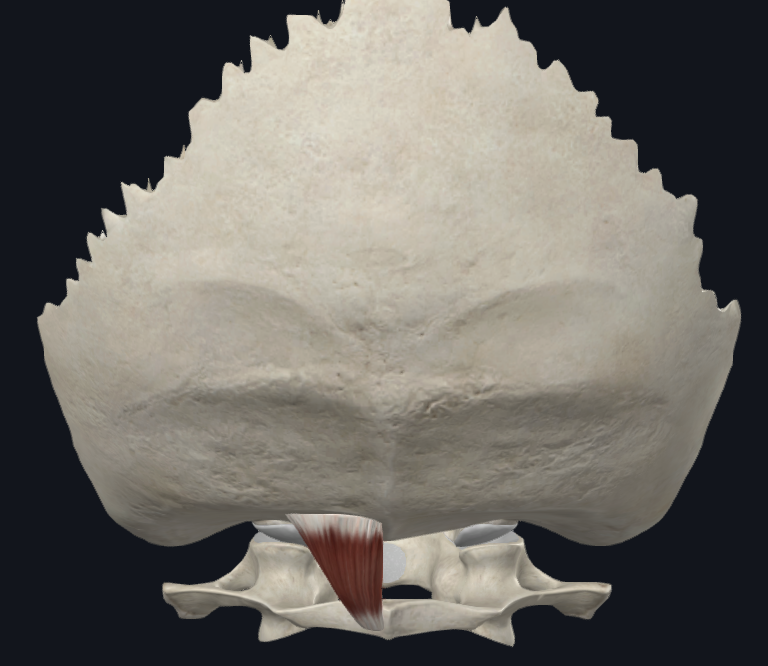
rectus capitis posterior minor
P: spinous process of C1
D: medial inferior nuchal line of occipital bone
extends head


obliquus capitis superior
P: transverse process of C1
D: between lateral aspect of superior and inferior nuchal lines of occipital bone
extends head


obliquus capitis inferior
P: spinous process of C2
D: transverse process of C1
rotates face to same side
