NSG 3123: Week 9 - Evidence-Informed Practice + Epidemiology
 Call Kai
 Learn
 Practice Test
 Spaced Repetition
 Match
 Flashcards
 Knowt Play
1/48

There's no tags or description
Looks like no tags are added yet.
49 Terms
Best available research, clinical judgement, patient preferences
What are the 3 components of evidence informed practice?
Client outcome measurement
Next most likely information collected; ex. client mortality, morbidity, immunization status, communicable disease outbreaks; use this data to understand key community health issues and priorities for their own community
Critical appraisal skills
Ability to decide is an article has sufficient methodoligical quality to warrant attention for decision making; Are the results valid? What are the results? Will they help me in umproving the health of my clients?
Systematic review
Summary of all the research evidence that relates to a specific question
Define
Step 1 of the EIP process; Clearly state the problem or practice issue and turn it into a focused, answerable question. Practitioners often use frameworks like PICO (Population, Intervention, Comparison, Outcome) to structure this step
Search
Step 2 of the EIP process; systematically look for the best available research evidence across academic databases, grey literature, and established guidelines. A well-planned search uses targeted keywords and inclusion criteria to avoid bias
Appraise
Step 3 of the EIP process; critically evaluate the retrieved studies for methodological quality, validity, and reliability
Synthesize
Step 4 of the EIP process; combine and interpret the findings from multiple high-quality studies to see the bigger picture. Rather than summarizing papers one by one, this step identifies patterns, consensus, and gaps in the overall body of evidence
Adapt
Step 5 of EIP process; tailor the synthesized evidence to fit the specific local context, available resources, and population needs. This ensures the proposed intervention is culturally appropriate, feasible, and aligned with stakeholder preferences.
Implement
Step 6 of the EIP process; Put the adapted intervention or policy change into action. Successful execution requires a clear rollout plan, stakeholder buy-in, and adequate training or resources
Evaluate
Step 7 of the EIP process; Measure the outcomes of the change to see if it worked as intended and improved results. This step assesses both the effectiveness of the intervention and how well the implementation process went
Epidemiology
Study of the occurence and distribution of health-related states or events in specified populations and the application of this knowledge to control the health problem
Screening
The testing of individuals who do not have symptoms in order to detect a health problem
Association
Occurs when there is reasonable evidence that a connection exists between a stressor or environmental factor and a disease or health challenge
Causation
An association that has been confirmed and there is a definite, statistical, cause-and-effect relationship between a particular stimulus and occurence of a disease

Web of causation
Epidemiologic model that strongly emphasizes the concept of multiple causation while de-emphasizing the role of agents in explaining illness
Measurement
Collecting and analyzing data to understand how widespread a disease is and how it affects a population; data must be presented with other factors such as population, time frame, or huma characteristics
Rate
A ratio that compares two quantities measured in different units; ex. number of live births delivered to teen mothers in the population divided by the total number of teens
Crude mortality rates
Compare number of deaths from a specific cause within the entire population
Specific mortality rates
Compare the number of deaths from a specific cause in a particular subgroup with that whole subgroup
Survival rate
Describes the effect of a given disease and can be used to compare the efficacy of various treatments
Morbidity rates
Give a picture of a population and a disease or health challenge over time, suggesting questions about the susceptibility of the population or subpopulation and the effectiveness of either health promotion or treatment strategies
Prevalence
Provides a picture of a specific disease process in a population at one given point in time
Incidence
Describes the identification of new cases of a disease in a population over time
Case reports
Comprehensive reports of cases of a disease
Case series studies
Counts of selected variables within a specific population; researcher determines morbidity/mortality rates and looks for evidence of association and causality
Cross-sectional studies
Snapshots of the present and may also be called prevalence studies; may be collected as baseline data for planning and implementing interventions or to measure change
Case-control studies
Individuals in the group with the disease are matched with individuals who are similar in some characteristics but who have not manifested the disease in questions; data are compared and common factors/differences are identified
False (prevalence and incidence are unknown)
True or false? The relative risk is calculated simply in a case-control study because both the prevalence and incidence are known
Odds ratio
Provides epideiologist with an estimate of the relative risk factor
Retrospective studies
Studies that begin in the present and search the past for information to explain the present
Prospective studies
Begin in the present and follow the subjects into the future or make predictions about the future that can be tested at a later date
Ethics approval
Must be sough for any study where data are collected about or from humans
Public health
The organized activity of society to promote, protect, and improve health for the individuals, specified groups or in the entire population
Endemic
Usual occurence of disease in a geographic area; can be high or low
Epidemic
Unusually high occurence of disease in an area, usually statistically significantly higher
Pandemic
Epidemic affecting severeal countries or continents, extending over much of the world
Outbreak
Epidemic which is localized, has an acute onset, or relatively short duration
Miasma theory
The theory that diseases were caused by miasma or bad air arising from organic decay, filth, or other conditions of the local environment
Germ theory
Idea that certain microbes might cause specific infectious diseases
John Snow
"Father of Epidemiology", studied the London Cholera epidemics of 1848 & 1854, suspected it was from the water, as most cases were found close to the Broad Street pump; case control study of those who drank water from pump and those who did not
Temporality
The cause must be observed before the effect
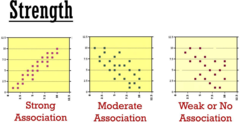
Strength of association
A description of how much scatter there is in the data away from the line or curve of best fit
Dose-response relationship
The effect on an organism at different levels of exposure to a pollutant or other hazardous substance
Consistency of association
Replication of the findings by different investigators, at different times, in different places, with different methods
Specificity of association
Refers to the extent that only one exposure is associated with a disease, or exposure only results in a single disease
Surveillance
Ongoing systematic collection, analysis, and interpretation of death data essential to the planning, implementation, and evaluation of public health practice, as well as the timely dissemination to those who need to know
Birth rate
Number of births divided by population x1000
Life expectancy
Mean age at birth to death