Chemotherapeutics Dental Products
 Call Kai
 Learn
 Practice Test
 Spaced Repetition
 Match
 Flashcards
 Knowt Play
1/20

There's no tags or description
Looks like no tags are added yet.
21 Terms
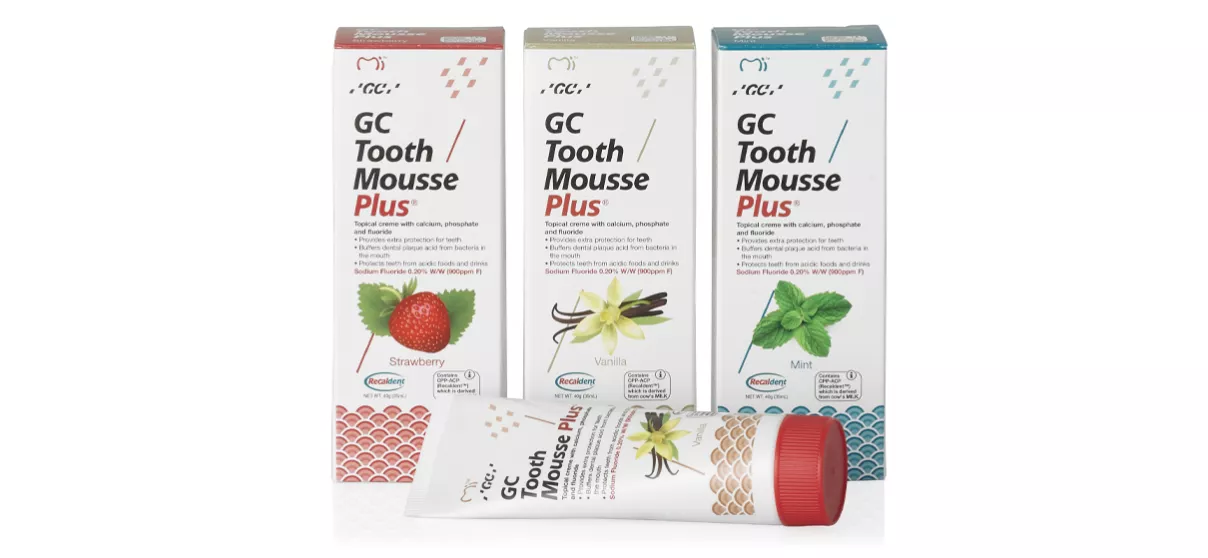
GC Tooth Mousse Plus
Active: CPP-ACPF (Casein Phosphopeptide-Amorphous Calcium Phosphate) calcium, phosphate and fluoride, containing 900 ppm fluoride.
Use: Early demineralisation, white spot lesions and patients requiring extra fluoride protection.
MOA: CPP-ACP delivers calcium and phosphate while fluoride promotes remineralisation, reduces demineralisation and improves acid resistance.
Application: Apply after brushing, leave for at least 3 minutes, spit excess, do not rinse, avoid food/drinks for 30 minutes. Often twice daily as directed.
Contraindications: Milk-protein allergy, allergy to benzoates or soy-derived ingredients; not for children 6 years or younger.
Side effects: Rare allergic reactions.
Goal: Remineralise early lesions and reduce caries progression.
Review: Lesion activity, new caries, diet and patient compliance.

NeutraFluor 5000
Active: Sodium fluoride (NaF), 5,000 ppm fluoride.
Use: High caries risk, multiple active lesions, root caries and xerostomia-associated caries risk.
MOA: Promotes remineralisation, inhibits demineralisation and reduces bacterial acid production.
Application: Use daily instead of regular toothpaste as directed. Brush for 2 minutes, spit out, do not swallow and avoid eating/drinking for 30 minutes.
Contraindications: Under 10 years; ingredient hypersensitivity. Ages 10–16 require supervision; seek professional advice during pregnancy or breastfeeding.
Side effects: Rare oral irritation or allergy; excessive ingestion may cause fluoride toxicity.
Goal: Prevent new caries and arrest or remineralise early lesions.
Review: New carious lesions, existing lesion activity, plaque, diet and compliance.

Oral-B Gum & Enamel Protect Sensitive Teeth
Active: Stannous fluoride (SnF₂).
Use: Gingivitis, plaque control, dentine hypersensitivity and caries prevention.
MOA: Tin ions inhibit plaque bacteria and help occlude exposed dentinal tubules. Fluoride strengthens enamel and promotes remineralisation.
Application: Brush twice daily for 2 minutes, spit out and avoid rinsing immediately afterwards.
Contraindications: Known ingredient hypersensitivity; follow age-specific labelling.
Side effects: Possible extrinsic staining or taste alteration, depending on formulation.
Goal: Reduce plaque, gingival inflammation and sensitivity while preventing caries.
Review: Plaque index, bleeding on probing, gingival condition and sensitivity scores.

SDI Riva Star
Active: Silver diamine fluoride (SDF), followed by potassium iodide (KI).
Use: Cervical dentine hypersensitivity is the manufacturer's Australian indication. SDF also has evidence for arresting active dentinal caries, but this use of Riva Star is outside its stated Australian indication.
MOA: Silver has antibacterial effects; fluoride reduces demineralisation. Silver-containing precipitates occlude dentinal tubules to reduce sensitivity. KI helps minimise staining. Increase resistance to demineralisation
Application: Professional use only. Clean and isolate the tooth, protect gingiva, apply Step 1 (SDF), followed by Step 2 (KI), according to the manufacturer's instructions.
Contraindications: Relevant ingredient allergies, including silver or iodine; patients undergoing thyroid gland therapy. The Australian instructions advise against desensitising carious teeth.
Side effects: Tooth staining, temporary soft-tissue staining or irritation.
Goal: Reduce dentine hypersensitivity.
Review: Sensitivity symptoms, staining, soft tissue response and any carious lesion activity.

Curasept ADS 212 (0.12%)
Active: Chlorhexidine (CHX) 0.12%.
Use: Short-term management of gingivitis and plaque where mechanical cleaning is temporarily inadequate, such as after certain dental procedures.
MOA: Cationic CHX binds to negatively charged bacterial cell surfaces, disrupting cell membranes. Its substantivity provides prolonged antibacterial activity.
Application: Rinse with 10 mL twice daily for 1 minute. Curasept ADS 212 is labelled for up to 28 days of continuous use; duration should match clinical need.
Contraindications: CHX hypersensitivity.
Side effects: Possible staining, taste disturbances, mucosal irritation and increased supragingival calculus. Anti-Discoloration Systems (ADS) formulation reduces staining risk.
Goal: Temporarily reduce bacterial plaque and gingival inflammation alongside mechanical plaque control.
Review: Plaque index, bleeding on probing, gingival inflammation and oral hygiene technique.

Colgate Sensitive Pro-Relief
Active: Pro-Argin technology (arginine and calcium carbonate), with fluoride for caries protection.
Use: Dentine hypersensitivity caused by exposed dentine, gingival recession or erosive tooth wear.
MOA: Forms a calcium-rich protective layer that occludes exposed dentinal tubules, reducing fluid movement and pain.
Application: Brush twice daily. For immediate relief, some variants allow direct application to sensitive teeth with a fingertip, massaging for 1 minute.
Contraindications: Ingredient hypersensitivity; check age guidance.
Side effects: Possible mild oral irritation. Persistent sensitivity requires investigation for caries, cracks or pulpal pathology.
Goal: Reduce sensitivity to cold, heat, touch and other triggers.
Review: Pain response to triggers, severity, exposed dentine and contributing risk factors.

Oral7 Dry Mouth Gel
Active/key ingredients: Glycerin, xylitol, lubricating polymers and salivary enzyme components including lactoperoxidase, lactoferrin and lysozyme.
Use: Xerostomia due to medications, mouth breathing, salivary hypofunction or cancer treatment.
MOA: Moisturises and lubricates oral tissues, providing symptomatic relief and supplementing some protective properties of saliva.
Application: Apply 1–2 cm of gel to the tongue and spread around the mouth as required, especially before sleep.
Contraindications: Known ingredient hypersensitivity. Seek advice before use in children 12 years and under.
Side effects: Possible irritation or sensitivity to ingredients.
Goal: Relieve dry-mouth symptoms, improve comfort, speech and swallowing.
Review: Subjective dryness, mucosal health, saliva flow where appropriate, caries risk and patient comfort.

Sensodyne Daily Care
Active: Potassium nitrate + sodium fluoride.
Use: Dentine hypersensitivity caused by exposed dentine, gingival recession or erosive tooth wear.
MOA: Potassium ions reduce pulpal nerve excitability, decreasing sensitivity to stimuli. Fluoride provides anticaries protection.
Application: Brush twice daily with regular, ongoing use according to the label.
Contraindications: Ingredient allergy; assess persistent sensitivity to exclude underlying dental pathology.
Side effects: Possible mild oral irritation.
Goal: Reduce sensitivity and support daily caries prevention.
Review: Sensitivity score, trigger response, oral hygiene and contributing factors.

Colgate NeutraFluor 220 Mouthwash
Active: Sodium fluoride 0.05% (220 ppm fluoride).
Use: Additional caries prevention, including orthodontic patients and individuals requiring supplemental fluoride exposure.
MOA: Fluoride supports remineralisation, inhibits demineralisation and increases enamel resistance to acid.
Application: Rinse with 10 mL once daily for 1 minute, spit out. Avoid rinsing, food and drinks for 30 minutes.
Contraindications: Children 6 years and under, patients unable to spit reliably and known ingredient hypersensitivity.
Side effects: Rare irritation; swallowing excessive quantities may cause gastrointestinal symptoms or fluoride toxicity.
Goal: Prevent new carious lesions.
Review: Caries activity, plaque, fluoride exposure and compliance.

Xylitol Sugar-Free Chewing Gum
Active: Xylitol (a sugar alcohol).
Use: Mild xerostomia where functioning salivary glands remain, and as an adjunct for patients at caries risk.
MOA: Chewing stimulates saliva flow, improving buffering and clearance. Xylitol is poorly fermented by many cariogenic bacteria.
Application: Chew sugar-free gum after meals for around 10–20 minutes, according to tolerance and product directions.
Contraindications/precautions: Avoid if chewing worsens TMD symptoms, causes jaw pain or presents a choking risk.
Side effects: Excessive consumption can cause bloating, gas and diarrhoea.
Goal: Increase stimulated saliva flow, reduce dryness and support oral clearance.
Review: Dryness symptoms, salivary function, caries risk and jaw discomfort.

Sensodyne Repair & Protect
Active: 5% calcium sodium phosphosilicate (NovaMin), with sodium fluoride in the Australian Extra Fresh formulation.
Use: Dentine hypersensitivity associated with exposed dentine.
MOA: Releases calcium and phosphate ions, forming a hydroxyapatite-like layer that occludes dentinal tubules and reduces fluid movement.
Application: Brush twice daily for 2 minutes, spit out and avoid rinsing immediately afterwards.
Contraindications: Ingredient allergy; follow age-related product warnings.
Side effects: Possible mild oral irritation.
Goal: Reduce sensitivity and prevent caries through fluoride protection.
Review: Sensitivity severity, cold response, exposed dentine and brushing technique.

Biotène Oralbalance Gel
Key ingredients: Glycerin, sorbitol, xylitol and lubricating polymers.
Use: Xerostomia and oral dryness caused by medications, mouth breathing or salivary hypofunction.
MOA: Humectants retain moisture while lubricants form a soothing film on oral tissues.
Application: Place approximately 1–2 cm on the tongue and spread throughout the mouth. Repeat as required.
Contraindications: Ingredient allergy; children 12 years and under require professional advice.
Side effects: Possible local irritation or sensitivity.
Goal: Improve comfort, speech, swallowing and nighttime dryness.
Review: Patient-reported dryness, mucosal health, eating comfort and caries risk.

Colgate Plax (CPC Mouthwash)
Active: Cetylpyridinium chloride (CPC), commonly 0.075% in selected formulations
Use: Adjunctive daily plaque control, mild gingivitis and halitosis.
MOA: CPC is a cationic antimicrobial that disrupts bacterial cell membranes, reducing bacterial viability.
Application: rinse with 20 mL for 30 seconds twice daily; spit out.
Contraindications: Ingredient hypersensitivity; avoid use in young children unable to rinse and spit.
Side effects: Possible mild irritation, taste changes and occasional staining.
Goal: Reduce plaque accumulation and gingival inflammation.
Review: Plaque score, bleeding, gingival condition and compliance.

Colgate Savacol Antiseptic
Active: Chlorhexidine gluconate 0.2%.
Use: Short-term plaque control, gingivitis and post-operative plaque management when mechanical cleaning is difficult.
MOA: Binds to bacterial cell membranes, disrupts membrane integrity and has prolonged antimicrobial activity (substantivity).
Application: Rinse and spit according to the specific bottle instructions, usually twice daily for a limited treatment period. Separate from toothpaste use as directed.
Contraindications: Chlorhexidine allergy.
Side effects: Tooth/tongue staining, altered taste, increased calculus accumulation and rare serious allergic reactions.
Goal: Reduce bacterial plaque and gingival inflammation.
Review: Plaque levels, bleeding, inflammation, staining and patient compliance.

Colgate Duraphat Varnish
Active: 5% sodium fluoride (22,600 ppm fluoride).
Use: Caries prevention, high caries risk, early demineralisation and dentine hypersensitivity.
MOA: Forms calcium-fluoride-like reservoirs on tooth surfaces that release fluoride during acid challenges, inhibiting demineralisation and promoting remineralisation. Varnish also temporarily occludes dentinal tubules.
Application: In-chair. Remove excess saliva, apply a thin layer to teeth using an applicator. Do not brush or eat hard foods for at least 4 hours.
Contraindications: Colophony/resin allergy, ulcerative gingivitis or stomatitis; assess asthma history and other ingredients.
Side effects: Rare allergic reactions, nausea if excessive amounts are swallowed, temporary surface coating.
Goal: Reduce caries incidence and sensitivity.
Review: New lesions, lesion activity, sensitivity and caries risk factors.

Essential Oils – Listerine
Active: Four essential oils:
Eucalyptol
Menthol
Thymol
Methyl salicylate
Use: Plaque-induced gingivitis, plaque control and halitosis.
MOA: Essential oils penetrate biofilm and disrupt bacterial cell membranes, reducing bacterial activity and plaque accumulation.
Application: Listerine Cool Mint: 20 mL undiluted for 30 seconds, twice daily. Spit out.
Contraindications: Ingredient allergies; not recommended for children under 12 years for this formulation.
Side effects: Burning sensation, taste alteration, possible mucosal irritation.
Precautions: Original Cool Mint contains alcohol. Consider alcohol-free alternatives for patients who experience irritation or have xerostomia.
Goal: Reduce plaque, gingival inflammation and halitosis.
Review: Plaque score, BOP, oral tissues, halitosis and patient tolerance.

APF – Acidulated Phosphate Fluoride
Active: Acidulated phosphate fluoride (APF), 1.23% fluoride = 12,300 ppm F.
Use: Professional caries prevention for selected patients at increased caries risk.
MOA: The acidic environment facilitates fluoride uptake and formation of fluoride reservoirs, reducing demineralisation and promoting remineralisation.
Application: Professional application, commonly with trays for 4 minutes; follow the specific manufacturer's instructions. Spit thoroughly.
Contraindications/precautions: Patients at risk of swallowing fluoride. Avoid contact with susceptible porcelain, glass ceramics and certain restorations because APF can damage their surfaces.
Side effects: Nausea if swallowed, mucosal irritation and potential etching of susceptible restorations.
Goal: Prevent caries and reduce enamel demineralisation.
Review: New lesions, lesion activity, fluoride exposure and caries risk.

Colgate Cavity Protection
Active: Sodium monofluorophosphate (MFP), commonly formulated to deliver 1,000–1,450 ppm fluoride in toothpaste.
Use: Daily caries prevention, enamel remineralisation and prevention of demineralisation.
MOA: MFP undergoes hydrolysis, releasing fluoride ions. Fluoride promotes remineralisation, inhibits demineralisation and reduces bacterial acid production.
Application: Brush twice daily for 2 minutes using an age-appropriate fluoride concentration and toothpaste amount. Spit out rather than rinse with water.
Contraindications: Ingredient hypersensitivity; avoid swallowing and follow age-specific fluoride guidance.
Side effects: Excessive fluoride ingestion during childhood can contribute to dental fluorosis.
Goal: Prevent dental caries.
Review: Caries risk, lesion activity, oral hygiene and fluoride exposure.

Colgate Peroxyl
Active: Hydrogen peroxide 1.5%.
Use: Short-term oral cleansing and removal of debris from difficult-to-clean areas, where clinically appropriate.
MOA: Releases oxygen on contact with tissues, producing an effervescent action that helps loosen and remove debris. It also has oxidative antimicrobial activity.
Application: Rinse with 10 mL for 1 minute, twice daily or as directed. Spit out.
Contraindications: Ingredient hypersensitivity; not recommended for children under 6 years.
Side effects: Mucosal irritation, tooth sensitivity and gingival discomfort.
Precautions: Do not swallow or use persistently without professional review. Peroxide rinses are not a first-line treatment for established periodontal disease.
Goal: Improve short-term oral cleanliness.
Review: Soft-tissue healing, irritation, discomfort and oral hygiene.
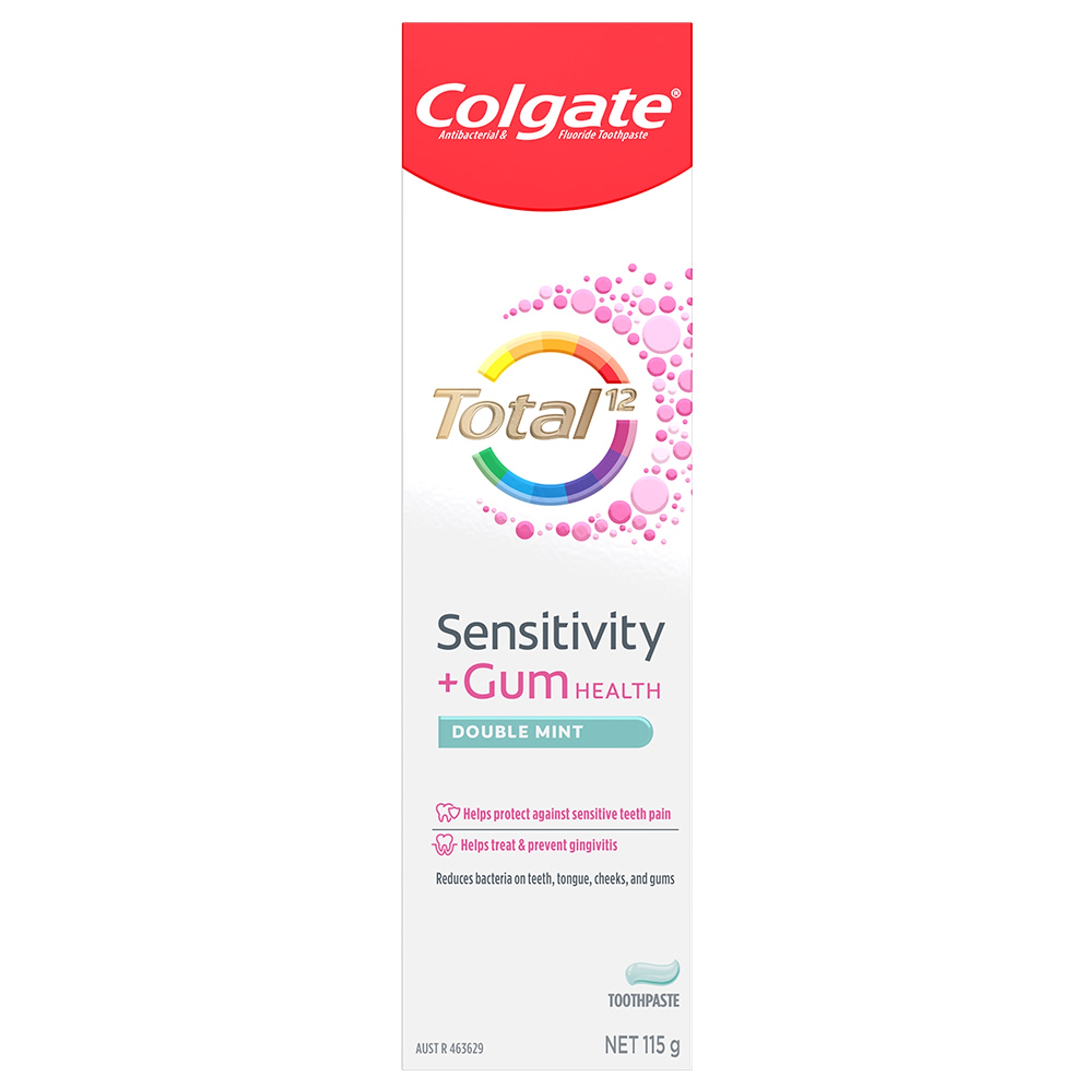
Colgate Total 12 Sensitivity + Gum Health
Active: Zinc citrate and zinc oxide in selected formulations.
Use: Plaque control, gingival health and intraoral halitosis.
MOA: Zinc ions have antibacterial activity and bind volatile sulfur compounds responsible for unpleasant breath.
Application: Brush twice daily as directed for the selected toothpaste.
Contraindications: Ingredient hypersensitivity.
Side effects: Possible altered taste or local irritation.
Goal: Reduce plaque-associated oral malodour and support gingival health.
Review: Plaque score, gingival inflammation, halitosis and oral hygiene practices.

Oral-B Clinical Clean Mint Mouthwash
Active ingredients:
Cetylpyridinium chloride (CPC): Antibacterial agent.
Sodium fluoride (NaF): Anticaries agent.
Use: Plaque control, mild plaque-induced gingivitis, halitosis and additional caries prevention.
MOA:
CPC: Disrupts bacterial cell membranes, reducing plaque bacteria and their activity.
NaF: Promotes enamel remineralisation, reduces demineralisation and improves resistance to acid attacks.
Application: Rinse with 20 mL for 30 seconds, twice daily after brushing. Spit out; do not swallow. Avoid eating or drinking for 30 minutes afterwards.
Contraindications/precautions: Ingredient hypersensitivity; not for children under 6 years without professional advice. Supervise younger children who are learning to rinse.
Side effects: Possible extrinsic tooth staining, taste disturbance or mucosal irritation.
Goal: Reduce plaque accumulation and gingival inflammation while providing additional fluoride protection.
Review: Plaque score, bleeding on probing (BOP), gingival condition, new caries/lesion activity and compliance.