bpol and strat exam 1
 Call Kai
 Learn
Learn Practice Test
 Spaced Repetition
 Match
Match Flashcards
 Knowt Play
1/43

There's no tags or description
Looks like no tags are added yet.
Name | Mastery | Learn | Test | Matching | Spaced | Call with Kai | Chat |
|---|
No analytics yet
Send a link to your students to track their progress
44 Terms
strategy
integrated and coordinated set of commitments and actions designed to exploit core competencies and gain a competitive advantage
risk
an investor’s uncertainty about the economic gains or losses from an investment
strategic management process
full set of commitments, decisions, and actions firms take to achieve strategic competitiveness and earn above-average returns
asp process model
analysis, strategy, and performance
firm analyzes the external environment and its internal organization, then formulates and implements strategies to achieve a desired level of performance
strategic competitiveness
accomplished by formulating and implementing a value creating strategy
above average returns
average returns: returns = to those an investor expects to et from other investments that have a similar amount of risk
competitive advantage
achieved when using a strategy to create superior value for customers and competitors are not able to imitate that value
core competency
capabilities that serve as a source of competitive advantage for a firm over its rivals
hypercompetition
condition where competitors engage in intense rivalry, markets change quickly and often entry barriers are low
drivers: emergence of global economy, rapid tech change
mission
specifies businesses in which the firm intends to compete and customers to serve

values
define what matters most to managers and employees when they make and implement strategic decisions

vision
picture of what the firm wants to be and in broad terms what they want to achieve

resources
highly mobile, any resource differences will be short-lived
physical, human, organizational capital
strategic management process
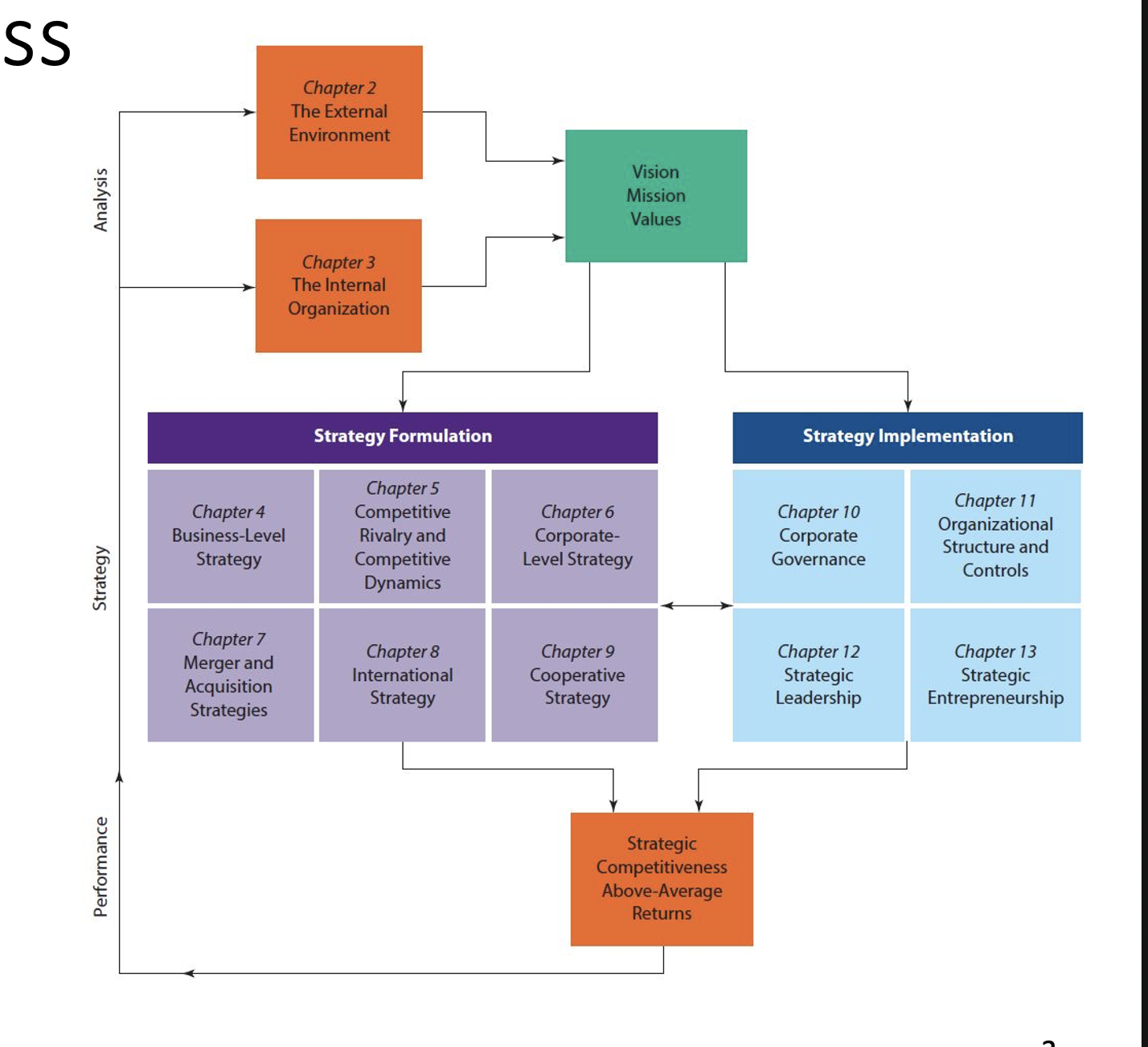
characteristics of the current competitive landscape, 2 drivers
2 drivers = globalization of industries and markets + rapid and significant tech change
nature of competition has changes - need to make strategic decisions and adopt a new mindset that is global
according to I/O model, what should a firm do to earn above-average returns?
conditions and characteristics of external environment are primary inputs and determinants of strategies -
firms should seek out the industry with the greatest profit potential and learn how to use their resources to implement value-creating strategies
I/O model assumptions
external environment puts pressures and constraints that determine which strategies will result in better profitability
forms competing in an industry control similar resources and will pursue similar strategies bc of it
resources used to implement strategies are highly mobile
decision makers are rational and committed to acting in firm’s best interests
what does resource-based model suggest a firm do to get above average returns?
firms should formulate and implement strategies that allow the firm to best exploit its ore competencies relative to opportunity in external environment
resource model assumptions
each firm is a collection of unique resources and capabilities that provides basis for its strategy and is primary source of its profitability
overtime, firms acquire different resources and develop unique capabilities
resources not highly mobile
value of vision and mission in strategic management process
externally focused mission provides sense of purpose
internally set vision indicates what ultimately will be achieved
what are stakeholders
individuals and groups who can affect and are affected by strategic outcomes and have enforceable claims of a firm’s performance
three primary stakeholder groups
capital market stakeholders (shareholders, lenders)
product market stakeholders (customers, suppliers, host communities)
organizational stakeholders (employees, managers)
how do 3 primary stakeholder groups influence organizations?
dissatisfied lenders can impose stricter covenants on borrowing of capital
dissatisfied stockholders can sell stock - bad effect on price
dissatisfied employees can organize collective bargaining
dissatisfied community groups can boycott goods
describe work of strategic leaders
people located in different parts of the firm using the strategic management process to reach vision and mission
decisive and committed to nurturing those around them and creating value and returns
hard working, thorough, honest, questioning, visionary, persuasive, analytical, decision makers
elements of strategic management process
strategic inputs
strategic actions
strategic outcomes
how are elements of strategic management process interrelated
inputs are vision and mission and drive the firm’s strategic actions and thus give strategic outcomes from implementing value creating strategies and strategic competitiveness and above average returns - feedback loop
competitive analysis
process of identifying key competitors and researching their products, sales strategies… to evaluate how your business compares - identifying opportunities and risks
competitive intelligence
set of data and information the firm gathers to understand and anticipate competitors’ objectives, strategies, assumptions, and capabilities.
demographic segment
population’s size, age structure, geographic distribution, ethnic mix, and income distribution
economic environment
nature and direction of the economy in which a firm competes or may compete.
general environment
composed of dimensions in the broader society that influence an industry and the firms within it.
1.Demographic
2.Economic
3.Political/Legal
4.Sociocultural
5.Technological
6, Global
7.Sustainable physical environment
global segment
global markets and their critical cultural and institutional characteristics, existing markets that are changing, and important international political events.
industry environment
set of factors that directly influences a firm and its competitive actions and responses:
−The threat of new entrants
−The power of suppliers (airplanes)
−The power of buyers (Retail)
−The threat of product substitutes (Fashion)
−The intensity of rivalry among competing firms (Fast Food)
political/legal segment
where organizations compete for attention, resources, and a voice in overseeing the body of laws and regulations guiding interactions among nations as well as between firms and various governmental agencies.
socioultural segment
concerned with a society’s attitudes and cultural values.
sustainable environment
potential and actual changes in the physical environment and business practices that are intended to positively respond to those changes in order to create a sustainable environment.
technological segment
the institutions and activities involved in creating new knowledge and translating that knowledge into new outputs, products, processes, and materials.
five competitive forces
threat of new entrants
bargaining power of suppliers
bargaining power of buyers
threat of substitute products/services
rivalry among existing competitors
strategic group
A set of firms emphasizing similar strategic dimensions and using a similar strategy
why is it important for a firm to study and understand the external environment?
influences strategic options and decisions
matched with knowledge about internal environment
conditions now differ from past - tech changes, information gathering, processing capabilities, labor practices
what are the differences between the general environment and the industry environment? why are these differences important?
general environment - influence all or most industries/firms, firms cannot directly control (demographic, economic, political…)
industry environment - directly influences a firm and its competitive actions (threat of new entrants, bargaining power…)
what is the external environmental analysis process? what does a firm want to learn when using this process?
organize attempt by firm to better understand turbulent, complex, and global environment
scanning - studying all segments of general environment, identifying existing or potential changes
monitoring - observing pattern of changes over time to detect meanings and trends
forecasting - develop feasible projections of what might happen and how quickly from changes and trends saw in scanning and monitoring
assessing - determining timing and significance of environmental changes and trends on strategic management of firm
objective - identify potential threats and opportunities
what are the 7 segments of the general environment? explain the differences among them?
demographic - characteristics of population/society
economic - nature and direction of economy
political/legal - how firms influence government and vise versa
sociocultural - social attitudes and values
tech - creating new knowledge and translating it into outputs, inputs..
global - relevant new global markets and existing ones that are changes
physical environment - global warming, energy consumption, sustainability
how do the 5 forces of competition in an industry affect its profit potential?
suppliers - raising prices, reducing quality of goods sold
buyers - can successfully bargain for higher quality, greater levels of service, lower prices
substitute products - placing upper limit on prices that can be charged
new entrants - bring additional production capacity to the industry
rivalry - lower overall profitability of industry, actions and responses influence