Dynamics of Disease Transmission and Risk
 Call Kai
 Learn
 Practice Test
 Spaced Repetition
 Match
 Flashcards
 Knowt Play
1/32

There's no tags or description
Looks like no tags are added yet.
33 Terms


What are five direct causes of illness?
biological pathogens (bacterial, viral, parasitic)
chemical exposures (smoke, alcohol, pesticides)
physical (trauma, radiation)
nutritional (deficiencies, excess)
genetics
What are some factors related to susceptibility to illness?
age
sex
race
genetics
nutritional status
previous illness
cultural practices or customs
occupation
martial status
other social determinants of health
What is an example of previous illness increasing susceptibility to future illness?
previous measles infection can increase susceptibility to future illnesses
What are social determinants of health?
conditions in which people are born, live, learn, work, play, worship, and age that affect a wide range of health, functioning and quality of life outcomes and risk
What are two ways infectious diseases are transmitted in populations?
directly
indirectly
can be transmitted through both direct and indirect pathways
How are diseases transmitted directly?
person to person contact
What are the mechanisms behind direct disease transmission? (2)
direct contact with blood or body fluids
touching contaminated skin, saliva or respiratory secretion contact, sexual transmission, contact w/ body lesions
droplet spread
relatively large, short-range aerosols produced by sneezing, coughing, or talking
How are diseases transmitted indirectly?
through a common vehicle or vector such as contaminated food or water supply, a mosquito or fly
What are the mechanisms behind indirect disease transmission? (3)
airborne transmission of small respiratory particles that can be suspended in air (ex: measles, COVID)
non-living vehicles (water, food, biological products such as blood, fomites aka contaminated objects)
vectors (living vehicles such as mosquitos)
Which type of viruses can have both direct or indirect transmission pathways?
respiratory viruses
What are three forms of vector borne disease (indirect transmission)?
parasite
virus
bacteria
Examples of parasite borne diseases.

Examples of virus borne disease.

Examples of bacteria borne viruses.

Who is John Snow? Describe his role in terms of the cholera outbreak
one of the “Fathers of Epidemiology” who was a Physician working in London
mapped cholera cases in relation to water sources as he thought the major cause was the bad water
figured out that a specific area with higher outbreaks were using a specific water pump (Southwark and Vauxhall Co.)
didn’t know that it had anything to do with Vibrio cholera bacteria, that was later discovered 1854/1884
next day, they removed the handle of the pump
What was the initial proposal for the initial reason for cholera?
believed to be due to “Miasma” aka bad air (already knew poor sanitation has some implication)
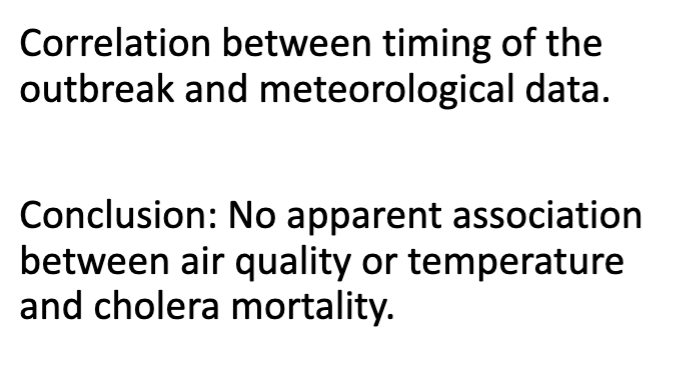
debunked by John Snow
What are four interventions to reduce the risk of cholera
waste water treatment
chlorinated drinking water
handwashing with soap
vaccination
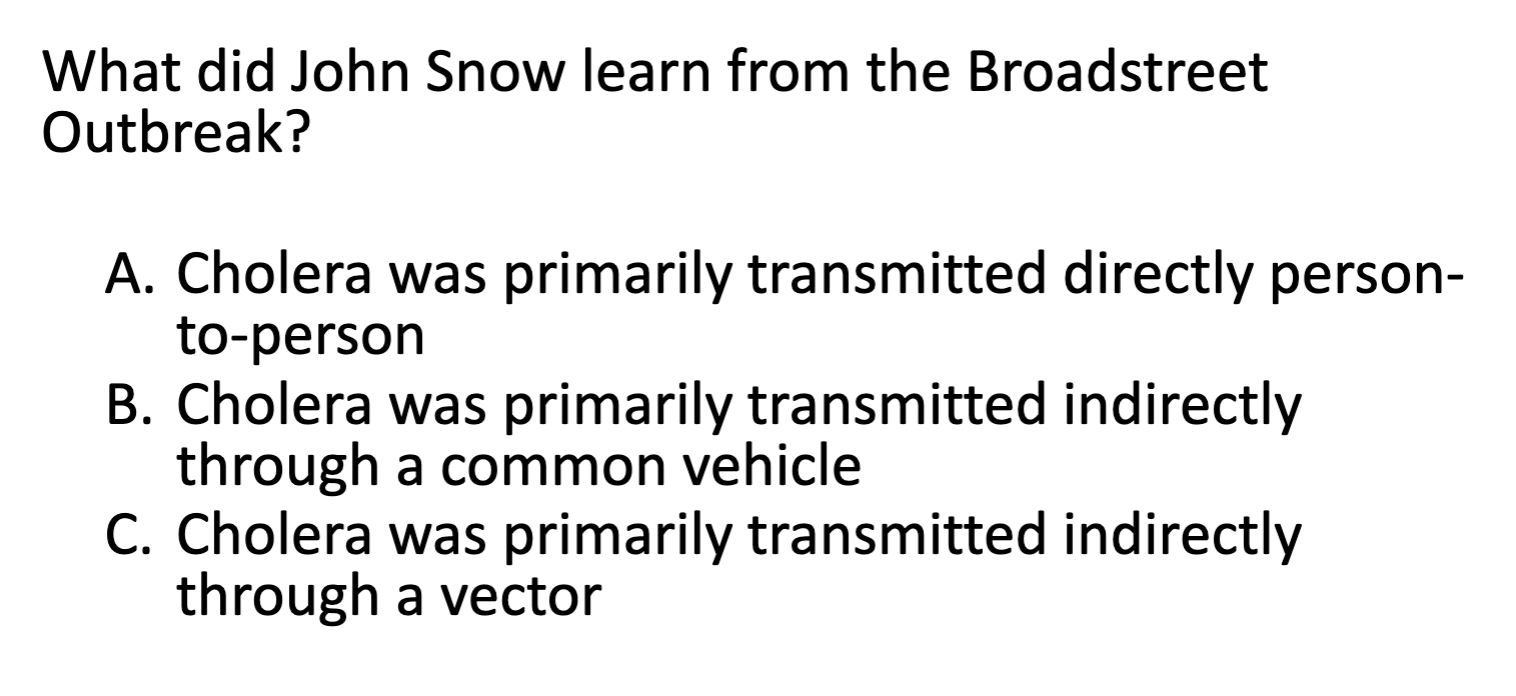
B
Describe the story of “Typhoid Mary”
Mary Mallon started working in the US 20-30 y/o as a chef in NY
problem: multiple families that she worked for got a typhoid diseased caused by salmonella (difficult to track bc it has different transmission pattern, not all families got infected but people who visited got infected)
detective assigned found that Mary had no symptoms
Mary served ice cream with peaches raw (perfect medium for salmonella to grow)
isolated her and the cases went down (ethical case on how we deal with those who are asymptomatic)
Describe disease progression in an individual patient.

In terms of disease progression in an individual patient, what did Mary bring to light?
it had been thought that only sick people could transmit infections

What is the difference between clinical disease vs. sub-clinical disease (unapparent)?
clinical: a disease with signs and symptoms of illness
sub-clinical: not apparent
may or may not progress to clinical disease
biomarkers of illness may be present without overt symptoms of disease
can be considered “carriers” as they are capable of infecting others
What is an endemic?
the habitual presence of disease in a population or geographic region
What is an epidemic?
the occurrence of disease in a community or region in excess of normal expectancy (endemic x 2)
What is a pandemic?
a worldwide epidemic
When do disease outbreaks occur?
will occur when a pathogen is introduced into a population an there are enough people susceptible to disease and few enough people that are immune

What is the basic reproduction number? (R)
the average number of secondary cases that one case would produce in a susceptible population
not a fixed constant for a disease
What is the relationship between the basic reproduction number and the chances that an epidemic will occur?

R0 is the reproductive number at the start of an epidemic (time zero) whereas Rt is the effective reproductive number at any given time (t)

as more people become infected, most of the population becomes infected and thus there are few people who remain susceptible (will get a lower R value)
What three things influence the basic reproduction number (R)?
biological factors
environmental factors
socio-behavioral factors
What three things can help bring Rt < 1 during an epidemic?
people tend to change their behavior to reduce their risk of exposure
quarantine and isolation guidance from public health authorities
vaccine campaign (one of the most effective public health interventions as it can result in herd immunity)
a partial vaccine campaign only benefits those directly vaccinated
What is a low infection fatality ratio (IFR)?
a very small percentage of all people who contract a specific disease—including those who are asymptomatic or undiagnosed—will die from it

A. epidemic