8 LIGHTING DESIGN - SPATIAL ILLUMINATION & LIGHTING HAZARDS
 Call Kai
 Learn
Learn Practice Test
 Spaced Repetition
 Match
Match Flashcards
 Knowt Play
1/85

There's no tags or description
Looks like no tags are added yet.
Name | Mastery | Learn | Test | Matching | Spaced | Call with Kai | Chat |
|---|
No analytics yet
Send a link to your students to track their progress
86 Terms
LIGHTING DESIGN
The intentional planning and application of light, both natural and artificial, to create spaces that are functional, comfortable, safe, and aesthetically pleasing.
Functionality
Objectives of Lighting Design:
provide adequate illumination for tasks.
Comfort & Safety
Objectives of Lighting Design:
reduce glare, prevent accidents, support wellbeing.
Aesthetics
Objectives of Lighting Design:
highlight form, texture, and architectural details
Energy Efficiency
Objectives of Lighting Design:
minimize waste through efficient systems.
Health & Well-being
Objectives of Lighting Design:
align lighting with circadian rhythms.
Identity & Atmosphere
Objectives of Lighting Design:
create mood, drama, and branding.
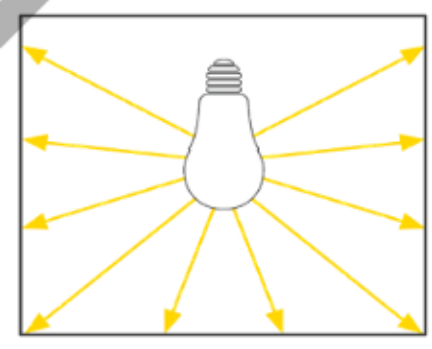
Luminous Flux (Ф)
Lumen (Im)
Luminous Flux (Ф)
describes the quantity of light emitted by a light source.
Luminous Efficiency
The ratio of the luminous flux to the electrical power consumed (Im/W). It is a measure of a light source's economic efficiency.
Luminous Intensity
Candela (cd)
Luminous Intensity
describes the quantity of light that is radiated in a particular direction.
Luminous Intensity (I)
This is a useful measurement for directive lighting elements such as reflectors. It is represented by the luminous intensity distribution curve (LDC).
Illuminance (E)
Lux (Ix)
Illuminance (E)
Describes the quantity of luminous flux falling on a surface such as ceiling, walland floor.
Illuminance (E)
Relevant standards specify the required illuminance for a specific space.
Luminance (L)
Candela per square meter (cd/m²)
Luminance (L)
The only basic lighting parameter that is perceived by the eye.
Luminance (L)
It describes on the one hand a light source's impression of brightness, and on the other. a surface and therefore depends to a large extent on the degree of reflection (color and surface).
Color Temperature (K)
Degrees Kelvin (K)
Color Temperature (K)
A measure of the color characteristics of light, which describes the appearance of the light emitted by a light source, ranging from warm (yellowish) to cool (bluish) tones.
Color Temperature (K)
helps set the mood of a space and can influence how occupants feel (e.g., relaxed or alert).
Color Rendering Index (CRI)
measures how accurately a light source reveals the true colors of objects compared to natural sunlight, which has a CRI of 100.
Color Rendering Index (CRI)
The scale goes from 0 to 100, with higher numbers indicating better color rendering.
Color Rendering Index (CRI)
is crucial for ensuring that materials, finishes, and artwork appear as intended, especially in spaces where aesthetics are important.
LIGHTING HAZARDS
Poorly designed or improperly maintained lighting systems can pose several hazards. These hazards can impact both the safety and wellbeing of building occupants, as well as the environment. Ensuring that lighting systems are well-planned, energy-efficient, and well-maintained can mitigate these hazards, improving the overall quality of any architectural space.
Glare
A disturbance in vision caused by high brightness levels or strong contrasts in luminance within a visual environment. It reduces visual performance (objective) or causes discomfort (subjective).
Physiological Glare
actual reduction in visual performance due to light scattering in the eye.
Physiological Glare
Caused by overlapping of glare light with the visual task image reducing clarity and precision in seeing.
Physiological Glare
E.g., looking at the sun
Psychological Glare
Subjective disturbance or discomfort without a measurable reduction in performance.
Psychological Glare
Doesn't reduce visual performance, but causes discomfort and distraction.
Psychological Glare
Acts like optical noise - pulling attention away from the task.
Psychological Glare
e.g., crystal chandelier brilliance = acceptable/expected, reflections on glossy paper = disturbing.
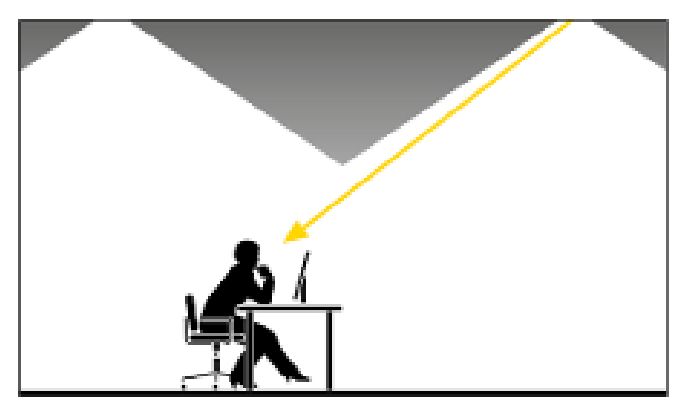
Direct Glare
Type of glare that is from the light source itself
Reflected glare
Type of glare that is from reflections of light on surfaces (e.g., glossy paper, screens).
Reflected glare
Indirect glare
Glare Hazard - Visual Fatigue
Prolonged exposure to glare can lead to eye strain, headaches, and discomfort.
Glare Hazard - Accidents
Glare can reduce visibility in critical areas such as workstations, roadways, or stairways, increasing the risk of accidents.
Glare Hazard - Productivity Loss
In office environments, glare from screens or windows can reduce employee productivity and comfort.
Flicker
Strobing
Flicker
The rapid fluctuations in light intensity, often caused by electrical issues, poor-quality lighting fixtures, or the use of incompatible dimmers.
Flicker - Health Risks
Prolonged exposure to flickering lights can trigger migraines, eye strain, vomitting, or, in extreme cases, seizures in individuals with photosensitive epilepsy.
Flicker - Distraction and Annoyance
Even in those not susceptible to health effects, flickering lights can be distracting, leading to reduced focus and discomfort.
Inadequate Lighting
Insufficient light levels for the tasks being performed, whether due to poor fixture placement, low lumen output, or failure to maintain the lighting system
Inadequate Lighting - Safety Risks
Insufficient lighting in areas like staircases, corridors, or parking lots can lead to trips, falls, and other accidents.
Inadequate Lighting - Reduced Task Performance
In work environments, inadequate lighting can reduce accuracy and efficiency, especially for tasks requiring high visual precision.
Over-illumination
occurs when spaces are illuminated more than necessary, leading to excessive brightness.
Over-illumination - Energy Waste
Over-illumination wastes energy, leading to higher electricity bills and increased carbon footprint.
Over-illumination - Discomfort
Excessive brightness can cause eye strain and discomfort, similar to glare.
Blue-Light Hazard - Disruption of Sleep Cycles
Overexposure to blue light, especially at night, can suppress melatonin production, leading to sleep disorders.
Blue-Light Hazard
Exposure to excessive amounts of blue light, particularly from LED lighting, can affect the human circadian rhythm and vision.
Blue-Light Hazard - Eye Strain
Prolonged exposure to blue light can cause digital eye strain, particularly in environments with heavy use of screens (e.g., offices.
Poor Light Distribution
Uneven illumination across a space, leading to areas with varying brightness levels.
Poor Light Distribution - Eye Strain
Areas that are too dim or bright force occupants' eyes to adjust constantly, causing strain.
Poor Light Distribution - Accident Risk
Poor lighting coverage can obscure hazards, leading to accidents.
Low Contrast
Insufficient contrast between different areas or objects, hindering the ability to distinguish shapes, edges, and surfaces.
Low Contrast - Visual Fatigue
Low contrast causes eye strain as the eyes work harder to differentiate objects.
Low Contrast - Reduced Clarity
Inadequate contrast can make tasks more challenging and impact productivity.
Thermal Heating
Heat emitted by certain lighting types (like incandescent or halogen bulbs), affecting room temperature and comfort.
Thermal Heating - Discomfort and Fire Risk
Excessive heat can create discomfort and, if unchecked, may pose fire risks.
Thermal Heating - Increased Cooling Costs
Overheating from lights can raise cooling needs and energy costs.
Glare
Excessive brightness that causes visual discomfort and reduces visibility.
Light Pollution
The excessive or misdirected use of artificial lighting that brightens the night sky and disturbs ecosystems.
Light Trespass
Unwanted light spilling into areas where it isn't needed, like streetlights shining into bedroom windows.
Clutter
Excessive grouping of bright lights, common in urban centers, which can confuse and distract
Skyglow
The brightening of the night sky over populated areas, making it difficult to see stars.
Light Pollution - Disruption of Ecosystems
Artificial lighting affects nocturnal wildlife, disturbing natural behaviors like migration and feeding.
Light Pollution - Human Health Impacts
Light pollution can disrupt human circadian rhythms, contributing to sleep disorders.
Light Pollution - Astronomical Interference
Excessive lighting reduces the visibility of stars and other celestial bodies, affecting both scientific research and the night-sky experience.
Luminous Flux
A

Luminous Intensity
B

Illuminance
C

Luminance
D

Luminous Flux
Luminous Intensity

Illuminance

Luminance

2500K
Color temperature for melatonin release - Rest
5000K
Color temperature for Cortisol release - activity
Direct Glare
Indirect Glare

Needed light
1

Glare
2

Light Trespass
3

Skyglow
4
