Lesson 9.1: Enterprise Design Thinking
 Call Kai
 Learn
 Practice Test
 Spaced Repetition
 Match
 Flashcards
 Knowt Play
1/33

There's no tags or description
Looks like no tags are added yet.
34 Terms
Enterprise Design Thinking
A framework that aligns multi-disciplinary teams around the real needs of their users.
When teams apply these scalable methods, they’re able to move faster and deliver differentiated outcomes over and over again.
Design thinking
mindset that aims to improve the situation of people through the experiences they have.
design thinking
If you’re interested in solving problems for people, then you can practice ____.
Client Ethos
The fundamental character or spirit of a client’s culture: their guiding beliefs. You must understand this to propose a solution that fits.
Active Listening
Problem Solving
Empathy
Communication
Key Consultant Skills
Active Listening
Understand the client’s problem before you suggest a solution.
Problem Solving
Frame the client’s needs as a problem that your IoT solution can solve.
Empathy
Understand the challenges from the client’s perspective.
Communication
Clearly explain complex technical ideas in terms of business value.
Design thinking
requires you to consider a person’s experience order to focus on their human needs.
Design thinking isn’t just for designers
Even though it includes the word “design,” design thinking is a mindset that can apply.
It simply means that you’re starting to think like a designer—about how you can improve the current experience of the people you serve: your users.
Enterprise Design Thinking
A tailor-made approach for large, distributed teams to help them quickly deliver human-centered outcomes to the market
The Principles
guide your day-to-day work. They ensure you’re keeping your user in mind, collaborating with a diverse team, and continuously trying to improve your solutions.

The Loop
Understand the present and envision the future in a continuous cycle of observing, reflecting, and making.

The Keys
Scalable practices for enterprise team alignment.

The Principles
guide your day-to-day work.
They ensure you’re keeping your user in mind, collaborating with a diverse team, and continuously trying to improve your solutions.
The Principles
A focus on user outcomes
Restless reinvention
Diverse empowered Teams

A focus on user outcomes
Drive business by helping users achieve their goals.

Restless reinvention
Stay essential by treating everything as a prototype.

Diverse Empowered Teams
Move faster by working together and embracing diversity.
The Loop
Understand the present and envision the future in continuous cycle of observing, reflecting, and making.
The Loop
Observe
Reflect
Make

Observe
Immerse yourself in the real world with design research. Interview users, watch them work, and test your ideas with the people who matter most to inform your decision-making and understanding.

Reflect
Come together and look within to synchronize your movements, synthesize what you’ve learned, and share your “aha” moments with each other. Decide together and move forward with confidence.

Make
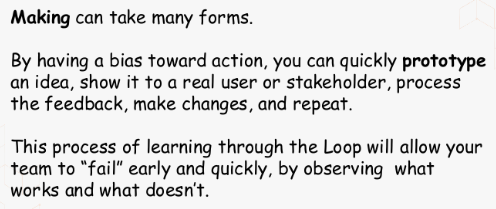
Give concrete form to abstract ideas. The earlier you make the faster you learn. Put your ideas out there before they’re complete and improve them as you go.
The Keys
Scalable practices for enterprise team alignment.
The Keys
The Hills
Playbacks
Sponsor Users

The Hills
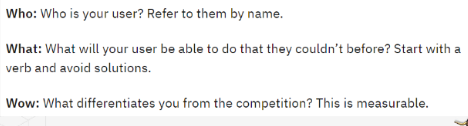
Align your team around the meaningful user outcomes you want to achieve. Hills are statements of intent written as user enablements. They follow a format of Who, What, and Wow.

Playbacks
Stay aligned by regularly exchanging feedback. Playbacks are story-based presentations that share insights, ideas, and updates to a user experience.

Sponsor User
Invite users into the work and stay true to real-world needs. Sponsor Users are external clients, future clients, or end users that represent your target user, who regularly contribute domain expertise to your team. Relationships with Sponsor Users are typically formalized with an agreement that covers confidentiality and our right to use their feedback.

Failure
gets a bad rap. It’s something many people fight to avoid at all costs.
Think about scientists.

Failing as opportunity

How to Fail Fast and Cheap?