8/31 - Equine LI Conditions and Diarrhea
 Call Kai
 Learn
Learn Practice Test
 Spaced Repetition
 Match
Match Flashcards
 Knowt Play
1/30

There's no tags or description
Looks like no tags are added yet.
Name | Mastery | Learn | Test | Matching | Spaced | Call with Kai | Chat |
|---|
No analytics yet
Send a link to your students to track their progress
31 Terms
Left
NSAIDs, fasting, and providing a place to roll are the most appropriate initial treatment for displacement of the colon in which direction?
Electrolytes
A solution of what given via a nasogastric tube is the most effective treatment for a pelvic flexure impaction? This draws water into the gut, as IV fluids alone would not be effective.
Base
Which part of the Cecum is the only part of the entire equine large intestine that is attached to the dorsal body wall?
Horizontal
Palpation of which bands on the colon is always abnormal rectally? It will be felt when there is right dorsal displacement of the colon.
Diarrhea
What condition is the primary clinical sign of large intestinal disease? It occurs when normal balance of secretion and absorption is disturbed, and when there is increased water content of the feces. It usually occurs due to an inflammatory process, and if it is acute and fulminant this is an emergency.
Acute
What type of diarrhea (acute or chronic) can occur due to Salmonella, Clostridium, antimicrobial use, Potomac Horse Fever, grain overload, blister beetle toxicosis, or Equine Corona virus?
Chronic
Which type of diarrhea (acute or chronic) can occur due to Salmonella, sand enteropathy, NSAID toxicosis, parasites, IBD, neoplasia, or peritonitis?
Water
Sand enteropathy diagnosis can be assisted by pouring what onto feces to look for sand separating from it?
Colitis
What term/condition refers to active inflammation of the colon wall? The cardinal sign is diarrhea but is not present in all cases initially. It occurs due to granulocytes attracted by inflammatory mediators. Presentation is with diarrhea, colic, fever, dehydration, abdominal distention, depression, anorexia, injected MMs, endotoxemia, and laminitis. Diagnosis includes signalment, history, PE, CBC/biochemistry, rectal exam for fluid (not always useful), and abdominal ultrasound (look for swirling fluid in colon/cecum).
Colitis
Increased PCV, neutropenia with left shift, hypoproteinemia, hyperlactatemia, metabolic acidosis, hyponatremia, hypokalemia, hypochloremia, and pre-renal azotemia on blood work can all indicate what LI condition is occurring?
No
Is a definitive diagnosis for colitis always achieved? This can be done with fecal bacterial culture, bacterial toxin presence in feces, or PCR.
Hypoproteinemia
In colitis cases, treatment for what blood protein condition requires both crystalloid and colloid therapy? Anti-endotoxemic therapy is also important, with NSAIDs, equine plasma, and Polymyxin B. Nutrition, possible metronidazole use, oral anti-diarrheals, and transfaunation/probiotics are also possible.
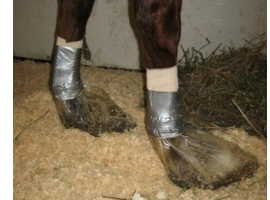
Cryotherapy
What technique, using ice boots, is an important method of prophylaxis against laminitis, such as when it is due to colitis or other conditions?
Lateral Thoracic
What vein can be used for venipuncture in colitis cases if the jugular veins cannot be accessed?
S. typhimurium
Which serotype is the most frequently isolated type of salmonellosis in horses? S. enterica is the species, but this is the serotype. It releases an enterotoxin that stimulates intestinal fluid secretion and activates intestinal wall inflammation, causing neutrophil migration and edema. Risk factors include stress, hospitalization, diet change, surgery, general anesthesia, and antimicrobial use. It is zoonotic and a biosecurity risk.
PCR
What test done on feces is the best method of diagnosis of salmonellosis? It provides the quickest results and is the most sensitive. Fecal cultures can also be done, but require 5 samples, 12-24 hours apart. If this test is done, it requires 3 negatives for full diagnosis.
Clostridiosis
What differential of colitis is caused by infection with either C. perfringens or C. difficile? They are gram +, spore-forming, anaerobes, and are part of the normal gut and environment. If the gut is imbalanced (stress, immune therapy, antibiotics), they can overgrow and produce toxins. Diagnosis is via hemorrhagic diarrhea and characteristic smell, or using culture (difficult and only suggestive). Identifying toxins in feces is also a possible test, either ELISA for enterotoxin A or PCR for genes inducing toxins A and B.
Hypersecretory
What type of diarrhea is produced in clostridiosis colitis?
A
Clostridiosis can be diagnosed using ELISA to look for what enterotoxin produced by the bacteria?
Yes
Can erythromycin, azithromycin, clarithromycin, TMPS, ceftiofur, oxytetracycline, doxycycline, and neomycin help to cause diarrhea?
N. risticii
What bacteria is the causative agent of Potomac horse fever? It is carried by flukes infecting aquatic insects, usually infecting horses near fresh water in warm seasons. Early disease lives in monocytes damaging the LI and lamina propria, and late disease causes fibrinous necrotizing typhlocolitis, causing severe mucosal ulceration. Laminitis is a common sequelae. It can cause diarrhea (60%), laminitis (30%), abortion, or may be subclinical. Fatality rates are 5-30%. Prevention is by decreasing standing water, and vaccine for endemic area horses in early spring.
Oxytetracycline
IV administration of what antibiotic (diluted) is the main treatment for Potomac horse fever? Fluids and support are also important, plus prophylaxis for laminitis. Diagnosis is using presumption in endemic areas, PCR for antigen in blood/feces, serology (paired titers 2 weeks apart for 4 fold increase), and possible culturing.
Grain Overload
What condition occurs due to inappropriate pre-cecal digestion, when not enough amylase is produced in the SI and too much CHO are passed to the cecum? Proliferation of bacillus, lactobacillus, and streptococcus can then appear, producing lactate/proprionate and decreasing the cecal pH to 6. Signs include cecal/colon dysmotility, colic, laminitis, distention, GI ileus, endotoxemia, and diarrhea. Treatment is with gastric lavage (if within an hour), oil/charcoal with NGT, anti-endotoxemic therapy, laminitis prophylaxis, and dyspnea treatment with cecal trocharization if needed.
Cantharidin
What type of toxicosis occurs due to ingestion of blister beetles in alfalfa bales? This toxin can cause clinical signs even if only 4 beetles are eaten, and acts as a mucosal vesicant, is absorbed by the GI tract, and is excreted in urine. Signs include mucosal irritation, salivation, colic/diarrhea, hematuria, stranguria, and decrease in Ca/Mg. Diagnosis is with identifying beetles in hay, or HPLC identification of the toxin in urine or gastric contents.

Coronavirus
Equine enterocolitis caused by what viruses will present with clinical signs including fever, lethargy, and diarrhea in adult horses? Infections are usually self-limiting and can cause complications. Diagnosis is with PCR of feces and treatment is usually not needed.
Salmonella
Chronic infection with what bacterial genus (species typhimurium and newport) can cause diarrhea with prolonged fecal shedding after the acute phase of illness? 1-17% of animals are carriers, and do not have risks from infection, but can be a continuous source of infection to other horses. Diagnosis for both acute and chronic variants is the same (fecal PCR).
Sand
What type of enteropathy occurs in areas with this type of soil, and it is ingested in normal grazing or from ground feeding? It causes mechanical irritation of colonic mucosa, diarrhea that is not severe (can be intermittent), and can also cause obstruction or colic. Diagnosis is with a wave sound on auscultation, fecal float, ultrasound, or x-ray of ventral abdomen. Treatment is with oral/IV fluids, NSAIDs, removing it over time (mineral oil), Psyllium/metamucil administration, and surgery in rare occasions. Complications include endotoxemia and laminitis. Prevention is through keeping hay in racks/bins, using mats under food, avoiding overgrazing, and using prophylactic psyllium.

Right Dorsal
Colitis in which part of the large intestine/colon can occur due to NSAID toxicity (mainly phenylbutazone)? It can cause mucosal ulcers through inhibition of the cyclo-oxygenase pathway of the arachidonic acid cascade, decreasing prostaglandins. These regulate mucosal blood flow in the stomach, colon, and kidney, with individual variation in sensitivity. Ulcers will mainly be seen only in this tissue, as well as protein-losing enteropathy, and acute or chronic intermittent colic. Acute signs include colic, endotoxemia, and variations based on ulcer size. Chronic signs include edema, PLE, and diarrhea. Diagnosis is with history of NSAID use, albumin loss, neutropenia, elevated fibrinogen, and thickened RDC wall (supportive). Treatment is by discontinuing NSAIDs, supporting the colitis, restricting long stem fibers, giving pelleted complete feeds, and giving corn oil (aids mucosal healing) and synthetic prostaglandins (not in pregnant mares). Opioids, 2% lidocaine CRI, and exploratory laparotomy may also be needed.

Guarded
What prognosis does RDC colitis have in horses? It is based on possible complication development.
Cyathostomes
What group of intestinal parasites in horses are small strongyles which live in the colon as adult worms and encyst in the gut wall, causing damage and diarrhea when the larvae hatch out? Hatching usually occurs in late winter and early spring. Diagnosis is with FEC/FECRT, hypoproteinemia, and response to deworming (moxidectin, ivermectin, fenbendazole, pyrantel).
Moxidectin
What drug has the least resistance from cyathostomines and is also able to kill encysted larvae if given in winter, which ivermectin cannot?