GOTHIC ART and ARCHITECTURE & ITS SPIRITUAL DIMENSION
 Call Kai
 Learn
 Practice Test
 Spaced Repetition
 Match
 Flashcards
 Knowt Play
1/8

There's no tags or description
Looks like no tags are added yet.
9 Terms

Monastery church of St. Denis, (near Paris) choir built under Abbot Suger, 1140-
1144
(rib vaults, pointed arches, stained glass, jamb statues)
Saint. Dionysus miraculously stood up from his grave and walked with his head in his hands
Saint Denis is in his honor and became the French Royal Church, the very symbol of the monarchy
Stained glass windows let in divine lux nova
Rib vaults from pointed arches spring from slender columns
Used exceptionally light rib vaults to get rid of walls between the radiating chapels in the ambulatory
Burial place of French kings

Chartres Cathedral, 1145-1220, Chartres, France
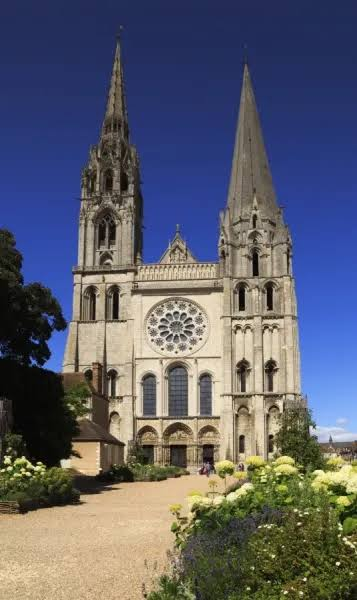
Chartres Cathedral, 1145-1220, Chartres, France
-West facade, 1145-1170, with later changes
- facade maintains the fortress-like look of St. Denis and other Romanesque churches

Chartres Cathedral, 1145-1220, Chartres, France
Nave, 1194-1220
compound piers -cylindrical core surrounded by four engaged colonnettes
rib vaults create a uniform rhythm leading down the nave
large clerestory

Chartres Cathedral, 1145-1220, Chartres, France
-Stained glass windows (lux nova)
colored light filtering through stained glass is a manifestation of god’s presence and grace
features a large rose window
cobalt blue and ruby red create a mystical intherior bathed in light - feels otherworldly

Chartres Cathedral, 1145-1220, Chartres, France
Royal Portal, west facade, c. 1145-1155
- Jamb figures of Old Testament kings and queens, ancestors of Christ
- Tympana: Ascension of Christ, Christ in Majesty, Virgin and Child
- entrance called Royal portal because of the sculptures of kings and queens who flank it
On Virgin and Child:
- seven female personifications of the liberal arts, which celebrates the revival of classical scholarship
- leading intellectuals of the era believed that human knowledge led to true faith
On Ascension of Christ:
surrounded with angels and prophets, christ’s majesty
On christ in majesty:
shows christ during second coming (apocalypse) framed by symbols of four evangelists
apostles below
- The Royal Portal proclaims the majesty of Christ

Chartres Cathedral, 1145-1220, Chartres, France
South transept portal 1210-20
-Jamb figures: Sts. Theodore, Stephen, Clement, and Lawrence
- unlike the column bound figures of the West facade Royal Portal, the Jamb figures have their own pedestals, asserting their independence from the masonry behind them
- St. Theodore has classical contrapposto, giving his body an organic weight beneath the drapery
- each saint had individual features and varying ages that show an increasing Gothic interest in human emotion and the individual

West façade of Reims Cathedral, c. 1225-99
-Sculptures of the Annunciation and Visitation from the West portal, c. 1225-
1245
The facade reveals High Gothic architects’ desire to replace heavy masonry with intricately framed voids
Stained glass, not stone reliefs, fill the three tympana
The site of French king coronation
The details seem to be stretched, they are taller, narrower, and more intricately decorated
Statues and reliefs of the west facade celebrate the virgin Mary
The support columns for the stone reliefs are virtually nonexistent, a sharp contrast to the Early Gothic Royal Portal
Statues carved by multiple sculptors as it took many decades to complete cathedrals
The biblical figures gesture and engage in dialogue

Hours of Jeanne d’Evreux, Paris, 1325 by Jean Pucelle
Primarily done in shades of gray with occasional splashes of color, meant to mimic sculpted Gothic ivory and reliefs
Marginal illustrations with animals, fantasy creatures, street performers, etc
Commissioned by King Charles IV for his queen