Musculoskeletal disease in ruminants SDL (NMSK)
 Call Kai
 Learn
 Practice Test
 Spaced Repetition
 Match
 Flashcards
 Knowt Play
1/18

There's no tags or description
Looks like no tags are added yet.
19 Terms
welfare implications of musculoskeletal disease in cows
pain + increased fracture risk
Consumer or milk buyer concerns of musculoskeletal disease in cows
decreased milk production due to pain/ illness
Financial cost to the business (farmer) due to musculoskeletal disease
vet treatment cost
how many days difference is there between calving and first service for cows due to lameness
3-8 days
how many days difference is there between calving and conception for cows due to lameness
11-12
how many days difference is there between “spent open“ period for cows due to lameness
28 days
average cost of lameness treatment
£180-£15000

lameness factors
environmental factors
managerial factors
individual cows
environmental factors
stall features,
flooring surface,
feed alley dimensions,
amount of rainfall (for cows on pasture)
Managerial factors:
stocking density,
handling practices along the tracks or alleys,
prolonged time spent standing while waiting to be milked,
timing of treatment relative to lameness diagnosis,
access to outdoor areas for cows housed indoors,
hoof-trimming practices, and hygiene
Individual cow factors:
low and rapid loss of body condition; history of lameness events; breed; parity; and extreme behavioural, metabolic, or conformational changes
Create a list of possible causes of musculoskeletal disease in farm animals which may lead to lameness.
diet
genetic
trauma
arthritis
fractures
dislocation
cuts
bruises
viruses
bacteria
foot rot
Lameness that does not originate from the hoof can be due to trauma, arthritis, muscular ruptures, and neurologic diseases. In beef cattle, foot rot commonly accompanies musculoskeletal injuries as a result of
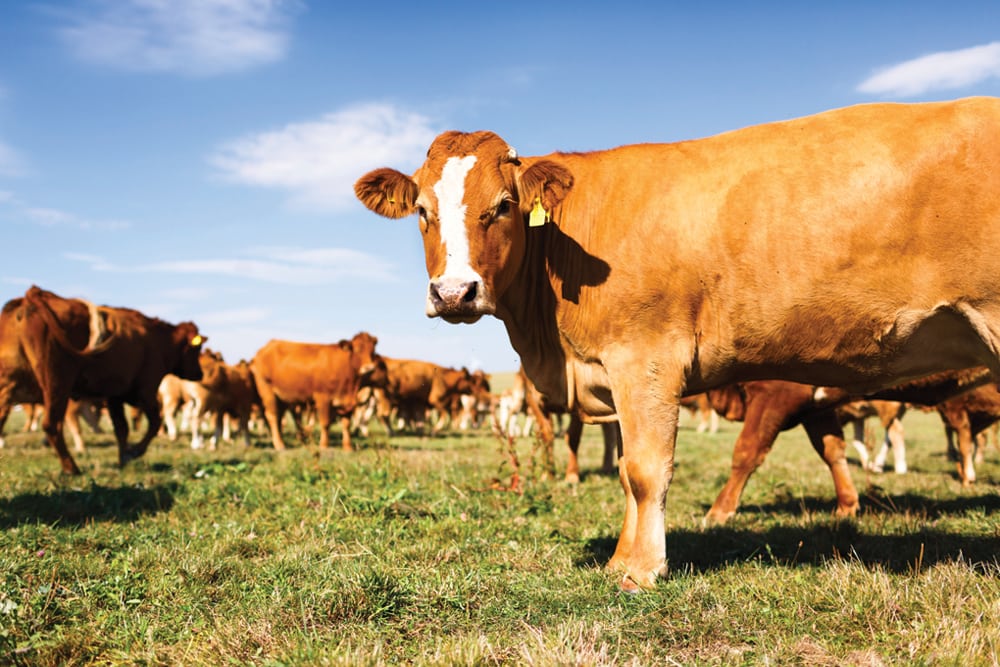
handling, restraint, and transportation. Upper leg lameness is more common in beef cattle compared to dairy cattle. Both diagnosis and treatment are more difficult than in cases of lower limb lameness. Lameness in beef cattle may be the second most treated condition in beef cattle, after respiratory disease. Despite increased awareness of its importance and impact, lameness in beef cattle has not been a focus of research in the industry in the same way it has for dairy cattle, nor have standards been developed at the industry level for beef cattle as intensively as they have for dairy cattle.
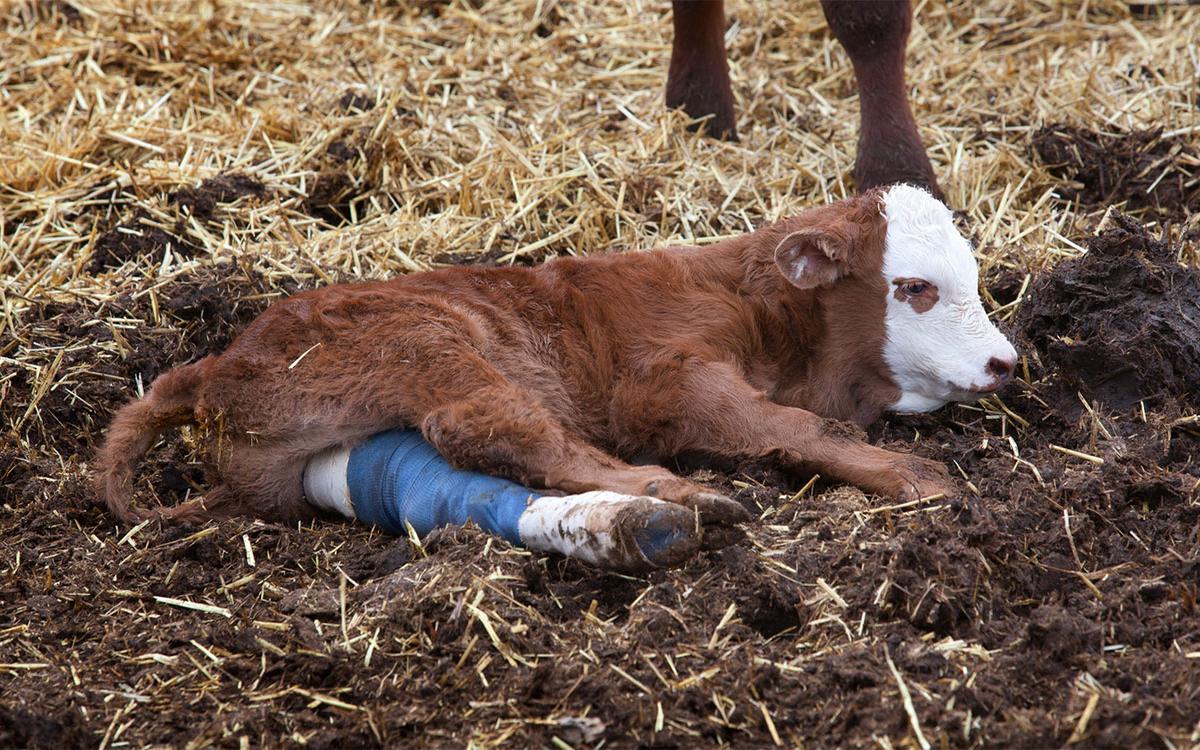
Despite causing significant production losses and welfare concerns the incidence of lameness is often underestimated in beef herds.
Septic arthritis, or joint infection, is common in all breeds of cattle and can be life but is most commonly seen in young calves as secondary infections to umbilical infections shortly after birth from 0 to 90 days of age. Mycoplasma arthritis is common in growing calves 3–6 months of age. The tarsus and carpus are the most commonly affected joints. Mycoplasma arthritis is less common in dairy cattle than in beef cattle. Mycoplasma arthritis has been found in many herds with Mycoplasma mastitis cases or in from respiratory infection.
In young lambs, Actinobacillus seminis causes polyarthritis, as do Chlamydophila (Chlamydia) psittaci and Erysipelothrix rhusiopathiae (insidiosa). Erysipelas arthritis can follow docking, castration, or navel
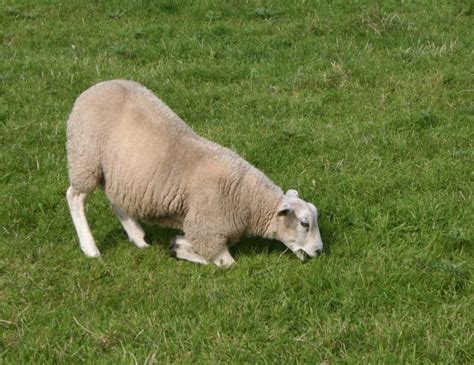
infection. In mature goats, caprine arthritis and encephalitis virus is an important cause of septic arthritis. In young goats, Chlamydophila (Chlamydia) pecorum (reclassified from Chlamydophila psittaci) and Mycoplasma mycoides are frequent causes. Limb fractures are also common in young lambs, which are frequently injured inadvertently by adults.
Causes such as fractures, dislocation, nerve damage, arthritis and cuts and bruises are important causes of lameness. The huge majority of lameness in dairy cattle is associated with problems in and around the foot.
mobility scoring
pros and cons of mobility scoring
pros: able to see if they are lame
cons: subjective
how many UK dairy cattle are in category 2 lameness
20%
how many UK dairy cattle are in category 3 lameness
5%
how many UK dairy cattle are in category 2+3 lameness
25%