ch5 Muscle (10), smooth, Nervous Tissue (12)
 Call Kai
 Learn
 Practice Test
 Spaced Repetition
 Match
 Flashcards
 Knowt Play
1/11

There's no tags or description
Looks like no tags are added yet.
12 Terms
Muscle Tissue function
body/organ movement, posture, comms, heat product
Muscle Tissue characteristics
Contractility (shorten to produce movement)
Excitability: Respond electrical signals
Elasticity & Extensibility: Can stretch beyond resting length, snap back into shape
Conductivity: transmit an electrical signal (an action potential) along the cell membrane

skeletal muscle fiber nucleus

nucleus cardiac muscle fiber

intercalated disc (cardiac muscle)
contain numerous desmosomes and gap junctions
Between cardiac muscle fibers
Mechanical connection b/w adjacent cardiac muscle cells
Electrical connection b/w adjacent cardiac muscle cells, providing for spread of polarization impulses throughout myocardium

branched cardiac muscle fiber
Involuntary contraction of myocardium
Contraction maybe modulated by autonomic nervous system

smooth muscle fiber
walls hollow internal organs and tubes (stomach, intestines, urinary bladder, uterus, respiratory airways, blood vessels)
Spindle-shaped muscle cells with tapered ends
Each fiber has single, centrally-placed nucleus
Fibers tightly packed and arranged in staggered arrays

neuron nucleus
soma
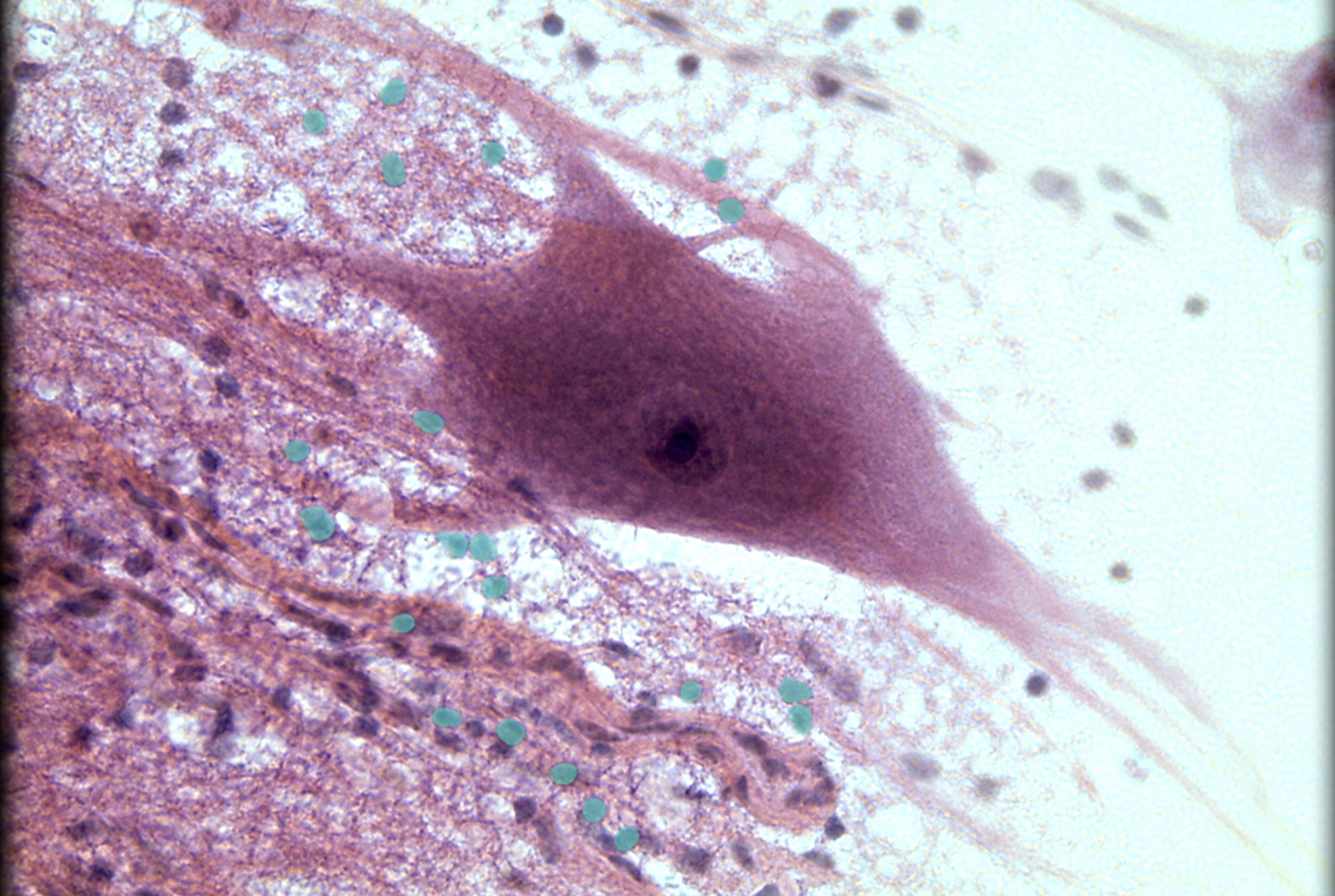
glial cell neuron
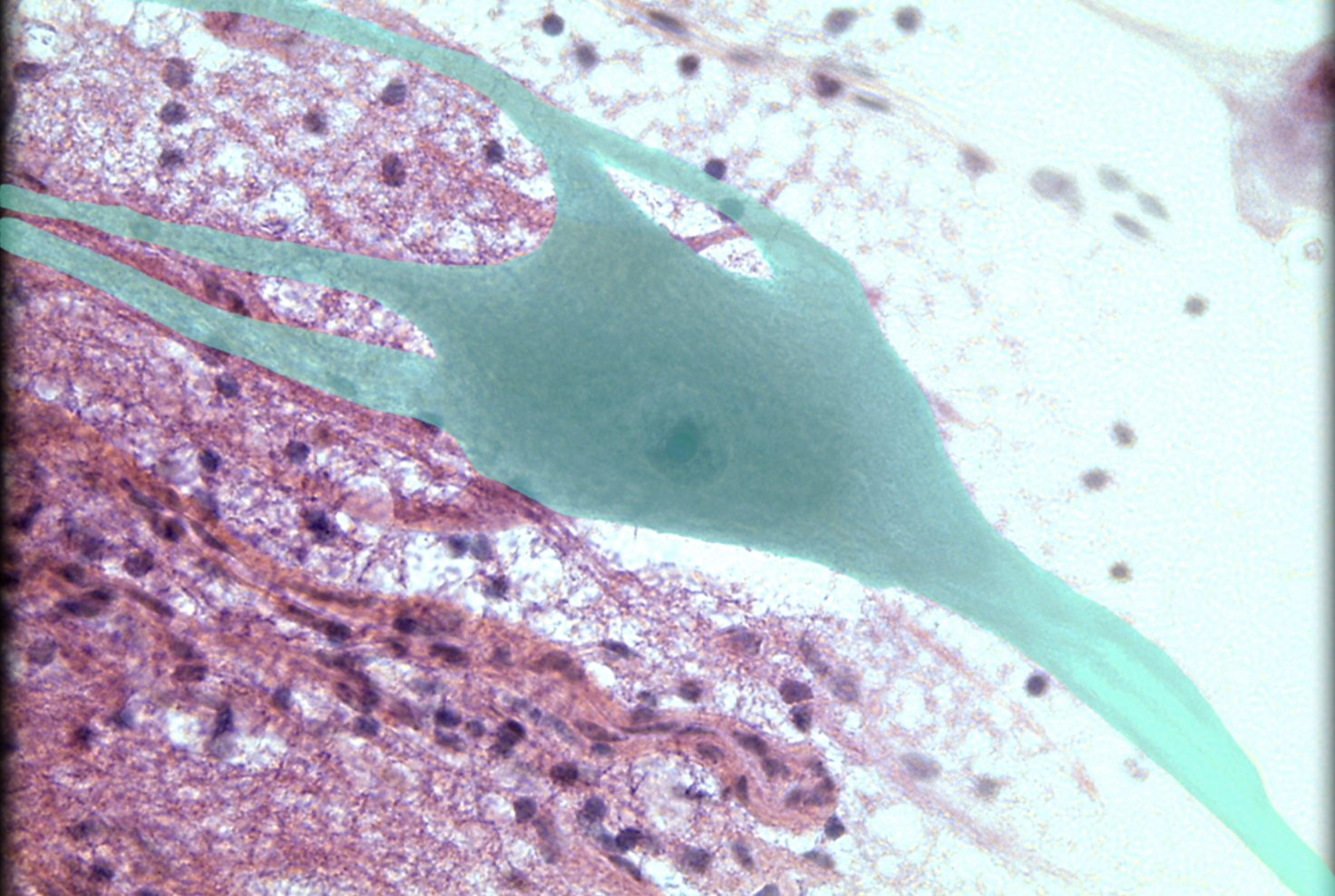
neuron
Generate, conduct, receive nerve (electrical) impulses
Axons direct information AWAY from soma
Dendrites direct information TOWARD soma

dendrite
direct info TOWARD soma

Axon
direct info AWAY from soma