biomechanics- both lectures
 Call Kai
 Learn
 Practice Test
 Spaced Repetition
 Match
 Flashcards
 Knowt Play
1/91

Earn XP
Description and Tags
lectures given 10/23/2026
92 Terms
tldr
application of force → tissue response → orthodontic movement
what are the principles of biomechanics?
prolonged pressure applied to a tooth → movement will occur
bone is removed in areas of pressure and added in areas of tension
tooth moves through the bone carrying its attachment apparatus with it
tooth movement is primarily a phenomenon of the PDL
biological basis of orthodontics
tooth movement is a function of the periodontal ligament
no PDL = no movement
why do implants and ankylosed teeth not move?
no PDL
are endo treated teeth or teeth wtih open apices are contraindicated to ortho movement?
no! they have a PDL, so they can be moved
how long does the reorganization of PDL fibers take post-ortho tx?
3-4 mo
how long does the reorganization of collagenous fibers (gingival fiber network) take post-ortho tx?
4-6 mo
how long does the reorganization of elastic/supracrestal fibers take post-ortho tx?
1 year
what are the principal fibers of PDL?
transseptal (cause rotational replapse)
alevolar crest group
horizontal
oblique (majority)
apical
interradicular
what factors affect tooth movement?
manner of force application- continuous (NiTi wires), interrupted (invisalign), and intermittent
amount of force- light/heavy
duration force
direction of force
occusal function
age
threshold for tooth movement
prolonged application of force is necessary for tooth movement- minimum for duration of force is 4-6 hrs (important consideration for removable appliances)
if less than 4 hrs you won’t get movement
greatest efficiency with up to 24hrs/day- fixed appliances more efficient than removable
initial strain/primary displacement
1-3 days
occurs at tissue level
compression of PDL
bone bending
creates area of pressure/tension
compression/tension of blood vessels
compression → resorption of bone
tension → deposition of bone
lag phase
2-10 weeks
may be longer with heavy forces
cellular recruitment
neovascularization
cell differentiation
PDL reorganization
lag phase- body treats it like a traumatic event (except with hyalinization)
secondary tooth movement
after lag phase + on
cellular recruitment
pressure areas = resorption of bone by osteoclasts
tension areas = deposition of bone by osteoblasts
frontal resorption
undermining resorption
undermining resorption
width of PDL maintained
rate of tooth movement gradually increases
pressure
PDL fibers and bone are compressed
tension
PDL is stretched
force magnitude
blood vessels in PDL are compressed
partial occlusion force magnitude
lower relative forces
blood vessels adapt to new environment
localized angiogenesis to bypass occluded areas
absolute occlusion force magnitude
heavier forces
complete occlusion of blood flow
cells die/hypoxic areas/necrosis of immediate area
hyalinization
loss of organization
frontal resorption
light force applied → cells from PDL go onto surface of alveolar bone
osteoclasts from within the PDL resorb front of bone
happens between root and lamina dura
light force- smooth continuous tooth movement
movement occurs within 3-4 days
undermining resorption
heavy forces- even more pressure and even more compression of ligament
occurs on the outer surface of lamina dura
pressure is too much for cells to be recruited
ligament loses cellular organiztion = hylinization, hypoxic appearance, necrosis
body resorbs by cells generated from the marrow spaces away from it in underlying bone
aka resorbing from the inside
delay in tooth movement (7-14 days)
clinical characteristics of optimal force
produces rapid tooth movement
minimal pt discomfort
lag phase of tooth movement
no marked mobility of tooth
histological characteristics of optimal force
maintained vitality of teeth
initiated maximal cellular response
produces frontal resorption
initial phase of bone remodeling in relation to ortho
rapid tooth movement
a few days
displacement of tooth in periodontal space
lag phase of bone remodeling in relation to ortho
no/low displacement rate
possibly due to hyalinization
possibly due to time required for absorption of thicker compact bone of lamina dura
heavy forces → considerable lag phase
post-lag phase of bone remodeling in relation to ortho
rate of tooth movement gradually/suddenly increases
static
forces on bodies at rest (teeth)
kinetics
forces on bodies in motion (accelerating at/changing certain velocity)
force = mass x acceleration (in gravity)
requires two bodies
defined by Newton’s
vectors
have magnitude and direction; all orthodontic forces are vectors
priniciple of transmissibility
external forces acting on a tooth is independent of where along the line it is applied
ie the tooth will move the same with a force pushing from the buccal as pulling from the lingual
newton’s first law
inertia and equilibrium
object at rest stays at rest/object in motion stays in motion unless acted upon by outside force
all ortho systems are at equilibrium / the body is said to be at equilibrium
newton’s second law
F = MA; A=F/M
force depends on magnitude of mass of body and direction of which it acts
acceleration is change in speed over time
newton’s third law
every action has an equal and opposite reaction
center of resistance (Cres)
point at which a force will produce movement so that all points on the tooth move in parallel, straight lines (translation)
depends on bone level and root length
moves apically with perio disease
for healthy single rooted teeth → 1/3 from apex
for molars → at the furcation
center of rotation (Crot)
the pivot point, the point about which a tooth will rotate
is NOT an anatomic point
the orthodontist controls the center of rotation
how do you find the center of rotation?
superimpose the two positions of the tooth, draw a line through the long axis of each, where the lines intersect
can be within tooth structure or outside of it
how is rotational movement created?
ortho forces are applied at the crown, not through the Cres of the tooth
how can you move teeth around Crot?
crown lingual/root buccal
crown lingual/apex still
translation along the line of force
movement of the force
tendency of a force to produce rotation
because brackets/attachments are on crowns and not at the Cres orthodontic forces are acting at some distance from Cres
the further the force is from Cres, the bigger the moment
moment (Mf)
force x distance from Cres
units = gram x mm
direction of the moment
take the line of force and draw it around Cres → that is the direction of the moment
t/f forces in opposite directions can cause moments in the same direction
true
t/f you can put 2 forces on a tooth so the moments cancel to get translation
true
what is the optimum force for intrusion?
10-20g
what is the optimum force for tipping, rotation, extrusion?
35-60g
what is the optimum force for root uprighting?
50-100g
what is the optimum force for translation?
70-120g
couple
two equal and opposite non-colinear forces
the only thing that can cause PURE rotation
can never move Cres
moment of a couple
couples result in pure rotation about the center of resistance regardless of where the couple is applied on the object
applied moment
couples
edgewise appliances
allow us to create couples in 3 planes of space
types of tooth movement
tip, translation, torque (root movement), rotation
results from the application of moments and forces
uncontrolled tipping
apply forces at bracket, crown moves lingual, apex moves labial (tip and apex move in opposite direction)
Crot = Cres
simplest movement to produce
greatest stress at crown and apex
controlled tipping
forces moved closer to Cres, only the crown moves
Crot is at the apex
system of forces
force AND couple- force to move crown, couple to control apex position
minimal stress at apex
greatest movement occurs further away
translation
line of force right through Cres (Crot at infinity)
Crot = at infinity
bodily movement
single force at Cres
stresses uniformly distributed along the root
root and crown move the same distance in the same direction Crot at infinity
torque
line of force is above
Cres/the whole thing reverses
Crot a the crown and the root moves
root movement
change in tooth’s axial inclination
greater stress at apical portion
rotation
pure rotation requires a couple
if single force is used → Crot is outside of tooth
no net force acts at Cres
viewed from the occlusal
anchorage
goal- maximize desired tooth movement while minimizing undesirable side effects
resistance to unwanted tooth movement
teeth themselves have the ability to resist movement although vary greatly in their ability to do so
these differences are due to variations in their root surface area- more surface area → more resistance to movement
intraoral- intra-arch or inter-arch
extraoral
intraoral anchorage
TPA- transpalatal arch
lingual arch
nance appliance
lip bumper
TAD- temporary anchorage device
inter-arch elastics
TPA- transpalatal arch
connects maxillary 1st molars
creates an anchor unit of the collective 6 roots

lingual arch
resists mesial movement of mandibular 1st molar
contoured to lingual surface of incisors

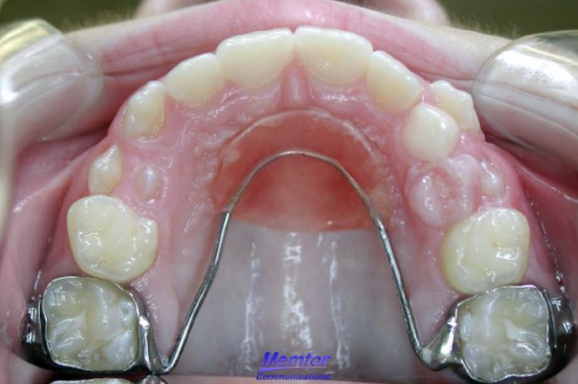
nance appliance
resists mesial movement of maxillary 1st molars
acrylic button on anterior portion of palate
lip bumper
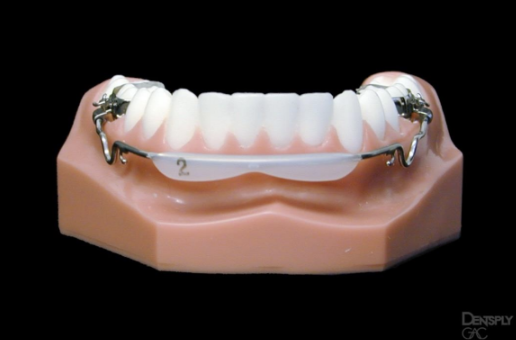
resists mesial movement of mandibular 1st molars, can get distal movement
acrylic bar anterior to incisors
lingual pressure from lip musculature gives posterior pressure
inter-arch elastics
have horizontal and vertical vectors

extraoral anchorage
headgear
usually paired with TPA or expander
provides a distal force
can also provide superior or inferior force depending on design

orthodontic forces
move teeth
lighter forces
think grams
orthopedic forces
move bones
heavier forces- 500g (1lb or more)
think pounds
treat skeletal discrepancies
application to maxilla or mandible
maxilla and midface orthopedic forces
maxillary expansion
restrain growth
augment growth
mandible orthopedic forces
restrain growth
augment growth
maxillary dental expansion
correct dental crossbite
tipping teeth buccally
no orthopedic effect (single light forces)
can be achieved with archwires alone
maxillary palatal expansion
rapid palatal expansion (RPE)
corrects skeletal crossbites
expansion occurs mostly at midpalatal suture
heavy orthopedic forces
palatal suture during growth- infancy to early childhood
primary dentition
straight line
contraindication for expansion

palatal suture during growth- childhood
early mixed/mixed dentition
interdigitation
easy to open
most appliances will work

palatal suture during growth- early adolescence
complex interdigitation
most common sequelae for RPE in adult pts = gingival clefting (recession)

methods of maxillary palatal expansion
haas appliance- soft and hard tissue borne
hyrax appliance- fully tooth borne, will get some dental expansion, 30% skeletal opening
rapid palatal expansion
suture opening
non-parallel
more pronounces anterior and inferior- triangular
occusal- base is anterior
frontal- base is inferior
age limit- suture fusion, mid/late teens
must be stabilized for 4-6mo to re-establish suture (25%) relapse
MARPE
mini-screw assisted rapid palatal expansion
use of TADs (temporary anchorage devices)
best for adult pts after sutures have fused
70% skeletal opening

SARPE
surgically assisted rapid palatal expansion
incisions to release the maxilla
incisions to release the midpalatal suture
best for adult pts after sutures have fused who require 10+mm of expansion
highly stable (10-15% relapse)

restrain maxillary growth
excessive maxillary growth → class II
prognathic maxilla
forces designed to oppose natural growth
as maxilla is restricted, allows for mandibular growth to catch up
corrects max/mand discrepancies
headgear
cervical pull headgear
restrain maxillary growth

high pull headgear
restrain maxillary growth

straight pull headgear
restrain maxillary growth
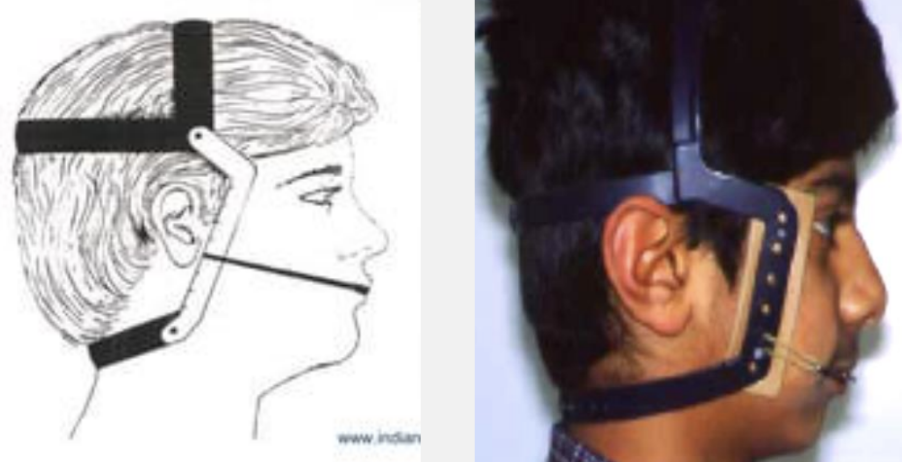
dental effects of cervical pull
down and back
extrude and translate
dental effects of high pull
up and back
intrude and translate
dental effects of straight pull
translate
augment maxillary growth
insufficient maxillary growth → class III
retrognathic maxilla
forces follow natural growth direction → down and forward
reverse pull headgear- facemask
reverse pull headgear
500-1000g (1-2lbs)
at least 14 hrs a day
RPE recommended- mobilizes maxillary complex
side effects- proclination U incisors, retroclination L incisors, soft tissue irritation

restriction of mandibular growth
excessive mandibular growth → class III
prognathic mandible
forces oppose natural growth direction
hold mandibular growth
very controversial
chin cups

augment mandibular growth
insufficient mandibular growth → class II
retrognathic mandible
forces follow natural direction of growth
advance mandible
functional appliance- herbst, MARA, twin block
herbst, MARA, twin block
class II correctors
designed to posture mandible forward when pt occludes
part skeletal/part dental correction- varies between appliance
