Mammals of the World 4
 Call Kai
 Learn
 Practice Test
 Spaced Repetition
 Match
 Flashcards
 Knowt Play
1/39

There's no tags or description
Looks like no tags are added yet.
40 Terms
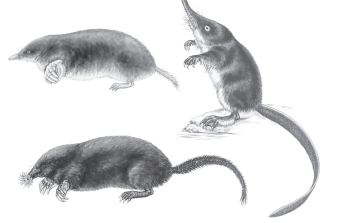
Family Soricidae
Shrews: 2 condyles on condyloid process of lower jaw, no zygomatic arch, no ossified auditory bullae, upper incisors hookes and large with cusp at base
Family Talpidae
Moles: highly modified manus for fossorial lifestyle, complete zygomatic arch, auditory bullae present, simple incisors
Family Pteropodidae
Flying fox, OW fruit bats: (does NOT echolocate) post-orbital process present, second digit of forelimb relatively free of third digit and usally clawed
Family Phyllostomidae
Leaf-nosed bats: (echolocates) leaf nose present, skull very diverse but always has a closed (unseparated) premaxilla
Family Molossidae
Free tailed bats: (echolocates) tail extends past uropatagium, skull can have either open (seperated) or closed (unseparated) premaxilla
Family Vespertilionidae
Common bat: (echolocates) has well developed tragus (ear thing) premaxilla is always open (seperated)
Family Manidae
Pangolin: overlapping keratin scales, edentate, no jugal or interparietal bone, palate does not extend past the pterygoids (compared to Myrmecophagidae)
Family Felidae
Cats: no alisphenoid canal (AC), relatively short rostrum, carnassials well developed, very few cheek teeth (3-4), tiny last upper molar
Family Herpestidae
Mongooses: AC present, complete postorbital bar, auditory bullae constricted horizontally (compared to Viverridae)
Family Hyaenidae
Hyaenas, aardwolves: no AC, very robust, 5 upper cheek teeth, 4 lower cheek teeth, aardwolves have small peglike cheek teeth for eating termites
Family Viverridae
Civets: AC present, no postorbital bar (compared to Herpestidae), and auditory bullae are constricted diagonally (compared to Herpestidae)
Family Canidae
Dogs, foxes, coyotes, wolves: AC present, AB not constricted, usually 6 or more cheek teeth, last upper molar well developed and transversely elongated (compared to feliforms)
Family Ursidae
Bears: AC present, bunodont cheek teeth, large last molar
Family Mephitidae
Skunks, stink badgers: no AC, last upper molar is square shaped, palate does not extend past tooth row (compared to Mustelidae)
Family Mustelidae
Weasels, ferrets, martens, minks, wolverines, otter, badgers: no AC, last upper molar is “dumbbell” (“8”) shaped, palate extends past the tooth row, mandibular fossa locks condyloid process of dentary (tight temporomandibular joint)
Family Procyonidae
Ringtails, racoons: no AC, carnassials poorly developed, generally 6 cheek teeth, bunodont cheek teeth in racoon, secodont teeth in ringtail
Family Odobenidae
Walrus: upper canines enormous and tusklike, no lower incisors, enormous mastoid process, AC present
Family Otariidae
Ear seals, sea lion: pinnae present, hind limbs capable of forward rotation, AC present, supraorbital process well developed, homodont cheek teeth with one large cusp
Family Phocidae
Earless seals, true seals: pinnae absent, hind limbs cannot rotate, no AC present, homodont cheek teeth with 3 longitudinal cusps
families in order Eulipotyphla
soricidae: shrews
talpidae: moles
families in order chiroptera
pteropodidae: flying foxes; old world fruit bats
phyllostomidae: new world leaf-nosed or fruit bats
molossidae: free-tailed bats
vespertilionidae: common bats
order/clade eulipotyphla recognition characteristics
very small to medium-sized
foot posture usually plantigrade (entire sole of foot flat on the ground)
snout generally elongate
pelage usually consisting of only one kind of hair of uniform length
cerebral hemispheres smooth, lacking complex folding
cheek teeth relatively simple, zalambdodont, dilambdodont, or quadritubercular, with sharp edges to cusps

family soricidae (shews) of order soricomorpha
no zygomatic arch; no ossified auditory bulla; 1st upper incisor large, hoked and with cusp at proximal base of tooth; upper molars tritubercula to quadritubercular with sharp cusps; crowns with W-shaped ectoloph
dental formula: 3/3, 1/1, 3/3, 3/3 = 40


family talpidae (moles) of order soricomorpha
zygomatic arch complete, slender; auditory bull present, incomplete; incisors simple, 1st uppper incisor directed downward and backward; upper molars tritubercular to quadritubercular with sharp cusps; crowns with W-shaped ectoloph
2-3/1-3, 1/0-1, 3-4/3-4, 3/3 = 34-44
order chiroptera recognition of characteristics
forelimb modified for flight, with digits elongate and joined together by a membrane extending to side of body and limbs
sternum usually keeled
glenoid fossa of scapula directed dorsally
knee directed posteriorly owing to rotation of hind limb for support of wing and tail membrane
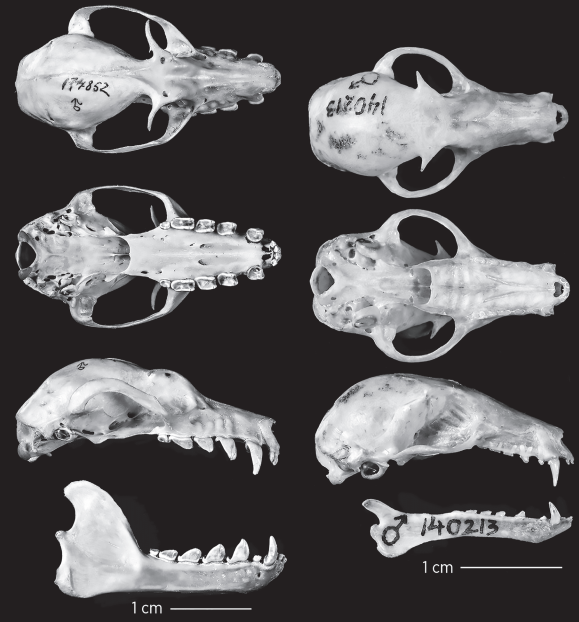
family pteropodidae of order chiroptera
premaxillae with palatal and nasal branches, fused to each other and to maxillae; teeth highly modified for frugivorous diet; incisors small, styliform, somewhat flattened; canines always well developed; cheek teeth simple, crowns low, cusps indistinct, not obviously tuberculate


family phyllostomidae: desmodontinae (vampire bats) of order chiroptera
premaxillae with nasal and palatal branches, fused to each other and to maxillae; no postorbital process; check teeth variable, simple crushing type to tritubercular
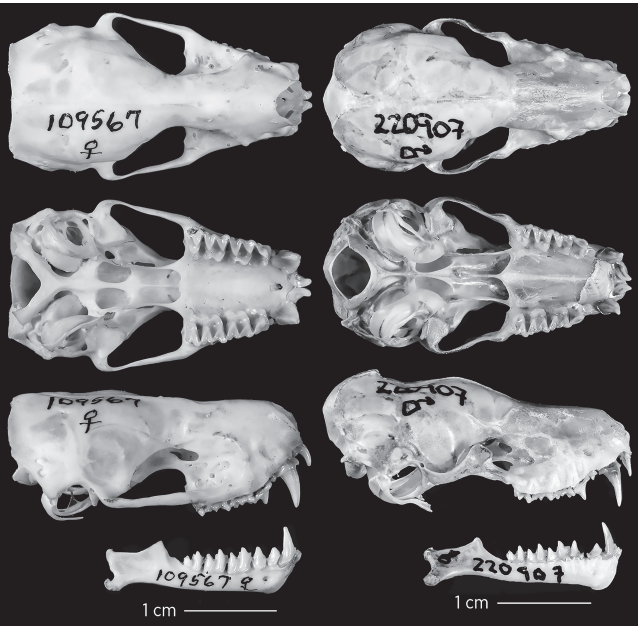
family molossidae (free-tailed bats) of order chiroptera


family vespertilionidae (common bats) of order chiroptera
premaxillae separated, but fused to maxillae, only nasal branches present; no postorbital process; cheek teeth tritubercular


order pholidota; family manidae
body covered with keratinized, overlapping scale-like plates

families in order carnivora, suborder feliformia
felidae: cats
herpestidae: mongooses
hyaenidae: aardwolf and hyenas
viverridae: civets, genets, and relatives
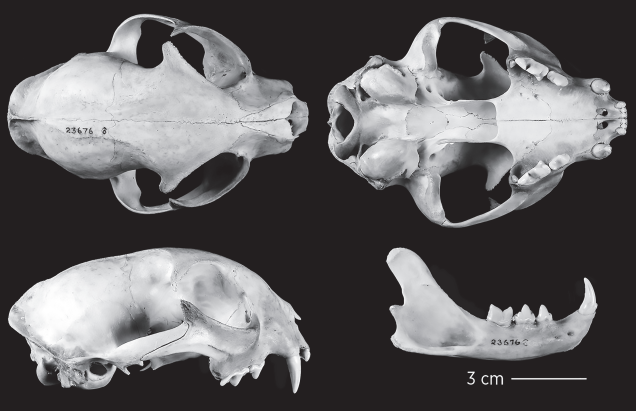
family felidae of suborder feliformia, order carnivora
skull short, rounded dorsally; rostrum very short, blunt; carnassials very well developed, bladelike

family herpestidae of suborder feliformia, order carnivora
skull elongate, rostrum moderately long; median lacerate foramen present; bulla large, auditory tube present; 1st lower incisor slightly out of line or others in row; last upper molar large triangular

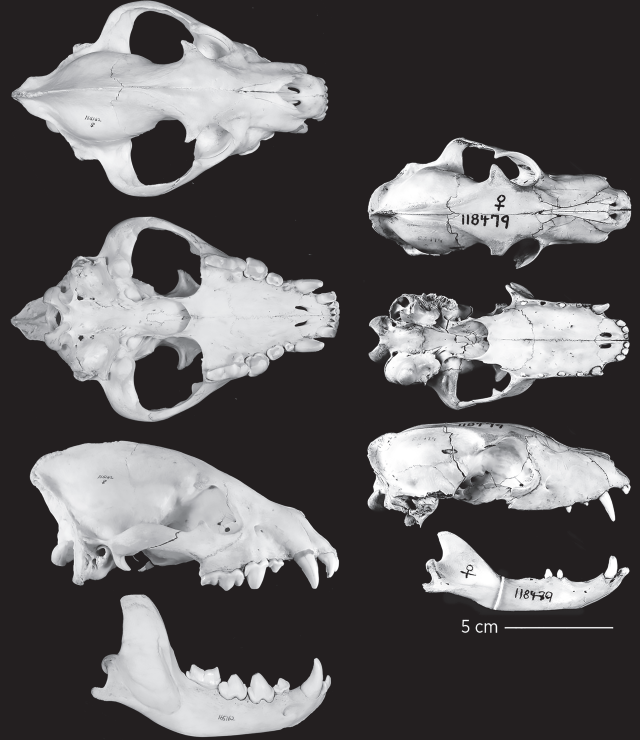
family hyaenidae of suborder feliformia, order carnivora
skulll massive or delicate, rostrum relatively long; upper molar, if present, very small, round or elongate

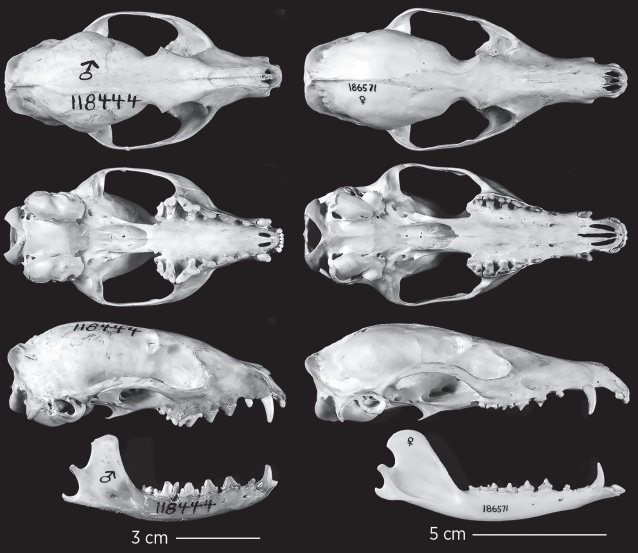
family viverridae of suborder feliformia of order carnivora; civets, genets, and relatives
skull elongate; rostrum moderately long; postorbital procces of frontal present, short and blunt; sagittal crest variable

suborder caniformia
family candiae
family ursidae
family mephitidae
family mustelidae
family procyonidae
family odobenidae
family otariidae
family phoicidae
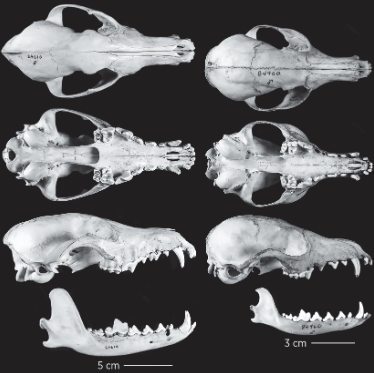
family canidae or suborder caniforma of order carnivora
skull elongate, rostrum relatively, narrow postorbital processes of frontal long; last upper molar relatively large, transversely elongate


family ursidae of suborder caniforma of order carnivora
claws large, curved, nonretractile; carnassial pair bunodont, specialized for crushing rather than slicing; last upper molar very large, elongate anteroposteriorly
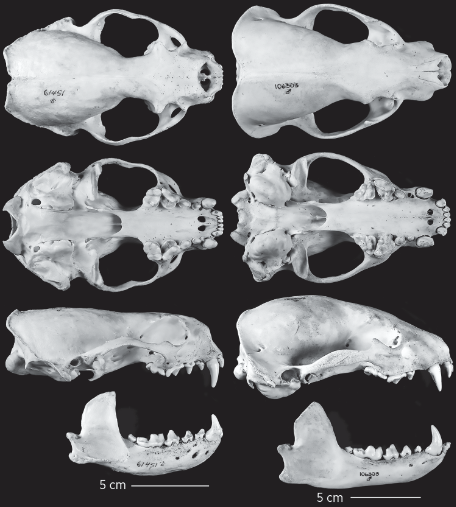
family mustelidae of suborder caniforma of order carnivora
skull blocky, robust, often flattened; rostrum short; postmandiubular process often prominent and curve daround mandibular fossa, often locking lower jaw into place
families in order Pholidota
Family Manidae