(STILL USE)Lesson 89: common drugs for the liver and pancreas
 Call Kai
 Learn
 Practice Test
 Spaced Repetition
 Match
 Flashcards
 Knowt Play
1/45

There's no tags or description
Looks like no tags are added yet.
46 Terms
Glossary of disorders

Management of disorders

Overview of drugs acting on the liver
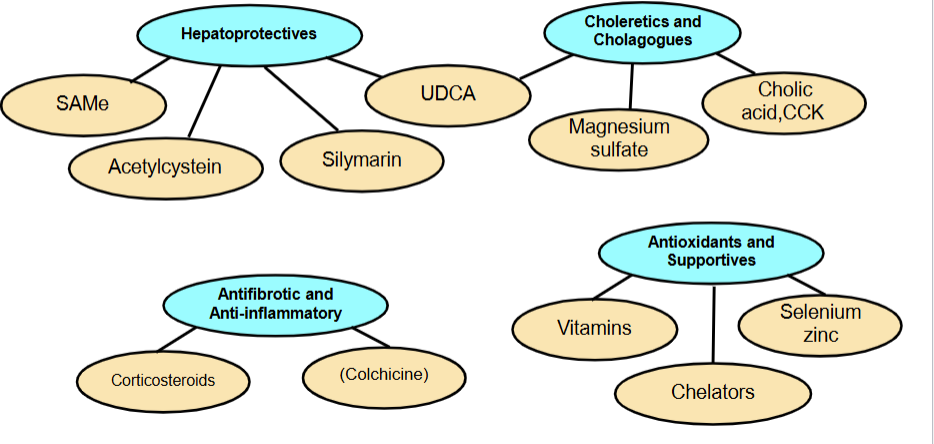
S-adenosylmethionine: Methylation support
donates CH₃ groups for phosphatidylcholine synthesis →stabilizes hepatocyte membranes and promotes bile flow
S-adenosylmethionine: Glutathione synthesis
increases intracellular glutathione (GSH) → major antioxidant protection
S-adenosylmethionine: Mitochondrial protection
maintains membrane potential and reduces apoptosis in hepatocytes
S-adenosylmethionine: Detoxification
enhances conjugation reactions and reduces oxidative and drug-induced injury
S-adenosylmethionine therapeutic uses
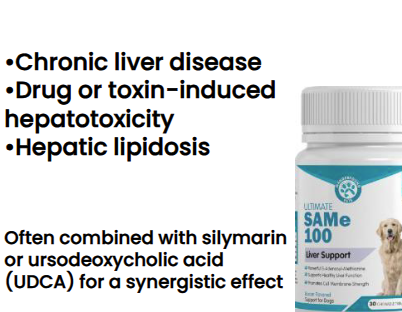
S-adenosylmethionine contraindications
Severe hepatic encephalopathy
Hypersensitivity or intolerance
Gastrointestinal disorders
Ursodeoxycholic Acid (UDCA) therapeutic uses
Cholestatic Liver Diseases
Immune-Mediated and Inflammatory Hepatopathies
Secondary (Reactive) Hepatopathies
Supportive Therapy in Drug- Induced Hepatotoxicity - Intrahepatic Cholestasis in Cats
Ursodeoxycholic Acid (UDCA) contraindications
Complete extrahepatic bile duct obstruction (risk of bile retention and hepatocellular injury)
Use cautiously in animals with severe acute hepatic failure
Silymarin: membrane stabilization
prevents entry of toxins (e.g., amanitin)
Silymarin: Antioxidant effect
scavenges free radicals (ROS) and increases intracellular glutathione
Silymarin: Protein synthesis stimulation
enhances ribosomal RNA formation, promoting hepatocyte regeneration
Silymarin: Antifibrotic and anti-inflammatory actions
inhibits lipid peroxidation and cytokines such as TNF-α, reducing inflammatory and fibrotic processes
Silymarin: Immunomodulation
modulates T-cell and Kupffer cell activity, decreasing immune-mediated injury
N-Acetylcystein Indications
Acetaminophen(paracetamol) toxicity
Other hepatotoxicities(sagopalm, aflatoxicosis, xylitol, NSAIDs, phenobarbital…)
Choleretics
UDCA
(SAMe)
Herbal extracts
Cholagogues
Cholecystokinin (CCK) or CCK analogs
Magnesium sulfate
Certain bitters or oils
Dietary fat
Always exclude extrahepatic biliary obstruction before?
giving any choleretic or cholagogue
Antioxidants and supportives: vitamins
Vitamin E, Vitamin K1-B-complex, Vitamin C, (Vitamin A and D)
Antioxidants and supportive: minerals and others
Zinc, Selenium, L-carnitine
Phosphatidylcholine, Methionine
Taurine (esp. Cats)
Hepatic diets
High- quality, highly digestible protein and carbs(restriction in hepatic encephalopathy)
Increased antioxidants (especially vitamin E), Zinc and L-carnitine supplementation
Adequate caloric density, Moderate fat levels, Copper restriction
Copper Storage Disease therapy
Chelators: D-Penicillamine &Trientine
Zinc salts(acetate/gluconate)
Iron Storage Disease therapy
Deferoxamine (Desferal)
Dietary management
Periodic blood removal
S-adenosylmethionine: target, MOA, effect

Silymarin(milk thistle): target, MOA, effect

Ursodeoxycholic acid (UDCA): target, MOA, effect

N-acetylcystein: target, MOA, effect

Penicillamine, Trientine: target, MOA, effect

Zinc: target, MOA, effect

Treatment approaches for Sago palm toxicity

Overview of drugs acting on the pancreas
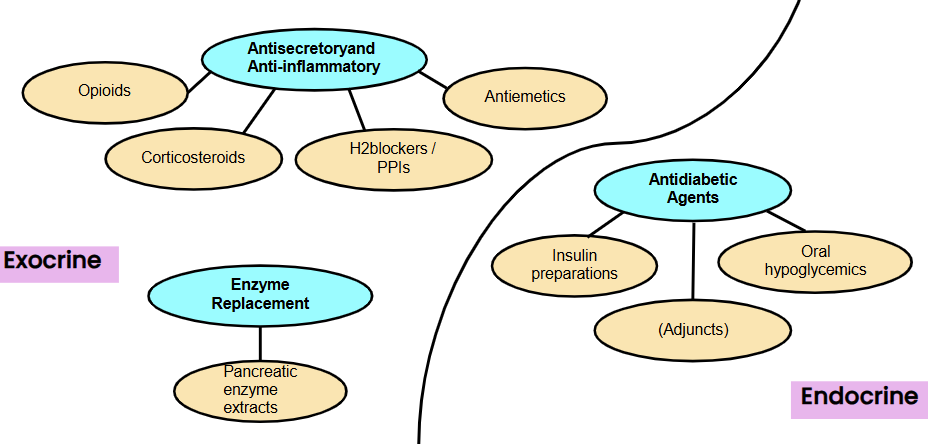
Enzyme Replacement Therapy purpose and MOA
Replaces missing digestive enzymes (lipase, amylase, protease) in animals with exocrine pancreatic insufficiency (EPI)
Mechanism: Exogenous enzymes act in the intestinal lumen, digesting food nutrients when pancreatic secretion is deficient
Enzyme replacement therapy: forms and administration
Main substance: Pancrelipase (from porcine pancreas)
Powder mixed with food (most effective); tablets or capsules may be used → Always given with each meal to ensure enzyme–food contact
Adverse effects: Oral irritation if powder not mixed; rare vomiting or diarrhea
Acute pancreatitis: Analgesia
Methadone, Fentanyl, Hydromorphone(avoid NSAIDs)
Acute pancreatitis: Antiemetics/anti-nausea
Maropitant, Ondansetron, Metoclopramide
Acute pancreatitis: Gastroprotection
Omeprazole, pantoprazole, Sucralfate
Acute pancreatitis: other
Nutrition helpers (if needed): mirtazapine (cats), Capromorelin (dogs)
Antimicrobials (sometimes): e.g., amoxicillin–clavulanate, Metronidazole
Overview of therapy of acute and chronic pancreatitis

Antidiabetic agents
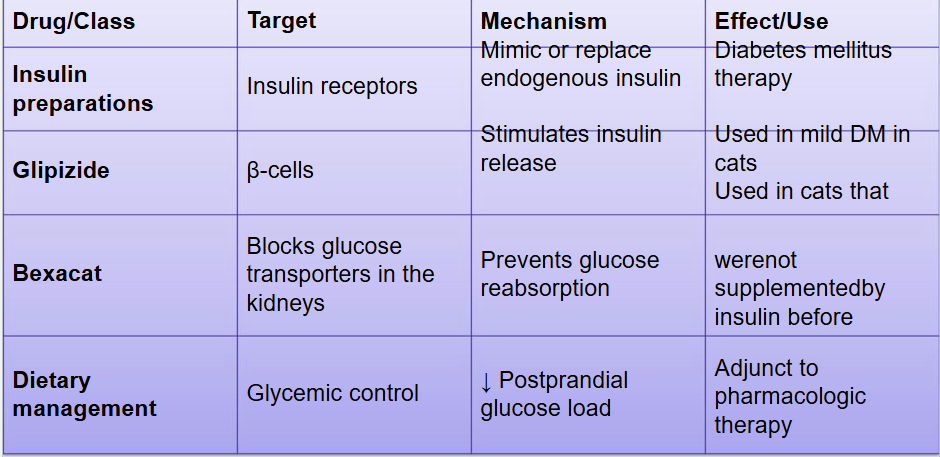
Insulin preparations: replace or supplement endogenous insulin(Can insulin, Glargine, Detemir etc.)
Oral hypoglycemics(cats): Require residual β-cell function(Glipizide- stimulates insulin release from pancreatic β-cells)
Some other (occasional or experimental): Insulin sensitizers (Thiazolidinediones/pioglitazone), incretin drugs…
Bexacat(Bexagliflozin):
Blocks SGLT2 transporters in the kidneys → Prevents glucose reabsorption
Causes glucose to be excreted in urine(glucosuria) → decreased blood glucose levels
Exocrine pancreas drugs

Endocrine pancreas drugs
Feline triaditis
clinical condition in cats characterized by concurrent inflammation across three organ systems:
Biliary system / Liver: Cholangitis or cholangiohepatitis
Pancreas: Pancreatitis (acute or chronic)
Intestine: Inflammatory bowel disease (IBD) of the small intestine
Therapeutic management of feline triaditis
Antibiotics (if a bacterial infection is detected)
Anti-nausea meds, Appetite stimulants (Mirtazapine, Capromorelin)
Gastrointestinal protectants; painkillers (Buprenorphine)
Steroids (to reduce IBD impact)
UDCA, SAMe, vitamin B12