MICROBIOLOGY EXAM 3
 Call Kai
 Learn
 Practice Test
 Spaced Repetition
 Match
 Flashcards
 Knowt Play
1/54

There's no tags or description
Looks like no tags are added yet.
55 Terms

Sigma Factor
Bacterial protein needed to start transcription by enabling RNA polymerase to specifically bind to gene promoters.
N-formylmethionine (fMet)
The first amino acid to be incorporated into a bacterial protein
Terminator
a sequence of nucleotides in DNA that marks the end of a gene or operon and signals RNA polymerase to stop transcription and release the newly formed RNA strand
Codon
a sequence of three consecutive nucleotides in a DNA or messenger RNA (mRNA) molecule that specifies a particular amino acid or signals the start or end of protein synthesi
Anticodon
is a sequence of three nucleotide bases located on a transfer RNA (tRNA) molecule that binds to a complementary codon on a messenger RNA (mRNA) strand during protein synthesis
Signal Sequence
The portion of a newly synthesized protein that directs it to the secretion apparatus, to which SecA binds, is called the ________
Operon
A group of related genes in DNA that are transcribed together to give a single polycistronic mRNA is known as a(n) ________________
cAMP
second messenger molecule used in intracellular signal transduction — relays signals from extracellular-first messengers (like peptide hormones) to target proteins inside the cell.
Antiseptic
An antimicrobial substance applied to living tissue, such as skin or mucous membranes, to destroy or slow the growth of microorganisms and prevent infection.
Disinfectant
Chemical agent used on non-living objects and surfaces to destroy or inactivate up to 99.9% of harmful microorganisms, including bacteria, viruses, and fungi
How to figure out the MIC of an antimicrobial?
In an Agar plate — The MIC is the lowest concentration of the antimicrobial agent that completely prevents visible growth compared to the control plate
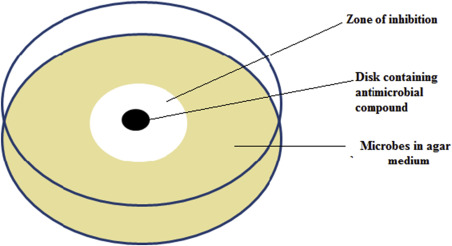
How to figure out which antimicrobial agent is most effective using the agar diffusion assay?
Measure and compare the zone of inhibition (ZOI) formed around each agent
What are the major targets of antimicrobial agents that make them effective against bacteria, but non-toxic to humans?
Cell Wall/Peptidoglycan
Bacterial Ribosomes
Nucleic Acid (DNA and RNA) Structure and Function — ex. Folic Acid production
Cytoplasmic Membrane Structure and Function
What are the targets of antimicrobial drugs designed to be effective against
fungal cells?
Fungal Cell Membrane (Ergosterol and Sterols)
Fungal Cell Wall
Nucleic Acid and Protein Synthesis
What factors allow a cell to change from sensitive to resistant?
Mutation
R-Plasmid Conjugation
Transposons
What are some of the common molecular mechanisms of antibiotic resistance?
Enzymatic Degradation or Modification of the Antibiotic
Alteration or Protection of the Drug Target
Reduced Permeability (Altered cell envelope)
Active Efflux Pumps
Central Dogma
DNA → Transcribed into RNA → Translated into Amino acids
Helicase
Unwinds and unzips the DNA double helix by breaking the hydrogen bonds between nitrogenous bases, creating a replication fork.
Topoisomerase (DNA gyrase)
Relieves tension and prevents supercoiling ahead of the replication fork.
Primase
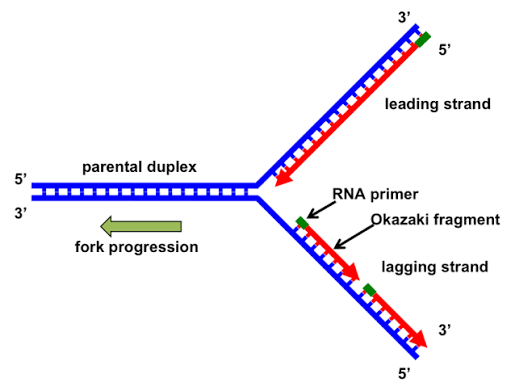
Synthesizes short RNA primers on both template strands. These primers provide a free 3'–OH group required for DNA polymerase to attach and begin building
Exonucleases
RNase H or DNA Polymerase I - remove the RNA primers from both strands.
DNA Polymerase
Reads the existing template strand in the 3' to 5' direction and builds the new complementary strand strictly in the 5' to 3' direction.

Leading Strand
Synthesized continuously in the same direction that the replication fork is opening.
Lagging Strand
Synthesized discontinuously moving away from the fork, producing short segments of DNA called Okazaki fragments, each requiring its own RNA primer
Why are histones positively charged?
They have a high abundance of basic (alkaline) amino acids, specifically lysine and arginine — Binds to DNA’s strong negative charge
DNA Ligase
Seals the nicks and joins the Okazaki fragments on the lagging strand (along with the backbone gaps) into one continuous sugar-phosphate backbone.
TATA-binding protein
a crucial universal general transcription factor that binds to the TATA box promoter sequence
TATA-Box
a non-coding DNA sequence found in the core promoter region of many eukaryotic and archaeal genes
Eukaryotic DNA Structure
Multiple linear chromosomes, many ORIs, histones
Bacterial DNA Structure
1 circular chromosome, 1 origin of replication, NO histones
Archael DNA Structure
1 circular chromosome, 1-3 ORI, histones
Eukaryotic Gene Structure
• Only monocistronic
• Always have introns (non-coding regions removed after
transcription
Bacterial Gene Structure
• Mono/polycistronic mRNA
• No introns (rare)
Transcription and translation are coupled
Archaeal Gene Structure
• Mono/polycistronic mRNA
• No introns (rare)
tRNA
Acts as the molecular "decoder" between mRNA codons and amino acids
Features an anticodon loop that base-pairs complementarily with the mRNA codon
Charged tRNA: A tRNA covalently linked to its specific amino acid at its acceptor end
Shine-Dalgarno sequence
Ribosomal binding site in prokaryotic (bacterial and archaeal) messenger RNA (mRNA) that recruits and aligns the ribosome to start protein synthesis
SecA
brings unfolded protein into periplasm so it can fold there
Signal Recognition Particle
Target new proteins to the endoplasmic reticulum (ER) in eukaryotes or the plasma membrane in prokaryotes for secretion or membrane insertion.
Twin Arginine System (TAT)
Exports fully folded proteins

What is an inverted repeat sequence in DNA?
A single-stranded nucleotide sequence followed downstream by its reverse complement on the same strand. DNA-binding proteins can identify these sequences by dimerizing and using two symmetrical structural units.
Prokaryotic Ribosomal Subunit Size
Large: 50S
Small: 30S
Eukaryotic Ribosomal Subunit Size
Large: 60S
Small: 40S
What is the standard start codon and what amino acid does it code for?
AUG/ATG — codes for Methionine
mRNA
Messenger RNA — carries genetic instructions from DNA in the cell nucleus to the ribosomes in the cytoplasm to build proteins

tRNA
Transfer RNA — a small RNA molecule—typically 76 to 90 nucleotides long—that acts as an adapter to link the genetic code in mRNA with the amino acid sequence of proteins during translation
rRNA
Ribosomal RNA — non-coding RNA molecule that serves as the primary structural and catalytic component of ribosomes, the protein-building factories in cells.
Protein Chaperones
specialized proteins that assist the correct conformational folding, unfolding, assembly, and translocation of other target proteins while preventing random, non-specific aggregation
Operators
a specific segment of DNA in a genetic unit called an operon where a regulatory protein (such as a repressor or activator) binds to control gene transcription — located within a gene’s promoter region
Co-repressor
A molecule or protein that cannot bind to DNA directly and instead binds to an inactive or active repressor to assist or activate its inhibitory function
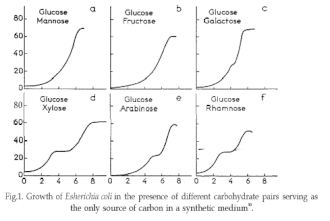
Diauxic Growth
a two-phase cell growth pattern that happens when microorganisms grow in a culture medium containing two different nutrient or sugar sources
2-Component Regulatory System
a sensor histidine kinase and a response regulator that work together to detect environmental changes and alter gene expression


Quorum Sensing
a cell-to-cell communication system that lets bacteria and other microbes track their population density and change their behavior together as a group using autoinducers

RNA Polymerase
Binds to a specific DNA sequence called a promoter. The enzyme unwinds the DNA double helix to form an open transcription bubble. No primer is required
Catabolite Repression
allows microorganisms to preferentially metabolize a preferred carbon source (such as glucose) while repressing the genes and enzymes needed to utilize less favorable alternative carbon sources
What causes the production of cAMP in a cell?
A lack of glucose